





Base BB Coupe vs Base SB Convert
Melting Slicks


Joined: Jul 2006
Posts: 3,103
Likes: 802
From: Massapequa Park NY

Condition is important regardless of originality, another factor which will affect price. Could be the $100K 69 was in considerably better condition than the $55K version. It may also be there was a buyer who badly wanted that particular 69 which sold for $100K, no other buyers for the remaining cars left willing to pay as much.
From what I recall Hagerty classifies daily drivers as class 4. Few if any collectors or investors would even look at these cars. Buyers of class 4 Corvettes may not care about originality?
There are way more than just 4 classifications. I would have clasification on type of car then on top of that condition of cars. A highly restored car can still NOT be worth as much much as a daily driver condition car that is unrestored but has all/most original parts if the restored car has incorrect parts in my opinion. And that would mean both cars having original drivetrains. Finding correct original parts is extremely expensive along with the recondition of those parts.
A perfect example is the car I just bought. It's a BB 390hp 4sp 69 roadster. It doesn't run, needs a total resto. Had 2 owners, great docs, can prove its a side pipe car, pop, etc and almost everything is original except the carb and water pump. Even the windshield is original which is usually replaced. The frame is exceptionally rust free as is the birdcage as this was a southern CA car. Seats are shot. I have not checked Hagerty but they would probably put this at a low value car. Or lower than a restored car that's missing all the big dollar parts. I could have purchased a "restored" BB with original drivetrain for the same price I paid but most "restored" cars are missing the smog pump ($1500) the starter ($500) the alternator ($700) have replaced non original distributor, radiator, jack, rims, incorrect tires, incorrect exhaust, wires, hoses, fuel lines, fuel pump, valve covers, radiator expansion tank cap, leaf spring and various other parts but these are the things that make a difference in PRICE to me as they add up quick. I'm not saying it has to be Top FLight ready but the more correct things the higher the price should be and the more I was willing to pay. Do they even take into account color change cost?
I know I am making it over complicated but car prices can get that way. I also know we sometimes make a bigger deal out of prices then it really is. It comes down to buying something you like at a price YOU can afford and are happy with. I just don't like seeing Corvette or any car guys pay too much because of some value guide. It's also bad for sellers who think there car is worth a ton of money but then can't understand why there car is still for sale two years later.
Last edited by ed427vette; May 4, 2016 at 11:13 AM.

Racer

Joined: Apr 2013
Posts: 283
Likes: 18
From: South carolina
When I made the comparison between the 100k and 55k I'm taking about identical VISUAL condition cars. Not one in much better running or physical condition. The differences are as I described above in my last post with low ownership, more original pieces such as alt, starter, carbs, real docs, etc these all make a world of difference Hagaerty just doesn't understand or reflect.
There are way more than just 4 classifications. I would have clasification on type of car then on top of that condition of cars. A highly restored car can still NOT be worth as much much as a daily driver condition car that is unrestored but has all/most original parts if the restored car has incorrect parts in my opinion. And that would mean both cars having original drivetrains. Finding correct original parts is extremely expensive along with the recondition of those parts.
A perfect example is the car I just bought. It's a BB 390hp 4sp 69 roadster. It doesn't run, needs a total resto. Had 2 owners, great docs, can prove its a side pipe car, pop, etc and almost everything is original except the carb and water pump. Even the windshield is original which is usually replaced. The frame is exceptionally rust free as is the birdcage as this was a southern CA car. Seats are shot. I have not checked Hagerty but they would probably put this at a low value car. Or lower than a restored car that's missing all the big dollar parts. I could have purchased a "restored" BB with original drivetrain for the same price I paid but most "restored" cars are missing the smog pump ($1500) the starter ($500) the alternator ($700) have replaced non original distributor, radiator, jack, rims, incorrect tires, incorrect exhaust, wires, hoses, fuel lines, fuel pump, valve covers, radiator expansion tank cap, leaf spring and various other parts but these are the things that make a difference in PRICE to me as they add up quick. I'm not saying it has to be Top FLight ready but the more correct things the higher the price should be and the more I was willing to pay. Do they even take into account color change cost?
I know I am making it over complicated but car prices can get that way. I also know we sometimes make a bigger deal out of prices then it really is. It comes down to buying something you like at a price YOU can afford and are happy with. I just don't like seeing Corvette or any car guys pay too much because of some value guide. It's also bad for sellers who think there car is worth a ton of money but then can't understand why there car is still for sale two years later.
There are way more than just 4 classifications. I would have clasification on type of car then on top of that condition of cars. A highly restored car can still NOT be worth as much much as a daily driver condition car that is unrestored but has all/most original parts if the restored car has incorrect parts in my opinion. And that would mean both cars having original drivetrains. Finding correct original parts is extremely expensive along with the recondition of those parts.
A perfect example is the car I just bought. It's a BB 390hp 4sp 69 roadster. It doesn't run, needs a total resto. Had 2 owners, great docs, can prove its a side pipe car, pop, etc and almost everything is original except the carb and water pump. Even the windshield is original which is usually replaced. The frame is exceptionally rust free as is the birdcage as this was a southern CA car. Seats are shot. I have not checked Hagerty but they would probably put this at a low value car. Or lower than a restored car that's missing all the big dollar parts. I could have purchased a "restored" BB with original drivetrain for the same price I paid but most "restored" cars are missing the smog pump ($1500) the starter ($500) the alternator ($700) have replaced non original distributor, radiator, jack, rims, incorrect tires, incorrect exhaust, wires, hoses, fuel lines, fuel pump, valve covers, radiator expansion tank cap, leaf spring and various other parts but these are the things that make a difference in PRICE to me as they add up quick. I'm not saying it has to be Top FLight ready but the more correct things the higher the price should be and the more I was willing to pay. Do they even take into account color change cost?
I know I am making it over complicated but car prices can get that way. I also know we sometimes make a bigger deal out of prices then it really is. It comes down to buying something you like at a price YOU can afford and are happy with. I just don't like seeing Corvette or any car guys pay too much because of some value guide. It's also bad for sellers who think there car is worth a ton of money but then can't understand why there car is still for sale two years later.
Safety Car


Joined: Jan 2008
Posts: 3,795
Likes: 435
From: Aarhus, Denmark
My first Corvette was a convertible, but as time went by, I had to get a Coupe.
And I a agree with Shark, a Convertible will always leak.

Thread Starter
Racer
Joined: Aug 2013
Posts: 271
Likes: 12

Melting Slicks
Joined: May 2009
Posts: 3,079
Likes: 315
2024 C3 of the Year Finalist - Unmodified

I take my tops down and store them in their bags behind the seat, along with the rear window. The air flow and sunshine is excellent!

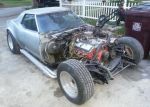
Somebody posted this picture comparing the small block to the big block.
Last edited by Faster Rat; May 5, 2016 at 08:58 PM.

Melting Slicks

Joined: Apr 2007
Posts: 3,189
Likes: 111
From: Tolland CT
When I made the comparison between the 100k and 55k I'm taking about identical VISUAL condition cars. Not one in much better running or physical condition. The differences are as I described above in my last post with low ownership, more original pieces such as alt, starter, carbs, real docs, etc these all make a world of difference Hagaerty just doesn't understand or reflect.
There are way more than just 4 classifications. I would have clasification on type of car then on top of that condition of cars. A highly restored car can still NOT be worth as much much as a daily driver condition car that is unrestored but has all/most original parts if the restored car has incorrect parts in my opinion. And that would mean both cars having original drivetrains. Finding correct original parts is extremely expensive along with the recondition of those parts.
A perfect example is the car I just bought. It's a BB 390hp 4sp 69 roadster. It doesn't run, needs a total resto. Had 2 owners, great docs, can prove its a side pipe car, pop, etc and almost everything is original except the carb and water pump. Even the windshield is original which is usually replaced. The frame is exceptionally rust free as is the birdcage as this was a southern CA car. Seats are shot. I have not checked Hagerty but they would probably put this at a low value car. Or lower than a restored car that's missing all the big dollar parts. I could have purchased a "restored" BB with original drivetrain for the same price I paid but most "restored" cars are missing the smog pump ($1500) the starter ($500) the alternator ($700) have replaced non original distributor, radiator, jack, rims, incorrect tires, incorrect exhaust, wires, hoses, fuel lines, fuel pump, valve covers, radiator expansion tank cap, leaf spring and various other parts but these are the things that make a difference in PRICE to me as they add up quick. I'm not saying it has to be Top FLight ready but the more correct things the higher the price should be and the more I was willing to pay. Do they even take into account color change cost?
I know I am making it over complicated but car prices can get that way. I also know we sometimes make a bigger deal out of prices then it really is. It comes down to buying something you like at a price YOU can afford and are happy with. I just don't like seeing Corvette or any car guys pay too much because of some value guide. It's also bad for sellers who think there car is worth a ton of money but then can't understand why there car is still for sale two years later.
There are way more than just 4 classifications. I would have clasification on type of car then on top of that condition of cars. A highly restored car can still NOT be worth as much much as a daily driver condition car that is unrestored but has all/most original parts if the restored car has incorrect parts in my opinion. And that would mean both cars having original drivetrains. Finding correct original parts is extremely expensive along with the recondition of those parts.
A perfect example is the car I just bought. It's a BB 390hp 4sp 69 roadster. It doesn't run, needs a total resto. Had 2 owners, great docs, can prove its a side pipe car, pop, etc and almost everything is original except the carb and water pump. Even the windshield is original which is usually replaced. The frame is exceptionally rust free as is the birdcage as this was a southern CA car. Seats are shot. I have not checked Hagerty but they would probably put this at a low value car. Or lower than a restored car that's missing all the big dollar parts. I could have purchased a "restored" BB with original drivetrain for the same price I paid but most "restored" cars are missing the smog pump ($1500) the starter ($500) the alternator ($700) have replaced non original distributor, radiator, jack, rims, incorrect tires, incorrect exhaust, wires, hoses, fuel lines, fuel pump, valve covers, radiator expansion tank cap, leaf spring and various other parts but these are the things that make a difference in PRICE to me as they add up quick. I'm not saying it has to be Top FLight ready but the more correct things the higher the price should be and the more I was willing to pay. Do they even take into account color change cost?
I know I am making it over complicated but car prices can get that way. I also know we sometimes make a bigger deal out of prices then it really is. It comes down to buying something you like at a price YOU can afford and are happy with. I just don't like seeing Corvette or any car guys pay too much because of some value guide. It's also bad for sellers who think there car is worth a ton of money but then can't understand why there car is still for sale two years later.
I still feel Hagerty's 4 classes are adequate for giving a general guide to pricing based on condition. I believe their pricing is based on the average price of all cars sold which fit the general category. It would be nearly impossible to create enough categories to cover all permutations.
What one buyer values highly may mean nothing or in some cases be considered to be a downgrade to another. I personally put most emphasis on condition and whether the car's options fit my requirements.
I believe price comes down to a question of whether the car fits the buyers requirements and whether there are other true comparables which are cheaper. I do not believe in an artificial price ceiling as some apply to cars which they view to be inferior. IMO, if the buyer is looking for a solid car, no rust issues, good paint, good interior, and a solid drive train, there will be a minimum base value reflecting the cost to restore a car to this level. Buying cheap thinking the car can be refurbished cheap is rarely more cost effective than buying another which doesn't need the work. When I hear of people declaring cars which don't fit their view of what is valuable to never be worth more than some arbitrary figure, I ask is there another in the same or better condition fitting the buyers stated requirements which can be had significantly cheaper. Sure, a buyer could settle for lesser condition or perhaps accept a base model when they wanted a more powerful drivetrain, get a lower price, but they didn't get what they wanted for fear of others calling them a fool for overspending? Can a car in lesser condition be repaired or upgraded cheaper than just paying the price up front? Quite often, no.
The example given, 100K car, could be a case of a buyer who felt this particular car fit their requirements exactly, kept bidding until they won. Nothing wrong with that. There may not have been any other buyers who wanted the other cars as badly as this person did, hence lower sales prices.
So far as concern over others paying too much, there's a danger of our personal values being more of an influence than factual data, whether there are better deals which fit what the buyer is interested in, not necessarily what we may consider valuable. Not everybody wants a survivor, I know I don't, not my cup of tea. This may mean everything to another. Same goes for numbers. I personally place most significance on numbers if I am looking at a car being presented as being low mileage, pampered. Paying big $$ for a numbers car obligates the owner to keep the car as it was built, else lose value. This may mean compromising what the buyer wants, settling for what's available. We can't order these cars new nor can we alter a numbers car to suit our desires without destroying value.
I think there has been overemphasis on value which spoils the hobby for some, becoming obsessed with what's it worth. I agree prices vary considerably depending on a number of variables as you stated. It comes down to whether the car fits what the buyer is after, are there others which fit as well but considerably cheaper?
When we're talking about prices I also find it odd how some become concerned about appreciation, wanting prices to go up, but frequently talk cars down if they don't fit their idea of what has value. I'd think people paying more for these cars would be welcome? If a buyer has done their homework, spots a car which is a good fit for what they want, pays more than the average price, I say that's fine. They're not foolish, they are paying a bit more than average for a car which suits them. So long as they realize this, so be it.


Corvette Stories
The Best of Corvette for Corvette Enthusiasts

Top 10 Most Expensive Corvettes Ever Sold on Bring A Trailer
Brett Foote
10 Things Every Corvette Owner Needs (2026 Edition)
Michael S. Palmer
8 Most "Only Corvette Owners Understand" Quirks and Problems
Pouria Savadkouei
10 Reasons the C6 Z06 is Still A Performance Benchmark After 20 Years
Joe Kucinski
How Much Horsepower Every Corvette Engine "LOST" in 1972
Joe Kucinski
Top 10 DOs and DON'Ts for Protecting Your Convertible Top!
Michael S. Palmer
Top 10 Most Explosive Corvettes Ever Made: Power-to-Weight Ratio Ranked!
Joe Kucinski
150 hp to 1,250 hp: Every Corvette Generation Compared by the Specs That Matter
Joe Kucinski
8 Coolest Corvette Pace Cars (and Replicas) of All Time
Verdad Gallardo
Melting Slicks
Joined: Apr 2007
Posts: 3,189
Likes: 111
From: Tolland CT
Melting Slicks
Joined: Jul 2006
Posts: 3,103
Likes: 802
From: Massapequa Park NY
Hi Ed,
I still feel Hagerty's 4 classes are adequate for giving a general guide to pricing based on condition. I believe their pricing is based on the average price of all cars sold which fit the general category. It would be nearly impossible to create enough categories to cover all permutations.
What one buyer values highly may mean nothing or in some cases be considered to be a downgrade to another. I personally put most emphasis on condition and whether the car's options fit my requirements.
I believe price comes down to a question of whether the car fits the buyers requirements and whether there are other true comparables which are cheaper. I do not believe in an artificial price ceiling as some apply to cars which they view to be inferior. IMO, if the buyer is looking for a solid car, no rust issues, good paint, good interior, and a solid drive train, there will be a minimum base value reflecting the cost to restore a car to this level. Buying cheap thinking the car can be refurbished cheap is rarely more cost effective than buying another which doesn't need the work. When I hear of people declaring cars which don't fit their view of what is valuable to never be worth more than some arbitrary figure, I ask is there another in the same or better condition fitting the buyers stated requirements which can be had significantly cheaper. Sure, a buyer could settle for lesser condition or perhaps accept a base model when they wanted a more powerful drivetrain, get a lower price, but they didn't get what they wanted for fear of others calling them a fool for overspending? Can a car in lesser condition be repaired or upgraded cheaper than just paying the price up front? Quite often, no.
The example given, 100K car, could be a case of a buyer who felt this particular car fit their requirements exactly, kept bidding until they won. Nothing wrong with that. There may not have been any other buyers who wanted the other cars as badly as this person did, hence lower sales prices.
So far as concern over others paying too much, there's a danger of our personal values being more of an influence than factual data, whether there are better deals which fit what the buyer is interested in, not necessarily what we may consider valuable. Not everybody wants a survivor, I know I don't, not my cup of tea. This may mean everything to another. Same goes for numbers. I personally place most significance on numbers if I am looking at a car being presented as being low mileage, pampered. Paying big $$ for a numbers car obligates the owner to keep the car as it was built, else lose value. This may mean compromising what the buyer wants, settling for what's available. We can't order these cars new nor can we alter a numbers car to suit our desires without destroying value.
I think there has been overemphasis on value which spoils the hobby for some, becoming obsessed with what's it worth. I agree prices vary considerably depending on a number of variables as you stated. It comes down to whether the car fits what the buyer is after, are there others which fit as well but considerably cheaper?
When we're talking about prices I also find it odd how some become concerned about appreciation, wanting prices to go up, but frequently talk cars down if they don't fit their idea of what has value. I'd think people paying more for these cars would be welcome? If a buyer has done their homework, spots a car which is a good fit for what they want, pays more than the average price, I say that's fine. They're not foolish, they are paying a bit more than average for a car which suits them. So long as they realize this, so be it.
Brick, that's pretty much where I was going though I lean to the originals or restored but not necessarily numbers matching. An upgraded, modern drive train may soon become more practical for a driver than an original drive train as quality parts become more difficult to find, gas and oil formulations change.
I still feel Hagerty's 4 classes are adequate for giving a general guide to pricing based on condition. I believe their pricing is based on the average price of all cars sold which fit the general category. It would be nearly impossible to create enough categories to cover all permutations.
What one buyer values highly may mean nothing or in some cases be considered to be a downgrade to another. I personally put most emphasis on condition and whether the car's options fit my requirements.
I believe price comes down to a question of whether the car fits the buyers requirements and whether there are other true comparables which are cheaper. I do not believe in an artificial price ceiling as some apply to cars which they view to be inferior. IMO, if the buyer is looking for a solid car, no rust issues, good paint, good interior, and a solid drive train, there will be a minimum base value reflecting the cost to restore a car to this level. Buying cheap thinking the car can be refurbished cheap is rarely more cost effective than buying another which doesn't need the work. When I hear of people declaring cars which don't fit their view of what is valuable to never be worth more than some arbitrary figure, I ask is there another in the same or better condition fitting the buyers stated requirements which can be had significantly cheaper. Sure, a buyer could settle for lesser condition or perhaps accept a base model when they wanted a more powerful drivetrain, get a lower price, but they didn't get what they wanted for fear of others calling them a fool for overspending? Can a car in lesser condition be repaired or upgraded cheaper than just paying the price up front? Quite often, no.
The example given, 100K car, could be a case of a buyer who felt this particular car fit their requirements exactly, kept bidding until they won. Nothing wrong with that. There may not have been any other buyers who wanted the other cars as badly as this person did, hence lower sales prices.
So far as concern over others paying too much, there's a danger of our personal values being more of an influence than factual data, whether there are better deals which fit what the buyer is interested in, not necessarily what we may consider valuable. Not everybody wants a survivor, I know I don't, not my cup of tea. This may mean everything to another. Same goes for numbers. I personally place most significance on numbers if I am looking at a car being presented as being low mileage, pampered. Paying big $$ for a numbers car obligates the owner to keep the car as it was built, else lose value. This may mean compromising what the buyer wants, settling for what's available. We can't order these cars new nor can we alter a numbers car to suit our desires without destroying value.
I think there has been overemphasis on value which spoils the hobby for some, becoming obsessed with what's it worth. I agree prices vary considerably depending on a number of variables as you stated. It comes down to whether the car fits what the buyer is after, are there others which fit as well but considerably cheaper?
When we're talking about prices I also find it odd how some become concerned about appreciation, wanting prices to go up, but frequently talk cars down if they don't fit their idea of what has value. I'd think people paying more for these cars would be welcome? If a buyer has done their homework, spots a car which is a good fit for what they want, pays more than the average price, I say that's fine. They're not foolish, they are paying a bit more than average for a car which suits them. So long as they realize this, so be it.
Brick, that's pretty much where I was going though I lean to the originals or restored but not necessarily numbers matching. An upgraded, modern drive train may soon become more practical for a driver than an original drive train as quality parts become more difficult to find, gas and oil formulations change.
There will always be exceptions to prices regardless of...well almost anything. I would expect most buyers that intend to spend any significant money would be doing there homework beyond just picking up a guide and buying a car the next day anyway.
I think some people use the H guide to consider flipping a car only to realize too late it may not have been a great idea. Over the last 5 years I've seen a few small blocks sell only to see them up for sale a year later with a much bigger price tag and then sit for 18+ months with no buyers.
Supply and demand.....
I agree very much about overemphasis on future value. If you've ever read any of my posts on this subject before I couldn't care less about that. This has always been a hobby for me, not a business. I buy the cars I like. Of course I don't want to waste money either and I want the best bang for my buck, I'm not wealthy, but I would make comments such that I would be happy seeing prices plummet and watch everyone who disagrees, which is probably the vast majority, go bananas. But I just buy the cars because I like them. Not to make money. So cheaper cars mean more cars for me. I don't sell them. I buy them.
And you are spot on about restoring cars. The car I bought that needs a resto will clearly cost me more than a similar car already done. And ill do most of the work myself (minus paint and engine/trans rebuild) and it will be at near almost what I paid to get the car. But I wanted a blue BB 69 vert 4sp with original sidepipes original drivetrain and great documentation. How many are out there? So I paid a bit high.
The cost for a resto is very high and that is a entirely different subject that people who have not done it just do not understand until they are neck deep into it. If you think you can farm it out inexpensively good luck...I have 2 restos going on right now and its eating up disposable income quickly, and takes up a good part of each weekend assuming I can even get to it for one reason or another. Good parts are costly.
The one thing that is helpful is this board and the Internet in general. You can find so many answers out there to help do things yourself on these cars. They are not overly complicated, just need patience and time. Oh yeah and money...
Last edited by ed427vette; May 5, 2016 at 10:56 PM.
Race Director


Joined: Mar 2003
Posts: 11,608
Likes: 780
From: Eustis ( Area 51 Bat Cave ) Fl
Coupe or convertible is always a hard choice and boils down to a persons taste, I just dig convertibles better in way the best of both worlds but still you do not get the coupe rear cove so it's is a loss there.
I have seen all sorts of sun roofs cut into hard tops even one in a magazine had little t bird style port holes.
I have been told here or there through the years that this person or that saw a hard top with t panels cut into it, anyone got a picture of such a mod or is that a tall fish tale?
I have seen all sorts of sun roofs cut into hard tops even one in a magazine had little t bird style port holes.
I have been told here or there through the years that this person or that saw a hard top with t panels cut into it, anyone got a picture of such a mod or is that a tall fish tale?



Thread Starter
Racer
Joined: Aug 2013
Posts: 271
Likes: 12
Looks like the Convertible is a slight favorite so far. Thank you to all of you who have stated your opinion. No right or wrong answer, just a personal preference. What happened between 1968 and 1969? 1968 production: 9936 coupe, 18,630 convert, then in '69 22129 coupe, 16,633. That is really a large swing in preference in 1 year. Any ideas?
Melting Slicks
Joined: Apr 2007
Posts: 3,189
Likes: 111
From: Tolland CT
Looks like the Convertible is a slight favorite so far. Thank you to all of you who have stated your opinion. No right or wrong answer, just a personal preference. What happened between 1968 and 1969? 1968 production: 9936 coupe, 18,630 convert, then in '69 22129 coupe, 16,633. That is really a large swing in preference in 1 year. Any ideas?

