




1970 Frame Question

Thread Starter
Gr8Corvette


Joined: Jun 2003
Posts: 1,139
Likes: 2
From: Indian Harbour Beach Florida
 1970 Frame Question
I am buying a 1970 Corvette. It is definitely a daily driver. There is wear on the seats, the paint is OK, with a few quarter sized chips on the convertible deck lid. The engine exhaust looks OK and there is the usual dirt, grease, rust in the engine compartment.
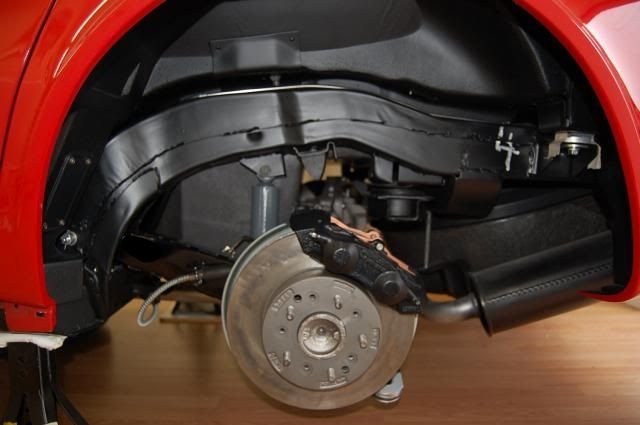
The frame looks brand new. Even the bolts are under the car are very shiny new! This seems strange to me. Why go all through the trouble to replace the frame and not take care of the other stuff?
I am buying the car from an elderly guy that flips cars for a hobby. He bought the car from an estate of an deceased individual in Missouri. The family did not know anything about the car other than they wanted to sell it. The car had obviously been sitting a long time judging by all the dust on it.
Anyone have ideas on why the frame would be replaced without doing other work on the car? My thought is that the owner may have started a frame off restoration and got ill so he put it back together. Any other thoughts?
Also, Is the VIN stamped on the frame? If so, where would I find it?
The frame looks brand new. Even the bolts are under the car are very shiny new! This seems strange to me. Why go all through the trouble to replace the frame and not take care of the other stuff?
I am buying the car from an elderly guy that flips cars for a hobby. He bought the car from an estate of an deceased individual in Missouri. The family did not know anything about the car other than they wanted to sell it. The car had obviously been sitting a long time judging by all the dust on it.
Anyone have ideas on why the frame would be replaced without doing other work on the car? My thought is that the owner may have started a frame off restoration and got ill so he put it back together. Any other thoughts?
Also, Is the VIN stamped on the frame? If so, where would I find it?

Team Owner


Joined: Sep 2006
Posts: 31,172
Likes: 4,250
From: Westminster Maryland
Hi gr8,
I'd say there are lots of reasons (not all good) for needing to replace the frame on a Corvette.
There could be good reasons only the frame was restored too as you've surmised.
Yes, the VIN of the car that the frame was originally used for was stamped in the frame in 2 places.
The first on the frame rail about where the driver's left hip is is impossible to see with the body in place.
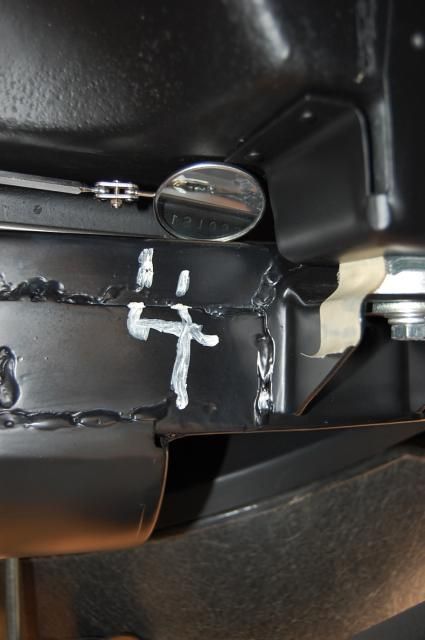
The second on the left frame rail just forward of the #4 body mount is sometimes visible.
Take a peek…. you never know what you might find.
Regards,
Alan
Look in the area above the shim count.
Use a small mirror and light.
I'd say there are lots of reasons (not all good) for needing to replace the frame on a Corvette.
There could be good reasons only the frame was restored too as you've surmised.
Yes, the VIN of the car that the frame was originally used for was stamped in the frame in 2 places.
The first on the frame rail about where the driver's left hip is is impossible to see with the body in place.
The second on the left frame rail just forward of the #4 body mount is sometimes visible.
Take a peek…. you never know what you might find.
Regards,
Alan
Look in the area above the shim count.
Use a small mirror and light.
Last edited by Alan 71; Jul 7, 2016 at 06:32 PM.
Thread Starter
Gr8Corvette
Joined: Jun 2003
Posts: 1,139
Likes: 2
From: Indian Harbour Beach Florida
Thread Starter
Gr8Corvette
Joined: Jun 2003
Posts: 1,139
Likes: 2
From: Indian Harbour Beach Florida
Thanks!


Le Mans Master


Joined: Aug 2010
Posts: 8,508
Likes: 501
From: Bussey, IA
[QUOTE=Alan 71;1592581234Yes, the VIN of the car that the frame was originally used for was stamped in the frame in 2 places.
The first on the frame rail about where the drive's left hip is is impossible to see with the body in place.
Regards,
Alan
Where is the first? The "drive's left hip" is not a clear location for me. Just trying to locate my own frame vin. The one by mount 4 is not clear.
The first on the frame rail about where the drive's left hip is is impossible to see with the body in place.
Regards,
Alan
Where is the first? The "drive's left hip" is not a clear location for me. Just trying to locate my own frame vin. The one by mount 4 is not clear.
Team Owner
Joined: Sep 2006
Posts: 31,172
Likes: 4,250
From: Westminster Maryland
Hi AT,
The first VIN stamp is typically in this area.
Regards,
Alan

The machine used was powerful enough to but a small 'recess' in the frame's surface where the stamp was done.

The first VIN stamp is typically in this area.
Regards,
Alan
The machine used was powerful enough to but a small 'recess' in the frame's surface where the stamp was done.
Last edited by Alan 71; Jul 7, 2016 at 06:38 PM.

Drifting

Joined: Jan 2014
Posts: 1,866
Likes: 140
From: Sadieville Kentucky
I am buying a 1970 Corvette. It is definitely a daily driver. There is wear on the seats, the paint is OK, with a few quarter sized chips on the convertible deck lid. The engine exhaust looks OK and there is the usual dirt, grease, rust in the engine compartment.
The frame looks brand new. Even the bolts are under the car are very shiny new! This seems strange to me. Why go all through the trouble to replace the frame and not take care of the other stuff?
I am buying the car from an elderly guy that flips cars for a hobby. He bought the car from an estate of an deceased individual in Missouri. The family did not know anything about the car other than they wanted to sell it. The car had obviously been sitting a long time judging by all the dust on it.
Anyone have ideas on why the frame would be replaced without doing other work on the car? My thought is that the owner may have started a frame off restoration and got ill so he put it back together. Any other thoughts?
Also, Is the VIN stamped on the frame? If so, where would I find it?
The frame looks brand new. Even the bolts are under the car are very shiny new! This seems strange to me. Why go all through the trouble to replace the frame and not take care of the other stuff?
I am buying the car from an elderly guy that flips cars for a hobby. He bought the car from an estate of an deceased individual in Missouri. The family did not know anything about the car other than they wanted to sell it. The car had obviously been sitting a long time judging by all the dust on it.
Anyone have ideas on why the frame would be replaced without doing other work on the car? My thought is that the owner may have started a frame off restoration and got ill so he put it back together. Any other thoughts?
Also, Is the VIN stamped on the frame? If so, where would I find it?

Corvette Stories
The Best of Corvette for Corvette Enthusiasts

8 Coolest Corvette Pace Cars (and Replicas) of All Time
Verdad Gallardo
Top 10 Corvette Engines RANKED by Peak Torque (70+ Years of Muscle!)
Joe Kucinski
Corvette ZR1X Will Be Pacing the Indy 500, And Could Probably Race, Too!
Verdad Gallardo
Top 10 Corvettes Coming to Mecum Indy 2026!
Brett Foote
Top 10 C9 Corvette MUST-HAVES to Fix These C8 Generation Flaws!
Michael S. Palmer
10 Revolutionary 'Corvette Firsts' Most People Don't Know
Joe Kucinski
5 Reasons to Upgrade to an LS6-Powered Corvette; 5 Reasons to Stay LT2
Michael S. Palmer
2027 Corvette vs The World: Every C8 vs Its Closest Competitor
Joe Kucinski
10 Most Common Corvette Problems of the Last 20 Years!
Joe Kucinski
Le Mans Master
Joined: Jul 2006
Posts: 8,117
Likes: 104
From: charlotte north carolina
Also consider the possibility that the birdcage and frame were both badly rusted, and only the frame (being easier to replace than the birdcage) was replaced. Check carefully for rust!

Racer


Joined: Apr 2016
Posts: 494
Likes: 93
From: Bucks County PA