






How much does a C-3 weigh?

Thread Starter
Burning Brakes


Joined: Jan 2017
Posts: 1,097
Likes: 213
From: The Buckle of the Bible Belt. Joplin Mo
 How much does a C-3 weigh?
Curious if anyone has looked into what these cars weigh. Like to know what the body of my C-3 weighs? Also frame, body and engine full of fluids.
Melting Slicks


Joined: Jul 2006
Posts: 3,103
Likes: 802
From: Massapequa Park NY
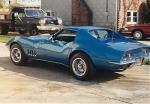
The exact weights depend on what year you have, engine, coupe or convertible and other options. So it all depends. The total weight will be near 3300 lbs.

Racer

Joined: Feb 2009
Posts: 390
Likes: 8
From: Louisiana
Depends on the year. 1980 weighs 3,336 lbs. according to this document...
https://gmheritagecenter.com/docs/gm...t-Corvette.pdf
You can change the year from 1980 in the link to your specific year to get the document that you need. Then scroll through to the weight section. For 1980 that info is on pages 10 and 46.
https://gmheritagecenter.com/docs/gm...t-Corvette.pdf
You can change the year from 1980 in the link to your specific year to get the document that you need. Then scroll through to the weight section. For 1980 that info is on pages 10 and 46.
Thread Starter
Burning Brakes
Joined: Jan 2017
Posts: 1,097
Likes: 213
From: The Buckle of the Bible Belt. Joplin Mo
Thank you for the replies. So safe to assume a big block car weighs in about 3600. Have to admit I am very surprised by this. Thought a fiberglass car would be lighter. We weighed our Chevelle on a similar CAT scale and it weighed in at 3700. A steel bodied car mind you. WOW. Not what I expected. Going to be pulling the body off of the C-3 within days and very interested in what the body alone will weigh. Have googled and checked the forum but all we can find is opinion, no fact. Like to know the weight of the body separately. No interior. Only glass and wiring. Also if anyone knows the weight of the frame without the engine.?
Corvette Stories
The Best of Corvette for Corvette Enthusiasts

5 Best & 5 Worst Corvette Daily Drivers
Joe Kucinski
The Headlights of Every Corvette Generation Explained
Joe Kucinski
5 Best & 5 Most Overrated Corvette Track Packages of All Time!
Joe Kucinski
Every 2027 Corvette Engine Explained
Joe Kucinski
Designer Imagines A Corvette That Looks More Like a Corvette Than the Corvette
Verdad Gallardo
10 Ugly Corvettes That We Still Kinda Love
Joe Kucinski
Top 10 Most Expensive Corvettes Ever Sold on Bring A Trailer
Brett Foote
10 Things Every Corvette Owner Needs (2026 Edition)
Michael S. Palmer
8 Most "Only Corvette Owners Understand" Quirks and Problems
Pouria Savadkouei
Race Director

Joined: Nov 2006
Posts: 19,445
Likes: 353
From: Athens GA
St. Jude Donor '12-'13, '15- '16-'17-'18-'19, '21
Thank you for the replies. So safe to assume a big block car weighs in about 3600. Have to admit I am very surprised by this. Thought a fiberglass car would be lighter. We weighed our Chevelle on a similar CAT scale and it weighed in at 3700. A steel bodied car mind you. WOW. Not what I expected. Going to be pulling the body off of the C-3 within days and very interested in what the body alone will weigh. Have googled and checked the forum but all we can find is opinion, no fact. Like to know the weight of the body separately. No interior. Only glass and wiring. Also if anyone knows the weight of the frame without the engine.?
My 67 Camaro used to beat any stock vette that showed up if for no other reason that my car was about 400 pounds lighter. Changing the rear to 4.11 gears and upping the hp to 425 helped.
I had one guy I had to beat twice to prove to him that his fancy vette was slower than my metal Camaro. That was 1971 btw....lol

Thread Starter
Burning Brakes
Joined: Jan 2017
Posts: 1,097
Likes: 213
From: The Buckle of the Bible Belt. Joplin Mo



Race Director

Joined: Oct 2000
Posts: 12,710
Likes: 3,161
From: Shamong, NJ
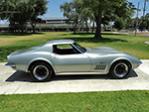
The curb weight on a standard equipment, base engine, 69 coupe was about 3,300 lbs. Figure about 150 more for a convertible. A big block convertible with both tops, air, PS, PB and an automatic was probably close to 3,700 lbs.
By 1977 the curb weight had grown to about 3,600 lbs. The increase was a result of Chevrolet adding more standard equipment, and the Government mandating more emission and safety equipment. In the late 70's, the Corvette went on a diet in an effort to increase performance and fuel mileage. As a result, the curb weight of an 81 was back down to around 3,300 lbs, even with air, PS, PB, power windows and stereo all standard. This was accomplished through the use of lighter seats, glass, and an aluminum rear end, as well as other weight reducing measures.
By comparison, a 69 small block Camaro coupe has a curb weight of around 3,450, about the same as a base equipment 69 Corvette convertible.
Though it is possible for fiberglass to weight less than sheet metal, the fiberglass (and the SMC that replaced it in 74) is quite thick and dense, making it fairly heavy. Chevrolet never used fiberglass to save weight on the Corvette, it was a cost savings, and an experiment. The Corvette was intended to be a low volume car. It was much more cost effective to mold the body panels out out of fiberglass, instead of creating the dies and stampings needed to produce sheet metal panels. Also, fiberglass was relatively new, and it gave GM the opportunity to determine the viability of fiberglass components, for production use.
By 1977 the curb weight had grown to about 3,600 lbs. The increase was a result of Chevrolet adding more standard equipment, and the Government mandating more emission and safety equipment. In the late 70's, the Corvette went on a diet in an effort to increase performance and fuel mileage. As a result, the curb weight of an 81 was back down to around 3,300 lbs, even with air, PS, PB, power windows and stereo all standard. This was accomplished through the use of lighter seats, glass, and an aluminum rear end, as well as other weight reducing measures.
By comparison, a 69 small block Camaro coupe has a curb weight of around 3,450, about the same as a base equipment 69 Corvette convertible.
Though it is possible for fiberglass to weight less than sheet metal, the fiberglass (and the SMC that replaced it in 74) is quite thick and dense, making it fairly heavy. Chevrolet never used fiberglass to save weight on the Corvette, it was a cost savings, and an experiment. The Corvette was intended to be a low volume car. It was much more cost effective to mold the body panels out out of fiberglass, instead of creating the dies and stampings needed to produce sheet metal panels. Also, fiberglass was relatively new, and it gave GM the opportunity to determine the viability of fiberglass components, for production use.

Burning Brakes
Joined: Nov 2014
Posts: 951
Likes: 215
From: Foothills of the Adirondacks.

Melting Slicks

Joined: May 2012
Posts: 2,192
Likes: 345
From: Allenton Wisconsin

Safety Car

Joined: Feb 2012
Posts: 4,705
Likes: 983
From: Orlando FL
https://www.corvetteforum.com/forums...dy-weight.html
This old thread asks about a 77.... but there shouldn`t be a huge difference. Also of note is if you`re asking about a stripped body, or with glass, interior, etc., which of course will add weight.
This old thread asks about a 77.... but there shouldn`t be a huge difference. Also of note is if you`re asking about a stripped body, or with glass, interior, etc., which of course will add weight.
Thread Starter
Burning Brakes
Joined: Jan 2017
Posts: 1,097
Likes: 213
From: The Buckle of the Bible Belt. Joplin Mo
Good info in the thread. Have to say I am inclined to believe the 1200 lb body weight. But I think that is fully loaded. I have removed the doors and totally stripped every part I could to lighten the load. Closer to the 800lb mark now. Found a video on u-tube, a guy named Mark @ America's Finest Corvettes. He claims the C-3 frame stripped weighs in at 300lbs . I am guessing about 600-800 more in suspension and drivetrain. That would leave the big block weighing about 1200 for the total 3600lbs. Anyone who is into power to weight ratio should find this interesting. As soon as I start lifting the body I will post the pictures.



Racer
Joined: Jun 2013
Posts: 484
Likes: 43
From: NJ
I think by 1976 they started filling them with lead.
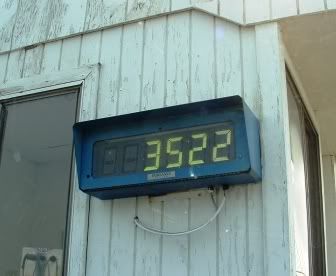
My slug weighed 3875 lbs when I put it on the dyno. I assumed that it was that heavy with myself and my son in the car. I was corrected by the dyno operator that it was without us in it.
Don't get me wrong, it does have a lot of extra stuff on it that increased the weight but it also has a lot of aluminum on it replacing the steel components.
So in the end it weighs almost 4075 lbs with me in it. That's heavy!
My slug weighed 3875 lbs when I put it on the dyno. I assumed that it was that heavy with myself and my son in the car. I was corrected by the dyno operator that it was without us in it.
Don't get me wrong, it does have a lot of extra stuff on it that increased the weight but it also has a lot of aluminum on it replacing the steel components.
So in the end it weighs almost 4075 lbs with me in it. That's heavy!
Race Director
Joined: Nov 2006
Posts: 19,445
Likes: 353
From: Athens GA
St. Jude Donor '12-'13, '15- '16-'17-'18-'19, '21
I think by 1976 they started filling them with lead.
My slug weighed 3875 lbs when I put it on the dyno. I assumed that it was that heavy with myself and my son in the car. I was corrected by the dyno operator that it was without us in it.
Don't get me wrong, it does have a lot of extra stuff on it that increased the weight but it also has a lot of aluminum on it replacing the steel components.
So in the end it weighs almost 4075 lbs with me in it. That's heavy!
My slug weighed 3875 lbs when I put it on the dyno. I assumed that it was that heavy with myself and my son in the car. I was corrected by the dyno operator that it was without us in it.
Don't get me wrong, it does have a lot of extra stuff on it that increased the weight but it also has a lot of aluminum on it replacing the steel components.
So in the end it weighs almost 4075 lbs with me in it. That's heavy!
I'll bet that monster of an engine has something to do with the weight....
Btw...looks like Jersey plates....I grew up in East Brunswick!

Race Director
Joined: Oct 2000
Posts: 12,710
Likes: 3,161
From: Shamong, NJ
Your 76 has the door guard beams that earlier cars didn't, and much heavier bumpers because of the impact bars and bumper shocks. Just these pieces probably added a couple hundred pounds. The catalytic converter also increased the weight, as well as assorted other emission equipment. Your 76 also has a metal floor, were as 75 and earlier Corvettes had fiberglass ones.
When you add the typical options to your 76's 3,600 lb curb weight (power steering, power windows, a radio, air conditioning, etc), it's easy to see how it could balloon to 3,875!