When you click on links to various merchants on this site and make a purchase, this can result in this site earning a commission. Affiliate programs and affiliations include, but are not limited to, the eBay Partner Network.
I recently came across this forum, as purchased a '77 Corvette a few days ago. I know the previous owners said the engine and VIN aren't matching (as with many) - but I'm just curious about whether it still has an L82 engine in it?
I've checked the car VIN itself, which confirms it as an L82 (with the "X" in fifth place), along with "L82" stamped on the hood.
Is there any specific "identity" relative to the engine codes to check whether they're an L82 vs an L48? I'm assuming when the block was changed they would have dropped in a similar L82, but just curious?
My engine code starts with "T0I", if that helps? I know the "T" in '75 etc. referred to the L82 as per the VIN, but not engine number...
Just as an FYI L82 on the hood means nothing. They are 50 bucks to slap on there. Your VIN confirms that you have a L-82 car, but some pics of the engine stampings and in general will help us out to help you out.
My engine code starts with "T0I", if that helps? I know the "T" in '75 etc. referred to the L82 as per the VIN, but not engine number...
First off, welcome to the Forum!
If the "T" you're referring to is the first digit, in a series of 7 or 8 letters and numbers, then that indicates the engine was made in GM's Tonawanda engine plant.
Normally there are two sets of numbers, stamped on the pad on the right front of the engine. One set identifies where and when the engine was built, and includes a code to identify the engine. A typical engine stamp for a 77 L82 would look something like V0I23CLF. This decodes as "V" for the Flint engine plant, "0I" for January, "23" for the 23rd day of the month, 'CLF" is the 1977 engine code for an L82 with an automatic.
The second set is a VIN derivative that matched a portion of the VIN of the car the engine was originally installed in. The VIN derivative is made up of letters and numbers to identify it as a Chevrolet engine, what plant the car was assembled in and a sequential number assigned to the car.
The "T" that identifies a 75 L-82 is only found in the VIN number on the body, not anywhere on the engine. Engines are identified by a two or three letter code, that's part of the where/when code I described above. If that code starts with a "T", then it is not an L-82, or a Corvette engine.
As I stated before, a T engine code indicates an engine assembled at Tonawanda, and all Corvette 350's were assembled at Flint MI, where the engine identifier was a "V".
A picture of the engine pad, or a complete listing of all of the info stamped on it, is needed to identify what the engine is.
Thanks Sullyman56 - yes makes sense. Having a blonde moment - not sure why I didn't think it'd be firing order! lol
I wondered if it was a re-builder's stamp, as engine appears good, no leaks and clean (thought doesn't mean much - previous owners could have cleaned it).
I was puzzled as I've seen others with two sets of numbers and mine only has one set as above, that doesn't seem to match anything.
I'm in New Zealand, so not sure when this was rebuilt. All I know is that she's hungry on gas! :P
The random number is the engine firing order. The stamp beginning with a T could be a rebuilders stamp.
No, that is the factory assembly stamp. It is a Tonawanda small block assembled January 4th. The S is typically a 327 back with an automatic for 1962 to 1964.
We need the block casting date to determine the year. It will be on the bellhousing flange at the rear of the engine. It is probably behind the distributor but could be on the driver's side bolt boss.
Also, this stamp just means what the engine was originally. It would be a 55ish year old engine, so it could have been rebuilt, and who knows what is in it now.
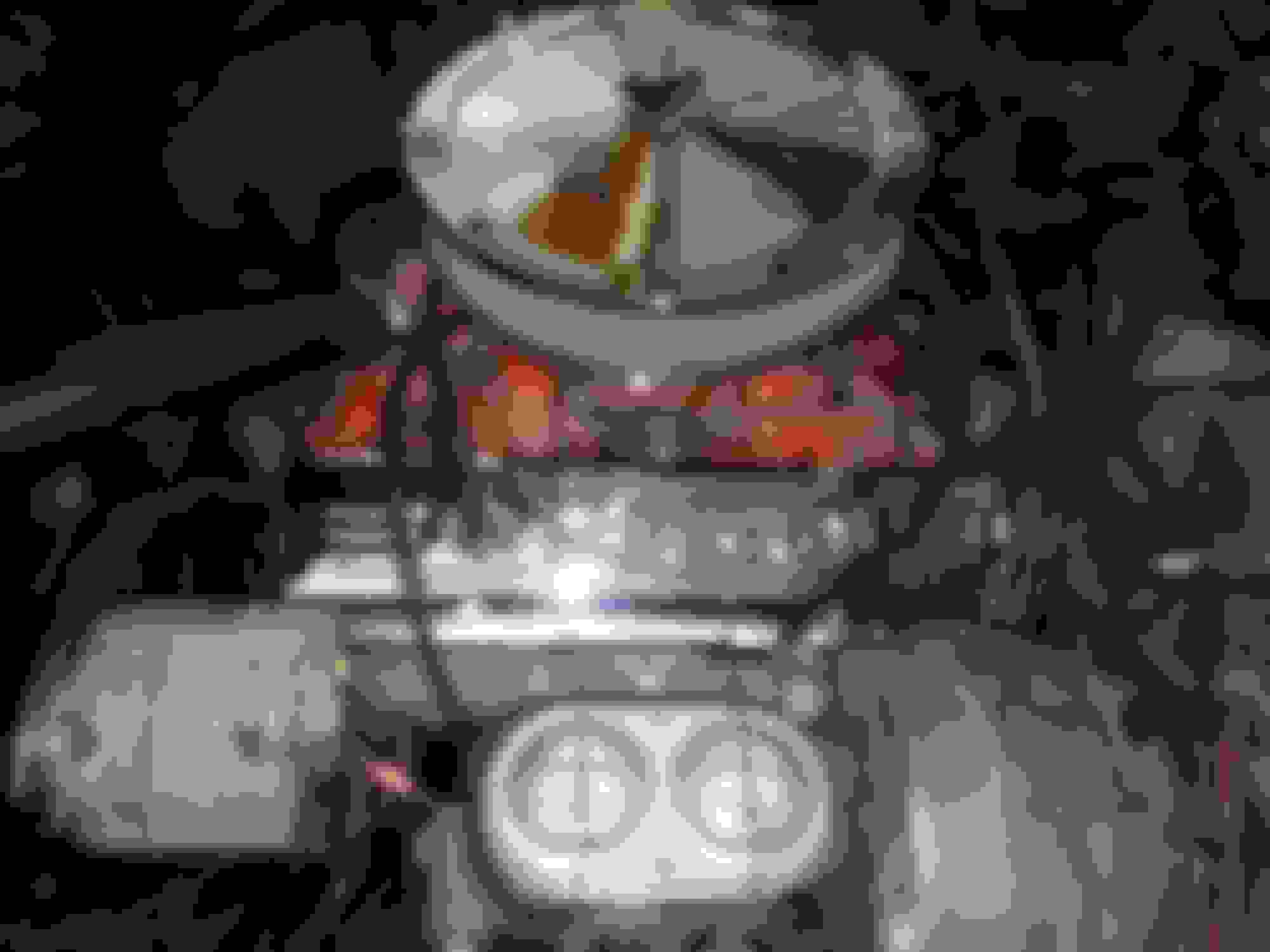
A better picture of the stamp pad would help.
Last edited by Procrastination Racing; Aug 21, 2017 at 10:29 PM.
Thanks Sullyman56 - yes makes sense. Having a blonde moment - not sure why I didn't think it'd be firing order! lol
I wondered if it was a re-builder's stamp, as engine appears good, no leaks and clean (thought doesn't mean much - previous owners could have cleaned it).
I was puzzled as I've seen others with two sets of numbers and mine only has one set as above, that doesn't seem to match anything.
I'm in New Zealand, so not sure when this was rebuilt. All I know is that she's hungry on gas! :P
Like this? There is an assembly stamp and a partial VIN stamp. If an engine wasn't installed in a car, then there is no partial VIN stamped. Many engines were available over the counter and as replacement items in a dealership.
Assembly stamps typically start with F or V for Flint and T for Tonawanda. The four numbers (cap I is the "number" 1) is the month and day. The letters on the end identify the configuration, such as RC is a 327-250 hp with manual transmission. The RF suffix is for 360 hp fuel injection with four speed.
The partial VIN starts with the year (3 = 1963) and has the last 6 numbers of the VIN.
The casting number is usually easy to read, but occasionally a number or two will be confusing, like a 3 may look like an 8 or 9.
The date casting is frequently hard to read. It was smaller and the casting often isn't crisp and sharp.
Last edited by Procrastination Racing; Aug 21, 2017 at 10:45 PM.
Engine Code (there's no other numbers anywhere) behind water-pump.
The "S" suffix code is a 327 from a full size 62 Chevrolet. T for the Tonawanda engine plant, "0I" January, "04" the 4th of the month, and "S" for a 62 full size Chevrolet 327, originally attached to a Powerglide trans.
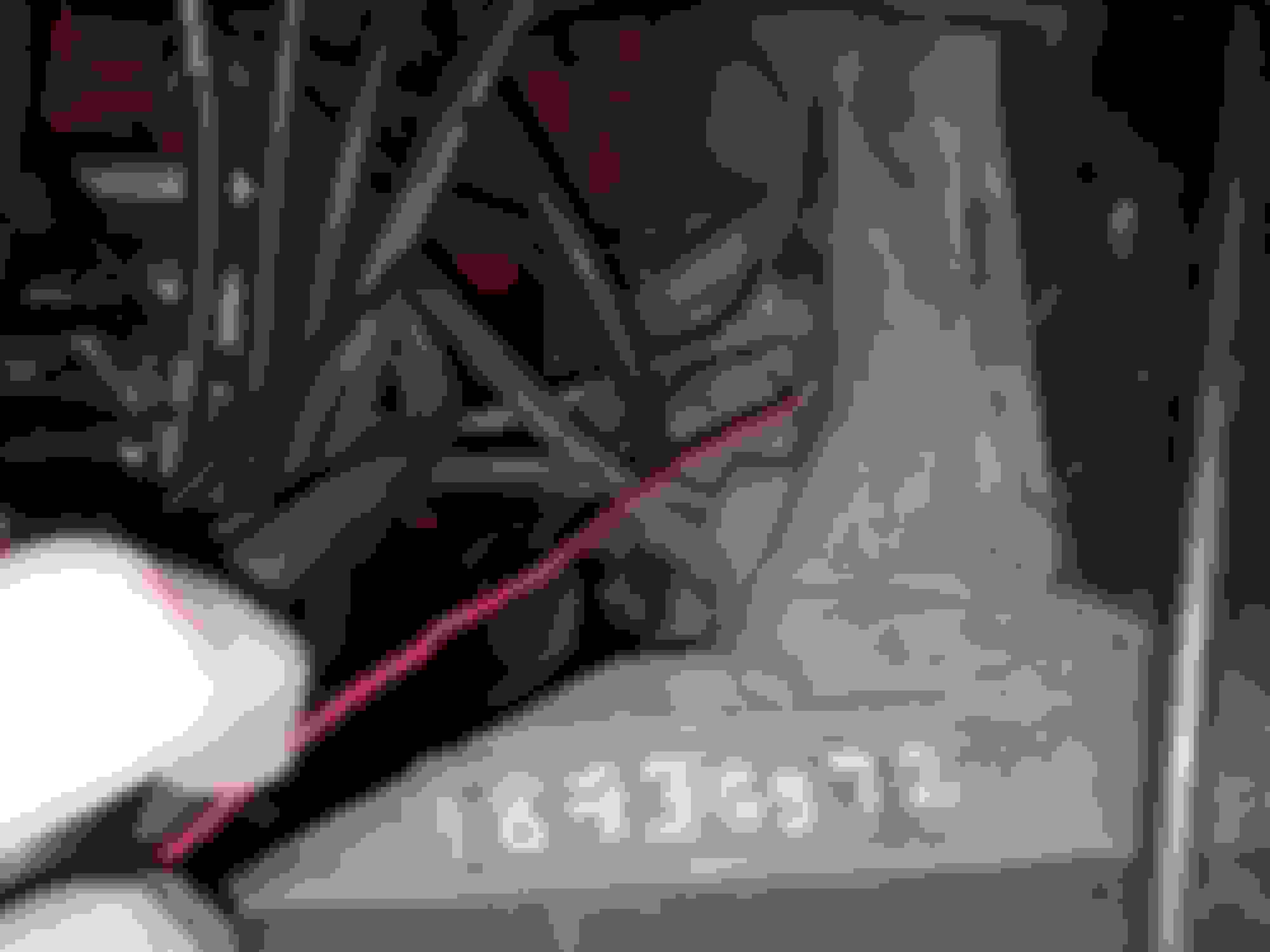
The only other engine-marking on the passenger side at rear of engine.
If you look at the back of the block, just above the "CONV1", there will be a date cast into the block. If it is a 62 block, that date will be something similar to Lxx61, "L" for December, xx for the day and "61" for 1961.
In the same area on the left rear of the block (on the flange the trans bolts to), will be a casting number. If it's a 62 327, the casting number will likely be either 3782870 or 3789817.
The casting date and casting number can be hard to see, but they are there, and are needed to further identify your engine.
Originally Posted by corvettec377
I wondered if it was a re-builder's stamp, as engine appears good, no leaks and clean (thought doesn't mean much - previous owners could have cleaned it).
I was puzzled as I've seen others with two sets of numbers and mine only has one set as above, that doesn't seem to match anything.
I really don't think it's a rebuilder's mark. It looks very much like a factory block stamping. There were an assortment of single letter suffix codes used early on, when GM first started stamping blocks with a code.
If the engine did come out of a full size 62 Chevrolet, it also makes perfect sense that there's only one set of digits stamped on the block. Corvette engines have been getting a VIN stamp since mid 1960, but most other Chevrolet engines didn't get a VIN derivative until 1968, when it became Federal law. Chevrolet did stamp VIN's on some engines in regular Chevrolet's, but it was usually only high performance engines, such as 348's, 409's, 396's, 327/350's in Nova's and Chevelle's, etc. A 327/250 or 300 in an Impala, wouldn't have gotten a VIN derivative stamped on the block.
I'm almost 100 percent sure that the valve covers are are not original to the car or the engine . But, all of this is not necessarily a bad thing, knowing that you knew that the engine wasn't original to the car. It might be a great replacement. How does it run?
jlpskydive - It runs well. But I assumed that not having "matching numbers" meant it just had another Corvette engine dropped in it, as many have (as most early Corvettes came here in the late '80s - '90s).
Many like to put 350 Chev engines in Jaguars. As mainly a British car person, I can understand that for reliability, but an American GM Engine in a British Jaguar is just butchering it!
Car runs well, but does about 3,000RMP at around 100kmph (60mph). Not sure if that's good?
Cold starting is trial and error! Previous owner said one-pump with the gas-pedal and then crank the engine from cold. Seems to require about 3 - 4 pumps (and I learnt from experience, more just floods it).
But, I'm a virgin to these Corvettes! So, very grateful for the help and feedback on this forum!
Originally Posted by jlpskydive
I'm almost 100 percent sure that the valve covers are are not original to the car or the engine . But, all of this is not necessarily a bad thing, knowing that you knew that the engine wasn't original to the car. It might be a great replacement. How does it run?
Is there any way to tell if the original (327) engine it has in it now has been modified to suit the Corvette's 350? I'm guessing it has later parts etc. and just used the block?
I've heard of some upgrading the 327s to a 350. I guess here they'd probably have just dropped the 327 in as it is, rebuilt, and shoved some after-market "350" rocker badges on it for fun? Or would it have been upgraded?
Last edited by corvettec377; Aug 22, 2017 at 01:36 AM.
The "870" block indicates that it is an early 60's 327, but the 6T is not the date. The date is found on the other side of the rear of the block.
Originally Posted by corvettec377
jlpskydive - It runs well. But I assumed that not having "matching numbers" meant it just had another Corvette engine dropped in it, as many have (as most early Corvettes came here in the late '80s - '90s).
To start with, just about everybody selling a small block Chevy, calls it a Corvette engine, and most people with a small block in a 55 Chevy, a 32 Ford, or a 50 Mercury, all claim they have a Corvette engine too. Everybody thinks their small block's a Corvette engine. Chevrolet would have had to build 10 times as many Corvettes, as they actually did, for there to be all the Corvette engines out there, that people claim there are.
I wouldn't sweat it though, other than a hand full of high performance engines, most Corvette engines were no different than any small block in an Impala or Nova. The 62 passenger car 327/250 and 300 horse power engines, were identical to the 250 and 300 installed in Corvettes.
Many like to put 350 Chev engines in Jaguars. As mainly a British car person, I can understand that for reliability, but an American GM Engine in a British Jaguar is just butchering it!
Down under's not the only place, where people like to drop 350's into Jags. I'd be willing to bet that there are far more XJ6's powered by Chevy 350's in the US, than twin cam Jag 6 cylinders. Quite a few XKE's and XJS', have had a Chevy heart transplant too.
Car runs well, but does about 3,000RMP at around 100kmph (60mph). Not sure if that's good?
If your speedometer's accurate, it sounds like you have a 4:11 rear in your car. It's good for acceleration, but not so much for cruising or gas mileage. Ask me how I know......my 62 Corvette has 4:11.
Can you see these numbers with out removing parts? I can not see the engine numbers.
To some degree, it depends on the year and the options.
The stamp pad on the right front of the engine, can usually be seen, though an AC compressor and/or an A.I.R. pump, can make it a little more difficult.
The casting number, on the left (driver's side) rear of the block, is normally pretty easy to see, but ignition shielding and a power brake booster, can make it a slightly more challenging.
The casting date, on the right rear of the block, is usually the toughest to see. The digits are much smaller than those of the casting date, and it's often covered with dirt or grease. Air conditioning makes it a tougher to see, as does the ignition shielding, if it's in place.
It's much easier to see the casting date and number on 68-77's, than on 78-82's, which have quite a few wires and other things, behind the engine.
If you're having trouble seeing or finding, any of the numbers, try using your cell phone. Usually there's enough room to sneak a smart phone in where you can't quite see, and snap a picture of the numbers.




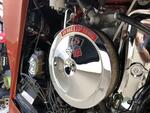





 C3 Engine Type