When you click on links to various merchants on this site and make a purchase, this can result in this site earning a commission. Affiliate programs and affiliations include, but are not limited to, the eBay Partner Network.
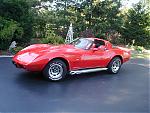
Got a 1969 small block C3 that I have had for about 6 months now. It's pretty great! I have noticed an annoying problem that I need to fix though, and wonder if anyone could help me get to the bottom of it.
I have trouble getting the engine to turn over a half hour to two hours after I last drive it. I don't have this problem if the car has sat for 8 hours while I work, or after it sits parked overnight. Oddly enough, I don't seem to have the problem if try to start the car say 5-10 minutes after I last parked it either (for example, running in and out of a store).
It is only when the engine has run, then sat for between 30 minutes and a couple hours, that I have this problem. Now, I can sometimes will the car to start. I will give it gas sporadically while cranking, and if I hear the faintest rumble, I can usually rhythmically press the pedal until the engine gets enough momentum/gas to turn over. But if I fail, then I have flooded the engine and I am stuck, as happened the other day.
Have you guys ever experienced this issue? If I had to guess, I would say there is a problem with the fuel line. The battery is fine, and power isn't an issue. And since I am able to (with a lot of effort) force the car to start by giving it a lot of gas, I am assuming the fuel line or pump must not have a clear, good flow to the engine. But I don't know.
It is worth noting that I also have to give the car gas in the morning to warm it up. It turns over in the mornings, but the car still requires me to feed it gas to get it really going.
What do you guys think the issue could be? What should I check? And how can I fix it?
Actually you are experiencing vaporlock or fuel percolation as one problem, the second maybe a carb problem such as a faulty choke. Let’s look at the hot start problem first. It’s not expensive or difficult to correct once you find out where the fuel system is picking up excess heat.
If you had a clear fuel line from the mechanical fuel pump to your carburetor you would likely see gas in the line and when the engine and underhood temps rise you would see bubbles in the tube indicating your fuel is being converted from a liquid to a gaseous State.
Other times the carburetor it’s self is soaking up heat and the fuel in the float bowels is turning too hot and percolation overflow is occurring.
The mechanical fuel pump can be picking up heat creating the vapor lock. The fuel line to the carburetor can be another and yet as I already mentioned the carburetor itself is the culprit.
Do you have a return line from your fuel pump back to the gas tank? If so you want to check this line and make sure it’s clean and clear and not constricted. Making sure your fuel system is free flowing as much as possible is very important.
check the fuel line from the pump to the Carb is not kinked, not up against the block or the head and intake. If you have an in-line fuel filter make sure it’s clean and free flowing. The best bet here is just install a new filter if you don’t know about that filter.
An old racers trick was to install spring loaded wooden clothes pins all long the fuel line for about 4 to 6 inches from the pump. Surprising this is a heat sink. You normally don’t think of wood as a eat sink but it is in this case.
Sometimes switching to an electric fuel pump eliminates any chance the mechanical pump is not acting as a heatsoak heating the fuel to the carb. When you switch pumps you can reroute the fuel line away from direct or near contact with the hot engine.
Another problem is not enough cool air under the hood. Look at this pretty much last on the list of things to check. Installing a better fan blade of even an electric fan can reduce underhood temperatures significantly.
A heat shield installed between the carb and the manifold, or a phenolic spacer to break any heatsink that may occur between the carb and manifold usually works to stop any fuel percolation in the carb.
This leads to the hard start in the morning, perhaps the fuel bowel/s are low from percolation. The other is a simple choke not properly working. Look at the carb when cold. Is the choke plate closed or open any amount? Let us know what you find.
does your choke work when you start it cold in the morning?
kinda sounds like that may be the problem, like its not dropping while cooling down(mid temp) so you have cold start issues.
or see if its working properly, you need to gap it right. if is open when it wont start.
get you a 1/4 inch carb phenolic insulator spacer to insulate your carb from your manifold.
you are percolating all your fuel away when the engine gets real hot.
if it is short runs to the store and it isn't totally up to temperature and you are only gone 5 minutes, it doesn't all percolate out, and will restart easier.
any longer then it does.
I had the same problem with my carb. you could hear it sizzle after shutting down the engine.
Had the same issue. I would smell gas and if I popped the hood I could hear it bubbling. Took off the air cleaner and saw the bubbles in the carb. Actually saw gas dripping onto the intake on the driver side once. Mine would also die on hard stops so I had the carb gone through and lowered the float and put in the correct leaner jets.
But this is the advice I got on this forum that literally changed my life- check to see if your heater hose is touching the fuel line.
Not sure your engine configuration- but my heater hose going to the heater core was resting on the fuel line from the pump to the carburetor. Pulled the hose forward and got about an inch of clearance.
Does the engine NOT turn over or just not start? If it doesn't turn over, then it may be a starter or starter solenoid heat soak issue. (common on GM starters). Make sure the heat shield is mounted on the solenoid.
Just went through this with mine and it sounds like it is boiling the fuel in carb the bowls and the engine is flooding as a result. You're having to pump the throttle to refill the bowls. After sitting a while the fuel evaporates and it starts normally. If you see black smoke from the exhaust after it starts and you smell gas, then that's another sign of the problem. If you have an aluminum intake the heat transfer from the engine is the main cause, combined with a hot day it is worse. Get a phenolic spacer and while you have the carb off rebuild it. I installed a 1/2" spacer on mine, so far no problems and no gas smell after its sat in the garage. Keep in mind that if you have a tight hood clearance you may need to make some adjustments to the air cleaner height. Mine had a 3" element and I had to shop around to find the right (K&N) filter with a 2.5" height to fit without hitting the underside of the hood since my aftermarket intake is higher than stock.
Also, check your oil. If the fuel has boiled and dumped into the intake, it will get past the rings and into the oil pan and your oil will smell like gas. You'll need to change the oil and probably the filter too.
What DUKE94 said is what I had a problem with. The starter would heat soak. Heat is resistance. I did about everything, then one day I took the garden hose and watered it down and it started with gusto. Starters do get wet and I didn't care because I have a shop full of starters. When I parked I would look for a hill, or have to push it, jump in and pop the clutch. I had the HD starter also. My problem was a heat soaked starter. NCRS has a bunch on this problem and they made heat shields to keep the exhaust heat from the starter.
A couple other posters described the hot engine boiling the gas out of the carb if it sat for a while after running. My big block in my 68 convert did the same thing, so that the carb was completely empty of gas and the engine had to crank for 30 -60 seconds for the mechanical fuel pump to re-fill the fuel bowels. I tried the insulating carb bases, but finally installed an electric fuel pump. When the engine has sat hot for a while I turn the key to "on" and let the fuel pump run for 10 seconds to re-fill the carb, then turn key to "start" and it starts immediately, instead of cranking for 30-60 seconds. Edelbrock makes an air gap intake manifold with an air space under the carb mounting area, I have not tried that to decrease the boil away of gas from the hot engine, but it might also be a way to go.
Hey guys! Thanks for all the responses. Incredibly helpful. So good to know what the problem is, as I think it is definitely fuel percolation due to heat. The problem has been especially bad lately, coinciding with the huge heat wave currently here in So Cal. So it totally makes sense that the fuel is bubbling in the line.
I took a few photos of the fuel line, carb, etc. I am pretty new to engine parts and maintenance, so I need some help spotting things amiss. Couple of things I do want to mention, as they may be relevant to the fuel percolation problem.
1.. My air cleaner is remarkably thin/small. This is due to the fact that the hood barely shuts as-is. I believe there are already some spacers under the carb, as you'll see from the carb sideview below. It's a catch 22, because my mechanic said more air would definitely help. But you guys are also making a good point that the spacers keep the carb away from the hot engine. So I am not sure what to do.
2. One photo below is of a kinked heat tube. I am not sure if the tube is related to the problem, but I did have an eye out for kinks as was suggested above, and thought this might be contributing. I will defer to you guys though.
(Fuel lines)
(Heat tube)
Last edited by BlankSlate; Aug 19, 2018 at 01:36 AM.
A few more pics. Don't know if ya'll can tell anything from them. The second pic is what I think (pretty sure, but just going off manual) is the fuel pump, leading up to the fuel filter.
One thing you will want to do is replace the rubber fuel line with solid line or at least steel braided.
It won't help with this issue you are having but rubber fuel line is a big no no and fire hazard on these cars.
2020 Corvette of the Year Finalist (performance mods)
2019 C3 of Year Winner (performance mods)
2016 C3 of Year Finalist
I had this problem and solved it a couple of ways.
1) Started with a 1/2" phenolitic wood spacer. I now use a 1" on my RPM intake but I have a L88 hood and plenty of clearance. If you have a stock hood measure the gap from the top of the wing nut and the hood using clay
2) old weber carb is same as new edelbrock. They dont like fuel pressure above 4.5 PSI, install a pressure regulator and fuel gauge
3) Only reason to replace old rubber fuel line is Ethanol gas eats rubber. At least get some Earls vapor guard hose in there go to solid line, edelbrock has a drop done banjo fitting that you can plumb to from the top of the fuel filter
4) I have edelbrock aluminum intakes and made sure to fill the exhaust crossover with block cement to prevent the exhaust heat from transferring to the carb. You may not need this but In SoCal you probably have your choke disconnected and it looks that way ithe pics
5) open the hood to let heat out if your stopping at a friends or your house, obviously you cant leave it open at the theatre
6) use starter fluid once the boiling issue is solved to prevent diluting your oil. If you have no fuel in your bowls starting it with fluid will help refill them faster than cranking the starter. Sometimes the check valve in the fuel pump can fail and the fuel will drain back out of the carb into the fuel l ines
Last edited by Rescue Rogers; Aug 19, 2018 at 08:10 PM.
I am such a newbie that it sounds like this may be a problem beyond my solving. I may take it back to my mechanic tomorrow. Will tell him that I have pretty much solved what this issue is though thanks to this forum.
It's been really helpful to get to figure out how the fuel works too, from the line to pump to filter to carb. Now you guys talk about the choke, that's where I get lost. Where is the choke? That's not the throttle, correct?
It happened again about an hours ago and I'm currently letting it cool for a few hours. Do you think this heater hose, which is touching the fuel line from the filter to the carb, is where the fuel might be boiling?
2020 Corvette of the Year Finalist (performance mods)
2019 C3 of Year Winner (performance mods)
2016 C3 of Year Finalist
its the upper flap on the front of the carbs primary side. If you look down the trhoat and move the throttle slightly you will see the bottom butterfly valve move, the rear is the secondary side and doesnt start to move until the carb meeets the vacuum requirement and the throttle is passing through half throttle or so. The choke also sets the throttle high idle . If you look on the passenger side at the bottom of the carb there is a cam and linkage that goes to the top front flap and it controls a lock out cam on the drivers side. The flap is open all the way with the choke off and closed with the choke on. It provides less air and more fuel for cold starts. If your mechanic isnt atleast 50 years old he probably knows less than you at this point
Last edited by Rescue Rogers; Aug 20, 2018 at 05:50 AM.
The rubber fuel line running from the plastic filter across the heater hose and on top of the valve cover are all contributing factors in the fuel getting heated.
Build or purchase a solid fuel line from the fuel pump, up to the filter.
Replace the plastic filter with a steel or aluminum type filter with fittings.
Run solid line from your filter up to your carburetor.
Keep the solid line from your pump to the filter as far away from the engine block as possible.
Keep the solid line from the filter to the carburetor as far away from the head as possible and run the fuel line as far above the intake as possible while running the line somewhere between the valve cover and carburetor.
There are many threads on this forum, with photos, that show how others have plumed their fuel lines.
Look at as many as you can and you will see a pattern of how it should be done.
Replace the aluminum spacer between your intake and carburetor with a 1/2" to 1" phoenlic spacer which will better insulate the carburetor.
CHECK HOOD CLEARANCE!!!
Check your starter cables especially the grounds to make sure they are tight and in good condition.
Your starter could be getting weak and heat soak will effect the efficiency of your starter.
Have your starter checked, and if needed, replace it with a good, high torque mini starter and think about adding a heat shield there as well.
Last edited by OldCarBum; Aug 20, 2018 at 01:25 PM.







 Hot Engine won't turn over