When you click on links to various merchants on this site and make a purchase, this can result in this site earning a commission. Affiliate programs and affiliations include, but are not limited to, the eBay Partner Network.
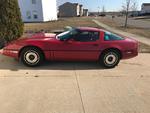
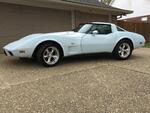
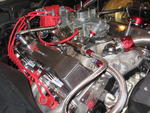
So here's the issue, refresh rebuild on the original 350 in a 79 Corvette. Now that I have it completed and running well, I've ran it around the block and it over heated to 220. It now has a new aluminum radiator and electric fans. New water pump and I just replaced the thermostat. Even with all this on it, still climbs over 200 on every run time. I was told that the new rebuilt block still has air in it and that I needed to leave the radiator cap off and run it to let the system burp for lack of a better word. I did that twice and what a mess.
After that burp method twice I'm still over heating. Asking you guys first before I do what I hate doing and have a shop look at it. We have a Corvette Shop local. I built the whole thing by myself so I hate when I have to allow someone else to work on it. With the new B&M Shifter I end up driving it into the garage anyway because the Tech doesn't know how to use a ratchet shifter.
So here's the issue, refresh rebuild on the original 350 in a 79 Corvette. Now that I have it completed and running well, I've ran it around the block and it over heated to 220. It now has a new aluminum radiator and electric fans. New water pump and I just replaced the thermostat. Even with all this on it, still climbs over 200 on every run time. I was told that the new rebuilt block still has air in it and that I needed to leave the radiator cap off and run it to let the system burp for lack of a better word. I did that twice and what a mess.
After that burp method twice I'm still over heating. Asking you guys first before I do what I hate doing and have a shop look at it. We have a Corvette Shop local. I built the whole thing by myself so I hate when I have to allow someone else to work on it. With the new B&M Shifter I end up driving it into the garage anyway because the Tech doesn't know how to use a ratchet shifter.
Any ideas guys? Anyone had this before?
Thanks
When you filled the radiator was the front end of the car lifted a few inches off the ground because you could of trap a air pocket in the line. When the car on a angle its keeps the air pockets out. Just a thought.
I saw this scenario a couple yrs ago on here after a fresh rebuild, new waterpump. Someone had purchased & installed the wrong waterpump. It was for a serpentine system.
Old generation pumps are to run ClockWise. Newer versions impellers run C.C.W.
Timing set correctly to Lars timing specs. Vacuum advance connected to manifold vacuum? Spring installed in lower radiator hose. Fans running backwards?
2020 Corvette of the Year Finalist (performance mods)
2019 C3 of Year Winner (performance mods)
2016 C3 of Year Finalist
All things listed above are great responses and are what I was thinking becasue I had cooling issues in the past
are the fans coming on.....put you had behind it to feel the direction
are the going in the correct direction for how they are mounted....... same as above
is the thermostat working
is the spring in the lower radiator hose...give it a squeeze, it should be firm from end to end
is the water pump spinning the correct direction for the way it is designed to pump....this you have to check the part number
is the cooling system blocked in the radiator....once the thermostat opens you can feel the fluid moving through the hose and the temperature move tot the lower hose
its not actually overheating, your temp sender isnt correct for the gauge...... I added a gauge in the upper radiator hose and a separate mechanical gauge on the opposite head along with a Willcox adjustable resistor for the gauge to dial it in. I use the 2 gauges to verify the temp and an Infrared gun to verify and do spot temp checks
Flush your block and cooling system. Green fluid going in should be green fluid coming out. If it is discolored in any way, buy a cooling system flush like prestone or your favorite and add it to your system and drive it for a couple of hours over the course of a day or two, then flush it out and repeat. I did this twice, then pulled the radiator and back flushed all the crap that got trapped in it. Installed and added the coolant flush again. drove it, and pulled it apart and back flushed the radiator again. This time all was clear. To back flush the radiator i used a garden hose and a rag to plug the outlet tube that had the hose stuffed in it. TO drain the block I pulled both drain plugs on the lower half of the block to get the sludge out of the block itself. Its mandatory or your just playing with yourself
these are mostly easy to verify except for the thermostat. the easiest way is to pull it and run the car and see what the temp does. it will still climb but very slowly and will stop at the level the car is cooling at. It should stop below 200 for a drive down the block. if it doesnt its another component.
You are going to have to check in stages to track it down....I really doubt you have and air pocket preventing the water from moving. its forced through the motor by the pump and any air pockets can be forced out on a hill climb
Last edited by Rescue Rogers; Aug 23, 2020 at 08:08 AM.
Wow all good places to look. I've done a lot of all this already except a few like elevating the front end. Thermostat is new and I tested in hot water (used the wife's pan, shsss). I've taken the housing off and poured the water directly in. Also the reason for a flashing the system, new rebuilt engine, new aluminum radiator. One thing is I'm not sure I replace the spring in the host. Does that really need to be there for flow and cooling or for support? Last idea listed above is the gauge is an aftermarket and is not connected to the sender it came with. That could be an issue as well.
Let me try some of these places to look and get back to all of you. Thanks.
I saw this scenario a couple yrs ago on here after a fresh rebuild, new waterpump. Someone had purchased & installed the wrong waterpump. It was for a serpentine system.
Old generation pumps are to run ClockWise. Newer versions impellers run C.C.W.
I would rule this out simply becasue there are no 3/4" shaft reverse rotation water pumps out there.....although I have seen this a half dozen times over the years. had it happen a few months ago on a K-5 blazer that my buddies swapped a Blueprint crate engine into......they used the old original V-belt pump on the serpentine system (1989) AND the freakin fan Start it up cold and it would rocket up to 230 in minutes!
Wow all good places to look. I've done a lot of all this already except a few like elevating the front end. Thermostat is new and I tested in hot water (used the wife's pan, shsss). I've taken the housing off and poured the water directly in. Also the reason for a flashing the system, new rebuilt engine, new aluminum radiator. One thing is I'm not sure I replace the spring in the host. Does that really need to be there for flow and cooling or for support? Last idea listed above is the gauge is an aftermarket and is not connected to the sender it came with. That could be an issue as well.
Let me try some of these places to look and get back to all of you. Thanks.
The spring absolutely has to be in the lower hose to keep it from collapsing........
Yes...verify with a different gauge (parts store cheapo-screw into head or intake) or shoot with an infrared gun.
Lastly.....timing is VERY important.....where is your set at?
The most important thing you can do is find, borrow or buy an Infrared non-contact temperature gauge. If you did an engine rebuild, you likely replaced the temp gauge sending unit. If so, you engine may NOT be overheating; the problem may be that the gauge reading is now in error because of a defective temp sender unit.
Comparing the C3's temp reading to the readings obtained from an IR temp sensor will give you some measure of confidence (or lack, thereof) in the car's gauge reading. And, BTW, if the gauge in the car is 'working', the gauge itself is not the problem. But, you need to confirm that the car's temp readings are either correct or in error before trying to tackle a 'non-existent' overheating problem.
2020 Corvette of the Year Finalist (performance mods)
2019 C3 of Year Winner (performance mods)
2016 C3 of Year Finalist
I just re read this real quick. And we overlooked the air dam and the seals a the radiator. If they aren’t on the air can’t get up into the radiator well to supply cooling air when your car gets up to speed
All of the above. Maybe a long shot but since this is a new rebuild, are you sure you have the correct head gasket and none of the water passages are blocked.
If you haven't boiled over or lost coolant because of excessive heat, you need to verify that your engine is actually reaching the temps shown on your gauge. It will only be (reasonably) accurate if the sender is working properly and calibrated properly. Many 'new' senders are neither.....
I put a new temp sender in when I installed my new heads. But also because I run EFI I run a separate engine coolant sensor for the EFI computer. Watching the screen from the EFI I was able to confirm that the gauge on the center cluster is 20 degrees off. Reading high that is.
before you totally loose your **** over this. Check to see if your guage is correct.
x2. Even a $25 non electric temp gauge from any auto parts store can solve this, dont need to mount it just run it inside and watch, i bet its not running as hot as you think. Common for C3s and even C4s
I am such a fan of the stock gauges that I have Oil Pressure mounted to the firewall and a Water Temp thermometer screwed into my intake right next to the thermostat
So the heating issue was identified. I purchased a new aluminum radiator that came with an aluminum fan shroud and two electric fans. I actually broke down and called a local garage and the guy was over confident he could fix anything. So he asked "Are the fans cheap twainesse?", umm they were. I replaced the fans with 80 Corvette electric fans, and you can feel the difference. Problem solved. Aluminum radiator and shroud were still good, but the fans were junk. Thanks everyone for the suggestions. I'm still told by old timers that 220 is normal on the highway.
So the heating issue was identified. I purchased a new aluminum radiator that came with an aluminum fan shroud and two electric fans. I actually broke down and called a local garage and the guy was over confident he could fix anything. So he asked "Are the fans cheap twainesse?", umm they were. I replaced the fans with 80 Corvette electric fans, and you can feel the difference. Problem solved. Aluminum radiator and shroud were still good, but the fans were junk. Thanks everyone for the suggestions. I'm still told by old timers that 220 is normal on the highway.
220 is not normal on the highway.......180-190 is.









 Over Heating on New Build
















 Start it up cold and it would rocket up to 230 in minutes!