When you click on links to various merchants on this site and make a purchase, this can result in this site earning a commission. Affiliate programs and affiliations include, but are not limited to, the eBay Partner Network.
For years I used the rubber end seals with RTV when installing intake manifolds. About 25 years ago I used rubber end seals and RTV to install a Edelbrock 2101 on my 71 L48, never a leak.
When I rebuilt the L48 I installed a new 2101 and succumbed to the hype and just used RTV. I used Permatex Ultra Black gasket maker and made 1/4" beads on front and back walls, following Edelbrock 's instructions. Guess what? It leaks... from the back...not much but still a leak. Front seems OK. So... getting ready to redo it and thinking of using the rubber end seals. Did I use the wrong RTV? Maybe larger beads?
When using such sealants, it requires placing the intake on the block and inserting all the bolts down FINGER TIGHT and letting the sealant cure overnight. THEN you apply torque to the bolts...in stages....so they pull down evenly. If the surfaces which seal are cleaned well before installing, they should not leak.
When intakes (or other such parts) are fully assembled with 'soft', uncured sealant, there is no resistance left in the sealant to prevent oil from wicking out. Also, the soft sealant actually acts as a lubricant (rather than a sealant) until it is cured.
Long shot: can you re-clean the leaky area with acetone.....
then force fresh rtv into the leaky area with a flexible body filler spreader or even your fingers....
the let the new rtv cure at least 24 hrs before starting the engine.
My method is to run the bead of high temp silicone, allow this to skin and then put a wipe of fresh silicone over this then tighten down the manifold as 7T1vette describes. So far I have not had a leak using this method. I believe the fresh sealant on the skinned allows the sealant to "key" to the surfaces better. JMPO
I have zero experience doing this, but have been reading up as it is on my "to-do" list.
Many folks here have recommended Permatex "The Right Stuff" for sealing china walls. Don't know how it differs from Ultra Black.
I have zero experience doing this, but have been reading up as it is on my "to-do" list.
Many folks here have recommended Permatex "The Right Stuff" for sealing china walls. Don't know how it differs from Ultra Black.
I could be 100% wrong, but I believe The Right Stuff can be put in service much sooner than Ultra Black. Everything I've done with ultra black needs 24 hours to cure before driving.
Long shot: can you re-clean the leaky area with acetone.....
then force fresh rtv into the leaky area with a flexible body filler spreader or even your fingers....
the let the new rtv cure at least 24 hrs before starting the engine.
I thought about doing that, but decided to just redo it.
When using such sealants, it requires placing the intake on the block and inserting all the bolts down FINGER TIGHT and letting the sealant cure overnight. THEN you apply torque to the bolts...in stages....so they pull down evenly. If the surfaces which seal are cleaned well before installing, they should not leak.
This makes sense. But thinking of switching to the "Right Stuff" for faster cure time.





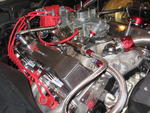



 China wall seal failed