



Brake Options
Thread Starter
Racer


Joined: Mar 2008
Posts: 482
Likes: 23
 Brake Options
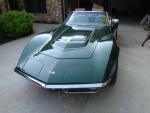
I wanted to see if anyone could provide some feedback on best options for repairing the brakes? I have an original 70 LT-1 and have not had it out and really put any miles on it in the last couple of years. The fronts are sticking a bit and I don't know that the brakes have ever been addressed on the car. I know there are a lot of options from rebuilding the original calipers, replacing them altogether, upgraded rotors, etc. I just want to get it back to being a fun daily driver. What options have you taken (good or bad) and which direction would you suggest? Any feedback is appreciated!
Racer


Joined: Mar 2011
Posts: 490
Likes: 99
From: The South
Need more information to really give you a good answer. When you say the front brakes are "sticking" - what do you mean? Do you have a solid pedal? Are the rotors simply corroded from not being used? If that's it, just drive it - the pads will clean the rotors up. If the car has truly been sitting for a long time, you may have other issues, but first lets find out if your brake system is holding pressure - so - do you have a firm brake pedal?
Le Mans Master


Joined: Aug 2017
Posts: 8,336
Likes: 2,809
From: Cool Northern Michigan
A basic brake "tune-up" would be new pads, four new rubber hoses and a complete flush with DOT3. Then go from there to see if the calipers, rotors or master have issues.
You need to take a turkey baster and remove the old brake fluid from the MC. But not every ounce. Leave a little in the bottom to avoid air pockets later.
Top-off the MC w/ new DOT3.
Change out the four hoses. As you are doing that, new, clean fluid will begin flushing the system so keep an eye on the MC fluid level.
Install new pads by squeezing caliper pistons with bleeders cracked open and a piece of clear hose in place.
You can let gravity flush everything for you. Or purchase a Hand Vacuum pump and start at the right rear outer bleeder. As soon as the fluid runs clear at each corner of the car, you are good to go. Never touch the brake pedal until done.
You need to take a turkey baster and remove the old brake fluid from the MC. But not every ounce. Leave a little in the bottom to avoid air pockets later.
Top-off the MC w/ new DOT3.
Change out the four hoses. As you are doing that, new, clean fluid will begin flushing the system so keep an eye on the MC fluid level.
Install new pads by squeezing caliper pistons with bleeders cracked open and a piece of clear hose in place.
You can let gravity flush everything for you. Or purchase a Hand Vacuum pump and start at the right rear outer bleeder. As soon as the fluid runs clear at each corner of the car, you are good to go. Never touch the brake pedal until done.
Last edited by HeadsU.P.; Nov 17, 2020 at 09:46 AM.
Le Mans Master
Joined: Aug 2017
Posts: 8,336
Likes: 2,809
From: Cool Northern Michigan
While you are waiting to order parts, go ahead spritz the following with PB Blaster and let them soak for days:
The rubber hose fittings on both ends.
All six bleeder screws.
And all eight caliper mounting bolt heads. (just in case)
The caliper pad pins / cotter pins.
The rubber hose fittings on both ends.
All six bleeder screws.
And all eight caliper mounting bolt heads. (just in case)
The caliper pad pins / cotter pins.
1967 Pedal Car Champion

Joined: Mar 2020
Posts: 9,034
Likes: 4,175
From: US-PNW
... and examine the caliper surfaces immediately around each piston and seal for seepage or corrosion buildup. If you spot any, that caliper needs internal parts work.

Safety Car


Joined: Sep 2005
Posts: 4,213
Likes: 643
From: Orange County Ca
Spongy usually means air in the system.
Can you see any leaks at the calipers, hoses, etc.?
If not, a good bleeding might fix it. Flushing the system while you're at it is a good idea if the fluid is old or dark.
Then, the options are endless.
Remember, whenever you change anything on a 50 yr old car, there is the possibility that you'll break something which could lead to a lot of head aches and $$$.
Anymore, if it ain't broke, I don't fix it.
Can you see any leaks at the calipers, hoses, etc.?
If not, a good bleeding might fix it. Flushing the system while you're at it is a good idea if the fluid is old or dark.
Then, the options are endless.
Remember, whenever you change anything on a 50 yr old car, there is the possibility that you'll break something which could lead to a lot of head aches and $$$.
Anymore, if it ain't broke, I don't fix it.
Corvette Stories
The Best of Corvette for Corvette Enthusiasts

150 hp to 1,250 hp: Every Corvette Generation Compared by the Specs That Matter
Joe Kucinski
8 Coolest Corvette Pace Cars (and Replicas) of All Time
Verdad Gallardo
Top 10 Corvette Engines RANKED by Peak Torque (70+ Years of Muscle!)
Joe Kucinski
Corvette ZR1X Will Be Pacing the Indy 500, And Could Probably Race, Too!
Verdad Gallardo
Top 10 Corvettes Coming to Mecum Indy 2026!
Brett Foote
Top 10 C9 Corvette MUST-HAVES to Fix These C8 Generation Flaws!
Michael S. Palmer
10 Revolutionary 'Corvette Firsts' Most People Don't Know
Joe Kucinski
5 Reasons to Upgrade to an LS6-Powered Corvette; 5 Reasons to Stay LT2
Michael S. Palmer
2027 Corvette vs The World: Every C8 vs Its Closest Competitor
Joe Kucinski
Team Owner


Joined: Jan 2006
Posts: 37,637
Likes: 3,116
From: Crossville TN
Also buy a good quality 6-point crowfoot hex wrench for the brake line fittings. If you don't soak the heck out of those fittings with PB Blaster [for a few days] and then use a good crowfoot wrench (which will not spread open under heavy torque loads when breaking those fittings free), you will damage your present brake lines and need to replace them, too.
Take your time....do it right....and you will have a successful outcome without 'breaking the bank'.
Take your time....do it right....and you will have a successful outcome without 'breaking the bank'.
Last edited by 7T1vette; Nov 18, 2020 at 12:06 AM.


Le Mans Master
Joined: Aug 2017
Posts: 8,336
Likes: 2,809
From: Cool Northern Michigan
I have no idea.
What my post refers to is basic diagnostics of what parts need to be replaced and which don't. And trying to keep things simple, then see what's lurking later.
Most of those old disc brake rotors are / were very meaty. So no need to replace in most cases until they do not meet specs anymore. If one can avoid replacing rotors, you not only save money, but the extra labor of drilling out rivets and checking for rotor run-out is a blessing. New pads will adapt to old rotors easily.
Supposedly, rubber brake lines life span is 10 yrs. Most of us change them out after 25-30-40 yrs. They have a bad reputation of collapsing internally, unseen by the naked eye. And that in itself is almost as bad as a rupture. So it just makes sense to swap them out, safety & hardship. And its cheap at $40 a set.
New pads, hoses. Hopefully the MC is ok, as well as the Proportioning Valve. Calipers are always questionable on C3s, but this is a good start for the O.P.
Also, by soaking everything down with PB Blaster in advance, you are less likely to start breaking fittings at the hose ends. If a bleeder screw snaps off, . . . .well . . . . . you know . . . . Mo $$$
What my post refers to is basic diagnostics of what parts need to be replaced and which don't. And trying to keep things simple, then see what's lurking later.
Most of those old disc brake rotors are / were very meaty. So no need to replace in most cases until they do not meet specs anymore. If one can avoid replacing rotors, you not only save money, but the extra labor of drilling out rivets and checking for rotor run-out is a blessing. New pads will adapt to old rotors easily.
Supposedly, rubber brake lines life span is 10 yrs. Most of us change them out after 25-30-40 yrs. They have a bad reputation of collapsing internally, unseen by the naked eye. And that in itself is almost as bad as a rupture. So it just makes sense to swap them out, safety & hardship. And its cheap at $40 a set.
New pads, hoses. Hopefully the MC is ok, as well as the Proportioning Valve. Calipers are always questionable on C3s, but this is a good start for the O.P.
Also, by soaking everything down with PB Blaster in advance, you are less likely to start breaking fittings at the hose ends. If a bleeder screw snaps off, . . . .well . . . . . you know . . . . Mo $$$
Last edited by HeadsU.P.; Nov 18, 2020 at 09:38 AM.
1967 Pedal Car Champion
Joined: Mar 2020
Posts: 9,034
Likes: 4,175
From: US-PNW
The disc brake system and components on Corvettes are just about identical from '65 to '82 with a few exceptions. For the most part your '78 is the same as my '72; the process and things to look out for are the same.
