



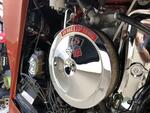



What are these?
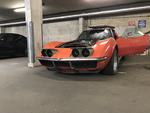
Burning Brakes

Joined: Dec 2018
Posts: 870
Likes: 204
From: London UK

Some kind of water diverter perhaps?
Edit, don't think it's a factory part, maybe leaky door seal and bubba added them to stop the seat getting soaked?
Edit, don't think it's a factory part, maybe leaky door seal and bubba added them to stop the seat getting soaked?
Last edited by Dazaa Rafae Aman; Dec 27, 2020 at 08:15 AM.
Race Director


Joined: May 2006
Posts: 18,729
Likes: 2,579
Corvette Stories
The Best of Corvette for Corvette Enthusiasts

Top 10 Most Expensive Corvettes Ever Sold on Bring A Trailer
Brett Foote
10 Things Every Corvette Owner Needs (2026 Edition)
Michael S. Palmer
8 Most "Only Corvette Owners Understand" Quirks and Problems
Pouria Savadkouei
10 Reasons the C6 Z06 is Still A Performance Benchmark After 20 Years
Joe Kucinski
How Much Horsepower Every Corvette Engine "LOST" in 1972
Joe Kucinski
Top 10 DOs and DON'Ts for Protecting Your Convertible Top!
Michael S. Palmer
Top 10 Most Explosive Corvettes Ever Made: Power-to-Weight Ratio Ranked!
Joe Kucinski
150 hp to 1,250 hp: Every Corvette Generation Compared by the Specs That Matter
Joe Kucinski
8 Coolest Corvette Pace Cars (and Replicas) of All Time
Verdad Gallardo
Pro


Joined: Sep 2006
Posts: 547
Likes: 13
From: Carlstadt NJ




Melting Slicks

Joined: May 2015
Posts: 2,365
Likes: 428
From: Cape Girardeau Missouri
Almost hard to believe that sunflower yellow paint and dark green vinyl was a "recommended" combination in '71.
I've always read that the early C3 convertibles had especially 'twisty" frames. These various attempts to essentially wedge rear of the door into position certain shows how engineers attempted to make a blatant problem somewhat less obvious. It almost makes me wonder if there were sometimes problems opening doors when parked on a very uneven surface.

I've always read that the early C3 convertibles had especially 'twisty" frames. These various attempts to essentially wedge rear of the door into position certain shows how engineers attempted to make a blatant problem somewhat less obvious. It almost makes me wonder if there were sometimes problems opening doors when parked on a very uneven surface.

Thread Starter
Drifting

Joined: Aug 2017
Posts: 1,433
Likes: 351
Almost hard to believe that sunflower yellow paint and dark green vinyl was a "recommended" combination in '71.
I've always read that the early C3 convertibles had especially 'twisty" frames. These various attempts to essentially wedge rear of the door into position certain shows how engineers attempted to make a blatant problem somewhat less obvious. It almost makes me wonder if there were sometimes problems opening doors when parked on a very uneven surface.
I've always read that the early C3 convertibles had especially 'twisty" frames. These various attempts to essentially wedge rear of the door into position certain shows how engineers attempted to make a blatant problem somewhat less obvious. It almost makes me wonder if there were sometimes problems opening doors when parked on a very uneven surface.


Old Fart Pilot


Joined: Apr 2010
Posts: 1,920
Likes: 990
From: Spokane, WA
To me, it looks more like part #17 is inside the door and part #4 is on the outside edge...
Don't have that on my '71 coupe and the AIM shows it's a convertible only item for that year...
Don't have that on my '71 coupe and the AIM shows it's a convertible only item for that year...
Last edited by nwav8tor; Dec 28, 2020 at 02:10 AM.