









1970 Stingray

Thread Starter
Advanced


Joined: Jul 2017
Posts: 76
Likes: 23
From: Wadmalaw Island, South Carolina
 1970 Stingray
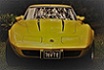
Good morning. I'm in the process of purchasing a 3 owner, 1970 Stingray coupe, Monza Red in body color. I would like some advice regarding sale price since I have no idea what a fair offer would be to the seller. I've taken the step to have it appraised by a reputable classic automotive appraisal company recommended by Hemmings and will not receive the document until sometime next week. I thought possibly, current and previous owners, of this model and year would assist me to also arrive at a fair offer.
Here's what we discovered yesterday during the inspection. The fiberglass body is straight and no damage, The frame is free of rust and is straight and true The hood was replaced with an LT1 style hood and not original to the car, but it looks very nice. The paint is in a condition to be expected for a car this old. The car has been repainted I suspect many years ago and shows signs of bubbling, minimal stress cracks, minimal chips and minor over spray, it should get a frame on repaint to bring it back to showroom condition. The t-tops are in good shape, but no longer align in fitment, but can be fixed with proper adjustment. Odometer reads 36,000 miles and shows no signs of tampering. The engine,350 CI / 350 HP identification does not show numbers matching and possibly not original. According to the appraiser he suspects the original heads were replaced and the block was shaved due to the unleaded gas used during it's lifetime and causing them to warp. The original Holly carburetor is replaced with a Rochester 4 barrel and the manifold is an aftermarket Edelbrock. Appraiser speculated these components were replaced during the heads being rebuilt.Further engine inspection from underneath revealed oil pan and transmission seal failure. Bushings were cracked, steering unit leaked fluid and exhaust pipes in average condition. Engine, 4 speed manual transmission, PS, PB and AC worked excellent during test drive, but AC fan mechanism was inoperable.and would not blow air from the vents.Tires have plenty of tread, but have manufacturing date of 2004, they need to be replaced for safety reasons. Black interior original and average condition with a crack on top of dash. Flip up headlights and windshield wiper cover are functional.
The preliminary opinion of the appraiser is it's a nice car to own and I should pursue the purchase, " you won't be sorry" owning this car.
I'm not concerned investing in this car to bring it back to showroom condition, I just need a starting point for how much I should consider offering the seller and not insult him, he's an incredible gentleman and former Vietnam Marine Master Sargent who is suffering from a debilitating illness and I wish to let him enjoy the car after I restore it back to original condition when I take him for a ride and let him drive it if he chooses too.
Any advice regarding fair price to seller, from the members who own or recently sold this model is greatly appreciated. Those who wish to advise can, preferably, email me, brucei@chesscg.com
Thank you in advance for the guidance
Bruce Iannatuono
Here's what we discovered yesterday during the inspection. The fiberglass body is straight and no damage, The frame is free of rust and is straight and true The hood was replaced with an LT1 style hood and not original to the car, but it looks very nice. The paint is in a condition to be expected for a car this old. The car has been repainted I suspect many years ago and shows signs of bubbling, minimal stress cracks, minimal chips and minor over spray, it should get a frame on repaint to bring it back to showroom condition. The t-tops are in good shape, but no longer align in fitment, but can be fixed with proper adjustment. Odometer reads 36,000 miles and shows no signs of tampering. The engine,350 CI / 350 HP identification does not show numbers matching and possibly not original. According to the appraiser he suspects the original heads were replaced and the block was shaved due to the unleaded gas used during it's lifetime and causing them to warp. The original Holly carburetor is replaced with a Rochester 4 barrel and the manifold is an aftermarket Edelbrock. Appraiser speculated these components were replaced during the heads being rebuilt.Further engine inspection from underneath revealed oil pan and transmission seal failure. Bushings were cracked, steering unit leaked fluid and exhaust pipes in average condition. Engine, 4 speed manual transmission, PS, PB and AC worked excellent during test drive, but AC fan mechanism was inoperable.and would not blow air from the vents.Tires have plenty of tread, but have manufacturing date of 2004, they need to be replaced for safety reasons. Black interior original and average condition with a crack on top of dash. Flip up headlights and windshield wiper cover are functional.
The preliminary opinion of the appraiser is it's a nice car to own and I should pursue the purchase, " you won't be sorry" owning this car.
I'm not concerned investing in this car to bring it back to showroom condition, I just need a starting point for how much I should consider offering the seller and not insult him, he's an incredible gentleman and former Vietnam Marine Master Sargent who is suffering from a debilitating illness and I wish to let him enjoy the car after I restore it back to original condition when I take him for a ride and let him drive it if he chooses too.
Any advice regarding fair price to seller, from the members who own or recently sold this model is greatly appreciated. Those who wish to advise can, preferably, email me, brucei@chesscg.com
Thank you in advance for the guidance
Bruce Iannatuono
Just another Corvette guy


Joined: Feb 1999
Posts: 8,518
Likes: 3,865
From: Palm Springs, CA.
From your limited description I'd call this car between $14-$18K.
Many variables here, of course, but if the car is much worse, I'd drop my bottom end to $10K, if the car is much better I might raise the top to as high as $26K.
Like Mike says, pics and a seller's starting point for price would help a great deal.
Cheers, Greg

Many variables here, of course, but if the car is much worse, I'd drop my bottom end to $10K, if the car is much better I might raise the top to as high as $26K.
Like Mike says, pics and a seller's starting point for price would help a great deal.
Cheers, Greg
Safety Car


Joined: May 2008
Posts: 3,751
Likes: 719
From: Lafayette Louisiana
Agree with Greg.
I respect you wanting to pay a fair market price to the Gentleman, you are a good guy.
I suggest you triangulate a price from:
1. completed ebay sales; advanced search, sold button, the completed sales, numbers in green.
2. Haggerty C3 price guide
3. Corvette DNA pricing guide
4. Mecum auctions.
You might show him your data too and why you can offer what you can.
The 2 big items that swing the price most for me anyway is NOM engine (like it or not, that is the market now) and how much and severity of rust (frame rust and windshield frame rust, particularly under the windshield glass which is hard to see sometimes)
Good luck and hope this might help.
I respect you wanting to pay a fair market price to the Gentleman, you are a good guy.
I suggest you triangulate a price from:
1. completed ebay sales; advanced search, sold button, the completed sales, numbers in green.
2. Haggerty C3 price guide
3. Corvette DNA pricing guide
4. Mecum auctions.
You might show him your data too and why you can offer what you can.
The 2 big items that swing the price most for me anyway is NOM engine (like it or not, that is the market now) and how much and severity of rust (frame rust and windshield frame rust, particularly under the windshield glass which is hard to see sometimes)
Good luck and hope this might help.

Team Owner


Joined: Jun 2001
Posts: 23,367
Likes: 1,061
From: Virginia USA
I don't know about the heads warping because of unleaded gas. Led was added to gas in the day to lubricate the valve seats especially the exhaust valves. Once unleaded became the norm you had three options to keep your car on the road. Have the heads worked to install hardened valve seats, replace the heads entirely with hardened valve seats or aluminum heads or add lead to your gas each time you filled up.
A 1970 350-300hp is the L46 option. It should have the q-jet with a cast iron intake. Only the LT1 SB came from the factory with the Holley.
I suggest contacting your local Corvette Club and take one of their knowledgeable members to look the car over if you are wanting numbers matching, factory original. If that's not a concern of yours then just make sure there is no bird cage rust. Yes, Corvettes can rust and create a very dangerous situation as the body will hide a lot of it and look showroom fresh. A Corvette guy can point to the problem areas that will determine if the bird cage/frame is good or not. Pay attention to the frames trailing arm kick-ups as well. Just looking at the frame rails is not enough. Also ask the owner if you can remove the A pillar trim panels (near your feet) for rust inspection. This will tell you how good/bad the bird cage condition is.
Numbers matching great condition I'd say between $25-$30.
Non-numbers matching great condition I'd say between $15-$20
Anything less than A1 great condition of course the value goes down. By your description and depending if the seller is selling it as a number matching car I'd say
Number matching - Be very careful
Non-numbers matching in the condition you described and not knowing the rust situation $15 grand tops.
A 1970 350-300hp is the L46 option. It should have the q-jet with a cast iron intake. Only the LT1 SB came from the factory with the Holley.
I suggest contacting your local Corvette Club and take one of their knowledgeable members to look the car over if you are wanting numbers matching, factory original. If that's not a concern of yours then just make sure there is no bird cage rust. Yes, Corvettes can rust and create a very dangerous situation as the body will hide a lot of it and look showroom fresh. A Corvette guy can point to the problem areas that will determine if the bird cage/frame is good or not. Pay attention to the frames trailing arm kick-ups as well. Just looking at the frame rails is not enough. Also ask the owner if you can remove the A pillar trim panels (near your feet) for rust inspection. This will tell you how good/bad the bird cage condition is.
Numbers matching great condition I'd say between $25-$30.
Non-numbers matching great condition I'd say between $15-$20
Anything less than A1 great condition of course the value goes down. By your description and depending if the seller is selling it as a number matching car I'd say
Number matching - Be very careful
Non-numbers matching in the condition you described and not knowing the rust situation $15 grand tops.

CF Community Team

Joined: Mar 2007
Posts: 9,320
Likes: 359
From: Delaware
St. Jude Donor '25
Corvette Stories
The Best of Corvette for Corvette Enthusiasts

Top 10 Most Explosive Corvettes Ever Made: Power-to-Weight Ratio Ranked!
Joe Kucinski
150 hp to 1,250 hp: Every Corvette Generation Compared by the Specs That Matter
Joe Kucinski
8 Coolest Corvette Pace Cars (and Replicas) of All Time
Verdad Gallardo
Top 10 Corvette Engines RANKED by Peak Torque (70+ Years of Muscle!)
Joe Kucinski
Corvette ZR1X Will Be Pacing the Indy 500, And Could Probably Race, Too!
Verdad Gallardo
Top 10 Corvettes Coming to Mecum Indy 2026!
Brett Foote
Top 10 C9 Corvette MUST-HAVES to Fix These C8 Generation Flaws!
Michael S. Palmer
10 Revolutionary 'Corvette Firsts' Most People Don't Know
Joe Kucinski
5 Reasons to Upgrade to an LS6-Powered Corvette; 5 Reasons to Stay LT2
Michael S. Palmer
Safety Car

Joined: Feb 2012
Posts: 4,705
Likes: 983
From: Orlando FL
Seller MUST have some number in mind. He`d have to give it to me to go any further.
"Make an offer".... without knowing what he has in mind? Not gonna play thay game.
To me, that says he doesn`t really want to sell, unless I offer something ridiculously high.
"Make an offer".... without knowing what he has in mind? Not gonna play thay game.
To me, that says he doesn`t really want to sell, unless I offer something ridiculously high.
Last edited by oldgto; Feb 26, 2021 at 08:05 PM.

Pro


Joined: Aug 2010
Posts: 648
Likes: 452
From: Napa, CA
I question the appraisers knowledge as well. He’s certainly not a corvette guy. Could you please tell us what state(s) you and the seller are in? I know some on this board say it doesn’t matter, the retail price is the retail price. However, I disagree, it may be true for the wholesale buyer/seller, but private retail values may vary widely and depend on a great many variables, including where it’s located.
Thread Starter
Advanced
Joined: Jul 2017
Posts: 76
Likes: 23
From: Wadmalaw Island, South Carolina
When I first spoke to the seller he was implicit the car was an LT1 model. I must admit I'm more of an enthusiast car collector than having knowledge of the mechanics. I know enough to stay out of trouble, but I leave the diagnostics to the experts.
I guess the reason I'm confused is what I expected was different from what I saw. We were able to get under the car and I wrapped on the frame rails with my knuckle and the sound was solid.The visual inspection underneath did notshow any signs of rust or deterioration .
Your description stating "1970 350-300hp" really concerns me, since the valve cover sticker claims it's a 350-350hp. I'm wondering if the valve cover sticker is accurate to the car.
The Holley carburetor was supposed to be on this car, but when we discovered it to be a Rochester 4 barrel we realized it wasn't an LT1 model.
I greatly appreciate your input and your estimates based on condition are really helpful.
I guess the reason I'm confused is what I expected was different from what I saw. We were able to get under the car and I wrapped on the frame rails with my knuckle and the sound was solid.The visual inspection underneath did notshow any signs of rust or deterioration .
Your description stating "1970 350-300hp" really concerns me, since the valve cover sticker claims it's a 350-350hp. I'm wondering if the valve cover sticker is accurate to the car.
The Holley carburetor was supposed to be on this car, but when we discovered it to be a Rochester 4 barrel we realized it wasn't an LT1 model.
I greatly appreciate your input and your estimates based on condition are really helpful.
Thread Starter
Advanced
Joined: Jul 2017
Posts: 76
Likes: 23
From: Wadmalaw Island, South Carolina
We both live on barrier islands located across from each other in South Carolina.
The appraiser is employed by AAG,Inc an insurance carrier that insures classic cars and was referred to me by Hemmings. I have to admit I'm a rookie when it comes to classic cars.
I have, prior to considering the purchase of this car, only purchased the newest versions of high horsepower cars. My current track toy is a 2017 Z06 with the Z07 upgrade. I only drive it on the track because I find it too boring to play with it on the public roads
The 1970 Corvette intrigued when the seller told me it was LT1, only to find out it was nothing of the kind. Hence the reason for my outreach to men who have knowledge of this model to assist me to evaluate pricing in addition to an appraisal. I feel the response from this type of group will reinforce my offer, which I'm beginning to believe is much less than I originally thought.
The appraiser is employed by AAG,Inc an insurance carrier that insures classic cars and was referred to me by Hemmings. I have to admit I'm a rookie when it comes to classic cars.
I have, prior to considering the purchase of this car, only purchased the newest versions of high horsepower cars. My current track toy is a 2017 Z06 with the Z07 upgrade. I only drive it on the track because I find it too boring to play with it on the public roads
The 1970 Corvette intrigued when the seller told me it was LT1, only to find out it was nothing of the kind. Hence the reason for my outreach to men who have knowledge of this model to assist me to evaluate pricing in addition to an appraisal. I feel the response from this type of group will reinforce my offer, which I'm beginning to believe is much less than I originally thought.


Safety Car
Joined: May 2008
Posts: 3,751
Likes: 719
From: Lafayette Louisiana
Good book, LOL's!

And some LT-1 infoUpdated 2-16-2021 Here is a great list I saved from a posting here:
There are a few things that only a LT-1 would have , some are pretty easy to change out and some are not very easy at all.in no particular order.
1st. No 1970 or 1971 LT-1 had A/C
2nd. Emission sticker on fire wall behind master cylinder should have letters AX on upper left corner for a 71.
3rd. All LT-1's are 4 speeds. (M20 was std , M21/M22 were optional)
4th. Tach has 6,500 RPM red line on 1970 & 1971 and on 72's w/o AC
5th. All 71 LT-1's came with A.I.R. system. If removed should still have manifolds with holes for the tubes, Car may have headers and if so ask to see old manifolds.
6th. LT-1's had copper radiator W/O a overflow canisiter on the passanger side fenderwell. There should also be no holes where one had been mounted.
7th. All 70 / 71 LT-1's had Tranisitor Ign. system. That may have been removed. But if it is removed look for the 3 holes on the front face of the driver side inner fender well where the Amplifer box was mounter.
Take a flashlight and look in front of the front wheel or open hood and look at it from the front side. 2 holes on bottom and 1 on top. No TI on the 72 LT-1
8th. Should have a Winters snowflake intake manifold with casting # 3959594
for 1971 and 1972, per NCRS, 1970 should be #3972110. Both manifolds are aluminum (my addition).
9th. LT-1's had a Holley carb. so there is only 1 fuel line , no return line like a quadra-jet carb. Look along frame rail on passanger side for the single line. Also the fuel tank is different. There should be no nipple on the passanger side, side wall for a return line.
If you lay on your back under the rear wheel you can reach your hand up and feel for an indention on the passanger side. If there is a nipple that is capped off , then beware.
Also the single fuel line on a LT-1 was not the same line that was used to feed fuel on the 2 line set up. So if someone removed the return line the look of the 3/8 line is still different. Not a big difference but if you can look at a car with a 2 line set up then you can see what you do not want to find.
10th. LT-1's had solid lifters , but if the car does not then that is not to big a red flag. Many people do not like them and may have replaced with HYD. lifters during a rebuild.
11th. The hardest to fake and most expensive would be the 4 bolt main block. No # on the outside of the block can verify this.
Only way to verify is to remove the pan or have a lighted optical viewer and remove the drain plug.
12th. LT-1's use 2.5" exhaust pipes like the big block cars. But the manifolds were still 2" set up. So the pipes flair from 2 to 2.5" about 6 inches from the manifold. The exhaust hangar at the trans is also different. Look on line at the Corvette Central site and you can see both 2" and 2.5" hangars.
13th. As I recall the highest rear end gear was 3:36 if trans was a M20
And id Trans was a M21 or M22 the 3:55 was highest gear
M20 3:36 Economy
3:55 Standard
3:70 Performance
M21 / M22
3:55 Economy
3:70 Standard
4:11 Performance
14th. The 71 /72 LT-1 Aluminum valve covers should have a rubber oil cap not a twist in. These covers are very hard to find. All the catalog’s sell the twist in cap style.
70 LT-1 has the regular slotted twist in oil cap
15th. LT-1's have the same heavy duty half shaft retainers as big block cars. Look at the rear end side yokes, there should be caps with bolts. Base cars used U bolts with nuts.
16th. The rocker arms have a letter O stamped in them.
17th. The balancer on the crankshaft is an 8" unit not a 6"
18th. Original LT-1 hood would not have the holes for 454 number emblems since LT-1 decal and stencil was used.
That is all I know of. and you could not fake all of this and sell a car for a mid 20's price and be worth the effort / expense.
So until someone finds the lost records from St Louis anyone buying a no base model car will be going out on a limb at little unless you are buying from the original owner.
19th You could add No p/s in 1970 with a CTU engine. CTU had the 6 qt. oil pan. 72 and 71 (later 71?) had the regular 5 qt oil pan. Also, plastic fan shrouds on LT1s. 10-23-20
20th. Lots of places to find this (the key is of course: is it an original stamp?)
1970 CTK, CTR, CTU CTV(ZR1)
1971 CGY(ZR1), CGZ
1972 CKY CKZ(ZR1) CRS CRT
And some LT-1 infoUpdated 2-16-2021 Here is a great list I saved from a posting here:
There are a few things that only a LT-1 would have , some are pretty easy to change out and some are not very easy at all.in no particular order.
1st. No 1970 or 1971 LT-1 had A/C
2nd. Emission sticker on fire wall behind master cylinder should have letters AX on upper left corner for a 71.
3rd. All LT-1's are 4 speeds. (M20 was std , M21/M22 were optional)
4th. Tach has 6,500 RPM red line on 1970 & 1971 and on 72's w/o AC
5th. All 71 LT-1's came with A.I.R. system. If removed should still have manifolds with holes for the tubes, Car may have headers and if so ask to see old manifolds.
6th. LT-1's had copper radiator W/O a overflow canisiter on the passanger side fenderwell. There should also be no holes where one had been mounted.
7th. All 70 / 71 LT-1's had Tranisitor Ign. system. That may have been removed. But if it is removed look for the 3 holes on the front face of the driver side inner fender well where the Amplifer box was mounter.
Take a flashlight and look in front of the front wheel or open hood and look at it from the front side. 2 holes on bottom and 1 on top. No TI on the 72 LT-1
8th. Should have a Winters snowflake intake manifold with casting # 3959594
for 1971 and 1972, per NCRS, 1970 should be #3972110. Both manifolds are aluminum (my addition).
9th. LT-1's had a Holley carb. so there is only 1 fuel line , no return line like a quadra-jet carb. Look along frame rail on passanger side for the single line. Also the fuel tank is different. There should be no nipple on the passanger side, side wall for a return line.
If you lay on your back under the rear wheel you can reach your hand up and feel for an indention on the passanger side. If there is a nipple that is capped off , then beware.
Also the single fuel line on a LT-1 was not the same line that was used to feed fuel on the 2 line set up. So if someone removed the return line the look of the 3/8 line is still different. Not a big difference but if you can look at a car with a 2 line set up then you can see what you do not want to find.
10th. LT-1's had solid lifters , but if the car does not then that is not to big a red flag. Many people do not like them and may have replaced with HYD. lifters during a rebuild.
11th. The hardest to fake and most expensive would be the 4 bolt main block. No # on the outside of the block can verify this.
Only way to verify is to remove the pan or have a lighted optical viewer and remove the drain plug.
12th. LT-1's use 2.5" exhaust pipes like the big block cars. But the manifolds were still 2" set up. So the pipes flair from 2 to 2.5" about 6 inches from the manifold. The exhaust hangar at the trans is also different. Look on line at the Corvette Central site and you can see both 2" and 2.5" hangars.
13th. As I recall the highest rear end gear was 3:36 if trans was a M20
And id Trans was a M21 or M22 the 3:55 was highest gear
M20 3:36 Economy
3:55 Standard
3:70 Performance
M21 / M22
3:55 Economy
3:70 Standard
4:11 Performance
14th. The 71 /72 LT-1 Aluminum valve covers should have a rubber oil cap not a twist in. These covers are very hard to find. All the catalog’s sell the twist in cap style.
70 LT-1 has the regular slotted twist in oil cap
15th. LT-1's have the same heavy duty half shaft retainers as big block cars. Look at the rear end side yokes, there should be caps with bolts. Base cars used U bolts with nuts.
16th. The rocker arms have a letter O stamped in them.
17th. The balancer on the crankshaft is an 8" unit not a 6"
18th. Original LT-1 hood would not have the holes for 454 number emblems since LT-1 decal and stencil was used.
That is all I know of. and you could not fake all of this and sell a car for a mid 20's price and be worth the effort / expense.
So until someone finds the lost records from St Louis anyone buying a no base model car will be going out on a limb at little unless you are buying from the original owner.
19th You could add No p/s in 1970 with a CTU engine. CTU had the 6 qt. oil pan. 72 and 71 (later 71?) had the regular 5 qt oil pan. Also, plastic fan shrouds on LT1s. 10-23-20
20th. Lots of places to find this (the key is of course: is it an original stamp?)
1970 CTK, CTR, CTU CTV(ZR1)
1971 CGY(ZR1), CGZ
1972 CKY CKZ(ZR1) CRS CRT

Thread Starter
Advanced
Joined: Jul 2017
Posts: 76
Likes: 23
From: Wadmalaw Island, South Carolina
Thank you. The knowledge you presented was much more than I cold have asked for. Obviously this vehicle is a well functioning example of a 1970 Corvette, but I now know based on this information the car is not an LT1. My offer to the seller will reflect what has been presented. Again, I cannot thank you enough.