




Tips on how to fix this.

Safety Car


Joined: Jul 2005
Posts: 3,682
Likes: 829
From: WI

Sure. There are 3 ways to skin every cat. I'll give you my suggestions, I'm sure others will pipe in.
1) Pull the 'wound' back in position as close as best you can get it. Use masking tape to hold the pieces together as tight and close together as possible. In other words, 'close the wound' ...and put masking tape along the bottom edge.
2) Mix up some clear 2-component epoxy (just the hardware store stuff) and daub it from the inside on the joint with a small stick or brush. Get as much in the 'wound' ...if you will, as you can. The purpose of this step isn't to make a final fix, it's to *hold* it all together so you can grind on it and perform the later repairs I'm going to suggest below. The masking tape will hold the gap closed and also prevent the epoxy from running out. Wipe clean the inside lip to remove excess epoxy (to save clean-up on the inside). Let the epoxy sit until the epoxy is fully cured before pulling off the masking tape.
3) Remove the masking tape. Take a grinder or even a grinding wheel on a drill, and gently "v" out the wound and places where the fiberglass is or was cracked or damaged. I suggest using a course wheel over the 'wounded' area to give the new repair a surface to effectively 'bite' and hold onto. Carefully remove the paint down to fiberglass in the damaged area.
4) Blow off the fiberglass dust very well with compressed air (you can't do repairs over dust!). If you don't have compressed air, use canned air. You want to have a completely clean surface. If the surface isn't rough-textured, run some 36 grit sandpaper over the V'd out areas .... and blow the dust off again.
5) Cut some random oriented strand fiberglass matt. Cut a few narrower sections that will fit into the V'd out area you ground down and some wider pieces too. You'll need several pieces as you will want to layer the pieces on top of each other from narrow to wider.
6) Mix up some more 2-part clear epoxy (slow setting) and apply it to the ground-out areas, then layer on your fiberglass pieces. Keep layering them on adding fiberglass as you need. The 'ideal' is to PRESS the fiberglass down into the epoxy as tight as you can get it. It should be 'clear' as the epoxy fills in the fiberglass matt. A tight multi-layer of fiberglass matt pieces is what gives you the most strength. It should be plenty strong afterwards.
7) Let it harden and then tool the repaired area with griders and/or sandpaper as needed. Perform normal bodywork repair. Prime and repaint.
The other (quicker and slightly weaker) alternative if you want to do a somewhat less 'professional' repair is to rough the surface up (after you've epoxied the joint shut), .....is to apply some pre-mixed fiberglass gel (with hair). There isn't a whole lot of stress down in that area and as long as you're working on fiberglass (not SMC) it should hold fine and be a lot quicker. Just be aware that if your substrate is SMC, you MUST use epoxy (not fiberglass gel). But the best and strongest repair would be what I outlined above.
What year is your car?
1) Pull the 'wound' back in position as close as best you can get it. Use masking tape to hold the pieces together as tight and close together as possible. In other words, 'close the wound' ...and put masking tape along the bottom edge.
2) Mix up some clear 2-component epoxy (just the hardware store stuff) and daub it from the inside on the joint with a small stick or brush. Get as much in the 'wound' ...if you will, as you can. The purpose of this step isn't to make a final fix, it's to *hold* it all together so you can grind on it and perform the later repairs I'm going to suggest below. The masking tape will hold the gap closed and also prevent the epoxy from running out. Wipe clean the inside lip to remove excess epoxy (to save clean-up on the inside). Let the epoxy sit until the epoxy is fully cured before pulling off the masking tape.
3) Remove the masking tape. Take a grinder or even a grinding wheel on a drill, and gently "v" out the wound and places where the fiberglass is or was cracked or damaged. I suggest using a course wheel over the 'wounded' area to give the new repair a surface to effectively 'bite' and hold onto. Carefully remove the paint down to fiberglass in the damaged area.
4) Blow off the fiberglass dust very well with compressed air (you can't do repairs over dust!). If you don't have compressed air, use canned air. You want to have a completely clean surface. If the surface isn't rough-textured, run some 36 grit sandpaper over the V'd out areas .... and blow the dust off again.
5) Cut some random oriented strand fiberglass matt. Cut a few narrower sections that will fit into the V'd out area you ground down and some wider pieces too. You'll need several pieces as you will want to layer the pieces on top of each other from narrow to wider.
6) Mix up some more 2-part clear epoxy (slow setting) and apply it to the ground-out areas, then layer on your fiberglass pieces. Keep layering them on adding fiberglass as you need. The 'ideal' is to PRESS the fiberglass down into the epoxy as tight as you can get it. It should be 'clear' as the epoxy fills in the fiberglass matt. A tight multi-layer of fiberglass matt pieces is what gives you the most strength. It should be plenty strong afterwards.
7) Let it harden and then tool the repaired area with griders and/or sandpaper as needed. Perform normal bodywork repair. Prime and repaint.
The other (quicker and slightly weaker) alternative if you want to do a somewhat less 'professional' repair is to rough the surface up (after you've epoxied the joint shut), .....is to apply some pre-mixed fiberglass gel (with hair). There isn't a whole lot of stress down in that area and as long as you're working on fiberglass (not SMC) it should hold fine and be a lot quicker. Just be aware that if your substrate is SMC, you MUST use epoxy (not fiberglass gel). But the best and strongest repair would be what I outlined above.
What year is your car?
Last edited by Mark G; Jul 29, 2021 at 11:56 PM.
Thread Starter
Racer


Joined: Apr 2021
Posts: 429
Likes: 128
Sure. There are 3 ways to skin every cat. I'll give you my suggestions, I'm sure others will pipe in.
1) Pull the 'wound' back in position as close as best you can get it. Use masking tape to hold the pieces together as tight and close together as possible. In other words, 'close the wound' ...and put masking tape along the bottom edge.
2) Mix up some clear 2-component epoxy (just the hardware store stuff) and daub it from the inside on the joint with a small stick or brush. Get as much in the 'wound' ...if you will, as you can. The purpose of this step isn't to make a final fix, it's to *hold* it all together so you can grind on it and perform the later repairs I'm going to suggest below. The masking tape will hold the gap closed and also prevent the epoxy from running out. Wipe clean the inside lip to remove excess epoxy (to save clean-up on the inside). Let the epoxy sit until the epoxy is fully cured before pulling off the masking tape.
3) Remove the masking tape. Take a grinder or even a grinding wheel on a drill, and gently "v" out the wound and places where the fiberglass is or was cracked or damaged. I suggest using a course wheel over the 'wounded' area to give the new repair a surface to effectively 'bite' and hold onto. Carefully remove the paint down to fiberglass in the damaged area.
4) Blow off the fiberglass dust very well with compressed air (you can't do repairs over dust!). If you don't have compressed air, use canned air. You want to have a completely clean surface. If the surface isn't rough-textured, run some 36 grit sandpaper over the V'd out areas .... and blow the dust off again.
5) Cut some random oriented strand fiberglass matt. Cut a few narrower sections that will fit into the V'd out area you ground down and some wider pieces too. You'll need several pieces as you will want to layer the pieces on top of each other from narrow to wider.
6) Mix up some more 2-part clear epoxy (slow setting) and apply it to the ground-out areas, then layer on your fiberglass pieces. Keep layering them on adding fiberglass as you need. The 'ideal' is to PRESS the fiberglass down into the epoxy as tight as you can get it. It should be 'clear' as the epoxy fills in the fiberglass matt. A tight multi-layer of fiberglass matt pieces is what gives you the most strength. It should be plenty strong afterwards.
7) Let it harden and then tool the repaired area with griders and/or sandpaper as needed. Perform normal bodywork repair. Prime and repaint.
The other (quicker and slightly weaker) alternative if you want to do a somewhat less 'professional' repair is to rough the surface up (after you've epoxied the joint shut), .....is to apply some pre-mixed fiberglass gel (with hair). There isn't a whole lot of stress down in that area and as long as you're working on fiberglass (not SMC) it should hold fine and be a lot quicker. Just be aware that if your substrate is SMC, you MUST use epoxy (not fiberglass gel). But the best and strongest repair would be what I outlined above.
What year is your car?
1) Pull the 'wound' back in position as close as best you can get it. Use masking tape to hold the pieces together as tight and close together as possible. In other words, 'close the wound' ...and put masking tape along the bottom edge.
2) Mix up some clear 2-component epoxy (just the hardware store stuff) and daub it from the inside on the joint with a small stick or brush. Get as much in the 'wound' ...if you will, as you can. The purpose of this step isn't to make a final fix, it's to *hold* it all together so you can grind on it and perform the later repairs I'm going to suggest below. The masking tape will hold the gap closed and also prevent the epoxy from running out. Wipe clean the inside lip to remove excess epoxy (to save clean-up on the inside). Let the epoxy sit until the epoxy is fully cured before pulling off the masking tape.
3) Remove the masking tape. Take a grinder or even a grinding wheel on a drill, and gently "v" out the wound and places where the fiberglass is or was cracked or damaged. I suggest using a course wheel over the 'wounded' area to give the new repair a surface to effectively 'bite' and hold onto. Carefully remove the paint down to fiberglass in the damaged area.
4) Blow off the fiberglass dust very well with compressed air (you can't do repairs over dust!). If you don't have compressed air, use canned air. You want to have a completely clean surface. If the surface isn't rough-textured, run some 36 grit sandpaper over the V'd out areas .... and blow the dust off again.
5) Cut some random oriented strand fiberglass matt. Cut a few narrower sections that will fit into the V'd out area you ground down and some wider pieces too. You'll need several pieces as you will want to layer the pieces on top of each other from narrow to wider.
6) Mix up some more 2-part clear epoxy (slow setting) and apply it to the ground-out areas, then layer on your fiberglass pieces. Keep layering them on adding fiberglass as you need. The 'ideal' is to PRESS the fiberglass down into the epoxy as tight as you can get it. It should be 'clear' as the epoxy fills in the fiberglass matt. A tight multi-layer of fiberglass matt pieces is what gives you the most strength. It should be plenty strong afterwards.
7) Let it harden and then tool the repaired area with griders and/or sandpaper as needed. Perform normal bodywork repair. Prime and repaint.
The other (quicker and slightly weaker) alternative if you want to do a somewhat less 'professional' repair is to rough the surface up (after you've epoxied the joint shut), .....is to apply some pre-mixed fiberglass gel (with hair). There isn't a whole lot of stress down in that area and as long as you're working on fiberglass (not SMC) it should hold fine and be a lot quicker. Just be aware that if your substrate is SMC, you MUST use epoxy (not fiberglass gel). But the best and strongest repair would be what I outlined above.
What year is your car?
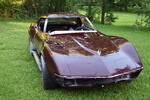
sorry it’s a 69.
Safety Car

Joined: May 2008
Posts: 3,745
Likes: 712
From: Lafayette Louisiana
You might ck the paint and body section here too
Good advice above.
I usually use the regular fiberglass resin instead of epoxy though. Although some say the epoxy is stronger, I have had good success with the fiberglass resin.
And you might check the paint and body section here. A good discussion in this thread:
Evaluate my fiberglass repair - safety sensitive location - CorvetteForum - Chevrolet Corvette Forum Discussion
I usually use the regular fiberglass resin instead of epoxy though. Although some say the epoxy is stronger, I have had good success with the fiberglass resin.
And you might check the paint and body section here. A good discussion in this thread:
Evaluate my fiberglass repair - safety sensitive location - CorvetteForum - Chevrolet Corvette Forum Discussion
Safety Car
Joined: Jul 2005
Posts: 3,682
Likes: 829
From: WI
Good advice above.
I usually use the regular fiberglass resin instead of epoxy though. Although some say the epoxy is stronger, I have had good success with the fiberglass resin.
And you might check the paint and body section here. A good discussion in this thread:
Evaluate my fiberglass repair - safety sensitive location - CorvetteForum - Chevrolet Corvette Forum Discussion
I usually use the regular fiberglass resin instead of epoxy though. Although some say the epoxy is stronger, I have had good success with the fiberglass resin.
And you might check the paint and body section here. A good discussion in this thread:
Evaluate my fiberglass repair - safety sensitive location - CorvetteForum - Chevrolet Corvette Forum Discussion
But you make a great point on the resin. (for everyone out there, just remember that normal fiberglass resin won't adhere to SMC, it'll just flake off like an old scab ....ha ha. But on a '69 the substrate won't be SMC)
Safety Car
Joined: May 2008
Posts: 3,745
Likes: 712
From: Lafayette Louisiana
Good to know and good point, I have never worked on SMC.
One other thing I have tried and works great; if you need to hold a part to position for fiberglassing, you can sometimes just super glue it (if you are impatient sometimes, like me, Ha! ).
).
One other thing I have tried and works great; if you need to hold a part to position for fiberglassing, you can sometimes just super glue it (if you are impatient sometimes, like me, Ha!
).
Corvette Stories
The Best of Corvette for Corvette Enthusiasts

10 Most Common Corvette Problems of the Last 20 Years!
Joe Kucinski
5 MOST and 5 LEAST Popular Corvette Model Years in History!
Joe Kucinski
2027 Corvette Buyer's Guide: Everything You Need to Know!
Joe Kucinski
10 Things C8 Corvette Owners Hate (But Won't Tell You)
Joe Kucinski
10 Best Corvettes Coming to Barrett-Jackson Palm Beach 2026!
Brett Foote
Every Corvette Grand Sport Explained! (C2, C4, C6, C7, & C8)
Joe Kucinski
Grand Sport & Grand Sport X Launch Alongside All-New 535hp LS6 V8!
Michael S. Palmer
5 Reasons Bad Drivers Crash & 5 Ways to Avoid a Costly Mistake!
Joe Kucinski
7 Bolt-On Upgrades From Extreme Online Store to Level Up Your C6 Corvette
Pouria Savadkouei
Team Owner


Joined: Jan 2006
Posts: 37,637
Likes: 3,112
From: Crossville TN
Clean it well (front back and separation), glass it on the backside for support; then use some polyester body filler (or whatever you prefer that works with fiberglass) to finish the surface. Prime and paint.