



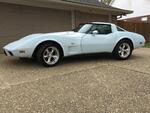

70 L-46 won't turn over.

Thread Starter
Racer


Joined: Feb 2001
Posts: 456
Likes: 28
From: New Jersey
 70 L-46 won't turn over.
Took my 70 out for a good run yesterday. ran great, get home and parked outside.
when I went to put it away later in the day, would not start, won't turn over, not even a click or any noise from starter.
Checked battery and connections (battery was replaced in March of this year)
Jacked up and crawled under car to check for loose or bad connections on starter.
Ground strap visually looks ok and is tight.
Horn makes a very week noise, not the normal "beep"
Interior lights work and dim when turning on ignition switch.
Car is currently in my garage under my 67 on a 4 post, so working space is limitedI.
before I get some muscle over here to help push on lift,, figured Id ask here, hoping its something simple I'm missing.
when I went to put it away later in the day, would not start, won't turn over, not even a click or any noise from starter.
Checked battery and connections (battery was replaced in March of this year)
Jacked up and crawled under car to check for loose or bad connections on starter.
Ground strap visually looks ok and is tight.
Horn makes a very week noise, not the normal "beep"
Interior lights work and dim when turning on ignition switch.
Car is currently in my garage under my 67 on a 4 post, so working space is limitedI.
before I get some muscle over here to help push on lift,, figured Id ask here, hoping its something simple I'm missing.

Melting Slicks

Joined: Feb 2017
Posts: 3,232
Likes: 1,232
From: PHX AZ
Take big set of booster cables...
connect BLACK directly to the NEGATIVE BATTERY POST
Connect other BLACK end to the Door Striker or CLEAN GROUND POINT on FRAME.
Try to start the car.....
unkahal
connect BLACK directly to the NEGATIVE BATTERY POST
Connect other BLACK end to the Door Striker or CLEAN GROUND POINT on FRAME.
Try to start the car.....
unkahal
Racer

Joined: Dec 2016
Posts: 353
Likes: 161

That is an outstanding piece of advice. It completely removes the negative battery cable from the equation, which is the one that usually corrodes WAY down under the insulation. If the car starts, you’ve isolated your problem......
Thread Starter
Racer
Joined: Feb 2001
Posts: 456
Likes: 28
From: New Jersey
Melting Slicks
Joined: Feb 2017
Posts: 3,232
Likes: 1,232
From: PHX AZ
Okay...
symptom; Horn weak, lights weak. Not enough power to turn over the starter nor even make the solenoid click.
1. Actual voltage AT THE BATTERY=
2. All power basically runs through the main cable to the starter...check that TERMINAL (as in corrosion IN the terminal, and under the terminal..
3. Obviously disconnect the pos and neg battery terms!
4. Luck bestid! It up on a lift so you can go under rather easily....check/remove/ clean/re-crimp the main positive trunk cable to the starter.
5. Just to eliminate the non-obvious it's the same starter, not a new one or one that has just been messed with*
6. Do the jumper cable trick from KNOWN GOOD CLEAN METAL GROUND on frame to ENGINE BLOCK....to ensure the engine itself is not self-isolating.
*You've heard the story start like this; "I just painted the starter"......no ground connection from starter to ground via the block due to paint build up as an insulator..
We have to creep up on this.
Good luck Unkahal
symptom; Horn weak, lights weak. Not enough power to turn over the starter nor even make the solenoid click.
1. Actual voltage AT THE BATTERY=
2. All power basically runs through the main cable to the starter...check that TERMINAL (as in corrosion IN the terminal, and under the terminal..
3. Obviously disconnect the pos and neg battery terms!
4. Luck bestid! It up on a lift so you can go under rather easily....check/remove/ clean/re-crimp the main positive trunk cable to the starter.
5. Just to eliminate the non-obvious it's the same starter, not a new one or one that has just been messed with*
6. Do the jumper cable trick from KNOWN GOOD CLEAN METAL GROUND on frame to ENGINE BLOCK....to ensure the engine itself is not self-isolating.
*You've heard the story start like this; "I just painted the starter"......no ground connection from starter to ground via the block due to paint build up as an insulator..
We have to creep up on this.
Good luck Unkahal
Last edited by L-46man; Aug 4, 2021 at 05:07 PM.

Melting Slicks


Joined: Dec 2016
Posts: 3,193
Likes: 184
From: Central Bucks County, Pennsylvania
Just because the connection looks or feels tight doesn’t mean you have a good ground. There’s a ground that comes off the back of the alternator to the block (I’ve seen it on the frame too). Remove it and sand or file both sides of the eye connectors and where that ground is connected, put a smear of dielectric grease on all cleaned surfaces and reconnect very tightly. Do the same with the battery grounded to the frame under the car.
Even if it turns out these grounds are not the cause you should be doing it sometime anyway.
Even if it turns out these grounds are not the cause you should be doing it sometime anyway.
Corvette Stories
The Best of Corvette for Corvette Enthusiasts

Corvette ZR1X Will Be Pacing the Indy 500, And Could Probably Race, Too!
Verdad Gallardo
Top 10 Corvettes Coming to Mecum Indy 2026!
Brett Foote
Top 10 C9 Corvette MUST-HAVES to Fix These C8 Generation Flaws!
Michael S. Palmer
10 Revolutionary 'Corvette Firsts' Most People Don't Know
Joe Kucinski
5 Reasons to Upgrade to an LS6-Powered Corvette; 5 Reasons to Stay LT2
Michael S. Palmer
2027 Corvette vs The World: Every C8 vs Its Closest Competitor
Joe Kucinski
10 Most Common Corvette Problems of the Last 20 Years!
Joe Kucinski
5 MOST and 5 LEAST Popular Corvette Model Years in History!
Joe Kucinski
2027 Corvette Buyer's Guide: Everything You Need to Know!
Joe Kucinski
Thread Starter
Racer
Joined: Feb 2001
Posts: 456
Likes: 28
From: New Jersey
Voltage at battery is 12.7 Volts.
No recent changes to starter
I did install a battery disconnect switch along with a connection for a trickle charger back in March, removed both with no change
I will start cleaning all connections on the "top side " this evening.
Once I get it on the lift, Ill; start on the bottom side.
Thanks for all the help and suggestions
No recent changes to starter
I did install a battery disconnect switch along with a connection for a trickle charger back in March, removed both with no change
I will start cleaning all connections on the "top side " this evening.
Once I get it on the lift, Ill; start on the bottom side.
Thanks for all the help and suggestions

Le Mans Master


Joined: Jun 2019
Posts: 5,391
Likes: 2,126
From: Loveland
What he said.... I had a rear light that wasn't working. The connection was a wire twisted together and taped. It was my last resort. It looked like it was just fine. I untwisted it, scraped the wired and twisted it back together,,, now my lights work.
Thread Starter
Racer
Joined: Feb 2001
Posts: 456
Likes: 28
From: New Jersey
I used a dremell with a small wire brush and started checking and cleaning individual connections.
I removed starter and noticed some pretty corroded wires and connections. (starter was not original or correctly dated for a 70 looks like a 71 or 81)
replaced starter and solenoid with one I ordered from Eklers, along with a couple of new/spliced connections.
and Fired right up !!!!
Not sure if it was the starter or bad connections.
I will throw a battery on the old one and bench test when I get a chance.
Thanks for the help
I removed starter and noticed some pretty corroded wires and connections. (starter was not original or correctly dated for a 70 looks like a 71 or 81)
replaced starter and solenoid with one I ordered from Eklers, along with a couple of new/spliced connections.
and Fired right up !!!!
Not sure if it was the starter or bad connections.
I will throw a battery on the old one and bench test when I get a chance.
Thanks for the help

Team Owner


Joined: Jan 2006
Posts: 37,637
Likes: 3,114
From: Crossville TN
Your issue was likely a failed starter solenoid. The starter is probably fine. You can test the starter by putting jumper cables to it from a good battery. CAUTION: Connect the negative cable to battery and case of starter. Connect the positive cable to the good battery ONLY. To test the starter, hold it down to the floor with on foot solidly on it, then just TOUCH the positive cable to the positive lug which is copper piece sticking out on side of forward end.plate. There will be a lot of torque to make the motor jump if you make a solid connection to it. You just want to know if the starter is "dead" or not....

Drifting

Joined: Dec 2020
Posts: 1,586
Likes: 956
From: Central Florida
2024 Corvette of the Year Winner - Modified
2023 C3 of the Year Winner - Modified
2021 C3 of the Year Finalist - Modified
Check that the relay on the ds fender that’s wired to the alternator isn’t loose. Happened to me a few times and after going through all the usual steps it turned out to just be that which is unusual.
Burning Brakes

Joined: Sep 2016
Posts: 927
Likes: 417
From: Dutchess county New York
It's probably something simple. The battery can read 12.7 volts and still fail a load test. I have one of those 'toasters' to check that but any auto store probably will load test it for you for free. Yes, a loose battery connection somewhere is possible and even likely. There's also a connection for the neutral safety switch up on the clutch pedal but I think you're getting ahead of yourself. Doing things at random might get the thing to start or you might just make further trouble for yourself somehow.If I jump start something it's always from a booster pack, not from my shiny new truck.
I'd go to the starter and verify that battery voltage at the big center terminal. There are two connections on the stater solenoid labeled R and S. When you turn the key all the way to engage the starter you should see battery voltage on the S terminal closest to the block. When the key springs back to the run position you'll have voltage on the R terminal. Start with S, see if it's getting what it needs. All a remote bump/start button does is short the battery lead to the S terminal directly.If you're going to take the R or S leads off the starter disconnect the battery first, connect your meter, then reconnect the battery. Don't want to get zapped. Alligator clips on the meter leads are helpful.
I'd go to the starter and verify that battery voltage at the big center terminal. There are two connections on the stater solenoid labeled R and S. When you turn the key all the way to engage the starter you should see battery voltage on the S terminal closest to the block. When the key springs back to the run position you'll have voltage on the R terminal. Start with S, see if it's getting what it needs. All a remote bump/start button does is short the battery lead to the S terminal directly.If you're going to take the R or S leads off the starter disconnect the battery first, connect your meter, then reconnect the battery. Don't want to get zapped. Alligator clips on the meter leads are helpful.
Last edited by pigfarmer; Aug 15, 2021 at 05:47 AM.

Team Owner


Joined: Mar 2002
Posts: 44,621
Likes: 1,826
From: Huntsville AL
It's probably something simple. The battery can read 12.7 volts and still fail a load test. I have one of those 'toasters' to check that but any auto store probably will load test it for you for free. Yes, a loose battery connection somewhere is possible and even likely. There's also a connection for the neutral safety switch up on the clutch pedal but I think you're getting ahead of yourself. Doing things at random might get the thing to start or you might just make further trouble for yourself somehow.If I jump start something it's always from a booster pack, not from my shiny new truck.
I'd go to the starter and verify that battery voltage at the big center terminal. There are two connections on the stater solenoid labeled R and S. When you turn the key all the way to engage the starter you should see battery voltage on the S terminal closest to the block. When the key springs back to the run position you'll have voltage on the R terminal. Start with S, see if it's getting what it needs. All a remote bump/start button does is short the battery lead to the S terminal directly.If you're going to take the R or S leads off the starter disconnect the battery first, connect your meter, then reconnect the battery. Don't want to get zapped. Alligator clips on the meter leads are helpful.
I'd go to the starter and verify that battery voltage at the big center terminal. There are two connections on the stater solenoid labeled R and S. When you turn the key all the way to engage the starter you should see battery voltage on the S terminal closest to the block. When the key springs back to the run position you'll have voltage on the R terminal. Start with S, see if it's getting what it needs. All a remote bump/start button does is short the battery lead to the S terminal directly.If you're going to take the R or S leads off the starter disconnect the battery first, connect your meter, then reconnect the battery. Don't want to get zapped. Alligator clips on the meter leads are helpful.
When the ignition key is held in the start position it removes the path for coil power and this path is restored when the ignition key is in the run position.

Melting Slicks
Joined: Feb 2017
Posts: 2,377
Likes: 838
From: New York
2017 C3 of the Year Finalist
St. Jude Donor '20- '21
Hey all this I do is great but just to be clear Rick B got the car running but might help someone in the future.
Now the probably dumb question. Sorry!! Mr. D if you remove power to the coil during start up how does the car start, from the energy that is already stored in the coil?? Why the need to do so? Thanks Ike
Now the probably dumb question. Sorry!! Mr. D if you remove power to the coil during start up how does the car start, from the energy that is already stored in the coil?? Why the need to do so? Thanks Ike
Team Owner
Joined: Mar 2002
Posts: 44,621
Likes: 1,826
From: Huntsville AL
Hey all this I do is great but just to be clear Rick B got the car running but might help someone in the future.
Now the probably dumb question. Sorry!! Mr. D if you remove power to the coil during start up how does the car start, from the energy that is already stored in the coil?? Why the need to do so? Thanks Ike
Now the probably dumb question. Sorry!! Mr. D if you remove power to the coil during start up how does the car start, from the energy that is already stored in the coil?? Why the need to do so? Thanks Ike
ignition switch positions
ACC - no power to coil
OFF - no power to coil
RUN - 9.5-10V to the coil via ignition circuit
START - 12V to the coil via the starter 12V start circuit
You have power to the coil in both RUN & START, they just come from different circuits. If you ever experienced a car that would start but die after you let the ignition key spring back to run that is because you lost the ignition circuit and only have a 12V start circuit. Another example is the car wont start with the key in the start position but as soon as you let it spring back to run it fired off. You need both.
Last edited by Mr D.; Aug 15, 2021 at 10:52 AM.
Melting Slicks
Joined: Feb 2017
Posts: 2,377
Likes: 838
From: New York
2017 C3 of the Year Finalist
St. Jude Donor '20- '21
Mr D thank you for the clarification and the quick response. But it creates another question.
RUN - 9.5-10V to the coil via ignition circuit
START - 12V to the coil via the starter 12V start circuit
Why the need step down the voltage to the coil when the car moves from starting to running? Interesting info to know and understand the Vette better.
Thanks. Ike.
RUN - 9.5-10V to the coil via ignition circuit
START - 12V to the coil via the starter 12V start circuit
Why the need step down the voltage to the coil when the car moves from starting to running? Interesting info to know and understand the Vette better.
Thanks. Ike.
Team Owner
Joined: Mar 2002
Posts: 44,621
Likes: 1,826
From: Huntsville AL
The coil by design operates on 9.5-10V to prevent premature coil & ignition contact points failure. In the early Vettes (C2) for example they had a ballast resistor that reduced 12V down to 9.5-10V, later GM did away with that and used an inline resistor to do the same thing. The 12V start system gives the ignition system an extra couple volts for starting.