When you click on links to various merchants on this site and make a purchase, this can result in this site earning a commission. Affiliate programs and affiliations include, but are not limited to, the eBay Partner Network.
To all C3 Gurus,
There was a recent post regarding the hood insulation blanket that was not really the conclusive and would like some Pro vs Con
inputs to help me decide wether to leave it up or take in down??
I’m thinking this is a pretty good all encompassing summary.
ymmv depending on timeframe, but suspect originally for noise, on higher end cars, to protecting paint, to engineered in later years to do all including fire suppression and heat specifics.
Heat should be left in the engine compartment....not dumped into the hood and its paint. If the insulation is not so thick that it causes interference with air cleaner/engine/etc, I can't think of any downside. The whole purpose of the insulation is to protect the paint on the hood.
In over 40years of ownership my '68 has never had hood insulation. Despite the car being in hot climates of South Louisiana and Texas, I never had an issue with the hood or paint.
I’m thinking this is a pretty good all encompassing summary.
ymmv depending on timeframe, but suspect originally for noise, on higher end cars, to protecting paint, to engineered in later years to do all including fire suppression and heat specifics.
Heat should be left in the engine compartment....not dumped into the hood and its paint. If the insulation is not so thick that it causes interference with air cleaner/engine/etc, I can't think of any downside. The whole purpose of the insulation is to protect the paint on the hood.
Nonsense. It was never intended to protect the paint. Its a sound deadener.
The paint is and will be fine without any insulation. Even new cars of today have fiberglass hoods without noise blankets. Good grief.
The C3s engine bays are already hotter than normal. Why would anyone want to add to the problem by using a blanket?
Blankets are for keeping warm.
Last edited by HeadsU.P.; Aug 14, 2021 at 09:53 PM.
Nonsense. It was never intended to protect the paint. Its a sound deadener.
The paint is and will be fine without any insulation. Even new cars of today have fiberglass hoods without noise blankets. Good grief.
The C3s engine bays are already hotter than normal. Why would anyone want to add to the problem by using a blanket?
Blankets are for keeping warm.
Years ago I put a custom hood on my 77. (back when I still lived in Wisconsin). As such no blanket was ever installed.
Now I I live in Queensland Australia. Summer temps here can be blistering. in the 14 years I have lived here, there have been MANY long drives in very Hot weather. no paint issues whatsoever. As per engine noise, hard to tell. can't really hear much over my chambered exhaust.
Nonsense. It was never intended to protect the paint. Its a sound deadener.
The paint is and will be fine without any insulation. Even new cars of today have fiberglass hoods without noise blankets. Good grief.
The C3s engine bays are already hotter than normal. Why would anyone want to add to the problem by using a blanket?
Blankets are for keeping warm.
So GM has been putting hood insulation on Vettes since 1973-even the C7 has a hood insulator.
Did they do that because they felt it wasn't needed... even the beancounters couldn't say it wasn't worth the extra cost?
Blankets/insulators also store energy- Do you not have insulation in your walls for the winter AND the summer?
Plus a hoodliner is also an essential element in protecting the driver and passengers in the event of an engine fire, blocking flames and heat from reaching the car’s occupants. Designed to allow the hoodliner’s attachments to quickly melt in the event of a fire, allowing the liner to fall onto the flames and help to smother them.
^^yeah, i always thought it was to get an extra few minutes for the firefighters to show up in case of a fire.
Its probably not a good sound deadener or insulator on our older cars because the engines have big openings all over the bottom.
but, on one of my bmws i had removed it because it was droopy and it made the normal engine noise/pullys louder from outside.
I replaced with a better pad, the tight engine packaging and almost completely sealed engine compartment makes a huge difference in engine sound
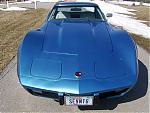
I bought my '71 Coupe used and I suspect it had a bunch of owners. The hood has 3 split head pins where a small peace of insulation fits over the radiator and fan. Not sure why my car has them and others don't. I have seen photos of this insulation setup in restoration manuals but am not sure why GM installed insulation on some cars and not others. So the questions are is the insulation correct on my '71? Did a previous owner add the pins? Or do I have the wrong hood for my year? See photos below:
I bought my '71 Coupe used and I suspect it had a bunch of owners. The hood has 3 split head pins where a small peace of insulation fits over the radiator and fan. Not sure why my car has them and others don't. I have seen photos of this insulation setup in restoration manuals but am not sure why GM installed insulation on some cars and not others. So the questions are is the insulation correct on my '71? Did a previous owner add the pins? Or do I have the wrong hood for my year? See photos below:
nice car.. i only see 76-79 with a part #..weird
Maybe the listing is missing and related body parts i cannot find
Last edited by interpon; Aug 15, 2021 at 08:14 AM.
So GM has been putting hood insulation on Vettes since 1973-even the C7 has a hood insulator.
Did they do that because they felt it wasn't needed... even the beancounters couldn't say it wasn't worth the extra cost?
Blankets/insulators also store energy- Do you not have insulation in your walls for the winter AND the summer?
Plus a hoodliner is also an essential element in protecting the driver and passengers in the event of an engine fire, blocking flames and heat from reaching the car’s occupants. Designed to allow the hoodliner’s attachments to quickly melt in the event of a fire, allowing the liner to fall onto the flames and help to smother them.
GM put a lot of nonsense items on the C3s. Doesn't make in correct. Kind of like a remote for outside drivers side mirror. Just three inches from the mirror. WTH?
Yes I have insulation in the house walls. To HOLD IN HEAT !!!! Not to extinguish a fire. And yes the hood blanket stores energy. So when you try to start an already hot engine, the fuel has boiled out of the carb. Stored energy, there you go.
Old wives tale again about the melting clips. Yes they will melt. And yes the blanket will drop on the engine, adding more fuel to the fire. Its not made of asbestos.
The clips melt from extreme heat of the engine fire. So does everything else in the engine bay. It was not by design.
Its not a fire retardant. Its a noise retardant.
Better Google C3 engine fires and take note of the blanket burning like hell.
Last edited by HeadsU.P.; Aug 15, 2021 at 10:02 AM.
Those who do not want hood insulation (BTW it is called hood INSULATION) want to demand that others do the same or they will get bludgeoned into submission. To them I wish to say,
"Believe what you will and do what you want with your car. Don't tell me or anyone else how to think, what to believe, or what to do on theirs. This Forum is for sharing ideas....whether you like them or not."
Did they do that because they felt it wasn't needed... even the beancounters couldn't say it wasn't worth the extra cost?
Good observation. Why in the world would insulation be installed if it was cheaper to not install it? Wouldn't it be part of a "comfort" package or something, or at least only an option if it was felt it wasn't necessary for some reason?
We all know the bean counters often override the engineers when it come to making a profit.
My guess is if it wasn't required by some regulation (ie fire suppression requirements) it would not be there other than as an option package.
Last edited by REELAV8R; Aug 15, 2021 at 11:46 AM.




 Hood insulation Pros & Cons??