When you click on links to various merchants on this site and make a purchase, this can result in this site earning a commission. Affiliate programs and affiliations include, but are not limited to, the eBay Partner Network.
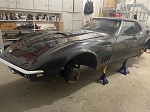
So after removing the interior and broken windshield I found rust. I am removing the front clip to reinstall do to a previous owner doing a crap fitment job. So if I need to pull the fire wall to fix the rust in the lower windshield frame it is what it is. Would rather have had no issue but don’t know how I would have seen it prior to purchase. What I would call the A pillars look ok, newbie to C3 so feel free to correct me if I miss define something. What concerns me the most is the small hole in the roof, what I would call a halo or something. My question is it a big deal or will some rust treatment be good enough. If it does need to be fix with a patch piece do you think it can be done with the rear fiberglass still installed. Pulling the rear fiberglass is where I will pull the eject handle .
Thanks for any advice and providing correct component names!
Regarding the rust through hole in the roof structure, my recommendation would be to get a die grinder and carefully remove all of the oxidized material in order to have a suitable surface to weld. Once you’ve determined the full extent of the rust, you can make an informed decision on how to proceed with repairs. Relative to the lower windshield frame, that repair will not be a big deal.
Shoot some pics of the bottoms of the #2 mounts as those areas are among the most problematic regarding rust. Be advised that removing the mount bolts is a field ripe for becoming a huge PITA as you don’t want to snap off a bolt in the captive nut on top of the frame. Ditto the #3 mounts that are accessed through the cover plate inside the rear wheel wells.
Take your time and fully assess all of the repairs you are facing. Map out your plan, get prepared, then execute.
Forget about using 'rust treatment' ...for the top bar ...and anywhere else on your car. When you remove the top stainless trim, do you have access to the rust? 69L88 is correct: cut out the rust, cut a patch to match out of 18ga, then weld in place. Best if you can remove all the body panels down to the areas that need to be repaired. Then sandblast the entire structure where you believe rust rot is (cover the car/engine/interior with plastic sheet). After sandblasting you will be able to clearly see what you're up against and what needs replacing. Then cut out the rot and weld in new metal and patch panels as necessary. Do your finish-grinding, then spray with a high-zinc self-etching primer prior to 2k primer or paint.
It sounds like you are on the right track on doing a good job.
Regarding the rust through hole in the roof structure, my recommendation would be to get a die grinder and carefully remove all of the oxidized material in order to have a suitable surface to weld. Once you’ve determined the full extent of the rust, you can make an informed decision on how to proceed with repairs. Relative to the lower windshield frame, that repair will not be a big deal.
Shoot some pics of the bottoms of the #2 mounts as those areas are among the most problematic regarding rust. Be advised that removing the mount bolts is a field ripe for becoming a huge PITA as you don’t want to snap off a bolt in the captive nut on top of the frame. Ditto the #3 mounts that are accessed through the cover plate inside the rear wheel wells.
Take your time and fully assess all of the repairs you are facing. Map out your plan, get prepared, then execute.
Thanks for the advise, cutting out the bad area will give me a visual on what the metal is doing above it. Gone this far no reason not to dig a little further, what the saying “ Might as well”. If I get off early enough this week I will get those pictures to you, if not this weekend. Thanks for the encouragement on the lower frame repair.
Forget about using 'rust treatment' ...for the top bar ...and anywhere else on your car. When you remove the top stainless trim, do you have access to the rust? 69L88 is correct: cut out the rust, cut a patch to match out of 18ga, then weld in place. Best if you can remove all the body panels down to the areas that need to be repaired. Then sandblast the entire structure where you believe rust rot is (cover the car/engine/interior with plastic sheet). After sandblasting you will be able to clearly see what you're up against and what needs replacing. Then cut out the rot and weld in new metal and patch panels as necessary. Do your finish-grinding, then spray with a high-zinc self-etching primer prior to 2k primer or paint.
It sounds like you are on the right track on doing a good job.
No, the top of structure in that area appears good with no signs of rust. I cleaned off all the old bonding or sealant that was under the stainless, looks good in the back, a little rough by the windshield but I need to clean it to see if it is just surface rust. Like I said, little new to this resto stuff, can I cut out piece of the body panel above the effected area and patch back or does the whole *** end need to be removed?
Fibreglass loves to burn and once lit it really goes!
Welding a half inch away from the glass sounds like a recipe for disaster.
But could you cut out a 6 inch section and patch it back in?
Absolutely.
Remove the entire rear clip for that. No.
Lots of wet rags around the edges of your cut out section and a nephew with a spray bottle of water over the top as you tack weld in your patch.
Fibreglass loves to burn and once lit it really goes!
Welding a half inch away from the glass sounds like a recipe for disaster.
But could you cut out a 6 inch section and patch it back in?
Absolutely.
Remove the entire rear clip for that. No.
Lots of wet rags around the edges of your cut out section and a nephew with a spray bottle of water over the top as you tack weld in your patch.
Looks like everyone agrees on the fact it needs to be repaired. At this point I think I need to do some cleaning and a little cutting to try and determine the extent of the corrosion. I am not a body or fiberglass guy, removing the front clip makes me nervous enough, cutting and repairing actual fiberglass panels scares the S**T out of me. Might just be giving the next owner a head start on fixing her.
I guess you need to determine how rusty it really is by the back window. I didn't see that part being rusty initially. Now I do. It doesn't look quite as rusty. You might have to poke around it some more to determine if you should leave it or cut it out. Then, is it better off removing the whole piece, or repair on the car. Looking at the rear window.. it's probably far enough away, that if you tack a piece of metal to shield it you'll be ok. But you could remove it too. Just remember (since you're new to this), any sparks or grinding sparks that come into contact with glass will imbed themselves in the glass ...and you'll be buying new glass. That's a real rookie mistake. Now you know... So NO grinding or welding sparks should contact any glass EVER. Remove or mask them, lower the side glass.
On-car fix. If you determine doing the rust repair on that roof portion is viable on the car, you *could* slide a piece of sheet metal above where you plan to weld in a new patch (on the roof panel). First I'd probably cut the front rust area out ..so you can slide a bigger piece of metal while welding a new patch to the rear area. (see blue circle on drawing below). Slide your metal through the part you cut out (fix that part last). Weld the back repair slowly (stitching here and there). With a piece of tin above where you are welding, it'll keep the welding heat super low. Then, lastly, come back to the front rust area and make a patch for that region. Cut an incision in the side of the framing somewhere (see red line), with a cut-off tool, and slip in your insulating piece of tin ...about 4-6" wide, through that gap. The tin above the patch you want to weld ...will prevent heat and sparks from damaging the fiberglass above. See the blue/red marks in the picture below. You could do this in other areas as well. You could use something like a piece of new stove pipe tin from the home center. It's thin, flexible and shiny. It does a great job deflecting heat. When you're finished weld in the incision.
Bear in mind ..when you go to weld in the new patch/es, the name of the game is taking your time. You don''t weld the whole thing in one continuous weld where it's going to get super hot! That would build up a lot of heat you don't want. You put a short stitch here ...then you move to a different part of the patch and put a short 3/8" stitch there. Then maybe in a 3rd or 4th place on far sides of the patch. Let it cool a bit, then start over next to the first stitch ....and so on down the line ...move your deflecting heat shield above where you are welding (that you've slid in above where you are welding) ...move that around to be above wherever you are welding at the moment. Stop and take frequent brakes. If it gets warm, take a break and stretch out. Let it all cool down. You can always drill a couple larger holes (1" or so) in the roof metal so you can 'see' what's going on. Go slow you won't build up much heat.
Then when you're finished, you remove your heat shield and weld up the seam you cut (to insert the heat shield into). But first poke around to make sure it's even worth saving. You might need to replace or fab up a whole rear section if it's all rusted above (inside) where you can't see.
I guess you need to determine how rusty it really is by the back window. I didn't see that part being rusty initially. Now I do. It doesn't look quite as rusty. You might have to poke around it some more to determine if you should leave it or cut it out. Then, is it better off removing the whole piece, or repair on the car. Looking at the rear window.. it's probably far enough away, that if you tack a piece of metal to shield it you'll be ok. But you could remove it too. Just remember (since you're new to this), any sparks or grinding sparks that come into contact with glass will imbed themselves in the glass ...and you'll be buying new glass. That's a real rookie mistake. Now you know... So NO grinding or welding sparks should contact any glass EVER. Remove or mask them, lower the side glass.
On-car fix. If you determine doing the rust repair on that roof portion is viable on the car, you *could* slide a piece of sheet metal above where you plan to weld in a new patch (on the roof panel). First I'd probably cut the front rust area out ..so you can slide a bigger piece of metal while welding a new patch to the rear area. (see blue circle on drawing below). Slide your metal through the part you cut out (fix that part last). Weld the back repair slowly (stitching here and there). With a piece of tin above where you are welding, it'll keep the welding heat super low. Then, lastly, come back to the front rust area and make a patch for that region. Cut an incision in the side of the framing somewhere (see red line), with a cut-off tool, and slip in your insulating piece of tin ...about 4-6" wide, through that gap. The tin above the patch you want to weld ...will prevent heat and sparks from damaging the fiberglass above. See the blue/red marks in the picture below. You could do this in other areas as well. You could use something like a piece of new stove pipe tin from the home center. It's thin, flexible and shiny. It does a great job deflecting heat. When you're finished weld in the incision.
Bear in mind ..when you go to weld in the new patch/es, the name of the game is taking your time. You don''t weld the whole thing in one continuous weld where it's going to get super hot! That would build up a lot of heat you don't want. You put a short stitch here ...then you move to a different part of the patch and put a short 3/8" stitch there. Then maybe in a 3rd or 4th place on far sides of the patch. Let it cool a bit, then start over next to the first stitch ....and so on down the line ...move your deflecting heat shield above where you are welding (that you've slid in above where you are welding) ...move that around to be above wherever you are welding at the moment. Stop and take frequent brakes. If it gets warm, take a break and stretch out. Let it all cool down. You can always drill a couple larger holes (1" or so) in the roof metal so you can 'see' what's going on. Go slow you won't build up much heat.
Then when you're finished, you remove your heat shield and weld up the seam you cut (to insert the heat shield into). But first poke around to make sure it's even worth saving. You might need to replace or fab up a whole rear section if it's all rusted above (inside) where you can't see.
Awesome description of how the repair could go if the top under the fiberglass is actually ok. Thank you so much for taking your time to describe your ideas. I have always appreciated fellow members that want to help others out. Always found that in the C6 and C7 sections. Nice to see it here as well.
Give us some details on the “crap fitment” of the surround.
I need to get better pictures and maybe fitment was not the best description. Poor execution may be better. The corners by the bottom corner of the windshield are out about a 1/2”. Doors are close to being correct I believe and shimming them out would pull the door glass out of wack. It would appear they tried to glass the fenders on instead of bonding. I attached some pictures but will get more plus the mounts this weekend.
Regarding the rust through hole in the roof structure, my recommendation would be to get a die grinder and carefully remove all of the oxidized material in order to have a suitable surface to weld. Once you’ve determined the full extent of the rust, you can make an informed decision on how to proceed with repairs. Relative to the lower windshield frame, that repair will not be a big deal.
Shoot some pics of the bottoms of the #2 mounts as those areas are among the most problematic regarding rust. Be advised that removing the mount bolts is a field ripe for becoming a huge PITA as you don’t want to snap off a bolt in the captive nut on top of the frame. Ditto the #3 mounts that are accessed through the cover plate inside the rear wheel wells.
Take your time and fully assess all of the repairs you are facing. Map out your plan, get prepared, then execute.
Ok, I give, ether my jack pads are blocking an access hole or I am looking in the wrong spot to see the bottom of the number 2 mounts. I think I got pictures of the number 3 mounts.
Right side 3 Left side 3 Top right side 2 Top left side 2
Give us some details on the “crap fitment” of the surround.
Here is some more pictures. Drivers door rear gap is not perfect and it definitely needs to be adjusted. When I shut the door the it rubs the top corner of the body. Circled in red in one of the pictures. Passenger door is closer I think.
Drivers front door gap Driver side top of clip at door Passenger side door gap Passenger side Under driver fender Under driver fender. Under driver fender
The right side #2 looks pretty good. The left #2 pic is a bit blurry so I would vacuum out the loose crap and reshoot another pic.
The pics you have list as #3 are actually the #4. The #3 mounts are behind the small access plates in the lower forward section of the rear wheel wells.
I would get the car supported on the suspension and not the frame rails as you have it now before you assess gaps and fitment. There is a lot of moment arm action, particularly on the front.
GM’s quality control (meaning lack thereof) for these cars meant quite a variance in fit/fair so unless you want to go full Monty and reglass everything, you may have to accept some of it as is. Addressing the front fender/door issue will involve a need to de-bond but if you plan carefully, you can do the repair locally without resorting to pulling off the entire surround.
As far as you are into it, I'd pull the rest of the body off and restore the birdcage fully. It's a bumper car, so definitely worth it, even if it isn't a pedigree car.
The right side #2 looks pretty good. The left #2 pic is a bit blurry so I would vacuum out the loose crap and reshoot another pic.
The pics you have list as #3 are actually the #4. The #3 mounts are behind the small access plates in the lower forward section of the rear wheel wells.
I would get the car supported on the suspension and not the frame rails as you have it now before you assess gaps and fitment. There is a lot of moment arm action, particularly on the front.
GM’s quality control (meaning lack thereof) for these cars meant quite a variance in fit/fair so unless you want to go full Monty and reglass everything, you may have to accept some of it as is. Addressing the front fender/door issue will involve a need to de-bond but if you plan carefully, you can do the repair locally without resorting to pulling off the entire surround.
OK let’s add to the mystery that is this car and my ignorance. One thank you for pointing out my mistake, other is looks like on the drivers side something is missing, see pictures. I knew the bottom of the rear quarters were flared like a 70+ but now I am lost, no access panel. Also clean out drivers number 2, pic below as well.
As far as you are into it, I'd pull the rest of the body off and restore the birdcage fully. It's a bumper car, so definitely worth it, even if it isn't a pedigree car.
Think so? I bought it to go full resto mod. Didn’t think you could pull the rear off with out without destroying it. Into the car for 14k and don’t mind the work or putting money into it but not ridiculously backwards, might be time to cut my losses, however that being said at least I would know it’s done right. Oh, the might as well moments!
I would get the car supported on the suspension and not the frame rails as you have it now before you assess gaps and fitment. There is a lot of moment arm action, particularly on the front.
Well stated.
Put the tires back on or move your supports. C3's flex like crazy. You need to support it like it sits on it's tires. Esp before you start on birdcage & panel work.
OK let’s add to the mystery that is this car and my ignorance. One thank you for pointing out my mistake, other is looks like on the drivers side something is missing, see pictures. I knew the bottom of the rear quarters were flared like a 70+ but now I am lost, no access panel. Also clean out drivers number 2, pic below as well.
wow , someone has already cut away most of the original panel to access you B pillar base (#3 mount(s) ). then rivetted something back in to cover their (work). The original panel had an access panel with 4 screws to get at the mount area. I'm sorry to say BUBBA has been into your car big time .
wow , someone has already cut away most of the original panel to access you B pillar base (#3 mount(s) ). then rivetted something back in to cover their (work). The original panel had an access panel with 4 screws to get at the mount area. I'm sorry to say BUBBA has been into your car big time .
Bazza77 is spot-on with his observations. I will get a shot of the access holes and post. Shouldn’t be a big deal to cut a hole in the bubbawork to gain access to the #3.







 Another rust question