When you click on links to various merchants on this site and make a purchase, this can result in this site earning a commission. Affiliate programs and affiliations include, but are not limited to, the eBay Partner Network.
Summit lists that coil as having 4.50 mH primary inductance. I haven't heard any definitive information on what the primary inductance is on the stock TI coils. If someone knows, I would appreciate your passing that information on to me.
My OEM used 263 and 207 are .6 omhs.
Last edited by bbvette427; Jan 20, 2023 at 01:55 PM.
No. An extra zener is only a last chance bandaid on an original circuit board. A repo/updated circuit board will most likely have a protection zener across the output transistor (just like the original circuit board), but also a higher breakdown-voltage power transistor. The high turns ratio of the TI coil was necessary to lower the primary winding flyback voltage to reduce the chances of damaging the "delicate" power transistor used in the original boxes. The newer circuit boards most likely have more robust, higher-breakdown voltage power transistors in them, which allows them to survive the higher flyback voltages inherent in coils that have lower turns ratios than the original TI coil.
When you say “bandaid are you saying it will only last a short while or would it work indefinitely?
Do you have a source for the zener for an original amp box?
When you say “bandaid are you saying it will only last a short while or would it work indefinitely?
Do you have a source for the zener for an original amp box?
From: I tend to be leery of any guy who doesn't own a chainsaw or a handgun.
Originally Posted by 68hemi
When you say “bandaid are you saying it will only last a short while or would it work indefinitely?
Do you have a source for the zener for an original amp box?
A correctly sized/spec'd zener will last a lifetime.
The original TI board has a protection zener on it. It was spec'd to clamp the flyback voltage at a specified magnitude, and to absorb the maximum/calculated energy that is stored in the original coil. Swapping in an alternative coil may (or may not) cause the zener to absorb higher levels of energy, possibly damaging/blowing-up the stock board zener, and thus allowing the power transistor to be subsequently damaged.
The problem is few, if any, people know what the original board power transistor max voltage capability is, or what the protection zener clamp voltage level is. All we know right now is that pretty much any alternative coil is going to have a lower turns ratio, and that automatically causes a higher primary winding flyback voltage to appear EACH firing event. (The high turns ratio of the stock coil is there to protect the power transistor. It is NOT intended to increase the plug voltage, NOR does it.) It's also not common knowledge what the original coil inductance is. Inductance plays a critical role in determining the coil's stored energy that eventually gets transferred to the plug (or to the protection zener in the event of a loose plug wire or excessive plug gap and cylinder pressure.)
As I mentioned before, I'm not trying to scare anyone, or push them to buy overpriced stock/reproduction coils. I'm just trying to help avoid expensive repairs or replacements due to not looking at the whole picture. There's much more to this coil replacement issue than just comparing the primary winding resistances.
69427,
You are talking WAY over my head regarding all of this. For myself (and likely others) all I really need to know is if the Summit replacement coil I have as a back up to my original coil will work without damaging the ORIGINAL amp provided my plug gap is correct, don’t hav a loose plug wire and the cylinder pressure is correct? I assume by cylinder pressure you mean correct original compression ratio or lower?o
From: I tend to be leery of any guy who doesn't own a chainsaw or a handgun.
Originally Posted by 68hemi
69427, You are talking WAY over my head regarding all of this. For myself (and likely others) all I really need to know is if the Summit replacement coil I have as a back up to my original coil will work without damaging the ORIGINAL amp provided my plug gap is correct, don’t hav a loose plug wire and the cylinder pressure is correct? I assume by cylinder pressure you mean correct original compression ratio or lower?o
I apologize for that. It's difficult to do a good job when trying to keep the answers somewhat brief, while minimizing the amount of electrical geek stuff in the verbiage.
For normal/sane street and highway driving, you are probably okay. The only time things get "risky" is under WOT conditions. The plugs need higher voltage to arc/fire at WOT due to the higher in-cylinder pressures in the compression stroke (and when the secondary winding voltage goes up, the primary winding (flyback) voltage goes up as well) . The occasional WOT run will probably be brief enough where the protection zener, if it should be called upon to do its job of clamping excessively high flyback spikes, will not get hot enough to damage itself.
Just don't do excessive WOT durations (no high RPM track days) or larger plug gaps, and you'll probably be okay. But, that is not a guarantee.
i apologize for that. It's difficult to do a good job when trying to keep the answers somewhat brief, while minimizing the amount of electrical geek stuff in the verbiage.
For normal/sane street and highway driving, you are probably okay. The only time things get "risky" is under wot conditions. The plugs need higher voltage to arc/fire at wot due to the higher in-cylinder pressures in the compression stroke (and when the secondary winding voltage goes up, the primary winding (flyback) voltage goes up as well) . The occasional wot run will probably be brief enough where the protection zener, if it should be called upon to do its job of clamping excessively high flyback spikes, will not get hot enough to damage itself.
Just don't do excessive wot durations (no high rpm track days) or larger plug gaps, and you'll probably be okay. But, that is not a guarantee.
Thanks to all who posted detailed electronic specifications. It was all very informative. I'm not an EE either, but I do have two cars with TI and I have run original and after-market replacement modules. Fortunately, both of my cars have original TI coils that seem to be working properly. I am aware of two currently available after-market modules for TI, Lectric Limited and Delco Products. The first car I did I was only aware of the Lectric Limited module and that is what I bought and it worked for me. Full disclosure, I'm still in the process of restoring this car so I have not driven it on the road under load or high revs. I ran the engine in the chassis to break in the cam after initial engine build. Nonetheless, one item of note that I read in the Lectric Limited paperwork was that you can run a TI coil or a standard coil with their module. The Delco Products module specifies that you need to have a TI coil for it to work properly. I have heard pros and cons of each but both worked well for me so I suspect it is a bit of a religious argument should either one be better than the other. The main reason I jumped in here to reply was because no one mentioned this and for the guys without a stock TI coil the Lectric Limited module may be their solution. If you don't care about having a "numbers" coil but want to run your TI this would be an option. Personally, I would run this certainly before points and I would still choose this over the electronic points replacement modules that go in the distributor. I have those in two cars and they work great but why not run TI if your car came with it? Like I said, I'm not an EE but I figure those guys at Lectric Limited and Delco Products have this all figured out so here's an option in layman's terms that may be a solution for some. Lectric Limited Module Delco Products Module P/N 1115005-M
Quite a while back a forum member here donated a failed module resembling the one above. I offered to take a look at it to see what failed. But first it required dissolving the epoxy to be able to probe the circuitry. I soaked that thing in a few chemicals that I'm sure weren't necessarily healthy for my lungs, but that stuff wouldn't budge. If anyone knows of some effective methods of dissolving that epoxy, I'd welcome that information.
At my former employer, when we had failures or dealer returns, we could clean out the passivation which allowed us to visually examine and electrically probe the part to figure out what the failure/problem was. I have no idea how (or if) these epoxied modules are examined to determine any failure modes.
If one really isn't worried about being completely original, a $40 D1906 h.e.i. module can be used with the t.i. distributor and any ignition coil. It can be hidden inside the distributor box. This is the way I'm going the next time either the t.i. coil or module fails.
If one really isn't worried about being completely original, a $40 D1906 h.e.i. module can be used with the t.i. distributor and any ignition coil. It can be hidden inside the distributor box. This is the way I'm going the next time either the t.i. coil or module fails.
I wonder if this module could be mounted inside of a real TI box with much of the original TI harness adapted to it? Presumably it works with an ordinary coil?
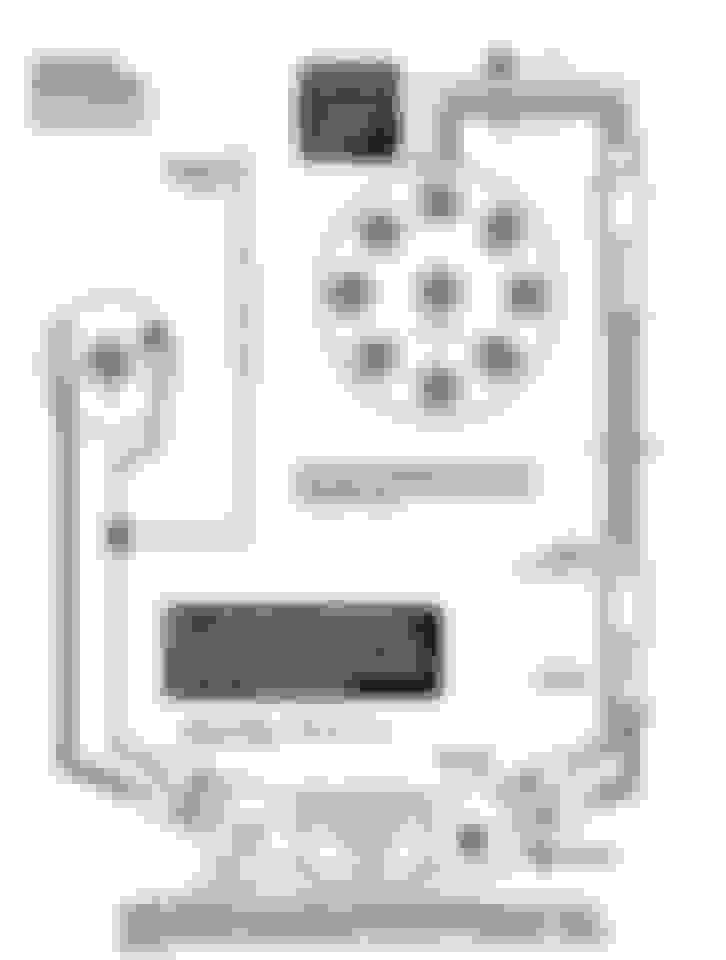
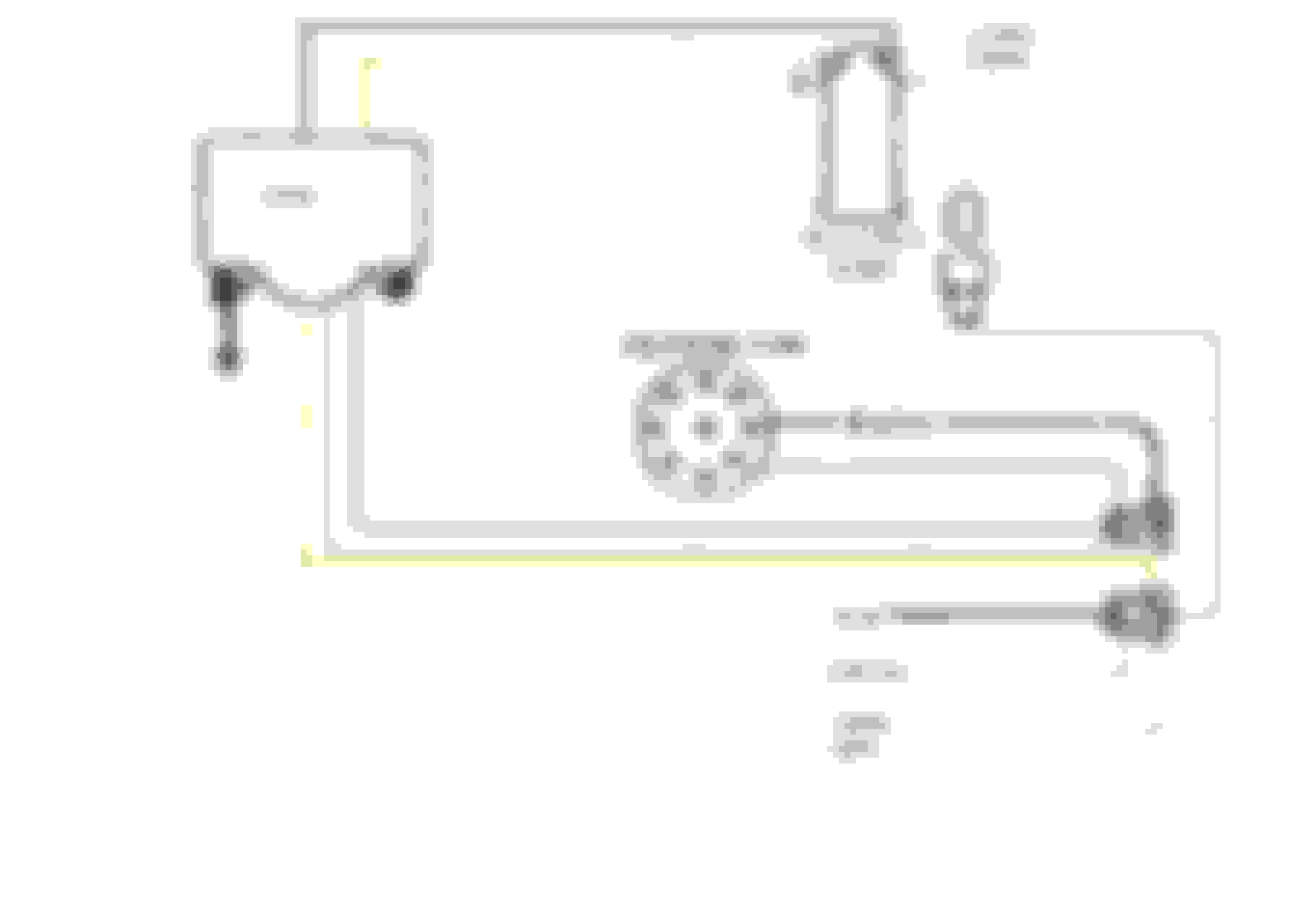
I guess it could be done if mounted securely with a dedicated ground and using some heat sink compound. I've never tried using a h.e.i. module, but will if needed. I don't remember where I got this schematic from, but may be helpful.
I wonder if this module could be mounted inside of a real TI box with much of the original TI harness adapted to it? Presumably it works with an ordinary coil?
Yes, however, I never did use it for anything other than trouble shooting the TI.
Just a little update on my ignition. While it did start up and seemed to run great in the garage, under power it pops cracks and generally runs terrible. After coming back from a short test drive it would not run below 2500 rpm at all. Yanked it and replaced with a point distributor and the problem was gone. So not sure if it is an issue with using the summit coil or if some other part in the TI ignition is having problems.
Just a little update on my ignition. While it did start up and seemed to run great in the garage, under power it pops cracks and generally runs terrible. After coming back from a short test drive it would not run below 2500 rpm at all. Yanked it and replaced with a point distributor and the problem was gone. So not sure if it is an issue with using the summit coil or if some other part in the TI ignition is having problems.
No. I'm not in love with this setup to point that I'm going to invest any amount of money in making it work. If it would have just been replacing a coil and go I'd keep it on the car, as it is, It'll get some modern ignition and problem solved