When you click on links to various merchants on this site and make a purchase, this can result in this site earning a commission. Affiliate programs and affiliations include, but are not limited to, the eBay Partner Network.
Been trying to chase down this gremlin without luck for a couple years now, and am frustrated and out of ideas....PLEASE HELP!
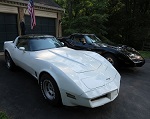
1970 convertible, SBC 350, 4 speed. It's my wife's occasional driver (when it's not too hot or cold out), and I've taken on the role of her personal mechanic.
The car has had issues starting in the past when it's been too hot, so thought it was likely some type of heat-soak because it would try and turn over, but struggled and wouldn't start. Let it sit for a while and could get it started. Since then, I've changed from original points to HEI ignition, new ignition cables, new HE starter, new battery. Ran great for a while but now Intermittently, it won't crank. I thought maybe the clutch safety switch, but last time it did it, I tried with and without the clutch pushed in and there was a slightly different sound when the clutch was in like the safety switch was OK. Checked Battery with Volt meter and it was fine. Also pulled off the negative battery cable the next time I got it running and it didn't die, so I think the alternator is fine.
Will happily do experiments and feed back data if any one has an idea of what to try or check.
Thanks
CB
No cranking can potentially be a ignition switch problem.
You can route a power wire from the battery to the starter solenoid terminal, throw a switch in the middle and do some testing.
or just replace the ignition switch. Not expensive but a huge pain to replace. It sits on top of the steering column. Not a fun job at all.
I had the same problem and it was the ignition switch, you say you replaced yours, did you correctly adjust it for proper contact when the rod from the key lock pushes the contact block ? When the issues occurs you can bypass the ignition switch to verify if this is the problem.From Jim Sheas papers........
Installing and Adjusting the Ignition Switch
In order to correctly install the ignition switch it is necessary for you to place the column lock cylinder in the Off Unlock position.
Back Drive Columns (1969-1976) reach down to the lower column lever and move it all the way Down to its lowest position. Now rotate the lock cylinder all the way counterclockwise until it stops. The steering column is now in Off Unlock position.
Key Release Columns (1977-1982) rotate the lock cylinder all the way counterclockwise until it stops. DO NOT actuate the key release lever. This will place it in the Off Unlock position.
You now need to place the ignition switch in that same Off Unlock position. You do this by moving the slider all the way to the end of travel to the Accessory position. It should detent and stay in that position. If in doubt, the other travel extreme will be the Start position and you should feel a spring return. Now move the slider two detent positions back from the Accessory position, this will be the Off Unlock position.
Fit the actuator rod into the slider hole and assemble it to the column with the two fasteners. Lightly push the switch down the column (away from the steering wheel), to take out lash in the actuator rod, and tighten the mounting screws. Caution should be exercised to prevent moving the switch out of the Off Unlock detent. Tighten the screws to 35 in-lbs. Reinstall and readjust the dimmer switch if so equipped.
If not the above fix, a solenoid will quit long before the starter will. The poor solenoid has to take all the heat from the exhaust, energize the starter and send the voltage to its destination, plus engage the bendix. The contacts inside the solenoid become corroded and brittle.
You do not need to replace the starter, just the solenoid.
Look for a unit with a brown end cap. Those are ceramic and handle the heat much better. Its a little more money but a lot more heavy-duty.
The car has had issues starting in the past when it's been too hot. NO START
it would try and turn over, but struggled and wouldn't start. Let it sit for a while and could get it started. NO START
Ran great for a while but now Intermittently, it won't crank. NO CRANK
Checked Battery with Voltmeter and it was fine. FULLY CHARGED BUT DOESN'T PROVE ITS GOOD
Also pulled off the negative battery cable the next time I got it running and it didn't die
CB
Please don't EVER do that again Chris. Disconnecting the load from a generator/alternator can cause the output to spike to over 100V (due to inductance) and
blow out every other circuit in the car, light bulbs, fusible link, etc. Who knows, maybe you got lucky and didn't melt anything (voltage regulator, gauges, fuel sender, ...)
Congratulations! You've ruled out / replaced enough "stuff" to have eliminated 90% of the causes of your two problems. Let's deal with the NO CRANK first.
The two most likely remaining causes of a no-crank are a poor battery to frame connection or a voltage drop in the ignition (cranking) circuit.
Get under the car and renew the battery to frame connection. Remove, wire brush till shiny, re-bolt, touch of spray paint primer.
Also check the frame to engine strap. Make sure it's not missing, or unbolt and clean both of its ends too. For whatever reason not
cranking reliably when HOT is often caused by a bad ground.
You can DIAGNOSE a poor ground by running jumper cables from the Battery (-) post to the starter (body, frame, bolts) , but why bother. Faster just to renew the connection.
The other possible cause is a voltage drop in your ignition switch, cranking circuit.
Diagnose this by hotwiring it. Build yourself two eight foot long alligator leads. Clamp one to the starter (crank) terminal, run it in the window into the cockpit
Run the other to the positive battery post.
When you turn the keyswitch and it DOES NOT CRANK, touch the two alligator lead ends together, sending 12V from the battery directly to the starter. If it cranks, you've
confirmed you've got a problem with your ignition switch or the wires to and from
Having cleaned up the ground, at this point if "hotwiring" the starter does not make it crank EVERY SINGLE TIME, it's time for a new starter and solenoid.
An auto electric professional would voltage drop the ignition switch, wires, clutch interlock, etc., but this way is faster and easier for DIYs.
YOU CAN HAVE YOUR NO-CRANK DIAGNOSED BEFORE LUNCH TODAY CHRIS. CONGRATULATIONS!
NOW, as far as the NO START....
Most carbureted cars of this era have a little trouble starting, hot. Usually the fuel in the carburetor has boiled, percolated, and flooded the engine.
How are you ATTEMPTING to start it? When mine is hot I hold the gas pedal to the floor and crank continuously until it clears out all that gas & starts.
Do not pump the pedal like you do when it's cold.
It doesn't run real well the first minute because of vapor locking, hot fuel, etc. Once the carb gets fresh, cool fuel from the tank it quits stumbling on acceleration, usually 4 miles down the road.
Every time I turn that key I ask myself, is this engine cold, or is it hot, and either hold it floored or pump it.
Stubborn starting can also be caused by excess timing advance. Does it feel like it's "kicking back?"
New battery, NEVERMIND!
Lastly, 12.6 is a fully charged battery. But seeing 12.6+ does not PROVE the battery is any good. Take it out of the car, Fully charge it and have it LOAD tested at
Autozone or WalMart or Interstate battery or buy your own battery load tester at Harbor Fright.
A quick & dirty way of battery load testing is to turn on your headlights THEN crank the engine. If the headlights dim excessively, time for a new battery.
The professional way of battery load testing is either out of the car, OR put a voltmeter across the starter lugs WHILE CRANKING. If the voltage drops below 9.0 V,
time for a new battery. Dear Chris, do make every effort NOT to run yourself over if you decide to make this measurement.
Battery is like a swimming pool that gradually fills with sand, leaves, etc. It can appear full but only have 10% of the capacity (cold cranking amps) it did new.
Dealing with vapor locking, hot fuel, flooding... that's another post. Start by only using Premium fuel, or preferably, non-alcohol fuel if you can find it.
That will reduce the problem.
You can be done diagnosing all this by noon and start loving this Corvette again.
Congratulations.
Last edited by wadenelson; Aug 16, 2023 at 09:37 AM.
Thanks for the suggestion. I don't remember exactly what I did, but I do remember following a detailed guide on how to do it, so I believe it was correct. I will keep it on the list of things to try if other experiments don't yield results.
Thanks for all the suggestions. I jacked up the car today and cleaned the negative frame connection. It wasn't bad at all, but cleaned it well but no change. Another possible clue:
I had a trickle charger connected and tried to start to it before jacking it up to clean the connection. I opened the door to get in and the floor light came on, lights on the dash like "open door" were on. I tried to crank it and nothing happened (just the mechanical sounding click). Tried to crank again and all lights were off like there is no battery in the car. I disconnect the trickle charger and jacked up the car, cleaned the frame connection, lowered it and then tried to start it again. Exact same thing happened. floor lights came on etc.. tried to start and got nothing but the click. Then all lights stopped working/coming on. Tried to crank it a second time and again seemed like no battery in the car, just nothing.
I'll figure where the engine strap is and check that and will try the hot wire w/ alligator lead to check the ignition switch next (probably over the weekend) unless this last clue rules it out or narrow's it down to something else.
Sooooo frustrating, but worth it after getting the feeling of accomplishment when I actually fix something!
Thanks in advance!
At this point I suspect you've either simply got a loose/corroded battery cable. Perhaps at the starter end:
Disconnect either battery cable and make sure the positive cable is tightly bolted to the starter, not loose or corroded.
That one is next to impossible to hotwire to test, easier just to tighten. (You'd have to hotwire it with jumer cables)
-OR -
You have managed to fry your primary fusible link, located down by the starter. Perhaps all but a couple of strands are broken and at the right angle, load, temperature
it somehow manages to make connection.
Where is this "click" sound coming from when you turn the key? In the steering column or at the solenoid?
When a starter solenoid is only getting hit with 5-9 volts it will "click" but not pull the "bolt" in sufficiently to energize and spin the starter.
Typically that's because of voltage drops occuring in the ignition switch, wiring, connectors, fuseblock, clutch switch, etc. Burned contacts, dirty connectors, wires with all but a few strands broken internally...
Battery may be fine, even brand new.
The easiest way to diagnose it is simply to hotwire the solenoid and see if it slams home and the starter spins. In neutral, of course, brake set, wheels chocked. Careful!
If hotwiring cures the problem, then it's time to inspect the wiring to and from the ignition switch, actually measure the voltage available while ATTEMPTING to crank on either side of the ignition switch, the ignition fuse, the wire to the solenoid, clutch interlock, etc. As in "Hey, there's 10.0 volts on THIS end of this wire (connector, switch, ...) but only 8.6 getting through to the other end! This wire must be broken internally, most of the strands!"
You HAVE to be turning the switch, cranking. Without a load there will be no current flowing, no voltage drop across a resistance. V = IR. All you'll see is battery voltage everywhere.
2025 c3 ('74-'82) of the Year Finalist - Unmodified
2019 C3 of Year Finalist (appearance mods)
Have you replaced the solenoid, or at least turned the disk over?
If you have done that and you still have the intermittent start problem then you might consider installing a new positive cable.
First - a huge thank you for everyone who jumped in and tried to help me solve this problem. It’s refreshing to see there are still people out there who are willing to take their time to help people they’ve never met!
Second - I got some time this afternoon and was going to try the Hotwire experiment. I figured I try and start it just to confirm the car was in the same state before trying the Hotwire, and also to be able to accurately answer where the click was coming from. I tried to start it, and heard the solenoid clicking, which hasn’t happened before. Then zero power to anything. Battery cables were on tight and had zero corrosion and everything looked fine. I push the negative cable around and the floor light came back on. There’s definitely something going on inside the cable that you can’t see from the outside (willing to bet its the original cable from 1970).
Online, they all seem to be around $80. Doesn’t matter if I use that cable specific to the 1970 Corvette, or can I buy a more generic one from AutoZone or a place like that? Of course I’d like to save a little bit of money but it’s more I’m excited to confirm this fixes the issue!
Sorry, should have been more clear. I’m just planning to replace only the negative battery cable that runs from the battery and attaches to the chassis. Just this one cable alone seems to be $80-$90 (plus a week for shipping), which seems expensive. Curious if I get a less expensive generic one from a local chain store, if it will be fine or am I possibly creating another issue by doing so.
I have a Corvette with high compression and starting reliably was an issue for a while. It turned out that the long tube headers were getting the starter motor pretty hot. Heat Sink Happens...
The solutions I used were pretty simple. I switched to a Gear Driven Starter which REALLY makes the engine turn over. The other thing was to dial the timing back 20* (Only while cranking) and this removed a huge load off the starter. I did this many years ago using a MSD Digital Retard Box that allowed me to pull anywhere from 5-20* of timing only during cranking and would revert back to standard timing above 600 rpm.
How is the battery in your Corvette? Cars that sit or are on a small battery charger can stratify the electrolyte and reduce their ability to make 12 volts when needed. I strongly suggest that people disconnect the battery and charge it with a 10-15 amp charger once or twice a year to fully charge the battery. Most battery tenders are not able to get the electrolyte bubbling or gassing which is critical to de-stratifying the electrolyte and fully charging the battery. I buy batteries that let me access the electrolyte so I can top it off as needed as this helps the battery last longer.
Getting the right cable is important, I personally can make them here but I still buy the official factory style cables to ensure the best performance and cranking. Cleaning the battery terminals and Posts is another maintenance item that is often over looked. Every winter my batteries are pulled, cleaned, Electrolyte topped off (Distilled Water ONLY) and charged before being put on a maintainer bench.
Chris a $20 cable from AutoZone will work just as well, if you're not worried about "originality." Who's ever gonna look in the battery box anyway??
If you believe you have an internally failed battery cable, connect a jumper cable from B(-) to the frame of the car or engine block.
Preferably a bare or unpainted portion.
Well i already order the $100 cable, so I think I’ll just stick with it. Hope to get it delivered late this week. I am almost certain it has to be the cable, but will provide an update to everyone once I get it in and start it a fee times.
Was out of town for work, but back yesterday. Changed cable and everything seems 100%!!
need to do some test drives, but so far so good
thanks again everyone









 Intermittent starting