When you click on links to various merchants on this site and make a purchase, this can result in this site earning a commission. Affiliate programs and affiliations include, but are not limited to, the eBay Partner Network.
Thanks Leigh, I did not know that. I have read several older articles that say the superior flow from unshrouding the valves in the open chamber heads more than made up for the loss of compression in both hp and torque gains.
Thanks Leigh, I did not know that. I have read several older articles that say the superior flow from unshrouding the valves in the open chamber heads more than made up for the loss of compression in both hp and torque gains.
back in 1970 we were told that just by bolting open chamber heads to a closed chamber was good for 20 Hp we were also told back then that the steel heads made more power then aluminum due to volumetric heat( read heat is power)loss
tge first “Rat” motor to use open chamber heads was the 69 open chambered L-88. I also seem to recall swing several special order 70 ss chevelles with LS 7 engines
here on Long Island motion performance was building Phase III CHEVIES WITH open chambered animals that are up all the other day 2 cars from Yenko niky, Gibbs and the like with Guarantees a running 1120 with a test drive with a tell you to come wi guarantees a running 1120s with a test driver from motion! If your car fails to run that fast, motion would buy it back, Joel Rosen NEVER HAD TO BUY ONE BACK!by t
An interesting read for everybody would be if you read the story of Astoria, Chaz and the Ko-Motion 67’ corvette
Last edited by Brickmaster; Jul 30, 2025 at 08:08 PM.
I always wondered which was better, iron heads and keeping the heat in the chamber or aluminum head giving off heat to run more timing without detonation.
All other things being equal. 🤔
For anyone interested I found this in an old thread here from ‘05 but couldn’t get the link to copy.
Chevrolet Big Block Aluminum Heads 1967 L-88/L-89 applications used the 3904392 casting closed chamber aluminum head.
1968-1970 L-89 applications used the 3919842 casting closed chamber aluminum head.
1968-1969(early) L-88 applications used the 3919842 casting closed chamber aluminum head. This head was used in 1968-1969 on first design L-88s with the broadcast code "IT".
1969(late) L-88 applications used the 3946074 casting open chamber aluminum head. This head was used in 1969 on second design L-88s with the broadcast code "LO" or "LV".
1969 ZL-1 applications used the 3946074 casting open chamber aluminum head.
1971 LS-6 applications used the 3946074 casting open chamber aluminum head..
The 1970 LS-6 engine did not use aluminum heads. The material was cast iron with a casting number of 3964291. The intended production version of the LS-7 engine (slated for use in the 1970 Corvette) would have used the 3919842 casting closed chamber aluminum head. As it was, the only 1970 Chevrolet vehicles to be factory equipped with aluminum heads were a handful of L-89 optioned 396/375 Chevelles that used the 3919842 casting.
Also , to the OP OVER THE COUNTER BLOCKS AND ENGINES HAVE ONLYVONE PREFIX ON THE ENINE SECH ID PAD IN FRONT OF THE PASSENGER SIDE HEAD , that would be the letter “R” for replacement
……,,Or, maybe not.
Today I was putting the crank in the block on my LS6 short block and saw something I had not noticed before. On the counter weight behind the #4 main cap is stamped LS7. Faint but visible.
Now I thought I read somewhere that LS6 and LS7 used a different crankshaft.
Can anyone confirm this?
I will do more research.
……,,Or, maybe not.
Today I was putting the crank in the block on my LS6 short block and saw something I had not noticed before. On the counter weight behind the #4 main cap is stamped LS7. Faint but visible.
Now I thought I read somewhere that LS6 and LS7 used a different crankshaft.
Can anyone confirm this?
I will do more research.
I know low performance 354 used cast cranks as I recall but all hiperformance bib blocks have tuff trident forged cranks. 454 are external balanced, when built for pure race Mallory metal is added to the crank to internally balance
I can't remember if all the BBC forged cranks were cross-drilled, or just some of them. Like the 12:1 C.R. versions.
My crank is forged and a 7416 code. It "rings" nicely!
That was supposed to be what the LS6 used.
I do not know if it is a cross-drilled one or not.
I do know lots of LS6s were sold over the counter in the 70s/80s.
A lot went into drag or street cars. Several guys stopped by the speed shop with one.
But I think that 7416 crank may have been used in some other applications during that period as well.
Like marine, trucks, etc.
Trivia: 1972 prices!!!....If we only knew then.....
BTW the 1971 LS6 pistons are a unique casting/part number. And were only ever used in Corvettes. And only 188 were made. Pretty rare piston to find today.
Last edited by leigh1322; Aug 2, 2025 at 12:19 AM.
Yes, this one is cross drilled also.
It also has the full number on the rear counterweight, not just 4 numbers making it one of the later ones. Full number
I have read that the tuffrided ones were darker color in the counterweights from the process also, but I have nothing to compare it to.
I have read that only LS7 was tuffrided and I have also read all LS6 got the treatment also.
I have also read only LS7 was cross drilled and also that some LS6 were and some weren’t.
Information is all over the board. So who knows.
The only reason I can think of for the LS7 stamp, is to identify it in production for some difference that is not easily detectable.
Yes, mine rings like a bell also.
Last edited by Vette5311; Aug 2, 2025 at 11:48 AM.
All right I looked hard and found a pic of mine.
I did manage to find a pic of my crank.
A close-up reveals only 4 numbers on the first throw, "7416"
I do see the two "straight shot drilled" thru holes on the rod journals.
And the very wide parting line of a forged crank.
If you look at two of the rod throws mine is a twisted forging.
The part lines do not line up.
Yours does look darker than mine, but who knows with lighting tricks.
Mine was just laying around the machine shop, it could have come from a truck for all I know, or a marine motor, or an old LS6/LS7 drag motor.
The color looks lighter, but it was magged.
I found this on a boat site:
"In my Chevy book it say's a 3967416 was LS6 / LS7, forged 1053 steel, cross-drilled, nitrated....the high-end of BBC factory cranks, good stuff!"
Reher Morrison says there is a difference between cross drilled main journals, and the two straight shot drilled holes to the rod journals.
Your 7416 does not appear to be a twisted forging, I believe it is a non-twisted one.
In your crank, the wide parting lines for the forging all seem to line up in a straight line, in red. The rod journal in blue does not have a parting line. Compare that to mine which has parting lines on all the rod journals, at like 90* angles to each other. I think you have the better crank.
Last edited by leigh1322; Aug 2, 2025 at 06:23 PM.
……,,Or, maybe not.
Today I was putting the crank in the block on my LS6 short block and saw something I had not noticed before. On the counter weight behind the #4 main cap is stamped LS7. Faint but visible.
Now I thought I read somewhere that LS6 and LS7 used a different crankshaft.
Can anyone confirm this?
I will do more research.
By that point....in the late 80's.....it would have made all the sense to run the same crank in both....as you could still buy both until 1990 I think....only difference would be the balance...
What I found most interesting about your "LS7" crank is it's non-twist forging. And the LS7 stamping.
Apparently this was extremely rare in the GM crankshaft world.
Perhaps the later LS7 cranks benefited from this?
Speed-Talk discussions say that all aftermarket cranks are the non-twist type, and all, or virtually all, Chevy ones are twisted.
But a examples of this 454 non-twist have popped up over the years, but always with the long GM part no.
So yours is 1053 forged steel, non-twist, Nitrated (dark). The straight thru drilling from mains to rods is normal. But are the main bearings cross-drilled 180* from one side to the other?
IIRC that was what made the L88 and LS7 cranks different from others.
But then again, my memory is not what it used to be.
My 1972 advertisement for OTC engines, says the LS6 crank is nitrated. But that is the OTC one. It also says they have the big 7/16 rod bolts. Now whether the factory installed LS6s had both those features, is unknown & unconfirmed to me. And what difference, if any, the 71 vette only LS6 had in this area.
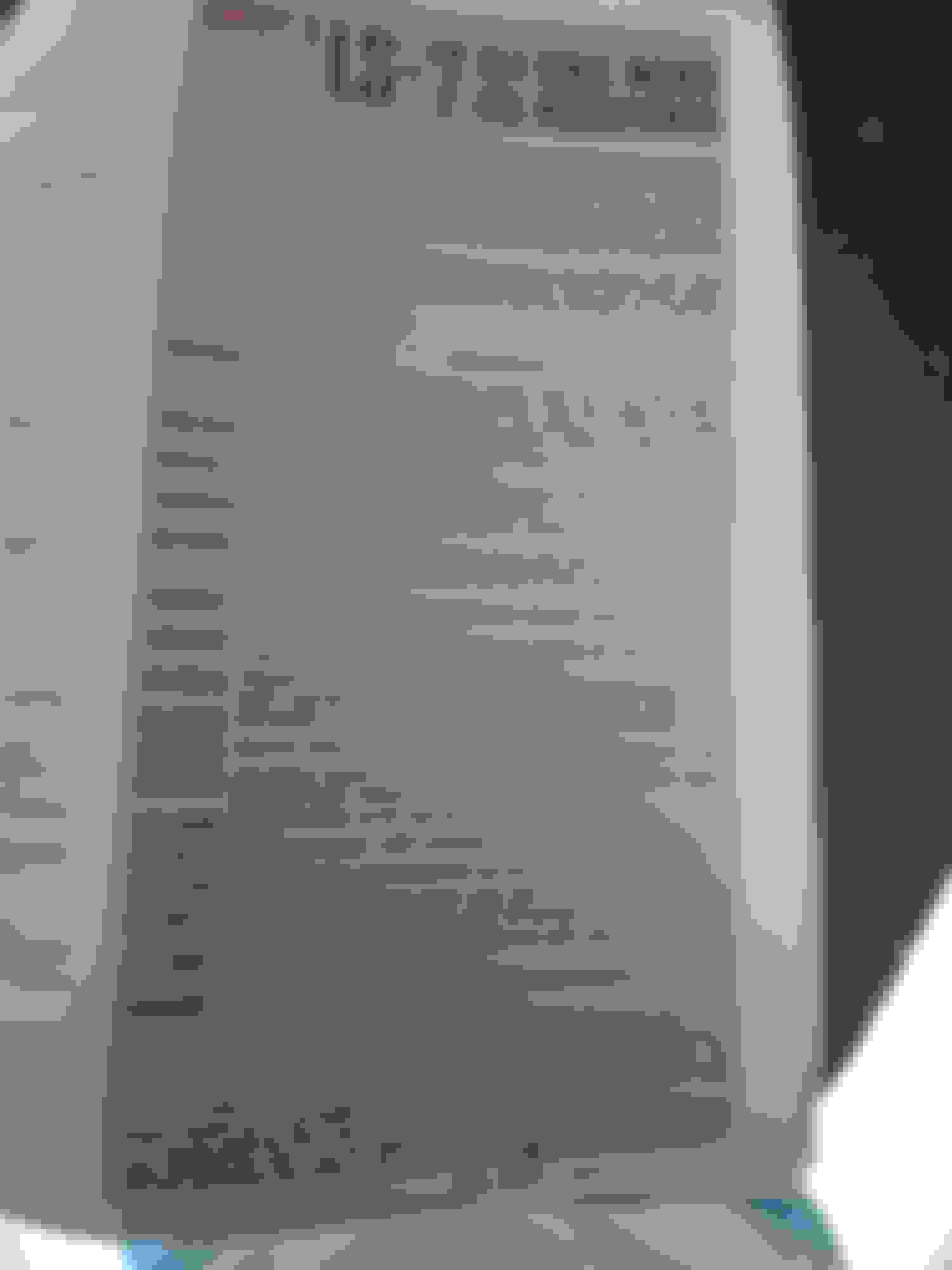
Here is an ad from Feb 1970 Car Craft magazine on LS7 specs. The specs sound like the later crate LS7 that was released, minus the aluminum heads and complete engine assemblies. But I don't think several of these GM numbers ever really existed, or were "released". It says nitrated and cross-drilled crank, and 7/16 rods. Take it for what it's worth.
If you read closely these specs appear to be a mix of the almost-released production LS7, and the later OTC LS7. Just all mixed together.
Last edited by leigh1322; Aug 3, 2025 at 10:57 AM.
Thanks Leigh and Jebby.
Yes, this crank is cross drilled through the mains 90 degrees to the journal. If you click on the picture you drew the arrows on and it opens in a new window it is much clearer when you blow it up. Look at the main between your two red arrows and you can see the two intersecting holes on the main journal from the rod and the cross drilled through. You can tell it’s not a round hole.
I have been doing lots of evening reading about LS6/LS7 and there is lots of conflicting information out there. Several places claim the 7 was treated and the 6 wasn’t. Others say tuffrided not nitrated. I confess I do not know the difference, but I did find a site that said tuffriding often warps the crank. When I got this one it was .0035 out. I took it to Dave at Mile High Cranks and he straightened it. He said not that unusual to be new out of the box with that kind of runout. I just assumed someone knocked it over before I got it.
The guy that balanced my assembly said it was out by quite a bit, but I just assumed that was from all my mismatched parts.
I read that 7 used boron rod bolts and 6 did not. You can tell the difference as 7 are smooth and 6 is knurled. The rods are reported to be the same except for the bolts. Mine are knurled.
I’ve got the rods and pistons ready to go in with gapless 2nd total seal rings. I was reading about a new dry powder Total Seal uses for ring breakin instead of oil. Supposedly prevents coking and glazing. Turns the cylinder walls green.
I was wondering what all the colors of paint stand for on the crank, if anyone knows please share.
Thanks again guys for all your help.
Now for those that want more information on this, here is a link to a thread Leigh posted over a year ago here with Stan posting also. Very good read.
Interesting camshaft info in this thread.
I appreciate all your effort. I found this post over on the Chevelle forum. Lots of LS6 guys over there. I think the footnotes explain my LS7 stamp. BBC Crankshaft Part Numbers
Casting # Year CID Comments/ Specs/RPO's/Apps
330570 427 truck,1053,forging number 6223
336782 1970-74 454 with automatic transmission
3879621 1967 427 L-88, See Note 1
3882841 1965-71 396 See Note 2
3882842 1965-69 427 forged, cross drilled, balanced for 11:1 CR
3882849 1966-69 427
3887114 1965 396 tufftrided, 5140
3963521 454 4 in stroke, 5140, raw forged
3963523 1970-71 454 LS-6, See Note 3
3963524 1970-71 454 LS-7, See Note 4
3965746 1965-69 430 raw forged, semi finished, 3.4-3.8 stroke
3965753 1970-72 495 raw forged, semi finished, 3.9-4.25 stroke, 5140
3967811 1968-69 427 L-88/ZL-1, See Note 5
3975945 1970 454 with manual transmission
Note 1: L-88, with 3/8 in bolt rods, balanced for 12.5:1 CR, tufftrided, cross drilled
Note 2: forged, cross drilled, 3.76 stroke, tufftrided, balanced for 11:1 CR
Note 3: 1053, tufftrided, cross drilled, balanced for 9.25:1 or 11.25:1 CR, forging number - 3520 and 7416
Note 4: 4 in stroke, HD, 5140, LS-7, balanced for 12.5:1 CR, tufftrided, cross drilled
Note 5: tufftrided, 5140, with 7/16 in bolt rods, tufftrided, cross drilled, forging number - 7115
Now either LS6 and LS7 being different types of steel OR three different balances (as Jebby said) for LS5, LS6, and LS7, depending on pistons used, could account for the LS7 stamp as none of these would be detected by just looking at them.
Like I said, information is all over the board, depending on who one chooses to believe.
Based on what I have found I believe my crank may be LS7 5140 tuffrided and cross drilled. Although I could be wrong, as none show casting 7416. I’m pretty happy with what I have.
Thanks again.
I am enjoying this discussion. And learning as I go.
So you and I have 2 different alloys, and a different twist.
This Engine builder Article is a great read: Link
And here is what Google AI has to say about the alloys:
Key differences summarized
Composition: 5140 is a chromium alloy steel, while 1053 is a carbon steel.
Strength & Toughness: 5140 generally offers higher strength, toughness, and fatigue resistance compared to 1053.
Hardenability: 5140 possesses superior hardenability, particularly important for achieving desired properties in larger components through heat treatment.
Applications: 5140 is preferred for more demanding applications with higher stresses and wear, while 1053 is suitable for stock or mild performance requirements.
In conclusion, 5140 steel provides a superior balance of strength, toughness, and wear resistance compared to 1053, particularly beneficial for applications requiring higher performance and durability due to its chromium content and better response to heat treatment.
I am not racing mine. I just do not want either one of us to wind up with this unique two piece crank: