When you click on links to various merchants on this site and make a purchase, this can result in this site earning a commission. Affiliate programs and affiliations include, but are not limited to, the eBay Partner Network.
As mentioned in the introduction, the radiator was leaking, and the support, like many C3s, was far from perfect. So, down went the hood and out came the radiator together with the support! Only after removing it did I comprehend the full extent of the damage to the radiator support; the lower half had been significantly corroded.
I contemplated my options—buying new radiator support and a radiator was easy, but I had concerns. From what I've researched, replicas often had fitting issues, and I wanted to avoid any such complications after my experience with the bumpers. Therefore, I sought someone who could repair the original radiator and support, ensuring a perfect fit. Additionally, it's simply satisfying to have factory original parts repaired, ensuring they can function for another 50 years. Rad support turned out great! Basically, the lower section had to be cut and newly fabricated. However, after the repair it is indistinguishable from the original!
The radiator underwent a pressure test and was discovered to have leaks at the lower neck and the bottom of the right tank. All repairs were carried out with professional soldering. Inquiring about the option to replace the radiator core, I was recommended to retain the original due to its better quality and good condition compared to current replacements. Ultimately, everything worked out nicely! After several test drives, I'm pleased to report that there's not a single drop of leakage!
Reinstalling the radiator, however, proved to be a challenge. Ultimately, I installed the entire assembly—radiator, support, fan shroud, and hoses, giving me quite the thigh workout as I maneuvered it back into place, especially over the car's front
The radiator hoses have been replaced with new ones from the ACDelco Gold/Professional series, along with the hoses in the ATF fluid cooling circuit, which were also leaking.
I removed the hood hinges to reinstall the radiator assembly and took the opportunity to clean and paint them. I find this kind of work somewhat satisfying & relaxing
I have also cleaned and reconditioned the fan shroud, fan blade, and other accessories while at it.
Here's a picture comparison of the front of the engine compartment. Some work remains to be done, but there's nothing that requires immediate attention.
2025 c3 ('74-'82) of the Year Finalist - Unmodified
2024 C3 of the Year Finalist - Unmodified
2023 C3 of the Year Finalist - Unmodified
Great job! It's looking good under that hood. A good call to stay with the original radiator - I tried a re-core many years ago and it was a disaster. I replaced it with an original style radiator that has proved more than adequate (in fact it was almost too good, I had to change the thermostat!). And you're right about the replacemn et rad suports, I've known a few that simply would not fit, or had bolt holes that were mis-aligned.
Your story of the top shock bolt brought back memories of working on a friends car. I recall we started to replace the shocks at about 9:00am one morning and almost 4 hours later his wife came into the garage to ask how we were getting on. My buddy said, "Well we've got one bolt out!"😀 Just remember to use plenty of copper grease during all the re-assembly processes.👍
Yes, at that time, the last thing I needed was to figure out what to do with a radiator support that didn't fit. Especially since it also serves as a reinforcing element, I wasn't too keen on improvising there.
As for the engine compartment, I plan to clean & detail it a bit. Also, I'll have a look at the cable / hose management + possibly replacing the brake fluid reservoir lid. Additionally, I've purchased a new set of ACDelco spark plugs and cables, which I may also replace.
Indeed, copper grease, I have a 500g container of it and I'm applying it, particularly on the bolts that were difficult to loosen. As you can see, I was assembling the tie rods with copper grease and Jim Shea's manual at the ready.
Currently, I'm working on these tie rods - at last, I've managed to adjust them so my front wheels have stopped squealing. It was embarrassing. However, after the adjustment, my steering wheel is like 90° degrees off-center when driving straight. But I'm making some progress... I've never performed such a job, so I'm essentially learning by doing. I actually have another paper from Jim Shea about steering wheel ajustment, just need to review it and make sure of what has to be turned in which direction.
2025 c3 ('74-'82) of the Year Finalist - Unmodified
2024 C3 of the Year Finalist - Unmodified
2023 C3 of the Year Finalist - Unmodified
Hi If you have the Jim Shea papers then I think he mentions that there is a "flat' on the steering box input shaft, between the splines and the box, which indicates when the box in in the straight ahead position. The flat should be face up. Once it is, then you need to align the wheels without moving the steering wheel/box. The method of alignment I use, with lines under tension each side of the car, allow you to ensure all four wheels are straight, and, that the car is not "crabbing". It's amazing how little movement of the tie rods is needed to make a change. The biggest problem I had was actually making the adjustments with the car on the ground, it was a stretch to get under and turn the tie rods! But it is just about possible. A pit would have been wonderful though!😄
Indeed, it is mentioned; here is the paper I am looking at:http://jimshea.corvettefaq.com/wp-co...v28jl20091.pdf
You are correct, working under the car is not particularly comfortable, and I can only adjust the tie rod sleeve incrementally before the wrench handle hits the ground. But it's what it is. There have been more challenging jobs to do on a C3.
Based on my research, a quarter turn adjusts the steering wheel by approximately 15 degrees. Therefore, to achieve a 90-degree adjustment, it would require one and a half turns on each rod in opposite directions. As a note for myself: the passenger tie rod is shortened by turning it counter-clockwise.
2025 c3 ('74-'82) of the Year Finalist - Unmodified
2024 C3 of the Year Finalist - Unmodified
2023 C3 of the Year Finalist - Unmodified
That's interesting, I've never looked at how much adjustment is needed to turn the wheel straight.
The info I worked with did have this note at the bottom:Note: When your car came from the factory the left tie rod had it's left hand threads on it's left side and the right tie rod had it's left hand threads on it's right side so the rods had to be turned in opposite directions to make a toe in/toe out adjustment. So before you go turning them determine which way they need to be turned by looking at their threads and determining if they're going to lengthen or shorten. Because since your car was built the rods may have been switched from side-to-side or from end-to-end.
When I fitted new tie rods and ends I made sure I fitted them them as they came from the factory.😄
Well, I adjusted them to match the original settings too, but that didn't worked. So, I tried setting them to the same length, which only made things worse Eventually, working solo in the early morning without assistance to measure the distance between the front and rear sections of the front tires, I resorted to eyeballing the front tires for adjustments. Surprisingly, it worked well enough to eliminate the squeaking and remove feedback from the steering wheel. However, I am certain that it will require additional attention
To remove the springs and control arms, it was necessary to take off the front wheel hub assemblies as well. In the process, I completely disassembled them to clean off the decades-old buildup of grime and to apply fresh paint. As mentioned in the previous post, the front rotors were still the original factory-installed and riveted ones, so drilling them out was the first step.
This task was relatively straightforward. The most challenging part was loosening the three large bolts that held the assembly together and knocking out the old bearing races with a brass tool. I also replaced the inner and outer bearings with a new set from Timken. Although the original bearings were in good condition with no scoring on the races, the replacement might not have been strictly necessary. However, since I had the new parts on hand, I went ahead with it. I've cleaned and stored the old bearings in a box, just in case... Indeed, I forgot to order new hub caps as you can see I hope I remember them this time as I'm putting together another batch of parts to order. Currently, I'm checking the availability and prices in various stores to determine where to place the order.
Upon checking the oil, I smelled a gasoline odor. A preliminary search suggested possible culprits: a faulty fuel pump diaphragm or a incorrectly set carburetor. Consequently, I drained the oil and investigated further.
The condition of the fuel pump and fuel hoses was just terrible... The setup of tubing and hose from the pump to the carburetor was equally unimpressive and seemed outright unsafe.
Even with my limited experience, a brief examination of the carburetor indicated issues. Notably, vacuum hoses pluged with bolts. Some of the emissions components were loose in the intake, likely non-functional, and the hoses connected to them appeared in poor condition too and looked just awful, so I decided to remove everything!
With the help of various members of this forum, several issues related to the carburetor have been identified: the absence of a choke pulloff and PCV valve, a misconnected valve cover breather to the EVAP float bowl (which resulted in that gasoline smell in the oil) and an improperly connected distributor vacuum advance. Moreover, the carburetor was a non-original part from a 1979 truck.
Faced with numerous issues, I opted to begin with simpler tasks.
I replaced the mechanical fuel pump and both fuel hoses. I also fabricated a new fuel hose from the pump to the carburetor, opting for rubber fuel hose with heat and abrasion-resistant braiding together with high pressure clamps, creating a single, safer connection than the original setup. Additionally, I removed the EGR valve and fabricated a thick aluminum plate with a high-temperature resistant insert to sit between the engine block and the plate.
Picture of an engine with the carburetor removed, along with the EGR and other emissions-related components. The carburetor has been replaced with one that has an electric choke, allowing for the removal of the hot air tubes as well. It is significantly cleaner than it was originally. The heater core hoses have been removed to reduce the car's interior heat. Additionally, the engine compartment appears much tidier without them. I am also progressively removing the AC components, piece by piece...
I've also replaced thermostat together with housing, while at it.
However, the pressing question still lingered in the air. Clearly, the carburetor itself needed to be resolved. It certainly couldn't stay like this.
Eventually I managed to find another Quadrajet locally, also originally from a truck, but nevertheless - in a nice condition and most importantly - complete. From a fellow C3 owner who had replaced it in his car with an Edelbrock if I remember correctly.
I was considering whether to take the parts from it that were missing from my existing carburetor, or do a swap. Since it was in good condition overall and no one seemed to have tinkered with it in the past- I decided to swap the entire carburetor.
I have correctly connected all vacuum hoses, installed a PCV Valve on the driver's side valve cover, and capped the unnecessary ports.
When I've fired it up after almost a year, the difference was like night and day! It started effortlessly and the idle was much smoother as well. In the end, everything turned out well. I opted to rotate the left valve cover by 90 degrees, positioning the PCV at the back. I also rerouted the hose to the rear. Consequently, once the air cleaner was installed, the hose connecting the carburetor to the PCV was concealed.
Additionally, since I'll be driving shorter distances, I've disabled the electric choke. It was a simple task; I just had to loosen the screws on the cap and rotate it to keep the flaps open.
Below is a picture of the newly installed carburetor. The way the hoses are routed is final, although I’m still considering some minor changes - specifically, replacing the hose from the carb to the PCV. I used a leftover fuel hose that fits perfectly and works just fine, but a proper vacuum hose would be better - in terms of looks, even if it’s hidden under the air cleaner assembly And I would just feel better about it. The issue is that I can’t find the required diameter in black. It’s one of those situations where I was told, “It’s a standard part; you can just get it at any regular auto parts store.” So there I was, in a regular auto parts store, asking for a regular vacuum hose. And, as expected, I was regularly told they don’t have it. The same story goes for a few other parts I assumed I could source locally, but either they’re unavailable altogether, or the issue lied with the difference in US standards.
Another detail I might revisit is the braided hose from the pump to the carb. I may shorten and reroute it slightly, but I’m saving that for the final step once everything else in the engine bay is completed.
Although the issue isn't fully resolved, at least that is the how I feel about it. The current carburetor is functioning adequately. Yet, it still would be better to install a rebuilt carburetor originally designed for the C3 Corvette. The challenge, however, lies in sourcing one in Europe that's in good enough condition for a proper rebuild. Another consideration is Holley and related modifications. Need to think it thru... Nevertheless, I'm relieved to have resolved the situation to this extent. Considering I only drive the car a few hundred miles annually, the most pressing issue has been managed, allowing me to focus on other matters and de-prioritize this one with peace of mind
It's been a nice day, so I took the C3 for another drive around town, cruising for over an hour Aside from the direction lights not functioning properly (they remain static instead of flashing - still working on that), there have been no significant issues. I've also managed to align the steering wheel The garage floor is still dry... Hopefully, it remains that way...
As the weather get worse, I plan to remove the seats for a thorough interior cleaning. Additionally, I'll recondition the seat rails, fasteners, and other various items inside. I also have to replace some grilles and a few other minor components... It's definitely easier with the seats removed!
While checking the fluid levels with the hood open, I noticed a missing bolt in the left hood hinge and another that was somewhat loose. Attempting to gently tighten it with a small ratchet, the second bolt snapped and fell out, which may indicate it was already snapped Consequently, the hood is now only attached by the foldable arm on the left, causing it to tilt sideways when closing. After some effort, I managed to close it, but this means I need to remove the hood to extract the remnants of the bolts.
Fortunately, bolts were recently removed and cleaned, so they aren't rusted into the nuts, which should make the removal process easier. Once removed, I plan to replace all the bolts securing the hood.
EDIT: II've researched OEM hinge bolts and found that the ones used to secure the hinge to my car's hood are different. Reflecting on it, I remember the bolts used to secure the hinge to the car itself were different tyoe too, likely the correct 5/16-18 UNC. I have a bad feeling that this is going to be interesting. Fortunately, I have a sample of the correct bolt to test in the hood. However, since those non-OEM bolts fit, I'm curious about the actual thread type present.
So, here we are, there's always something to work on!
Among the various issues that required attention was the headlight tilt control, which was completely non-functional. The actuators and relays failed to hold vacuum and several hoses needed replacing. After removing the hood with the complete radiator assembly, I decieded that it's a right time to have a look at it. Plenty of space everywhere!
As you can see, I was attempting to rebuild the original vacuum system's components. The actuators were successfully rebuilt, but the relays kept failing to hold vacuum, despite my effort. Locally sourcing hoses of the correct size also proved challenging; only some sort of "tuning" hoses in blue or orange were available, which would look awful under the hood. Ordering black hoses from the US was not economically justifiable for me.
I pondered over the additional work and potential issues, such as a vacuum leaks that could impair engine performance. Ultimately, I decided to surrender and purchased an electric conversion kit from Amazon. Looking back, I'd say that it was the right decision. The amount of time I might have spent fixing the original system is unknown, and the quality of the replica vacuum relays was questionable, which could have meant another repair within a year. Additionally, it eliminated bunch of hoses in the engine bay, making it a little bit neater
The photo shows the setup right after installation. I've since relocated the WAGO connector to a more suitable spot than the original one under the hood's edge. I plan to conceal the colored wires better. The wiring itself was straightforward: 12V to the alternator, a new ground on the front bumper's metal reinforcement, and the control wire connected to the headlight controller, allowing the headlights to tilt with the low beams and remain tilted with the high beams
And... It's working!
By the way, only recently, I've noticed that something is off with the front...
Hi Stephen,Thanks for your message! I should probably note that most of the work I'm describing here took place over several months. The beginning of this thread will be a sort of recap of what's been done. It's been a year since I acquired my C3, and it took me some time to start working on it. The tank was full of fuel that had to be used up and replaced with premium fuel without bio components to prevent it from turning into goo. I could have siphoned it out into canisters, but where's the fun in that? The previous owner claimed he had been using premium fuel as well, but there's only one way to be sure!
At the moment, I'm dealing with non-working turn signals (the bulbs remain static and not flashing). I'll also need to remove the hood so I can take out that snapped bolts and inspect the threads.
Regarding the video, it's a .gif I made from an ordinary video to make it more forum-friendly. It's in real time, but with a reduced frame rate, which might make it look faster. But yes, with the electric servomotors, the headlights go up and down quickly, especially compared to the original vacuum system
Yes, I do sleep, no worries! I sometimes stay up late, but I usually go to bed early and wake up early in the morning. This way, I can get most things done in a day
Among the various issues that required attention was the headlight tilt control, which was completely non-functional. The actuators and relays failed to hold vacuum and several hoses needed replacing. After removing the hood with the complete radiator assembly, I decieded that it's a right time to have a look at it. Plenty of space everywhere!
As you can see, I was attempting to rebuild the original vacuum system's components. The actuators were successfully rebuilt, but the relays kept failing to hold vacuum, despite my effort. Locally sourcing hoses of the correct size also proved challenging; only some sort of "tuning" hoses in blue or orange were available, which would look awful under the hood. Ordering black hoses from the US was not economically justifiable for me.
I pondered over the additional work and potential issues, such as a vacuum leaks that could impair engine performance. Ultimately, I decided to surrender and purchased an electric conversion kit from Amazon. Looking back, I'd say that it was the right decision. The amount of time I might have spent fixing the original system is unknown, and the quality of the replica vacuum relays was questionable, which could have meant another repair within a year. Additionally, it eliminated bunch of hoses in the engine bay, making it a little bit neater
The photo shows the setup right after installation. I've since relocated the WAGO connector to a more suitable spot than the original one under the hood's edge. I plan to conceal the colored wires better. The wiring itself was straightforward: 12V to the alternator, a new ground on the front bumper's metal reinforcement, and the control wire connected to the headlight controller, allowing the headlights to tilt with the low beams and remain tilted with the high beams
And... It's working!
By the way, only recently, I've noticed that something is off with the front...
I think you found your turn signal problem...
Something is askew...lol
I can’t believe it myself, but I only noticed the non-original position lights in the grilles this morning, even though I had been changing the bulbs in them before!
While installing the Valance Panel and Air Dam, I was shining a flashlight around those lights when I noticed the “Made in France” sign. I thought, since when are the position lights on a C3 Corvette made in France? Then I realized that’s not what these lights are supposed to look like!
I believe the lights were replaced to comply with European regulations, which likely required amber turn signals at the front. As was discussed in the another thread.
Functionally; it actually combines the front side indicators and daytime running lights, that's actually good. Aesthetically, though, not ideal, but I hadn’t noticed it until now, so… These lights actually blend well, even the orange one didn’t bother me.
I’ll still do a quick test, but I think that if I disconnect the daytime running lights bulbs (10W per bulb), which are definitely connected to the 12V at the side indicators, it will reduce the load on that circuit and the indicators will start flashing again. I believe the reason only one side was functioning is due to a failed wire connection to one of the rear sockets. When I fixed that, both sides ceased working.
I'll check the part number and determine which car they originate from. They might be European, not necessarily French, though. I remember that, back in the day, many automotive lighting components were produced in France...
As you can see the pigtails have 3 wires a Black, a Brown and a Dk.Blue.
Our Current traffic laws here in the Seattle area do NOT require daytime running lights (yet)...
I did this conversion to my 77, as you can see the pigtail connector is different shape then earlier models...
I do pull my headlight switch out to the first position, it's normal to do that anyways driving a classic car here...
Thanks for the info bmotojoe,
According to local traffic laws here, it's mandatory to drive with your lights on during the day, even with classic cars that have historic status, as far as I know. Modern cars, of course, have dedicated daytime running lights, so it's not a big deal. But in the case of the C3, it’s handy to have front lights with both directional signals and daytime running lights. This allows me to drive with the headlights in the closed position, which is prefered, of course
I really like your solution of using an LED bulb with both white and amber diodes! I have a similar idea for these non-original lights I have installed at the moment. I’ll check in the garage to see if I can find some 12V ~1.5W bulbs to test with. The idea is to use a low-load LED bulb for the daytime running lights while keeping the classic bulb for the turn signals. This way, the total load is reduced, which might get the flasher working again. And by retaining classic bulbs for the turn signals, it shouldn’t go out of sync with the other bulbs already installed. At least, that's what I think could work...
Additionally, I had a few minutes, so I quickly checked those lights based on the part number. And... voilà... Ces lampes de la Renault R4! Excuse my French, not sure if it's correct... French was my second foreign language back in high school, but I haven’t used it much since then...
So, what do the Corvette C3 and the Renault R4 have in common? It almost sounds like setup for a joke...
I also quickly inspected the front grille as well. It looks like the modification was done by welding a plastic plate in the spot where the stock light would normally go through. That Renault light is attached to this plate. So, if I decide to revert it back to the stock lights, I can simply cut it out with a Dremel. That’s actually pretty cool, considering original parts often end up going FUBAR during such 'adjustments'...
Designer Imagines A Corvette That Looks More Like a Corvette Than the Corvette
Slideshow: A Jaguar designer's personal project imagines what a modern front-engined Corvette might look like if Chevrolet revisited the golden age of the Stingray.




 Rad support turned out great! Basically, the lower section had to be cut and newly fabricated. However, after the repair it is indistinguishable from the original!





 I actually have another paper from Jim Shea about steering wheel ajustment, just need to review it and make sure of what has to be turned in which direction.







 Aside from the direction lights not functioning properly (they remain static instead of flashing - still working on that), there have been no significant issues. I've also managed to align the steering wheel

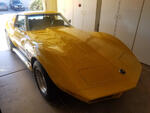
 Consequently, the hood is now only attached by the foldable arm on the left, causing it to tilt sideways when closing. After some effort, I managed to close it, but this means I need to remove the hood to extract the remnants of the bolts.


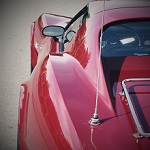


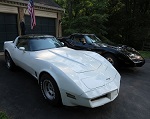
 These lights actually blend well, even the orange one didn’t bother me.


