When you click on links to various merchants on this site and make a purchase, this can result in this site earning a commission. Affiliate programs and affiliations include, but are not limited to, the eBay Partner Network.
Lets start off I purchased this care from a consignment dealership, so i am new to the car and honestly new to corvettes I mostly owned Chevelle's and 442's. I have on order the front seal, and i just had delivered a new proper heater core.
It was pointed out that bypass loop from the intake to the water pump is short circuiting the cooling system. The previous owners had that done and, cut the lines to the heater core, I figured it was done because of a leaking core. It also has a griffen rad. The distributor/ignition is a MSD, and seen talk about timing helping the car run cooler/proper temp.
I haven't dove into to the heater core replacement yet as it has been way to hot for me to be out in the garage working on it, and collecting the parts, waiting for the heater box seal kit.
In respect to the timing, it seems there is no vacuum advance on the distributor, when i got the car it had two bad plug wires and back firing though the center carb, and the center carb accelerator pump is leaking (carb rebuild) Replaced the wires still back firing. have a set of news plugs on order, but it ran hot and smoked one of the boots already. good think i kept the old wires the known good ones, I also have a set of ceramic booted wires to install once dialed in. Through to car's fame on restoration in 06-07. it looks like they put in a 160 thermostat, i have new 180 to replace that. last night i wanted to check coolant flow, my garage was around 102, so the car heated up fast, and coolant just bubbled out of the rad. turned car off immediately, checked with a temp gun thermostat housing, was around 230, the side of the rad were 190.
I have multiple issues with the car and working on knowing it and learning. it appears that it has the rectangular cutout in the front and lower deflector.
I have seen pictures of some vetts not sure 69 or 68 that have expansions tanks for the coolant, I just got an assembly guide so i will be looking thought that at well.
Anyhow will the MSD cause over heating once i have things properly hooked up?
The current 160°F thermostat kinda indicates this was a problem prior to your ownership. 427s did not use a expansion side tank, so the radiator is not filled to the neck. Coolant should be a couple inches below to allow for expansion. (Your overflow hose should drop straight down alongside the radiator.)
So you really need to first find out what the timing is set to. Timing below optimum will certainly cause an engine to run hotter. Lean carb setting will also cause higher heat. What do your current spark plugs look like as for deposits and whiteness of the center insulator?
The lower holes and chin spoiler will only help when the car is moving; when stationary, you are relying on the fan and shroud to pull air through the radiator. Yours has no seals around it, which allows air to bypass the radiator and not do its job.
After the engine is warm/hot and you shut it down, how easy is it to rotate the fan blades? Can you make them spin for a full revolution? If so, the fan clutch is not working properly and needs to be replaced. The resistance to rotating the fan when cold vs. hot should be noticeably different.
Last edited by barkingrats; Jun 30, 2025 at 11:11 AM.
2020 Corvette of the Year Finalist (performance mods)
2019 C3 of Year Winner (performance mods)
2016 C3 of Year Finalist
Its overheating quickly i would test the thermostat in a pot of very hot water with a thermometer or run the engine without the thermostat as a test....if it goes away then the T stat was bad....if not your cooling system is plugged and you need to flush the engine and the radiator. It should be done anyway, getting rust and sludge out makes a world of diiference. You will need to pull the two block plugs just above the oil pan to get the crap out of the bottom of the block.
Checking the timing is always a good idea as well. Make sure to run the highest octane you can to prevent detonation on a true 435hp motor. They ran very high compression. .
Also the backfiring through the carb could also be a related timing issue. Verify top dead center in relation to your timing mark. Old balancers have a tendency to slip giving a false reading
Can you examine your fan blades, looking for a stamped part number? I recall in your previous thread someone commented that it looked small in diameter to the shroud. I believe your car should have a 7-bladed fan (3955182), but I'm not positive on that. There was an NCRS article on fan blades a few years back; I'll see if I can find it and relay what was said there.
The current 160°F thermostat kinda indicates this was a problem prior to your ownership. 427s did not use a expansion side tank, so the radiator is not filled to the neck. Coolant should be a couple inches below to allow for expansion. (Your overflow hose should drop straight down alongside the radiator.)
So you really need to first find out what the timing is set to. Timing below optimum will certainly cause an engine to run hotter. Lean carb setting will also cause higher heat. What do your current spark plugs look like as for deposits and whiteness of the center insulator?
The lower holes and chin spoiler will only help when the car is moving; when stationary, you are relying on the fan and shroud to pull air through the radiator. Yours has no seals around it, which allows air to bypass the radiator and not do its job.
After the engine is warm/hot and you shut it down, how easy is it to rotate the fan blades? Can you make them spin for a full revolution? If so, the fan clutch is not working properly and needs to be replaced. The resistance to rotating the fan when cold vs. hot should be noticeably different.
I will check these items out when i get home, Where is a good source for the seals for the radiator shroud? Recommend?
Its overheating quickly i would test the thermostat in a pot of very hot water with a thermometer or run the engine without the thermostat as a test....if it goes away then the T stat was bad....if not your cooling system is plugged and you need to flush the engine and the radiator. It should be done anyway, getting rust and sludge out makes a world of diiference. You will need to pull the two block plugs just above the oil pan to get the crap out of the bottom of the block.
Checking the timing is always a good idea as well. Make sure to run the highest octane you can to prevent detonation on a true 435hp motor. They ran very high compression. .
Also the backfiring through the carb could also be a related timing issue. Verify top dead center in relation to your timing mark. Old balancers have a tendency to slip giving a false reading
Thank you for the awesome tips to check out. Especially with the drain plugs at the bottom of the engine, I never in all my years knew that. If there a certain chemical to use? any certain procedure for doing that type of flush.
Can you examine your fan blades, looking for a stamped part number? I recall in your previous thread someone commented that it looked small in diameter to the shroud. I believe your car should have a 7-bladed fan (3955182), but I'm not positive on that. There was an NCRS article on fan blades a few years back; I'll see if I can find it and relay what was said there.
Thanks for that information i will look and see, i missed that from my other thread.
If it is the wrong fan, who would be a good source for a replacement fan? I also read that eliminating the fan clutch can help as well with a direct fan.
Hi Jojo33, welcome to the forum and congrats on your L-71! (BTW, I used to be into SS's, 442's, H/O's, etc. - great cars).
You're getting some good advice above - great members with a lot of knowledge. Our '68 L-71 runs cool as could be in 100+ weather in stop/go. No worries at all. I'll let you know what I did to get it there. I'll also mention that because I was restoring lots of stuff on the car some of the items might not be applicable to your situation (but most will).
I would suggest a wholistic approach - get all the stuff you want to do and do it all so you can narrow down any issues you might find. I suggest you get (unless you already have one) an assembly manual for '68 vettes. That will enable you to look up a bunch of stuff and see where it all goes). Here are some of the things we did:
Replaced the heater core because it had a slight leak. I know you said you're doing this so make sure you have a quality unit. You don't have a/c so you can do this from the firewall side. Do not bother going in under the dash - you don't need or want to. And you are correct that a good heater core will actually help with cooling because it adds more volume and a small 'radiator'.
Rebuilt the water pump.
New plugs, wires, hoses, belts, etc. Make CERTAIN that your lower radiator hose has the spring in it at the bend. Otherwise it can/will collapse and cause overheating.
Replaced the radiator (I see you have an aftermarket one) with a DeWitt's direct fit. That radiator rocks. A great radiator is key!
Found an original, rebuilt fan clutch. I do not suggest running without one.
There is no expansion tank on '68 BB's. As mentioned above, fill the radiator to withing about 1 inch or so of the top, run your overflow hose straight down the side of the radiator (you'll see where it was originally), keep the radiator close to full until you've got all the air out, and it will find its own level about 1.5 inches below the neck.
Get a seal kit and make sure all the radiator and shroud seals are in place.
Timing is also key. Your MSD can work just fine if it's set up correctly. Contact Lars for his timing papers. He is a wealth of knowledge and it always willing to help.
As mentioned above, if this is a real L-71 motor it will like good high-test gas.
180 stat.
Check for vacuum leaks and replace any vacuum hoses if/as needed.
Flush the system so you know it's clean. Fill with 50/50 of the green stuff. Enjoy
A stock cooling system on this car, when all sorted like the advice you're getting, will run no problem. Keep us informed. Best, Paul
Hi Jojo33, welcome to the forum and congrats on your L-71! (BTW, I used to be into SS's, 442's, H/O's, etc. - great cars).
You're getting some good advice above - great members with a lot of knowledge. Our '68 L-71 runs cool as could be in 100+ weather in stop/go. No worries at all. I'll let you know what I did to get it there. I'll also mention that because I was restoring lots of stuff on the car some of the items might not be applicable to your situation (but most will).
I would suggest a wholistic approach - get all the stuff you want to do and do it all so you can narrow down any issues you might find. I suggest you get (unless you already have one) an assembly manual for '68 vettes. That will enable you to look up a bunch of stuff and see where it all goes). Here are some of the things we did:
Replaced the heater core because it had a slight leak. I know you said you're doing this so make sure you have a quality unit. You don't have a/c so you can do this from the firewall side. Do not bother going in under the dash - you don't need or want to. And you are correct that a good heater core will actually help with cooling because it adds more volume and a small 'radiator'.
Rebuilt the water pump.
New plugs, wires, hoses, belts, etc. Make CERTAIN that your lower radiator hose has the spring in it at the bend. Otherwise it can/will collapse and cause overheating.
Replaced the radiator (I see you have an aftermarket one) with a DeWitt's direct fit. That radiator rocks. A great radiator is key!
Found an original, rebuilt fan clutch. I do not suggest running without one.
There is no expansion tank on '68 BB's. As mentioned above, fill the radiator to withing about 1 inch or so of the top, run your overflow hose straight down the side of the radiator (you'll see where it was originally), keep the radiator close to full until you've got all the air out, and it will find its own level about 1.5 inches below the neck.
Get a seal kit and make sure all the radiator and shroud seals are in place.
Timing is also key. Your MSD can work just fine if it's set up correctly. Contact Lars for his timing papers. He is a wealth of knowledge and it always willing to help.
As mentioned above, if this is a real L-71 motor it will like good high-test gas.
180 stat.
Check for vacuum leaks and replace any vacuum hoses if/as needed.
Flush the system so you know it's clean. Fill with 50/50 of the green stuff. Enjoy
A stock cooling system on this car, when all sorted like the advice you're getting, will run no problem. Keep us informed. Best, Paul
I thought Griffen Rads were good ones, I have to check to see if i have a metal or plastic shroud to order the right seal kit. The engine numbers decode 427/435 4spd muncie and matching.
I don't know how crazy i am about the MSD, I would have preferred a gold ole GM HEI, the stock points and coil. Lol
I did get an assembly manual/Book. I have do have to get into the dash as the cables for the vents one especiall is locked up the pass side seems okay but while i am in there replace with new.
I did check the intake for leaks that seems good. I do have to check the plugs and get a new set.
I never knew that about the flushing plugs. when you say 50/50 with green stuff, what solution are you talking about, i want to make sure i am using the correct stuff.
I thought Griffen Rads were good ones, I have to check to see if i have a metal or plastic shroud to order the right seal kit. The engine numbers decode 427/435 4spd muncie and matching.
I don't know how crazy i am about the MSD, I would have preferred a gold ole GM HEI, the stock points and coil. Lol
I did get an assembly manual/Book. I have do have to get into the dash as the cables for the vents one especiall is locked up the pass side seems okay but while i am in there replace with new.
I did check the intake for leaks that seems good. I do have to check the plugs and get a new set.
I never knew that about the flushing plugs. when you say 50/50 with green stuff, what solution are you talking about, i want to make sure i am using the correct stuff.
Hi, Griffin radiators have a good reputation, but I've never used one. IF the radiator was not a 'direct fit' and the installation caused a change to the angle of the radiator, the distance from the fan to the radiator, modified shroud, no seals, etc. then one of the problems could be that air is not being directed through the radiator but rather finding ways around the radiator. (Make sure you have your front/bottom spoiler in place, or sufficient air will not be directed up through the radiator).
Others may have differing opinions, but I like a 50/50 mix of water/Prestone green.
Since the car is an L-71, it came with a Transistor Ignition. Unless someone removed all the stuff, the harness probably still runs up the driver's side of the fender well, through the supports, and into a TI amplifier that is mounted to the front left side of the radiator/fender support. If someone removed it, you'll see a triangle of three mounting holes there. If you don't have any of the TI parts, they can be expensive but there are a couple of really good suppliers here that can supply and rebuild them. But your MSD can work if set up correctly. Lars and a few others can give you great guidance there.
Good luck, Paul
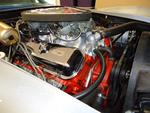
PS - I put in a pic of our stock '68 in case that helps you in any way.
Last edited by Hopper12; Jun 30, 2025 at 04:42 PM.
Hi, Griffin radiators have a good reputation, but I've never used one. IF the radiator was not a 'direct fit' and the installation caused a change to the angle of the radiator, the distance from the fan to the radiator, modified shroud, no seals, etc. then one of the problems could be that air is not being directed through the radiator but rather finding ways around the radiator. (Make sure you have your front/bottom spoiler in place, or sufficient air will not be directed up through the radiator).
Others may have differing opinions, but I like a 50/50 mix of water/Prestone green.
Since the car is an L-71, it came with a Transistor Ignition. Unless someone removed all the stuff, the harness probably still runs up the driver's side of the fender well, through the supports, and into a TI amplifier that is mounted to the front left side of the radiator/fender support. If someone removed it, you'll see a triangle of three mounting holes there. If you don't have any of the TI parts, they can be expensive but there are a couple of really good suppliers here that can supply and rebuild them. But your MSD can work if set up correctly. Lars and a few others can give you great guidance there.
Good luck, Paul
Thanks Paul,
I checked the fan shroud and it is extremely rigid plastic.
I checked out Dewitts rads and they are not too bad in pricing when you don't get the electric fans or painted black.
They have a Pro series and a HP series I wonder which would be the best for me to get. https://www.dewitts.com/collections/...40087551180882
There is only one situation when removing the block drainplugs is acceptable. And that is when the engine is out, and the block is to be hot tanked.
I wouldn't touch those drainplugs with a ten-foot pole unless you enjoy more labor-intensive misery.
If the plug snaps off or you strip the threads, you are in a world of hurt.
The teaspoon of crud in the bottom of the block has been there for decades and has little to do with actual cooling.
Keep in mind, it's common for racers to fill the block with plaster paris / concrete to strengthen cylinders.
Its called Block Filler and is sold at Summit.
Don't worry about the drainplugs.
Great timing on this thread as I'm currently working on improving my '68 L71 cooling system. I agree with most of what has been said but I am doing a couple of things just a bit differently. I'm upgrading to the Pro Series direct fit but I'm adding the optional expansion tank. To your point earlier, excess coolant capacity helps, right? I'm also going to the electric fans (upgrading charging to keep up with the fans) so that I have better space for a front suspension tie bar. You'll find our early C3s are not super stiff and you can change all the suspension components you want but the early chassis won't truly benefit. Stop the flop as much as you can first. The DeWitts summer sale ends today so this is your chance to get whatever you need from them for 10% less. I also run antifreeze in a 1:2 ratio with distilled water. My car is never anywhere close to freezing and water transfers heat better. The only reason I run any antifreeze is for the corrosion protection.
I'm also curious about the ignition. My car has good old GM points and I can't find any evidence of any other system anywhere in the engine bay. In fairness the car also has side exhaust and the PO glassed in the rear valance cutouts for the original tailpipes so who knows what they did to hide TI holes and wiring? I love the points and have no desire to change them as my ignition works very well.
Hi, Griffin radiators have a good reputation, but I've never used one. IF the radiator was not a 'direct fit' and the installation caused a change to the angle of the radiator, the distance from the fan to the radiator, modified shroud, no seals, etc. then one of the problems could be that air is not being directed through the radiator but rather finding ways around the radiator. (Make sure you have your front/bottom spoiler in place, or sufficient air will not be directed up through the radiator).
Others may have differing opinions, but I like a 50/50 mix of water/Prestone green.
Since the car is an L-71, it came with a Transistor Ignition. Unless someone removed all the stuff, the harness probably still runs up the driver's side of the fender well, through the supports, and into a TI amplifier that is mounted to the front left side of the radiator/fender support. If someone removed it, you'll see a triangle of three mounting holes there. If you don't have any of the TI parts, they can be expensive but there are a couple of really good suppliers here that can supply and rebuild them. But your MSD can work if set up correctly. Lars and a few others can give you great guidance there.
Good luck, Paul
PS - I put in a pic of our stock '68 in case that helps you in any way.
here are some pics of mine, not sure if my should has been modified for the griffin rad, also the lower hose doesn’t have a spring in it. Not sure if the shroud has been modified , the lower hose doesn’t have the spring either.
I see some things you may want to correct. I don't see any seals for the radiator. Looks like the shroud is not sealed (or at least close to) the radiator core. Does the car have the chin spoiler? The fan blades should be about 1/2 way into the shroud. My 69 L71 runs cool with only a dewitts radiator, stock fan shroud and clutch, and a 7 blade fan vs the stock 5 blade fan.
I see some things you may want to correct. I don't see any seals for the radiator. Looks like the shroud is not sealed (or at least close to) the radiator core. Does the car have the chin spoiler? The fan blades should be about 1/2 way into the shroud. My 69 L71 runs cool with only a dewitts radiator, stock fan shroud and clutch, and a 7 blade fan vs the stock 5 blade fan.
I have to order the seals and looks like replacing the radiator as well.
There is only one situation when removing the block drainplugs is acceptable. And that is when the engine is out, and the block is to be hot tanked.
I wouldn't touch those drainplugs with a ten-foot pole unless you enjoy more labor-intensive misery.
If the plug snaps off or you strip the threads, you are in a world of hurt.
The teaspoon of crud in the bottom of the block has been there for decades and has little to do with actual cooling.
Keep in mind, it's common for racers to fill the block with plaster paris / concrete to strengthen cylinders.
Its called Block Filler and is sold at Summit.
Don't worry about the drainplugs.
Thank you for that information, I was dredding it.
I haven't read the whole thread, but here are my thoughts.
First, make sure that your distributor advance can is connected to MANIFOLD vacuum. From the factory, it was hooked to "ported/timed" vacuum. That is a KILLER for engine running cool at idle and low speeds.
Second, there is way too much clearance between the tips of your fan blades and the shroud surrounding it. That fan can not be sucking much air THRU the radiator with that much clearance. The tips should be no more than 1/2" from the interior of the shroud.
Third, make sure that your thermo-fan is actually working. It will be "turning" at speed...and LOOK fine. But it may not be in 'direct-drive' mode when it get to operating temperature. To check it out, run car till engine is at full operating temperature (when you think the thermo-fan SHOULD be in direct-drive mode) and while engine is still running, stop and open the hood. While watching the action of the fan, turn the engine OFF. If the fan rotates more than 2-3 revolution after shut-down, the thermo-fan function is KAPUT!
Finally, when you have manifold vacuum run to the distributor, adjust the ignition timing. If you have Lars' papers on how to do that correctly, follow them. If you don't, get engine running, pull the vacuum line off the advance can and PLUG IT, then adjust timing to 12* BTDC. Shut down and put the vacuum line back on the advance can. If timing was significantly retarded (which is how GM spec'ed it), the engine will run HOT at idle and low speeds. This was done to help pass EPA emissions requirements; hot cylinder heads burn excess hydrocarbons better.
Leave any heater and cooling flow issues until after you have dealt with these issues. I believe the items listed here are primary to solving your engine heat concerns.
I haven't read the whole thread, but here are my thoughts.
First, make sure that your distributor advance can is connected to MANIFOLD vacuum. From the factory, it was hooked to "ported/timed" vacuum. That is a KILLER for engine running cool at idle and low speeds.
Second, there is way too much clearance between the tips of your fan blades and the shroud surrounding it. That fan can not be sucking much air THRU the radiator with that much clearance. The tips should be no more than 1/2" from the interior of the shroud.
Third, make sure that your thermo-fan is actually working. It will be "turning" at speed...and LOOK fine. But it may not be in 'direct-drive' mode when it get to operating temperature. To check it out, run car till engine is at full operating temperature (when you think the thermo-fan SHOULD be in direct-drive mode) and while engine is still running, stop and open the hood. While watching the action of the fan, turn the engine OFF. If the fan rotates more than 2-3 revolution after shut-down, the thermo-fan function is KAPUT!
Finally, when you have manifold vacuum run to the distributor, adjust the ignition timing. If you have Lars' papers on how to do that correctly, follow them. If you don't, get engine running, pull the vacuum line off the advance can and PLUG IT, then adjust timing to 12* BTDC. Shut down and put the vacuum line back on the advance can. If timing was significantly retarded (which is how GM spec'ed it), the engine will run HOT at idle and low speeds. This was done to help pass EPA emissions requirements; hot cylinder heads burn excess hydrocarbons better.
Leave any heater and cooling flow issues until after you have dealt with these issues. I believe the items listed here are primary to solving your engine heat concerns.
The MSD distributor doesn't
have a vac advance on it
How is the MSD distributor programmed? And does it set ignition timing properly for your car? If it was set up to 'mimic' the timing specified by GM for your engine, then at lower speeds it is retarded significantly from how the engine was originally designed to operate.
You still have an "ineffective" fan/shroud system the needs to be addressed. And determining if the thermo-fan works as it should...or not.
You asked for help and I am attempting to offer same. It's your car. Wish you luck...




 1968 427/435 Cooling issues and Timing