When you click on links to various merchants on this site and make a purchase, this can result in this site earning a commission. Affiliate programs and affiliations include, but are not limited to, the eBay Partner Network.
I am looking to get the brakes changed or upgraded on my C3 -- and no, I don't have the budget for 2k plus performance ones lol . Just want to get some form this century ;-) any recommendations? I was looking at power stop and thought maybe someone would have some experience with these or comparable. Any suggestions would be great!!
I'm of the opinion that original GM brakes, when they are tuned, are damned good. With the proper pads for my use, well-bled lines, and minimal run-out, both of my cars stop reliably and quickly in a reasonable distance. (One has standard brakes, the other power brakes.)
Unless your rotors are worn out (less than 1.215" thick), I'd keep them and only swap pads. Resist the temptation to put "racing" pads on your car - they won't be effective on the street. Ceramics seem to be gaining a very good reputation for braking efficiency, low dust, and low noise. Many folks think that going to Wilwood calipers, will transform the braking capabilities... The 4-piston Wilwoods have the same overall design as the stock GM.
Bottom line. The brakes that came on your C3 were so good back then. They still stop better than most cars today. Particularly when considering fitment with stock wheel sizes. The rotors are nearly indestructible. Replacing them in most cases is a fools move.
fix what you have.
My 2 cents.
Bottom line. The brakes that came on your C3 were so good back then. They still stop better than most cars today. Particularly when considering fitment with stock wheel sizes. The rotors are nearly indestructible. Replacing them in most cases is a fools move.
fix what you have.
My 2 cents.
I appreciate the input, I thought about only replacing the pads, but I wondered if maybe the new stuff was better. I have a problem with actual pedal travel currently, lots of actual travel before it starts to stop.
Thanks you very much for the details, I will probably just change the pads and get the brakes bled first. If that doesn't help with the pedal travel (and basically having to stand on the brake) I will swap the rotors next.
It's pretty tough to upgrade the stock brakes on 65-82 Corvettes, they're better than what comes on most modern cars. Most cars use single piston floating calipers now, not four piston calipers like the early Corvettes did. This is mainly because they're cheaper.
About the best upgrade you can do to improve the braking of the stock Corvette brake system is a good set of Hawk or other brand performance brake calipers. One thing I wouldn't do is buy those drilled and slotted rotors. We only use slotted rotors on the Corvette vintage racers I work on, we stopped using drilled rotors years ago when we found they were prone to heat cracking around the holes. Odds are you'd never generate enough heat in the rotors on the street for cracking to be an issue, but why chance it?
Wilwood makes some very nice D8 direct replacement calipers for the stock Corvette calipers, but they can't do anything the stock calipers won't. People will tell you how great the Wilwood D8's are, and they do make a nice product but they don't provide any better stopping power than Corvette stock calipers do. They use the same pads on the same size rotors as GM used. The sole advantage the Wilwood's have over the stock caliper, other than the perceived cool factor of the name "Wilwood" on the side of them is they're aluminum and 3 or 4 pounds lighter than stock calipers. Don't get me wrong, it's never a bad thing to reduce unsprung weight, and aluminum dissipates heat quicker than cast iron, but these are advantages that you'll rarely if ever benefit from on the street. Even the Wilwood six piston D8-6 front calipers still use the same pads and rotors as stock calipers, they don't change the contact area of the pad or rotor.
The vintage series we race Corvettes in requires us to use the stock cast iron calipers, though rotors are free. We use slotted two piece rotors on the front, and have added spacers to our J-56 front calipers to widen them which allows us to use thicker pads and improves cooling. We've also modified the caliper brackets to relocate the calipers behind the rotors, making it easier to duct cooling air from the front of the car to the center of the rotors. Other than the pads and slotted rotors, our rear brakes are completely stock. The 65 Corvette we race consistently stops straight and without any fade from speeds of 160+ with four cast iron Delco calipers.
If you're autocrosssing your Corvette or doing HPDE days with it, then it might be worth considering slotted rotors and a set of Wilwood calipers, but on the street a good set of pads are the simplest and most effective upgrade.
Thanks you very much for the details, I will probably just change the pads and get the brakes bled first. If that doesn't help with the pedal travel (and basically having to stand on the brake) I will swap the rotors next.
If you have too much pedal travel that sounds like air in the system, and you should bleed the brakes before doing anything else. Changing the rotors will have no effect on a long pedal, but if the rotors were previously replaced they may not have been indexed properly. That could be contributing to your problem. The only advantage to slotted and drilled rotors is they dissipate heat quicker, but if you're experiencing a long pedal in normal driving then I doubt you're problem is heat related brake fade.
Do you have power or manual brakes? The stock manual brakes in these old Corvettes require more pedal pressure than most people are used to after driving modern power brake cars. I actually prefer the manual brakes in early Corvettes over the power brakes because I think they provide better feed back, but they do take more pressure to stop the car.
What kind of shape is the rest of your system in? How old is the master cylinder, the calipers and the hoses, and have you checked your calipers for leaks? I'd make sure the system is bled properly, and check the condition of all of the brakes components, before throwing aftermarket parts at it.
If you have too much pedal travel that sounds like air in the system, and you should bleed the brakes before doing anything else. Changing the rotors will have no effect on a long pedal, but if the rotors were previously replaced they may not have been indexed properly. That could be contributing to your problem. The only advantage to slotted and drilled rotors is they dissipate heat quicker, but if you're experiencing a long pedal in normal driving then I doubt you're problem is heat related brake fade.
Do you have power or manual brakes? The stock manual brakes in these old Corvettes require more pedal pressure than most people are used to after driving modern power brake cars. I actually prefer the manual brakes in early Corvettes over the power brakes because I think they provide better feed back, but they do take more pressure to stop the car.
What kind of shape is the rest of your system in? How old is the master cylinder, the calipers and the hoses, and have you checked your calipers for leaks? I'd make sure the system is bled properly, and check the condition of all of the brakes components, before throwing aftermarket parts at it.
Thanks very much for all the data, I am probably going to do all of that. I Don't know the status of the brakes, but since my Dad hadn't driven it for years I am guessing the whole brake system may be needing some TLC. I want to start simple and work form there. My hardest task is actually finding a shop here in Utah that will touch it without doing a full resto on it.
If you replace the calipers, go with the O Ring seals, They are more tolerant of runout. They also seam to last longer on a car that is not used every day.
EBC pads helped me get a better stop, as the pads are more aggressive.
If you replace the calipers, go with the O Ring seals, They are more tolerant of runout. They also seam to last longer on a car that is not used every day.
EBC pads helped me get a better stop, as the pads are more aggressive.
Thanks very much for the reply, I now have a whole bunch of researching to do, and manufacturers to check out!
Thanks very much for all the data, I am probably going to do all of that. I Don't know the status of the brakes, but since my Dad hadn't driven it for years I am guessing the whole brake system may be needing some TLC. I want to start simple and work form there. My hardest task is actually finding a shop here in Utah that will touch it without doing a full resto on it.
If the car hasn't been driven in years, it's probably time to at least replace the calipers, pads and hoses.
From a quick look on Google it appears the Corvette Club of Utah is based in Sandy UT, around 10 miles from West Jordan according to Google maps. I would reach out to the club and ask for recommendations for reliable repair shops in the area. There may even be someone in the club who does repairs or is willing to help you do them yourself.
You also might want to ask for recommendations for a reliable shop in the "Mountain-Prairie" section of the Forum's "Upcoming Events and Regional Discussion" forum, though from a quick look at in there the section doesn't see a lot of activity (the last post there was on 9/3/25). Still, it couldn't hurt.
I’ve got a book on designing brake systems and while I haven’t read the entire thing (due to a mixture of too busy and too lazy), the biggest thing the book emphasizes is that it’s the tires that stop the car, not the brakes. I agree with other members you probably have air in your system but given the car has been sitting, check the date code on the tires too. Those four tiny rubber contact patches provide all of your stopping power and you can have the best brakes in the world but if the tires can’t handle it, it’s worthless. Tires and shoes are two places that it’s worth spending extra on. One keeps you on the road and the other protects your feet lol. Good luck!
so i need to kinda hijack this thread... I just bought a nice 69 coupe and while driving it I personally thought the brakes could be better... The pedal wasn't mushy or anything just didn't feel right to me.. Now granted I haven't driven and older car since I sold my C2 in 2013 and I have been driving a 2013 GS since new... That being said I know my GS will obviously stop better but I'm just looking for thoughts on those that have a C3... This is a non PB car also... I was thinking of just making sure the brakes bled and then maybe replace the pads... also I know the calipers were rebuilt with the O-ring style pistons... Any thoughts or am I just way off base???
Thanks..
......it’s the tires that stop the car, not the brakes. ......
If your brakes do not have enough authority to lock up the tires, you can't extract enough friction to get the most out of those contact patches. I'm not saying that is the best way to stop, but you need to be on right on that edge in an extreme circumstance.
Additionally these cars are not easily able to lock up all fours, the rears are notably deficient in their authority.
so i need to kinda hijack this thread... I just bought a nice 69 coupe and while driving it I personally thought the brakes could be better... The pedal wasn't mushy or anything just didn't feel right to me.. Now granted I haven't driven and older car since I sold my C2 in 2013 and I have been driving a 2013 GS since new... That being said I know my GS will obviously stop better but I'm just looking for thoughts on those that have a C3... This is a non PB car also... I was thinking of just making sure the brakes bled and then maybe replace the pads... also I know the calipers were rebuilt with the O-ring style pistons... Any thoughts or am I just way off base???
Thanks..
Aren't C2 & C3 the same braking system?
A good bleeding helps. Some fresh stainless steel brake hoses if the old ones are old. They should have the printed on them.
If you have power brakes, the booster rod is adjustable. Believe around 75 or so it no longer is adjustable. But i'd run down the list on the whole brake system before you start messing with this.
Yes, very much the same system design from '65 to '82 with minor changes here and there. If you have experience with the C2 disc brakes, you won't have any problems with the C3 disc brakes.
A good alternative to the original calipers are the D8-6 front and D8-4 rear calipers from Willwood.
They make kits ready to install on our Corvettes which includes front and rear D8-4 front and rear calipers with new rotors.
The calipers and rotors are designed to fit in the oem 15” Rally wheels and most aftermarket 15” or larger diameter wheels.
The calipers and rotors fit without modifications.
And although you will save some weight with the above mentioned calipers. Braking performance will not be noticeably changed.
You have manual brakes. You need to press the pedal harder than with power brakes.
You can change over to power brakes for a more modern feel.
Or you can get used to it.
Designer Imagines A Corvette That Looks More Like a Corvette Than the Corvette
Slideshow: A Jaguar designer's personal project imagines what a modern front-engined Corvette might look like if Chevrolet revisited the golden age of the Stingray.




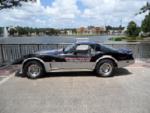


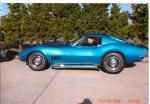


 Looking for brake upgrade 73 C3