







High Output Alternator wiring question....

Thread Starter
Drifting


Joined: Jan 2000
Posts: 1,612
Likes: 0
From: Phoenix Arizona
 High Output Alternator wiring question....
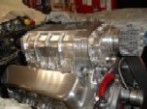
I received my alternator from www.4alterstart.com this week. It is the 135 amp unit. Cost me $98 with shipping. Good looking unit.
I realize that I need to run a new smaller gauge wire for the 12+ since I more then doubled the amperage output.
Those of you who have done this, where did you run the new wire TO?
Does the 12+ wire from the alternator run to that Junction block on the driver's side inner fender? Or the starter?
I would appreciate any input here!
Thanks!
Bob
I realize that I need to run a new smaller gauge wire for the 12+ since I more then doubled the amperage output.
Those of you who have done this, where did you run the new wire TO?
Does the 12+ wire from the alternator run to that Junction block on the driver's side inner fender? Or the starter?
I would appreciate any input here!
Thanks!
Bob

The ORIGINAL and bestest


Joined: Oct 2000
Posts: 10,009
Likes: 240
From: Toronto Ontario
Toronto Events Coordinator
I hope you meant to write that you need to instal a larger gauge wire!
The correct thing to do would be to run the new wire to the junction point on the fender. Any new, high current drawing things you have installed (like fans,amps,ect..) should also be wired to this point. You can run another wire to the starter parallel to the original if you want to, although it is not totally neccessary, just make sure to use a fusable link if you do.
The correct thing to do would be to run the new wire to the junction point on the fender. Any new, high current drawing things you have installed (like fans,amps,ect..) should also be wired to this point. You can run another wire to the starter parallel to the original if you want to, although it is not totally neccessary, just make sure to use a fusable link if you do.
Racer

Joined: Jun 2004
Posts: 423
Likes: 0
From: Okiehoma

Team Owner

Joined: May 2001
Posts: 29,745
Likes: 3
From: Exiled to Richmond, VA - Finally sold my house in Murfreesboro, TN ?? Corner of "Bumf*&k and 'You've got a purdy mouth'."
CI 6-7-8 Veteran
CI-VIII Burnout Champ
St. Jude Donor '06-'10, '13
Originally Posted by 7t2vette
I hope you meant to write that you need to instal a larger gauge wire!
I just ran another #6 or #8 from the alt. post to the starter post.
The ORIGINAL and bestest
Joined: Oct 2000
Posts: 10,009
Likes: 240
From: Toronto Ontario
Toronto Events Coordinator
When you instal a higher amp alternator, its purpose is to supply the extra needed current for the demand of new high amp loads, not to charge the battery more, and the stock factory wire is quite capable of doing that already. The power does not go into the car and then to the battery. On earlier vettes, there is a junction point on the driver's side inner fender that is also usually the horn relay. Look for it and you will see that all the power that is fed to the fuse block is coming from there, not the starter.
Last edited by 7t2vette; Apr 2, 2005 at 03:29 PM.

Drifting
Joined: Nov 2002
Posts: 1,665
Likes: 1
From: Ontario
It all depends where your additional loads have been connected. If those loads are connected right at the alternator output there is no need to increase the alternator output wire size. If you have additional loads connected at the battery or on any 'hot at all times' wires you should increase the alternator wire size. Besides, the only negative point to going overkill on wire size is the cost, which is minimal.
Corvette Stories
The Best of Corvette for Corvette Enthusiasts

Top 10 Most Expensive Corvettes Ever Sold on Bring A Trailer
Brett Foote
10 Things Every Corvette Owner Needs (2026 Edition)
Michael S. Palmer
8 Most "Only Corvette Owners Understand" Quirks and Problems
Pouria Savadkouei
10 Reasons the C6 Z06 is Still A Performance Benchmark After 20 Years
Joe Kucinski
How Much Horsepower Every Corvette Engine "LOST" in 1972
Joe Kucinski
Top 10 DOs and DON'Ts for Protecting Your Convertible Top!
Michael S. Palmer
Top 10 Most Explosive Corvettes Ever Made: Power-to-Weight Ratio Ranked!
Joe Kucinski
150 hp to 1,250 hp: Every Corvette Generation Compared by the Specs That Matter
Joe Kucinski
8 Coolest Corvette Pace Cars (and Replicas) of All Time
Verdad Gallardo
Drifting
Joined: Jan 2002
Posts: 1,484
Likes: 0
From: Northampton Ma
Is this a 1-wire style alternator? I bought a 140 amp Powermaster 1-wire alternator, and they supply a very heavy gauge (6 maybe?) that you have to run from the alternator directly to the battery, that's it. I haven't done it yet, so I don't know how good that works.

Melting Slicks


Joined: Nov 2001
Posts: 2,668
Likes: 43
From: Eastern US XX
Originally Posted by 7t2vette
When you instal a higher amp alternator, its purpose is to supply the extra needed current for the demand of new high amp loads, not to charge the battery more, and the stock factory wire is quite capable of doing that already. The power does not go into the car and then to the battery. On earlier vettes, there is a junction point on the driver's side inner fender that is also usually the horn relay. Look for it and you will see that all the power that is fed to the fuse block is coming from there, not the starter.

Melting Slicks
Joined: Sep 2004
Posts: 2,655
Likes: 19
Originally Posted by carriljc
does anyone know where the ammeter(for those with ammeters) ties into the circuitry?
Wiring the the new alternator to the starter will pretty much disable it. Or more likely, make it appear as though your battery is draining.
Gary

Team Owner


Joined: Apr 1999
Posts: 21,953
Likes: 1,445
From: Reno Nevada
2024 C3 of the Year Finalist- Modified
You have to increase the diameter of both the + & - wires. I run a high amp one wire system. It came with 6 gauge to connect into the fuse panel. I ran 8 gauge switched to my Spal fans with inline fuse.
I also ran 6 gauge to my starter + with fuse link to give a larger low resistance path for battery recharging. I also have my Crane Digital spark box connected at the starter because I want the highest voltage available. The more large diameter wiring you use the less chance of brown out you have.
I also ran 6 gauge to my starter + with fuse link to give a larger low resistance path for battery recharging. I also have my Crane Digital spark box connected at the starter because I want the highest voltage available. The more large diameter wiring you use the less chance of brown out you have.

Team Owner

Joined: Jul 1999
Posts: 65,492
Likes: 230
From: Orange Park Florida
OK, here is MY phil *** ophy on it....
assuming you wire the high current devices directly off the alt you need not bother with any 'heavy up' of the stock wiring, inherently that is....
furthermore, I think wiring any heavy gauge wire directly to the starter/battery post there is a huge mistake unless there is a fusible link OR a 60 amp fuse in there, frankly just leave the original (good condition) wiring alone, it's fine in that starter area.....
I see no inherent problem with wiring your high current devices like fans/stereos/whatever to the horn relay/distribution block, but then you need wire THAT to the alt with super heavy wire to carry the whole shooting match with just ONE wire, and getting fine stranded vibration tolerance wire for that job is not too damn easy....thicker the gauge stiffer it is, and engine vibration WILL snap it at a stress point....don't ask please, UM, OK???
I would rather just ONE accessory fail than say the whole shooting match depending on one freaking wire....
enough with battery cables allready, don't need more crap to go rong....
GENE
assuming you wire the high current devices directly off the alt you need not bother with any 'heavy up' of the stock wiring, inherently that is....
furthermore, I think wiring any heavy gauge wire directly to the starter/battery post there is a huge mistake unless there is a fusible link OR a 60 amp fuse in there, frankly just leave the original (good condition) wiring alone, it's fine in that starter area.....
I see no inherent problem with wiring your high current devices like fans/stereos/whatever to the horn relay/distribution block, but then you need wire THAT to the alt with super heavy wire to carry the whole shooting match with just ONE wire, and getting fine stranded vibration tolerance wire for that job is not too damn easy....thicker the gauge stiffer it is, and engine vibration WILL snap it at a stress point....don't ask please, UM, OK???
I would rather just ONE accessory fail than say the whole shooting match depending on one freaking wire....
enough with battery cables allready, don't need more crap to go rong....
GENE
C6 the C5 of tomorrow
Joined: Nov 2000
Posts: 6,665
Likes: 2
From: Twin Cities Minnesota
Yes as stated a few times above. You don't run a huge cable to the battery or the starter. You are asking for trouble.
The big wire you do need to add must go to the exact same place as the small brown 'sense' wire that the altenator uses to measure the output voltage. This is the place where all accessory power must come from.
On my '69 it is the horn relay. I ran a big wire to the horn relay, then a big wire from that to a fused junction block. Everything goes through the fuses before running anything.
The big wire you do need to add must go to the exact same place as the small brown 'sense' wire that the altenator uses to measure the output voltage. This is the place where all accessory power must come from.
On my '69 it is the horn relay. I ran a big wire to the horn relay, then a big wire from that to a fused junction block. Everything goes through the fuses before running anything.
