







sputters/pops when decelerating

Thread Starter
Drifting

Joined: Sep 2004
Posts: 1,532
Likes: 4
From: Fairview Heights Illinois, near Saint Louis MO, STL C3 Shark
 sputters/pops when decelerating
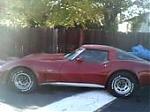
Im trying to figure out what my 76 is doing, really trying to figure out how to describe it....
Lets say I'm going about 55 mph, then let off the gas (4 spd manual) it "sputters" and sometimes "pops" out of the exhaust pipes. The pops and sputtering are louder if engine RPM is higher. Is this a timing/carb issue?
Lets say I'm going about 55 mph, then let off the gas (4 spd manual) it "sputters" and sometimes "pops" out of the exhaust pipes. The pops and sputtering are louder if engine RPM is higher. Is this a timing/carb issue?
Melting Slicks


Joined: May 2003
Posts: 2,387
Likes: 2
From: Meriden CT
my 70 did the same, was told that it was maybe running too rich. Leftover gas makes it into the headers and ignites there causing the pop and sputter. I put a smaller carb on and it went away.
Joe
Joe
Thread Starter
Drifting
Joined: Sep 2004
Posts: 1,532
Likes: 4
From: Fairview Heights Illinois, near Saint Louis MO, STL C3 Shark
Good info. I don't think cold air is getting in, as I had to remove exhaust a little while ago and when I put it back on I made sure all bolts etc were tight. I'll check the carb, Im not sure that it is "right on" yet anyway. I need to get a vacuum gauge.
It currently has a square bore 750 CFM Holley that the previous owner put on. He also gave me a qjet. Perhaps the Holley is just too big?
It currently has a square bore 750 CFM Holley that the previous owner put on. He also gave me a qjet. Perhaps the Holley is just too big?

Le Mans Master


Joined: Mar 2004
Posts: 7,493
Likes: 1,500
From: Little Rock AR
Do you have a smog pump? A bad diverter valve will cause that. The properly functioning diverter valve diverts the air away under conditions of high manifold vacuum such as backing off the gas to shift gears etc. Basicaly the pump would be putting air into the exhaust all the time causing the noise if the valve is bad.
The other thing that comes to mind is leaking headers where the gasket to the head is installed. You need a good seal to prevent air from being drawn in. This will also cause afterfiring like you describe.
-Mark.
The other thing that comes to mind is leaking headers where the gasket to the head is installed. You need a good seal to prevent air from being drawn in. This will also cause afterfiring like you describe.
-Mark.
Corvette Stories
The Best of Corvette for Corvette Enthusiasts

Top 10 Most Expensive Corvettes Ever Sold on Bring A Trailer
Brett Foote
10 Things Every Corvette Owner Needs (2026 Edition)
Michael S. Palmer
8 Most "Only Corvette Owners Understand" Quirks and Problems
Pouria Savadkouei
10 Reasons the C6 Z06 is Still A Performance Benchmark After 20 Years
Joe Kucinski
How Much Horsepower Every Corvette Engine "LOST" in 1972
Joe Kucinski
Top 10 DOs and DON'Ts for Protecting Your Convertible Top!
Michael S. Palmer
Top 10 Most Explosive Corvettes Ever Made: Power-to-Weight Ratio Ranked!
Joe Kucinski
150 hp to 1,250 hp: Every Corvette Generation Compared by the Specs That Matter
Joe Kucinski
8 Coolest Corvette Pace Cars (and Replicas) of All Time
Verdad Gallardo

Team Owner


Joined: Aug 1999
Posts: 42,487
Likes: 47
SPARTAN
CI 3-4-5-6-8-9-10 Vet
CI-9 AutoX Winner
CI-3 Go Kart Champ
St. Jude '03-'04-'05-'06-'07-'08-'09-'10-'11
Check the carb. You can make a car do this by opening the butterflys and reducing the amount of fuel coming through the idle circuit. So you're basically idling off the mains instead of the idle circuit. That's one possible cause.


Tech Contributor


Joined: Aug 1999
Posts: 14,379
Likes: 6,390
From: At my Bar drinking and wrenching in Lafayette Colorado
Originally Posted by ruby76
It currently has a square bore 750 CFM Holley that the previous owner put on. He also gave me a qjet. Perhaps the Holley is just too big?
Originally Posted by Brettmc
I experienced this when I was tuning my carb with my O2 sensor. It always happened when I had too lean of an a/f mixture. Try richening up the idle mixture screws 1/8 to 1/4 turns.
Brett
Brett
Suggest you do a couple of things:
First, check the list number on your Holley and see what jet sizes are supposed to be installed: Many of these carbs have had some "creative" jetting done to them, and many people go too lean on their setups. If you don't have the jetting specs, let me know and I'll give you the jetting for your list number.
If the carb has not been jetted lean, try running a jet size 2 sizes bigger than the stock jet on the primary side and see how the car responds to this. If it cures the problem and provides you better throttle response and power, jet the secondary side 7 to 8 jet sizes bigger than the primary side. This will give you a very nice setup.
You can also do as Brett suggested and richen up your idle mixture screws about 1/4 turn and see how it responds - this may give it enough to reduce the problem on deceleration.

Melting Slicks
Joined: Feb 2002
Posts: 2,298
Likes: 1
From: Sodertalje/Sweden
Originally Posted by lars
, jet the secondary side 7 to 8 jet sizes bigger than the primary side. This will give you a very nice setup.

Thread Starter
Drifting
Joined: Sep 2004
Posts: 1,532
Likes: 4
From: Fairview Heights Illinois, near Saint Louis MO, STL C3 Shark
I'll try to get the mixture a little richer next time I get it out of the garage. Supposed to rain the next couple of days here.
The Carb is Holley 0-80508S, the manual says primary jets are 72, secondary jets/plate is 21-plate = 75 jet and a 65 power valve. I assume the jet size is printed/marked on the jets when I have a look? I don't have a vacuum guage and have no clue what cam etc is in the engine. I'll see if the idle mixture makes a difference first.
Someone earlier mentioned smog stuff, thanks for the suggestion, I guess I should have mentioned, there is absolutely no emissions stuff on the car.
Thanks guys!
The Carb is Holley 0-80508S, the manual says primary jets are 72, secondary jets/plate is 21-plate = 75 jet and a 65 power valve. I assume the jet size is printed/marked on the jets when I have a look? I don't have a vacuum guage and have no clue what cam etc is in the engine. I'll see if the idle mixture makes a difference first.
Someone earlier mentioned smog stuff, thanks for the suggestion, I guess I should have mentioned, there is absolutely no emissions stuff on the car.
Thanks guys!
Racer


Joined: Jan 2003
Posts: 383
Likes: 0
From: Columbia SC
I had the same thing on my 76 awhile ago and found the carb was running to lean.
LARS is always right on the money so listen to him.
I fixed mine by adjusting the power piston (stock Q-jet carb) just like Lars said to in one of his white papers. The power pistion was making it to lean when I came off the throttle and I would here small pops in the exhaust. I adjusted the piston to go a little richer (1/4 turn) and this resolved the problem.
Of course I know exactly how my Q-jet is setup to begin with and that makes it easy for me to tune it.
LARS is always right on the money so listen to him.
I fixed mine by adjusting the power piston (stock Q-jet carb) just like Lars said to in one of his white papers. The power pistion was making it to lean when I came off the throttle and I would here small pops in the exhaust. I adjusted the piston to go a little richer (1/4 turn) and this resolved the problem.
Of course I know exactly how my Q-jet is setup to begin with and that makes it easy for me to tune it.

Tech Contributor
Joined: Aug 1999
Posts: 14,379
Likes: 6,390
From: At my Bar drinking and wrenching in Lafayette Colorado
Originally Posted by BB wowbagger
Should this be done to a carb with PWs installed on both sides or just on the primaryside?
The power valve, when open, is equivalent to an 8-size jet increase. Therefore, on a carb with a PV on the primary side and no PV on the secondary side, you jet the carb with the secondary side 8 sizes bigger than primary. This will then produce equal A/F ratios on both sides of the carb at WOT. If you have PVs on both sides of the carb, the carb can be "square" jetted.
Originally Posted by ruby76
The Carb is Holley 0-80508S, the manual says primary jets are 72, secondary jets/plate is 21-plate = 75 jet and a 65 power valve. I assume the jet size is printed/marked on the jets when I have a look?
Lars
Tech Contributor
Joined: Aug 1999
Posts: 14,379
Likes: 6,390
From: At my Bar drinking and wrenching in Lafayette Colorado
Originally Posted by ruby76
secondary jets/plate is 21-plate = 75 jet
Last edited by lars; Apr 5, 2005 at 05:40 PM.
Thread Starter
Drifting
Joined: Sep 2004
Posts: 1,532
Likes: 4
From: Fairview Heights Illinois, near Saint Louis MO, STL C3 Shark
OK - don't laugh
Lars, I took the air cleaner off and looked at what I thought the jets were, the brass looking part that sticks out into the "barrel" - sorryfor my terminology. Here is what I found - I drew it in paintbrush real quick as I don't have a digital camera:

The number on these parts are "45R - 107". Did I have it right, is this what the jet is? THen my next question is I don't see 72 on it anywhere but I could be looking at the wrong parts.
The number on these parts are "45R - 107". Did I have it right, is this what the jet is? THen my next question is I don't see 72 on it anywhere but I could be looking at the wrong parts.
Last edited by ruby76; Apr 5, 2005 at 08:47 PM.