



quadrajet problems
Thread Starter
Intermediate

Joined: Apr 2005
Posts: 34
Likes: 0
 quadrajet problems
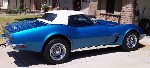
I am in the process of trying to pass my 73 Corvette w/350 through Arizona emissions. The first test failed but not by much, so I proceeded to take the car to a local shop that advertised fixing emission problems. The shop told me the carb needed a new float, $85 to tell me that. $340 later they installed the new float and the car was worse than the first emissions test. The shop tells me I need to re-jet the carb, today he tells me the carb is not the right one for the car. I have the original quadrajet, but had purchased a edelbrock quadrajet #1901 and installed it. The car had been in storage for several year so I though it would be best to just replace the carb with a new one. The shop manager is trying to tell me to rebuild the original carb, which will cost more money. How difficult is it to rebuild a quadrajet, the one thing that scares me is trying to rebuild a carb. Is this something that a mechanically inclined person can do with ease or am I best to take it to a shop? If the shop is the best bet, is there any recommened shops in the Phoenix area that are capable of rebuilding a quadrajet? Also any other emissions tricks would be greatly appreciated.
Race Director


Joined: Jun 2000
Posts: 10,051
Likes: 677
From: FL
Since you already have a carb on the car, my vote is rebuild.
Get the book Rochester Carburetors by Doug Roe. There is a whole section on Q-Jets and it shows a rebuild step by step with photos. A rebuild kit will cost you about $25 from NAPA and it will take about an afternoon to do (may be more the first time).
$340 to fix a float is outrageous. I can get my float out in 10 minutes max.
Your problem with the Edelbrock replacement is that it does not have the same jetting as stock, hence the emissions problem. If you rebuild the stock, you should be good to go.
BTW, if the car sits, the carb may get gummed up but a good cleaning and new gaskets should be all it needs.
Get the book Rochester Carburetors by Doug Roe. There is a whole section on Q-Jets and it shows a rebuild step by step with photos. A rebuild kit will cost you about $25 from NAPA and it will take about an afternoon to do (may be more the first time).
$340 to fix a float is outrageous.
I can get my float out in 10 minutes max. Your problem with the Edelbrock replacement is that it does not have the same jetting as stock, hence the emissions problem. If you rebuild the stock, you should be good to go.
BTW, if the car sits, the carb may get gummed up but a good cleaning and new gaskets should be all it needs.
Racer
Joined: Apr 2005
Posts: 365
Likes: 1
From: UK without vette :(
Antique Registrations
Can't you just register it as an antique / collector car and bypass the inspection process?  Here in VA they require annual safety inspections, but since I registered as an antique (>25 yrs old car, can't be your primary vehicle for transportation) I am not required to do the inspections.
Here in VA they require annual safety inspections, but since I registered as an antique (>25 yrs old car, can't be your primary vehicle for transportation) I am not required to do the inspections.

Safety Car

Joined: Mar 2005
Posts: 3,503
Likes: 2
From: Raleigh NC
What kind of dumbass legislator would requirer a 1973 automobile go through emissions testing?!
An obvious ploy to line the pockets auto repair shops and new car dealers.
25 years old and newer in NC--Vintage, 'Vette, or Vega--it don't matter.
They're doing away with it for 1996 and older; cars that don't have the tell-tale computer port.
An obvious ploy to line the pockets auto repair shops and new car dealers.
25 years old and newer in NC--Vintage, 'Vette, or Vega--it don't matter.
They're doing away with it for 1996 and older; cars that don't have the tell-tale computer port.
Last edited by PhotoVette1; May 6, 2005 at 08:07 AM.

Melting Slicks


Joined: Jul 2002
Posts: 3,128
Likes: 3
From: Deltona (son of Deland and DAYTONA) FL
Lars has written excellent tuning directions that can be found here:
http://www.corvettefaq.com/listing.asp?group=1&sub=11
Qjets are easy to rebuild. If you need rods and jets for it you can find them here : http://www.carburetion.com/
There might be something you can do with timing that affects CO and HCO output, but I'm not sure which way. Maybe that does will post.
http://www.corvettefaq.com/listing.asp?group=1&sub=11
Qjets are easy to rebuild. If you need rods and jets for it you can find them here : http://www.carburetion.com/
There might be something you can do with timing that affects CO and HCO output, but I'm not sure which way. Maybe that does will post.

Tech Contributor


Joined: Aug 1999
Posts: 14,384
Likes: 6,408
From: At my Bar drinking and wrenching in Lafayette Colorado
73 -
You don't need to swap carbs or rebuild anything. You can get your car to pass emissions without all that. This is a typical and usual problem: These "mechanics" don't have a clue about these older carbureted cars anymore.
Do you have your emissions numbers as measured (HC and CO) and the allowables? Post it up and let me take a look at it. If you have them, give me the numbers the way the car was both before and after they "fixed" it. I can then give you some recommendation on what to do with it. Just because the carb is not "correct" for your car has nothing to do with it passing emissions, and rebuilding & installed the "correct" carb will not assure that you'll pass...
You don't need to swap carbs or rebuild anything. You can get your car to pass emissions without all that. This is a typical and usual problem: These "mechanics" don't have a clue about these older carbureted cars anymore.
Do you have your emissions numbers as measured (HC and CO) and the allowables? Post it up and let me take a look at it. If you have them, give me the numbers the way the car was both before and after they "fixed" it. I can then give you some recommendation on what to do with it. Just because the carb is not "correct" for your car has nothing to do with it passing emissions, and rebuilding & installed the "correct" carb will not assure that you'll pass...
Thread Starter
Intermediate
Joined: Apr 2005
Posts: 34
Likes: 0
lars,
Here is the emissions information from the first and second test.
The standard is as follows:
HC 400 Loaded / 400 Idle
OC 3.75 Loaded / 5.00 Standard
First Test:
HC 191 Loaded / 290 Idle
OC 4.27 Loaded / 5.14 Idle
Second Test:
HC 544 Loaded / 1018 Idle
OC 7.41 Loaded / 7.50 Idle
After the first test I had thought it was the best I could do by myself, that was when I had taken it to a Mechanic. I thought he could dial it in and get the car to pass. Obviously he doesn't know what he is doing. Thanks for the help.
Here is the emissions information from the first and second test.
The standard is as follows:
HC 400 Loaded / 400 Idle
OC 3.75 Loaded / 5.00 Standard
First Test:
HC 191 Loaded / 290 Idle
OC 4.27 Loaded / 5.14 Idle
Second Test:
HC 544 Loaded / 1018 Idle
OC 7.41 Loaded / 7.50 Idle
After the first test I had thought it was the best I could do by myself, that was when I had taken it to a Mechanic. I thought he could dial it in and get the car to pass. Obviously he doesn't know what he is doing. Thanks for the help.
Thread Starter
Intermediate
Joined: Apr 2005
Posts: 34
Likes: 0
Originally Posted by vabeachvette
Can't you just register it as an antique / collector car and bypass the inspection process? Here in VA they require annual safety inspections, but since I registered as an antique (>25 yrs old car, can't be your primary vehicle for transportation) I am not required to do the inspections.
Here in VA they require annual safety inspections, but since I registered as an antique (>25 yrs old car, can't be your primary vehicle for transportation) I am not required to do the inspections.Corvette Stories
The Best of Corvette for Corvette Enthusiasts

5 Best & 5 Worst Corvette Daily Drivers
Joe Kucinski
The Headlights of Every Corvette Generation Explained
Joe Kucinski
5 Best & 5 Most Overrated Corvette Track Packages of All Time!
Joe Kucinski
Every 2027 Corvette Engine Explained
Joe Kucinski
Designer Imagines A Corvette That Looks More Like a Corvette Than the Corvette
Verdad Gallardo
10 Ugly Corvettes That We Still Kinda Love
Joe Kucinski
Top 10 Most Expensive Corvettes Ever Sold on Bring A Trailer
Brett Foote
10 Things Every Corvette Owner Needs (2026 Edition)
Michael S. Palmer
8 Most "Only Corvette Owners Understand" Quirks and Problems
Pouria Savadkouei


 :o
:o
Melting Slicks
Joined: Dec 2000
Posts: 2,198
Likes: 2
From: Eastern Connecticut
When CT only checked HC and CO, I would just pull the vacuum advance hose off the carb (manifold vacuum) and increase the idle speed a little. Lean and retarded both lower those emissions. If they measured NOX that wouldn't work. Also, make sure the motor is good and warmed up. Joe
Thread Starter
Intermediate
Joined: Apr 2005
Posts: 34
Likes: 0
Originally Posted by joe73vette
When CT only checked HC and CO, I would just pull the vacuum advance hose off the carb (manifold vacuum) and increase the idle speed a little. Lean and retarded both lower those emissions. If they measured NOX that wouldn't work. Also, make sure the motor is good and warmed up. Joe
Melting Slicks
Joined: Dec 2000
Posts: 2,198
Likes: 2
From: Eastern Connecticut
Originally Posted by 73conv
After pulling the vacuum advance hose off the carb, does the hose need to be plugged?
Thread Starter
Intermediate
Joined: Apr 2005
Posts: 34
Likes: 0
Originally Posted by joe73vette
No, you want to create a vacuum leak to lean the mixture. That's also why you have to raise the idle speed. Joe

Intermediate
Joined: Jun 2004
Posts: 40
Likes: 0
From: Edmonds WA
The April 2005 issue of "Corvette Enthusiast" has an article written by Tom Shaw that gives good info on rebuilding the Q-Jet. He also gives references of good rebuilders.
My wife read the article and then bought the book "Rochester Carburetors" by Doug Roe. She used both and rebuilt the carb on her 75 Conv. She said it was relatively easy but said she learned quickly to read ahead before assembly. She got the job done in two days and it looked good to me.
She's not mechanically inclined but wants to do everything she can to expedite the rebuild of the car. I say if she can do it then so can most. Give it a try. The worst thing that can happen is you will have to have it redone. Only costing you your time and the cost of the rebuild kit ($25-30) if it doesn't work. Good Luck!
My wife read the article and then bought the book "Rochester Carburetors" by Doug Roe. She used both and rebuilt the carb on her 75 Conv. She said it was relatively easy but said she learned quickly to read ahead before assembly. She got the job done in two days and it looked good to me.
She's not mechanically inclined but wants to do everything she can to expedite the rebuild of the car. I say if she can do it then so can most. Give it a try. The worst thing that can happen is you will have to have it redone. Only costing you your time and the cost of the rebuild kit ($25-30) if it doesn't work. Good Luck!
