






Custom gauge setups
Thread Starter
Racer


Joined: May 2005
Posts: 462
Likes: 0
From: Tracy Ca

Originally Posted by corvetteatv7
I have an aluminum plate for a '79 for the tach speedo, that i had professionally cut, but they took too long, so i built my own and used it. If anyone would like to buy it, give me a shout. It does have the holes for the brights and so on in the middle too.
Pics?
While were on the subject,
My car is going to be a mildly built 502. What Gauges would you guys recommend?
Definatly
Water,
Oil pressure
oil temp
voltage?
Probably going to have a wideband setup with EGT so i dont think i need a guage there.
Should i get a trans guage?

Race Director


Joined: Dec 1999
Posts: 16,945
Likes: 9
water temp, oil temp, oil press, fuel press and voltage are the minimum I'd want.
a wieband O2 w/ EGT? Where do you get those? The champion thermocoupler plugs would be nice but i think they're still not available on the market.
I have the following:
oil press
oil temp
water press
water temp
trans oil temp
fuel press
fuel level
voltage
EGT 2 band
Vac/Boost
thinking about adding intake temp (if there's such a gauge, maybe use a general temp gauge...will have to look through autometer catalog)
a wieband O2 w/ EGT? Where do you get those? The champion thermocoupler plugs would be nice but i think they're still not available on the market.
I have the following:
oil press
oil temp
water press
water temp
trans oil temp
fuel press
fuel level
voltage
EGT 2 band
Vac/Boost
thinking about adding intake temp (if there's such a gauge, maybe use a general temp gauge...will have to look through autometer catalog)
Drifting

Joined: Oct 2003
Posts: 1,486
Likes: 10
From: Big Pine Key FL
Just posted pics under my corvette photos, should be available shortly.
I have am finishing up a custom dash kinda NASCAR style...
Main panel:
Switches for Wiper lo-off-high
fan auto-off-manual
rear hatch release
Fuel pump
Water temp
0-8000 tach
0-200 speedo (elect)
Oil Press
Oil Temp (Backordered/elect)
Fuel Press (elect)
Fuel Qty
Volts
Center panel TBD
CD/amp
Bat Disconnect,
Diff Temp
Trans temp
Clock
Vac
Aux switch pannel
also installed a ECU interrupter switch

I have am finishing up a custom dash kinda NASCAR style...
Main panel:
Switches for Wiper lo-off-high
fan auto-off-manual
rear hatch release
Fuel pump
Water temp
0-8000 tach
0-200 speedo (elect)
Oil Press
Oil Temp (Backordered/elect)
Fuel Press (elect)
Fuel Qty
Volts
Center panel TBD
CD/amp
Bat Disconnect,
Diff Temp
Trans temp
Clock
Vac
Aux switch pannel
also installed a ECU interrupter switch
Drifting
Joined: Oct 2003
Posts: 1,486
Likes: 10
From: Big Pine Key FL

Burning Brakes


Joined: Mar 2004
Posts: 1,100
Likes: 2
From: Charlotte NC
Originally Posted by 84rzv500r
Corvette Stories
The Best of Corvette for Corvette Enthusiasts

Top 10 Most Explosive Corvettes Ever Made: Power-to-Weight Ratio Ranked!
Joe Kucinski
150 hp to 1,250 hp: Every Corvette Generation Compared by the Specs That Matter
Joe Kucinski
8 Coolest Corvette Pace Cars (and Replicas) of All Time
Verdad Gallardo
Top 10 Corvette Engines RANKED by Peak Torque (70+ Years of Muscle!)
Joe Kucinski
Corvette ZR1X Will Be Pacing the Indy 500, And Could Probably Race, Too!
Verdad Gallardo
Top 10 Corvettes Coming to Mecum Indy 2026!
Brett Foote
Top 10 C9 Corvette MUST-HAVES to Fix These C8 Generation Flaws!
Michael S. Palmer
10 Revolutionary 'Corvette Firsts' Most People Don't Know
Joe Kucinski
5 Reasons to Upgrade to an LS6-Powered Corvette; 5 Reasons to Stay LT2
Michael S. Palmer
Advanced
Joined: Jul 2005
Posts: 80
Likes: 1
From: Washington County Oregon
Originally Posted by 84rzv500r


Team Owner


Joined: Feb 1999
Posts: 34,453
Likes: 665
From: Republic of Texas
Originally Posted by corvettecris
Here are my cobalts. Just waiting for the 5'' tach/speedo to come out.

Any idea on the ETA?? When I called Autometer they said "It will be a while" so I went with the Ultra-lites.
Burning Brakes
Joined: Mar 2004
Posts: 1,100
Likes: 2
From: Charlotte NC
No idea. but they said they were coming, and my car has a ways to go yet, so I can wait them out... Hopefully. Or else there may be a set of cobalts for cheap in the FS section in a few years.
Burning Brakes
Joined: Dec 2004
Posts: 1,020
Likes: 1
From: Nederland Texas
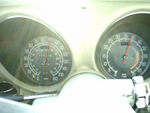
[QUOTE=ltlevil]Here's a pic of mine, Tach is a little canted in the pic but that's straight now. Who ever said it was easy knows more than me.
What did you use as a trim ring around the gauges since they do not fit the holes?
What did you use as a trim ring around the gauges since they do not fit the holes?
Pro

Joined: Oct 2004
Posts: 567
Likes: 0
From: Springhill Kansas
Originally Posted by PolishMike
Is it the same as a 75? (sorry, still learning here)
Pics?
While were on the subject,
My car is going to be a mildly built 502. What Gauges would you guys recommend?
Definatly
Water,
Oil pressure
oil temp
voltage?
Probably going to have a wideband setup with EGT so i dont think i need a guage there.
Should i get a trans guage?
Pics?
While were on the subject,
My car is going to be a mildly built 502. What Gauges would you guys recommend?
Definatly
Water,
Oil pressure
oil temp
voltage?
Probably going to have a wideband setup with EGT so i dont think i need a guage there.
Should i get a trans guage?
Melting Slicks


Joined: Jul 2002
Posts: 3,000
Likes: 22
From: Boulder Creek California
Originally Posted by nvvetgirl
Is there something you can do with the heat/ac switches. I love you guages set up but want to get rid of or move the heater/ac switches.
-Chris

Racer
Joined: Dec 2001
Posts: 328
Likes: 0
From: Dallas County Texas
Yeah, there is - at least from Nordskog...I've got one
Originally Posted by Twin_Turbo
I have the following:
oil press
oil temp
water press
water temp
trans oil temp
fuel press
fuel level
voltage
EGT 2 band
Vac/Boost
thinking about adding intake temp (if there's such a gauge, maybe use a general temp gauge...will have to look through autometer catalog)
oil press
oil temp
water press
water temp
trans oil temp
fuel press
fuel level
voltage
EGT 2 band
Vac/Boost
thinking about adding intake temp (if there's such a gauge, maybe use a general temp gauge...will have to look through autometer catalog)
I really don't see how much a wide band helps over the common narrow band a/f gauge - unless you are way out of range such as in a diagnosis of error situation. I was about to get the new nordskog digital pyro, but the engine needed the bucks more right now.
What I need is an AB switch - ideally one that automatically flips back and forth on its own at regular intervals - that will switch between right and left bank a/f, pyro and head temp. I haven't even decided whether to use the head temp gauge or not - can't see the huge difference between it and water.
Racer
Joined: Dec 2001
Posts: 328
Likes: 0
From: Dallas County Texas
So I would need to measure the resistance and impedance
and match them on each wire then (and with the switch wired in)?
I know Summit and Jegs sell pyrometer sensors seperate from the gauges....;Nordskog sells theirs as a package.
Generally, I would think relatively thin copper wire and all solid connections would have very little resistance.
Assuming my temporary engine can be healed, and cheaply (should know by Tuesday) I'll make sure to ask Nordskog about that.
I know Summit and Jegs sell pyrometer sensors seperate from the gauges....;Nordskog sells theirs as a package.
Generally, I would think relatively thin copper wire and all solid connections would have very little resistance.
Assuming my temporary engine can be healed, and cheaply (should know by Tuesday) I'll make sure to ask Nordskog about that.
Race Director
Joined: Dec 1999
Posts: 16,945
Likes: 9
Yes, you would need to measure the impedance (which is resistance) and get it dead on to be correct, but you'll need to know what impedance refers to what temperature. I wasn't aware that summit and jegs sell seperate wiring kits, unless theya re for sue w/ a specific gauge or brand of gauges (or some kind of control box)
To switch between banks you're better off jsut getting the dual pyro controller from autometer or such.
To switch between banks you're better off jsut getting the dual pyro controller from autometer or such.
Thread Starter
Racer
Joined: May 2005
Posts: 462
Likes: 0
From: Tracy Ca
Originally Posted by WayneLBurnham
I really don't see how much a wide band helps over the common narrow band a/f gauge - unless you are way out of range such as in a diagnosis of error situation. I was about to get the new nordskog digital pyro, but the engine needed the bucks more right now.
wideband is a million times better than narrowband. All you see on narrowband are GUESSES. Have you ever seen a narrowband log? it shoots all over the place. tells you very little about how your car is running. wideband will give you an accurate ratio no matter what your throttle position is. You know that 11.7:1 is 11.7:1. With narrowband it will give you a certain voltage but there is no way to know what ratio it actually is. It is also very hard to see what is going on at anything besides WOT.
Racer
Joined: Dec 2001
Posts: 328
Likes: 0
From: Dallas County Texas
yep, I have twin a/f gauges....and, when I haven't nuked
them from getting soaked in oil or tranny leaks, they are VERY predictive and sensitive to how I have the carb set.
You could tell EXACTLY when you transitted across the steps on the fuel rods on the Edelbrock when it was on the car with the last engine. Between those and the vacuum gauge there was NO guesswork involved at all in picking jets and rods on the AFB.
The full range of those narrow bands may only have been from, say, 11.5 to 13.5:1 (I don't know) but that was where it is most useful for functioning. On a dyno where you are expecting to find problems you need to know when you have 8:1 and 16:1, but not on a running setup you expect to be near, but not perfect. Plus, when you hit over range on the narrow bands, they peg in the correct direction, lean or rich.
There's no guesswork with those sensors, even if they will not read the full range a wide band will. As far as what corresponds to what exact ratio, calibration is always an issue, but my plugs always reflected the expected neutral or lean or rich readings and the two gauges agreed with each other with the same carb settings on each side.
I don't know the center of my display with narrow band is definitely stoichiometric - but, then again, neither would I with wide band - either way I have to experimentally verify that against other indicators like plugs and running temps or just trust the electronics that are interpreting the signal.
As far as throttle position - that was where they really shine! You'd have a nice mid range slightly lean cruise A/F ratio, hit the gas, watch the vacuum drop below 8 or 10" and INSTANTLY watch the A/F lean out and you KNEW you had to change to a narrower stepped fuel rod on the skinny end. Alternately, if they went more than a little into the rich area, you knew you needed a fatter one there - and I DID have that predict an over rich on acceleration stumble once.
I really miss how nicely you could set up AFB's with these things, with their segregated bank to bank fuel, but lacking the big fuel bowls and "squirters" of a holley, they just lack the responsiveness, even if I have a harder time setting them up.
To me, more useful than wideband vs. narrow band, was how quickly they respond, whatever their range, how long they last (I seem to need several sets a "normal" year - whatever that is with this last stupid year with this albatross engine) and that I should stop being so cheap and get some self heating ones!
You could tell EXACTLY when you transitted across the steps on the fuel rods on the Edelbrock when it was on the car with the last engine. Between those and the vacuum gauge there was NO guesswork involved at all in picking jets and rods on the AFB.
The full range of those narrow bands may only have been from, say, 11.5 to 13.5:1 (I don't know) but that was where it is most useful for functioning. On a dyno where you are expecting to find problems you need to know when you have 8:1 and 16:1, but not on a running setup you expect to be near, but not perfect. Plus, when you hit over range on the narrow bands, they peg in the correct direction, lean or rich.
There's no guesswork with those sensors, even if they will not read the full range a wide band will. As far as what corresponds to what exact ratio, calibration is always an issue, but my plugs always reflected the expected neutral or lean or rich readings and the two gauges agreed with each other with the same carb settings on each side.
I don't know the center of my display with narrow band is definitely stoichiometric - but, then again, neither would I with wide band - either way I have to experimentally verify that against other indicators like plugs and running temps or just trust the electronics that are interpreting the signal.
As far as throttle position - that was where they really shine! You'd have a nice mid range slightly lean cruise A/F ratio, hit the gas, watch the vacuum drop below 8 or 10" and INSTANTLY watch the A/F lean out and you KNEW you had to change to a narrower stepped fuel rod on the skinny end. Alternately, if they went more than a little into the rich area, you knew you needed a fatter one there - and I DID have that predict an over rich on acceleration stumble once.
I really miss how nicely you could set up AFB's with these things, with their segregated bank to bank fuel, but lacking the big fuel bowls and "squirters" of a holley, they just lack the responsiveness, even if I have a harder time setting them up.
To me, more useful than wideband vs. narrow band, was how quickly they respond, whatever their range, how long they last (I seem to need several sets a "normal" year - whatever that is with this last stupid year with this albatross engine) and that I should stop being so cheap and get some self heating ones!