




Drag Race suspension question..

Thread Starter
Team Owner

Joined: Jul 2001
Posts: 182,997
Likes: 88
From: Lakeland, FL
Cruise-In IV-V-VI-VII-VIII Veteran
St. Jude Donor '03, '06, '17
 Drag Race suspension question..
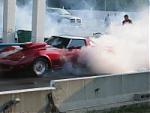
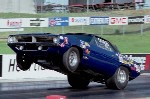
I've noticed in several videos (including my latest video) that my wheels come off the ground, then the car bounces and the wheels come off the ground again... Could this be because my shocks are set to 80/20?? If I'll switch them to 90/10, could the 2nd bounce go away??
http://www.corvetteforum.net/c3/gran...otowheelie.wmv
http://www.corvetteforum.net/c3/gran...otowheelie.wmv

Melting Slicks

Joined: Jul 2005
Posts: 2,545
Likes: 3
From: 406ci SB, AFR 180 Heads - 490 HP @5,600 RPM 529 lb-ft @ 4,100 RPM
Originally Posted by GrandSportC3
Could this be because my shocks are set to 80/20?? If I'll switch them to 90/10, could the 2nd bounce go away??
 Say what, changing your shock tension will not stop your front lift, only weight transfer will. Buy the looks of your picture you want front lift to rear so the car will hook up with the least amount of wheel spin on leaving. If you have moveable weights more them forward or add wheelie bars. By the looks of it you do alot of 1/4 blvd running, for over 20 yrs I rode 2500 + HP, 6.40 et's, and have been there done that. What class do you run in.?
Thread Starter
Team Owner
Joined: Jul 2001
Posts: 182,997
Likes: 88
From: Lakeland, FL
Cruise-In IV-V-VI-VII-VIII Veteran
St. Jude Donor '03, '06, '17
Originally Posted by Glass Act
Say what, changing your shock tension will not stop your front lift, only weight transfer will. Buy the looks of your picture you want front lift to rear so the car will hook up with the least amount of wheel spin on leaving. If you have moveable weights more them forward or add wheelie bars. By the looks of it you do alot of 1/4 blvd running, for over 20 yrs I rode 2500 + HP, 6.40 et's, and have been there done that. What class do you run in.?My thought was that setting the front shocks to 90/10, the resistance on the way down would be higher and the resistance on the way up would be lower.. This should result in pulling the wheels off the ground higher but it should limit the bouncing.... I'm mostly concerned that once I use the transbrake that the car will be bouncing hiher.. I expect to pull the wheels off the ground by at least a foot with the transbrake... Right now the wheels only come off the ground by 1 - 3 inches...
Pro


Joined: Aug 2005
Posts: 704
Likes: 2
From: Cincinnati OH
I haven't spent enough ime with the vette to answer your question but I can tell you where I've had the most luc figuring out how the suspension reacts and what to do about it. I'm not sure if any of this applies to our suspension system though. http://www.dickmillerracing.com/
He has a great book. Maybe some of it will help.
I ran a LS1 Firebird before I traded it for the C3. Adjustable suspension/shocks front and rear. When the front end was bouncing it helped to slow down the rise of the front end. You can do that 2 ways. Adj your 90/10 80/20 ratio up front to slwo it down(which reuces weight transfer so you don't get as good a launch although maybe better than with the bounce) or stiffen the rear shocks. For the rear coil spring cars the bounce meant the suspension had bottomed out and was rebounding which drives the front end back down and causes you to lose traction. The best combo would be to loosen the front and stiffen the back. The faster the front end comes up the better the weight transfer as I know you have experienced! Although it looks cool when your front tires leave the ground you are actually losing power, wasting it rotating the car rather than moving it forward.
So that's what I can add. Hopefully someone can help convert the coil theory to our C3 suspension.
He has a great book. Maybe some of it will help.
I ran a LS1 Firebird before I traded it for the C3. Adjustable suspension/shocks front and rear. When the front end was bouncing it helped to slow down the rise of the front end. You can do that 2 ways. Adj your 90/10 80/20 ratio up front to slwo it down(which reuces weight transfer so you don't get as good a launch although maybe better than with the bounce) or stiffen the rear shocks. For the rear coil spring cars the bounce meant the suspension had bottomed out and was rebounding which drives the front end back down and causes you to lose traction. The best combo would be to loosen the front and stiffen the back. The faster the front end comes up the better the weight transfer as I know you have experienced! Although it looks cool when your front tires leave the ground you are actually losing power, wasting it rotating the car rather than moving it forward.
So that's what I can add. Hopefully someone can help convert the coil theory to our C3 suspension.
Melting Slicks
Joined: Jul 2005
Posts: 2,545
Likes: 3
From: 406ci SB, AFR 180 Heads - 490 HP @5,600 RPM 529 lb-ft @ 4,100 RPM
I watched your video and from what I see your front end sits a bit high even for a racing street machine. I also noticed you lift or bounce 3 or 4 times. Shock adjustment will not correct the issue that concerns you, you need to lower (try 1 or 2 in.) and stiffen the front supension. My 56 had 2500 + HP, but no a Vette supension as the frame was custom made for strength and adjustability for track conditions. I ran Pro Mod powered by a mega ci Donovan average ET 640's. We still have the car in our family but don't race anymore, the expense to compete became out of reach unless you had big sponsers. Engines were $35000.00 ea and we always had at least 2 not counting parts, trailer, lodging. But I did have fun and met some great people. You stated you run bracket racing and I know you have fun also, there is no better smell than nitro on a warm weekend day, and the sound of 2 and 3 thousand HP engines 
Thread Starter
Team Owner
Joined: Jul 2001
Posts: 182,997
Likes: 88
From: Lakeland, FL
Cruise-In IV-V-VI-VII-VIII Veteran
St. Jude Donor '03, '06, '17
Originally Posted by TheMongoose
I haven't spent enough ime with the vette to answer your question but I can tell you where I've had the most luc figuring out how the suspension reacts and what to do about it. I'm not sure if any of this applies to our suspension system though. http://www.dickmillerracing.com/
He has a great book. Maybe some of it will help.
I ran a LS1 Firebird before I traded it for the C3. Adjustable suspension/shocks front and rear. When the front end was bouncing it helped to slow down the rise of the front end. You can do that 2 ways. Adj your 90/10 80/20 ratio up front to slwo it down(which reuces weight transfer so you don't get as good a launch although maybe better than with the bounce) or stiffen the rear shocks. For the rear coil spring cars the bounce meant the suspension had bottomed out and was rebounding which drives the front end back down and causes you to lose traction. The best combo would be to loosen the front and stiffen the back. The faster the front end comes up the better the weight transfer as I know you have experienced! Although it looks cool when your front tires leave the ground you are actually losing power, wasting it rotating the car rather than moving it forward.
So that's what I can add. Hopefully someone can help convert the coil theory to our C3 suspension.
He has a great book. Maybe some of it will help.
I ran a LS1 Firebird before I traded it for the C3. Adjustable suspension/shocks front and rear. When the front end was bouncing it helped to slow down the rise of the front end. You can do that 2 ways. Adj your 90/10 80/20 ratio up front to slwo it down(which reuces weight transfer so you don't get as good a launch although maybe better than with the bounce) or stiffen the rear shocks. For the rear coil spring cars the bounce meant the suspension had bottomed out and was rebounding which drives the front end back down and causes you to lose traction. The best combo would be to loosen the front and stiffen the back. The faster the front end comes up the better the weight transfer as I know you have experienced! Although it looks cool when your front tires leave the ground you are actually losing power, wasting it rotating the car rather than moving it forward.
So that's what I can add. Hopefully someone can help convert the coil theory to our C3 suspension.
The softest direct fit front spring that I found was a '65 small block Vette spring.. I know that I'd get a even better front weight transfer with softer front springs, but nobody makes a direct fit soft front springs.. I don't want to buy a universal one and start cutting.. I'd like something that I can just install and race...
Thread Starter
Team Owner
Joined: Jul 2001
Posts: 182,997
Likes: 88
From: Lakeland, FL
Cruise-In IV-V-VI-VII-VIII Veteran
St. Jude Donor '03, '06, '17
Originally Posted by Glass Act
I watched your video and from what I see your front end sits a bit high even for a racing street machine. I also noticed you lift or bounce 3 or 4 times. Shock adjustment will not correct the issue that concerns you, you need to lower (try 1 or 2 in.) and stiffen the front supension. My 56 had 2500 + HP, but no a Vette supension as the frame was custom made for strength and adjustability for track conditions. I ran Pro Mod powered by a mega ci Donovan average ET 640's. We still have the car in our family but don't race anymore, the expense to compete became out of reach unless you had big sponsers. Engines were $35000.00 ea and we always had at least 2 not counting parts, trailer, lodging. But I did have fun and met some great people. You stated you run bracket racing and I know you have fun also, there is no better smell than nitro on a warm weekend day, and the sound of 2 and 3 thousand HP engines
Last edited by GrandSportC3; Aug 13, 2005 at 10:41 PM.
Corvette Stories
The Best of Corvette for Corvette Enthusiasts

Top 10 Most Expensive Corvettes Ever Sold on Bring A Trailer
Brett Foote
10 Things Every Corvette Owner Needs (2026 Edition)
Michael S. Palmer
8 Most "Only Corvette Owners Understand" Quirks and Problems
Pouria Savadkouei
10 Reasons the C6 Z06 is Still A Performance Benchmark After 20 Years
Joe Kucinski
How Much Horsepower Every Corvette Engine "LOST" in 1972
Joe Kucinski
Top 10 DOs and DON'Ts for Protecting Your Convertible Top!
Michael S. Palmer
Top 10 Most Explosive Corvettes Ever Made: Power-to-Weight Ratio Ranked!
Joe Kucinski
150 hp to 1,250 hp: Every Corvette Generation Compared by the Specs That Matter
Joe Kucinski
8 Coolest Corvette Pace Cars (and Replicas) of All Time
Verdad Gallardo
Melting Slicks

Joined: Jan 2004
Posts: 2,672
Likes: 1
From: New Cumberland PA
I'm no drag racer. So you can take this and toss it in the trash. I do have some basic common sense. I would think it would be counter productive to lift the front end of the car off the ground. The ideal soulution would be for the front end to have zero weight on the tires, essentially at the brink of coming of the ground. At that point all the weight is placed on the rear tires. Lifting the front end any further does not transfer any more weight. You want all the power transferred thru the drivetrain to the rear wheels in a direction which is pointed down the track, not up in the air. I thought your goal was to lower your ET, not pop wheelies for the spectators. I wouldn't worry about the car bouncing from lifting the front tires. Figure out a way to keep the front end barely touching the ground first. One way would be to transfer weight forward. How? That's up to you. Remove the gas tank and place a small fuel cell in the front is just one option.
Last edited by mandm1200; Aug 13, 2005 at 11:53 PM.
Race Director


Joined: Jan 2000
Posts: 13,018
Likes: 2,262
From: Corsicana, Tx
2020 C2 of the Year - Modified Winner
2020 Corvette of the Year (performance mods)
C2 of Year Winner (performance mods) 2019
2017 C2 of Year Finalist
The bounce comes from the rear suspension unloading. Initially you have the hard hit that is keeping the spring under load, but it's entirely possible that you have slightly too stiff of a spring and it is able to overcome that initial hit and unload. You have as much or more spring as I have on mine, and I've got 600-700+ more pounds of weight, a stick trans and quite a bit more TQ.
You might try a lighter leaf and some snubbers to limit travel and go to some adjustable rear shocks where you can set really strong rebound to keep it from unloading as quckly.
The fastest way down the first 60' will be to keep the rear suspension fully compressed and loaded. That's where the lighter spring and snubbers come in.
Last year we nicknamed my car "Flipper" because it was porpoising so much though first gear. Getting much better!
JIM
You might try a lighter leaf and some snubbers to limit travel and go to some adjustable rear shocks where you can set really strong rebound to keep it from unloading as quckly.
The fastest way down the first 60' will be to keep the rear suspension fully compressed and loaded. That's where the lighter spring and snubbers come in.
Last year we nicknamed my car "Flipper" because it was porpoising so much though first gear. Getting much better!
JIM
Last edited by 427Hotrod; Aug 14, 2005 at 02:31 PM.
Thread Starter
Team Owner
Joined: Jul 2001
Posts: 182,997
Likes: 88
From: Lakeland, FL
Cruise-In IV-V-VI-VII-VIII Veteran
St. Jude Donor '03, '06, '17
Originally Posted by 427Hotrod
The bounce comes from the rear suspension unloading. Initially you have the hard hit that is keeping the spring under load, but it's entirely possible that you have slightly too stiff of a spring and it is able to overcome that initial hit and unload. You have as much or more spring as I have on mine, and I've got 600-700+ more pounds of weight, a stick trans and quite a bit more TQ.
You might try a lighter leaf and some snubbers to limit travel and go to some adjustable rear shocks where you can set really strong rebound to keep it from unloading as quckly.
The fastest way down the first 60' will be to keep the rear suspension fully compressed and loaded. That's where the lighter spring and snubbers come in.
Last year we nicknamed my car "Flipper" because it was porpoising so much though first gear. Getting much better!
JIM
You might try a lighter leaf and some snubbers to limit travel and go to some adjustable rear shocks where you can set really strong rebound to keep it from unloading as quckly.
The fastest way down the first 60' will be to keep the rear suspension fully compressed and loaded. That's where the lighter spring and snubbers come in.
Last year we nicknamed my car "Flipper" because it was porpoising so much though first gear. Getting much better!
JIM
Safety Car


Joined: Aug 2001
Posts: 3,892
Likes: 13
From: Pettis Performance 565 with two stages of Nitrous Supply nitrous 1.082, 4.61 at 155, 7.17 at 192
Originally Posted by GrandSportC3
I want to limit rear suspension travel for several reasons.. One of the main reasons is that squatting is the #1 killer of rear ends... Luckily, traction doesn't seem to be an issue right now so I'm not too concerned about the bounce.. but I just hope that it won't cause any problems with the transbrake..
Racer

Joined: Jul 2004
Posts: 332
Likes: 0
From: Geneva Ohio
Oliver listen to Jim. Your problem is NOT the front! You have to plant the rear tires and keep them planted.
First you have to adjust the rear spring so the half shafts and strut rods are parallel to the ground. Get some factory style rubber bumpers. With this setup I have only 1/2 to 3/4 inch of suspension travel. Use just enough spring to slowly allow the frame to rest on the bumpers on the launch. I am using an adjustable mono leaf spring currently set at 425#. Forget the rear drag shocks those are for Camaro's. Get the QA1 adjustable Stocker Stars shocks. Start at about the middle setting (6) and go higher from there until the bouncing goes away. I usually have them set at 9 or 10 depending on the track condition. I have stock big block front springs and cheap KYB front shocks, nothing fancy. The front raises just enough to glue down the rear tires. On the launch the back end drops slightly and carries the front tires just 3 or 4 inches off the ground for about 12 to 15 feet. No big wheel stand and no bouncing. I also use just enough RPM to keep the engine from bogging. I am usually happy with about 1/2 a turn of the tire on the launch. Comes out of the hole like a pro stock car just slower. We have spent half of this season trying to get rid of the very same problems that you are having.
First you have to adjust the rear spring so the half shafts and strut rods are parallel to the ground. Get some factory style rubber bumpers. With this setup I have only 1/2 to 3/4 inch of suspension travel. Use just enough spring to slowly allow the frame to rest on the bumpers on the launch. I am using an adjustable mono leaf spring currently set at 425#. Forget the rear drag shocks those are for Camaro's. Get the QA1 adjustable Stocker Stars shocks. Start at about the middle setting (6) and go higher from there until the bouncing goes away. I usually have them set at 9 or 10 depending on the track condition. I have stock big block front springs and cheap KYB front shocks, nothing fancy. The front raises just enough to glue down the rear tires. On the launch the back end drops slightly and carries the front tires just 3 or 4 inches off the ground for about 12 to 15 feet. No big wheel stand and no bouncing. I also use just enough RPM to keep the engine from bogging. I am usually happy with about 1/2 a turn of the tire on the launch. Comes out of the hole like a pro stock car just slower. We have spent half of this season trying to get rid of the very same problems that you are having.
Thread Starter
Team Owner
Joined: Jul 2001
Posts: 182,997
Likes: 88
From: Lakeland, FL
Cruise-In IV-V-VI-VII-VIII Veteran
St. Jude Donor '03, '06, '17
Originally Posted by red79vette454
Oliver listen to Jim. Your problem is NOT the front! You have to plant the rear tires and keep them planted.
First you have to adjust the rear spring so the half shafts and strut rods are parallel to the ground. Get some factory style rubber bumpers. With this setup I have only 1/2 to 3/4 inch of suspension travel. Use just enough spring to slowly allow the frame to rest on the bumpers on the launch. I am using an adjustable mono leaf spring currently set at 425#. Forget the rear drag shocks those are for Camaro's. Get the QA1 adjustable Stocker Stars shocks. Start at about the middle setting (6) and go higher from there until the bouncing goes away. I usually have them set at 9 or 10 depending on the track condition. I have stock big block front springs and cheap KYB front shocks, nothing fancy. The front raises just enough to glue down the rear tires. On the launch the back end drops slightly and carries the front tires just 3 or 4 inches off the ground for about 12 to 15 feet. No big wheel stand and no bouncing. I also use just enough RPM to keep the engine from bogging. I am usually happy with about 1/2 a turn of the tire on the launch. Comes out of the hole like a pro stock car just slower. We have spent half of this season trying to get rid of the very same problems that you are having.
First you have to adjust the rear spring so the half shafts and strut rods are parallel to the ground. Get some factory style rubber bumpers. With this setup I have only 1/2 to 3/4 inch of suspension travel. Use just enough spring to slowly allow the frame to rest on the bumpers on the launch. I am using an adjustable mono leaf spring currently set at 425#. Forget the rear drag shocks those are for Camaro's. Get the QA1 adjustable Stocker Stars shocks. Start at about the middle setting (6) and go higher from there until the bouncing goes away. I usually have them set at 9 or 10 depending on the track condition. I have stock big block front springs and cheap KYB front shocks, nothing fancy. The front raises just enough to glue down the rear tires. On the launch the back end drops slightly and carries the front tires just 3 or 4 inches off the ground for about 12 to 15 feet. No big wheel stand and no bouncing. I also use just enough RPM to keep the engine from bogging. I am usually happy with about 1/2 a turn of the tire on the launch. Comes out of the hole like a pro stock car just slower. We have spent half of this season trying to get rid of the very same problems that you are having.
I think that the bounce might mostly go away if I lower the front.. If it doesn't, I'll change the spring rate in the rear.. I'm definetely not going with a stiff front spring.. I'd actually prefer even softer springs for the front... I want to get most of my weight transfer in front and limit travel in the rear..


Thread Starter
Team Owner
Joined: Jul 2001
Posts: 182,997
Likes: 88
From: Lakeland, FL
Cruise-In IV-V-VI-VII-VIII Veteran
St. Jude Donor '03, '06, '17
Originally Posted by White 68
Interesting topic could some of you guys post pictures of the rear end set up you have ..Thanks 
Racer
Joined: Jul 2004
Posts: 332
Likes: 0
From: Geneva Ohio
Okay. Paint some 4" wide stripes on your slicks, from the wheel to the ground and have someone watch the rear tires closely when you launch the car. I bet when the front end drops the tires will spin slightly breaking traction then grabbing again. That is the rear suspension unloading causing your porpiose problem. You probably don't need to change the front suspension other than to get the car fairly level. Oh and by the way as you come into more power the problem will get worse, and you might find yourself aiming toward the wall. The very same reason that we haven't used the nitrous yet, because we want to be sure the tires are planted before hitting the spray.

Thread Starter
Team Owner
Joined: Jul 2001
Posts: 182,997
Likes: 88
From: Lakeland, FL
Cruise-In IV-V-VI-VII-VIII Veteran
St. Jude Donor '03, '06, '17
Originally Posted by comp
good info, i'd try them at 90/10 and 70/30 the front sway bar is gone isn't it

