



Crankcase Breathers Necessary?

Thread Starter
Melting Slicks


Joined: Sep 2004
Posts: 2,412
Likes: 3

Originally Posted by yellow 72
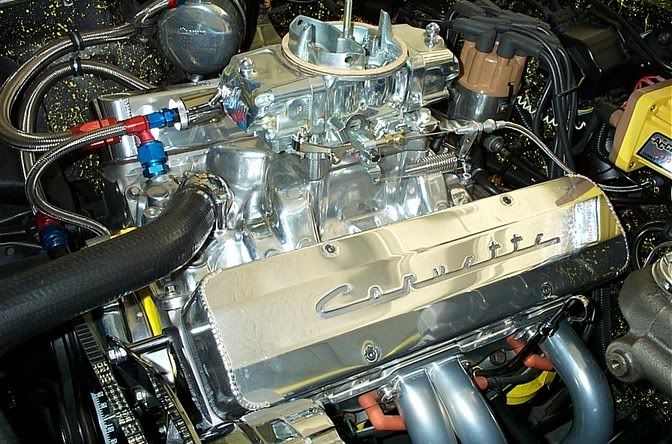
Who says you have to put the PCV valve in the valve covers? On my last few manifolds I've drilled my intakes over the lifter valley for the valve. When I got these trick new covers the last thing I wanted was a bunch of crap hanging out of the top of them. Crankcase air intake is on the back of one cover plumbed to the air cleaner assembly. I did fab a baffle under the grommet in the intake and I used a lifter valley baffle. 



Le Mans Master


Joined: Apr 2000
Posts: 5,202
Likes: 10
From: cincinnati ohio
St. Jude Donor '09
Originally Posted by torqvette
Is the PCV valve the only form of crankcase ventilation that you have? And is that the same vacuum line that feeds your brake booster? That motor is gorgeous by the way.

Team Owner


Joined: Apr 1999
Posts: 21,953
Likes: 1,445
From: Reno Nevada
2024 C3 of the Year Finalist- Modified
Yellow 72 - My question would be the "T" pcv and on to the brakes. Does it effect repeated braking? Unless you have a mild cam the "T" would cause a reduced signal to the booster?
Le Mans Master
Joined: Nov 2004
Posts: 6,128
Likes: 21
From: North Alabama
Originally Posted by kdf1986
And last...didnt early Chevy V-8 engines have some type of external oil filler tube at the front of the engine which meant those valve covers may not have needed holes in them, but they did have an oil filler tube.
kdf
Last edited by Jclgodale3; Dec 9, 2005 at 12:59 AM.
Burning Brakes

Joined: Aug 2005
Posts: 1,126
Likes: 0
From: Hudson Falls, N.Y. 76 Vette Modified L-48
Originally Posted by gkull
Yellow 72 - My question would be the "T" pcv and on to the brakes. Does it effect repeated braking? Unless you have a mild cam the "T" would cause a reduced signal to the booster?
Le Mans Master
Joined: Apr 2000
Posts: 5,202
Likes: 10
From: cincinnati ohio
St. Jude Donor '09
Originally Posted by gkull
Yellow 72 - My question would be the "T" pcv and on to the brakes. Does it effect repeated braking? Unless you have a mild cam the "T" would cause a reduced signal to the booster?
Burning Brakes
Joined: Aug 2005
Posts: 1,126
Likes: 0
From: Hudson Falls, N.Y. 76 Vette Modified L-48
Originally Posted by yellow 72
That T goes to the vacuum reservoir I have manual brakes....
Corvette Stories
The Best of Corvette for Corvette Enthusiasts

How Much Horsepower Every Corvette Engine "LOST" in 1972
Joe Kucinski
Top 10 DOs and DON'Ts for Protecting Your Convertible Top!
Michael S. Palmer
Top 10 Most Explosive Corvettes Ever Made: Power-to-Weight Ratio Ranked!
Joe Kucinski
150 hp to 1,250 hp: Every Corvette Generation Compared by the Specs That Matter
Joe Kucinski
8 Coolest Corvette Pace Cars (and Replicas) of All Time
Verdad Gallardo
Top 10 Corvette Engines RANKED by Peak Torque (70+ Years of Muscle!)
Joe Kucinski
Corvette ZR1X Will Be Pacing the Indy 500, And Could Probably Race, Too!
Verdad Gallardo
Top 10 Corvettes Coming to Mecum Indy 2026!
Brett Foote
Top 10 C9 Corvette MUST-HAVES to Fix These C8 Generation Flaws!
Michael S. Palmer
Team Owner
Joined: Apr 1999
Posts: 21,953
Likes: 1,445
From: Reno Nevada
2024 C3 of the Year Finalist- Modified
Originally Posted by kb2fzq
I would say you'll know immediately if the PVC is pulling too much vacuum, I assume that's your concern.....
I've had to down shift and let off of the gas to get my head lights to open going up hill on a freeway.
Burning Brakes
Joined: Aug 2005
Posts: 1,126
Likes: 0
From: Hudson Falls, N.Y. 76 Vette Modified L-48
My point being...with a T there is no resistance thru the PVC...the vacuum is pulling air out of the crankcase thru a breather on the other valve cover, hence the booster side of the T "MAY" be low or none existant, making stopping a little difficult if there is low or no vacuum on the booster...my point being with MY car, this problem with the T isn't happening, I have good brakes and the PVC must be working as the oil blow-by accumulating on chrome parts that was happening with the pvc removed is no longer happening....just my point..not that there would be TOO MUCH vacuum
Le Mans Master
Joined: Apr 2000
Posts: 5,202
Likes: 10
From: cincinnati ohio
St. Jude Donor '09
My car was pretty much unmolested when I bought it and there was a T on the PCV then on to the vac canister. Don't know if that was a manual brake only setup or what....

Burning Brakes
Joined: Mar 2002
Posts: 839
Likes: 0
From: Lewiston, Maine
Originally Posted by kdf1986
I heard that if you dont have any type of breathers/PVC system on your valve covers that the internal pressure will build up enough to cause leaks from the pressure.
Having said that, if you dont have holes in your valve covers, then how do you add oil?
And last...didnt early Chevy V-8 engines have some type of external oil filler tube at the front of the engine which meant those valve covers may not have needed holes in them, but they did have an oil filler tube.
kdf
Having said that, if you dont have holes in your valve covers, then how do you add oil?
And last...didnt early Chevy V-8 engines have some type of external oil filler tube at the front of the engine which meant those valve covers may not have needed holes in them, but they did have an oil filler tube.
kdf
 good point about adding oil. My dad's '63 Studebaker Avanti, that I got to drive to high school, has 4 breather caps (two per valve cover) and an additional tube that went straight to the oil pan. In that configuration it's possible to pour 5 quarts of oil into the engine simultaneously.
My autoshop classmates thought it was really cool. After I'd finished draining the pan, I'd give 5 of them each one bottle of oil and tell them to have at it. They'd fight over who got the "pan" tube because it is the easist to pour into without getting oil on the engine; something I told them to try not to do.
I always thought it would be cool to replicate the "5 oil filler" design on my Corvette. Though my dad's Avanti is special because it had a race motor built by the Granatelli brothers. Having the same thing done to my street driven Corvette may prove to be pointless. Do daily driven cars really need that much venting?