




It pings under acceleration; need advice

Thread Starter
Melting Slicks


Joined: Apr 1999
Posts: 2,675
Likes: 13
From: Sudbury MA

427 Hotrod,
Let me clarify.
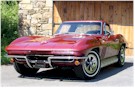
I purchased the car in 1972 with all original components. NOTHING has been modified. I have just spent 10 years and over $30K to restore the car to factory original condition in every way. It has 46,000 miles on it and I bought it from a frend of mine who is a purist. The distributor was sent to a machine shop only to be checked as part of the restoration as I am not a distributor expert and wanted someone to look at it to be sure it was in correct working order. Engine is a stock 1968 L79 motor that was disassembled and rebuilt by a machine shop with all factory correct GM parts at a cost of $3200.00 for labor, I supplied any needed new parts direct from GM. This is not a "Bubba" car with mix and match parts but a restoration of a low mileage garage pampered car that was driven on weekends and will be again driven on weekends and sunny days. Not a trailer queen but also not a daily driver. I drive my "toys" 1000-2000 miles per year just to keep them fit. The car did not ping before and maybe it is just the fact that the quality of the gas is now lower octane, (I used to run Sunoco 260 when it was still available) or maybe it is as simple as the fact that I might have the timing wrong. I can't tell that today, since to test it after adjusting the timing I will have to drive it, and it is raining out today and I won't drive it in the rain.
Let me clarify.
I purchased the car in 1972 with all original components. NOTHING has been modified. I have just spent 10 years and over $30K to restore the car to factory original condition in every way. It has 46,000 miles on it and I bought it from a frend of mine who is a purist. The distributor was sent to a machine shop only to be checked as part of the restoration as I am not a distributor expert and wanted someone to look at it to be sure it was in correct working order. Engine is a stock 1968 L79 motor that was disassembled and rebuilt by a machine shop with all factory correct GM parts at a cost of $3200.00 for labor, I supplied any needed new parts direct from GM. This is not a "Bubba" car with mix and match parts but a restoration of a low mileage garage pampered car that was driven on weekends and will be again driven on weekends and sunny days. Not a trailer queen but also not a daily driver. I drive my "toys" 1000-2000 miles per year just to keep them fit. The car did not ping before and maybe it is just the fact that the quality of the gas is now lower octane, (I used to run Sunoco 260 when it was still available) or maybe it is as simple as the fact that I might have the timing wrong. I can't tell that today, since to test it after adjusting the timing I will have to drive it, and it is raining out today and I won't drive it in the rain.

Team Owner


Joined: Jul 1999
Posts: 26,545
Likes: 46
From: Huntersville NC
Kurt, I didn't notice if you explained anywhere who set the timing and how. Although most of us Lars-trained will set the timing all-in (vac removed) at 36 with engine revving... the owners manual calls for setting the initial timing at 8 degrees BTDC... but there is a footnote that says 8 degrees is for 2 specific distributor nos, and 4 degrees for two other distributor numbers. I haven't researched why there were different distributors in the 350 hp cars. Either way, retarding the timing as suggested above will probably eliminate the pinging. It would also be interesting to check if the timing is set at factory spec or not.
Your stock comp ratio is 11:1, so you will be more sensitive to octane than a base engine or even an L-36 or L-68 bigblock, which were all 10.25:1 stock.
Your stock comp ratio is 11:1, so you will be more sensitive to octane than a base engine or even an L-36 or L-68 bigblock, which were all 10.25:1 stock.
Thread Starter
Melting Slicks
Joined: Apr 1999
Posts: 2,675
Likes: 13
From: Sudbury MA
PRNDL,
I confess, I am the guy whoset the timing and I did it per the owner's manual. When Lars returned my carbuertor to me after setting it up for me, he did mention to set the timing as you said at 36 degrees all in but to be honest, I did not know how to do that.
I only knew how to set timing at idle with vacuum advance plugged and if memory serves me correctly I did it at 8 degrees but I am getting senile and my memory could be worng. I'm sure I wrote it down somewhere so will have to check. It's raining pretty hard in Massachusetts right now so I can't really road test my precious baby today so will probably wait until tomorrow to set the timing. Will take the day off from work to get this done as it is nagging at me. I know, I am a sicko.
I VERY MUCH APPRECIATE ALL THE COMMENTS AND HELP I HAVE RECEIVED ON THIS PROBLEM FROM EVERYONE. YOU GUYS ARE GREAT.
Thank you all,
Kurt
I confess, I am the guy whoset the timing and I did it per the owner's manual. When Lars returned my carbuertor to me after setting it up for me, he did mention to set the timing as you said at 36 degrees all in but to be honest, I did not know how to do that.
I only knew how to set timing at idle with vacuum advance plugged and if memory serves me correctly I did it at 8 degrees but I am getting senile and my memory could be worng. I'm sure I wrote it down somewhere so will have to check. It's raining pretty hard in Massachusetts right now so I can't really road test my precious baby today so will probably wait until tomorrow to set the timing. Will take the day off from work to get this done as it is nagging at me. I know, I am a sicko.
I VERY MUCH APPRECIATE ALL THE COMMENTS AND HELP I HAVE RECEIVED ON THIS PROBLEM FROM EVERYONE. YOU GUYS ARE GREAT.
Thank you all,
Kurt

Race Director


Joined: Mar 2001
Posts: 11,322
Likes: 1
From: Living in the Hartland
I had an iron head eng that was sensative to gas, it would ping once in while if it did not like the gas, remove the vac adv from the equation and it would stop so I would carry a vac plug with me and when it pinged I would pull the vac adv line off the carb and plug the port, no more ping and no loss of performance. Next time I filled up I would usually use high oct gas and run for a few miles then hook up the vac adv again to see if it pinged. Much easier than changing the timing back and forth everytime I encountered pinging.
Now if unhooking the vac adv does not get rid of the pinging then retarding is def the next logical step. If carrying a timing light with you and changing the timing back and forth appeals to you then go for it but I found pulling a vac line much easier for the problem I was having.

Now if unhooking the vac adv does not get rid of the pinging then retarding is def the next logical step. If carrying a timing light with you and changing the timing back and forth appeals to you then go for it but I found pulling a vac line much easier for the problem I was having.

Race Director


Joined: Jan 2000
Posts: 13,019
Likes: 2,262
From: Corsicana, Tx
2020 C2 of the Year - Modified Winner
2020 Corvette of the Year (performance mods)
C2 of Year Winner (performance mods) 2019
2017 C2 of Year Finalist
My mistake....I thought it was a '72 car...and I didn't check profile.
Sorry....
I'll try again now that I understand more.
Since it was built all stock with GM type components...and I assume the shop followed instructions....
You have an "honest" calculated compression ratio of around 10.5 or so with iron heads using the domed 350hp pistons. This assumes he used steel shim headgaskets and not normal thicker composttion style. If he used thicker ones then compression is a little lower, but that also changed quench distance that was probably around .040-.045 or so from the factory. Could easily be .060-.080 with replacement pistons and gaskets even if they are OEM replacements. Quench helps a little with detonation resistance. But it's not killing us here either way. Just wanted to let you know about it.
Past that, we have an engine with stock T-stat and cooling system that has temps in the 190-200* range I'm sure....so that isn't helping. And we have A/C in the picture.
We have a heated intake with exhaust crossovers that aren't helping.
But the biggest issue is the gas quality as you've noted. While I believe typical current 93 octane is better than past years, it's nothing like the Sunoco 260 you were using.
Hot Rod style carb'ed engines can run 11.0 honest/measured compression with the type of cams we use. I have 11.06 but I also have aluminum heads, a cooling system that keeps it well below 180*, no heat crossovers and a dist set up to maximize it all. EFI guys can get 11.5-12.0 with tuning.
If you are determined to keep it all original and not willing to change timing curve or other parts to allow it to run better on the gas we can get, then the best you can hope for is to add some Av gas or a little race gas. Actually for only 1000-2000 miles a year, that's not too bad.
Other than that you will need to back off timing some, but there goes some performance.
It would be interesting to see what the actual advance is in your distributor. If you can get an dial back timing light you can plot it out pretty well to get an ida.
Just for reference most other high compression motors with larger cams set initial as high as we can. It really helps response as well as keeping things cool. Same principle of full vacuum advance at idle..it cools things down. I'm talking 18-20*+ at least here. Now to do that takes some work on dist to limit the total advance in dist. Usually a simple bushing change or extreme cases you can weld up slot to some to limit travel...which I know is not an option here. Anyway, you limit it to total of the same 36-40* you originally had. Then we play with springs to bring curve in as quick as possible without pinging. When all is done you also need to limit vacuum advance some because you will end up with way too much on the road undr light throttle.
I know GM spent a lot of time working this all out...but it was a compromise for the fuel available at the time. I see nothing wrong with tuning it to run well with the fuel available today.
The tips of working out the full throttle timing first will tell you what it will take. If it will only handle 32* with the fuel you want to use, then I would for sure do some dist recurving to get some initial back in it. If not the engine temp and driveability will not be good.
No one will ever see all of this under the cap and they will marvel at how well yours runs!
JIM
Sorry....
I'll try again now that I understand more.
Since it was built all stock with GM type components...and I assume the shop followed instructions....
You have an "honest" calculated compression ratio of around 10.5 or so with iron heads using the domed 350hp pistons. This assumes he used steel shim headgaskets and not normal thicker composttion style. If he used thicker ones then compression is a little lower, but that also changed quench distance that was probably around .040-.045 or so from the factory. Could easily be .060-.080 with replacement pistons and gaskets even if they are OEM replacements. Quench helps a little with detonation resistance. But it's not killing us here either way. Just wanted to let you know about it.
Past that, we have an engine with stock T-stat and cooling system that has temps in the 190-200* range I'm sure....so that isn't helping. And we have A/C in the picture.
We have a heated intake with exhaust crossovers that aren't helping.
But the biggest issue is the gas quality as you've noted. While I believe typical current 93 octane is better than past years, it's nothing like the Sunoco 260 you were using.
Hot Rod style carb'ed engines can run 11.0 honest/measured compression with the type of cams we use. I have 11.06 but I also have aluminum heads, a cooling system that keeps it well below 180*, no heat crossovers and a dist set up to maximize it all. EFI guys can get 11.5-12.0 with tuning.
If you are determined to keep it all original and not willing to change timing curve or other parts to allow it to run better on the gas we can get, then the best you can hope for is to add some Av gas or a little race gas. Actually for only 1000-2000 miles a year, that's not too bad.
Other than that you will need to back off timing some, but there goes some performance.
It would be interesting to see what the actual advance is in your distributor. If you can get an dial back timing light you can plot it out pretty well to get an ida.
Just for reference most other high compression motors with larger cams set initial as high as we can. It really helps response as well as keeping things cool. Same principle of full vacuum advance at idle..it cools things down. I'm talking 18-20*+ at least here. Now to do that takes some work on dist to limit the total advance in dist. Usually a simple bushing change or extreme cases you can weld up slot to some to limit travel...which I know is not an option here. Anyway, you limit it to total of the same 36-40* you originally had. Then we play with springs to bring curve in as quick as possible without pinging. When all is done you also need to limit vacuum advance some because you will end up with way too much on the road undr light throttle.
I know GM spent a lot of time working this all out...but it was a compromise for the fuel available at the time. I see nothing wrong with tuning it to run well with the fuel available today.
The tips of working out the full throttle timing first will tell you what it will take. If it will only handle 32* with the fuel you want to use, then I would for sure do some dist recurving to get some initial back in it. If not the engine temp and driveability will not be good.
No one will ever see all of this under the cap and they will marvel at how well yours runs!
JIM
Thread Starter
Melting Slicks
Joined: Apr 1999
Posts: 2,675
Likes: 13
From: Sudbury MA
Jim,
If I change the timing and it makes the pinging go away, and then I want to make some of the other adjustments you mention to get back some power, are those types of things done by a machine shop?
Where would I go to have this done as I do not feel competent enough to do something like that without screwing it up.
Also, I thought it was illegal to buy AVgas for street use and not that I care so much about that, but how do I go about getting it since when I run out of gas I might not be near a place that sells it. Can a regular guy on the street like me buy that stuff? I am in Massachusetts, so don't know if it differs from state to state.
Thanks,
Kurt
If I change the timing and it makes the pinging go away, and then I want to make some of the other adjustments you mention to get back some power, are those types of things done by a machine shop?
Where would I go to have this done as I do not feel competent enough to do something like that without screwing it up.
Also, I thought it was illegal to buy AVgas for street use and not that I care so much about that, but how do I go about getting it since when I run out of gas I might not be near a place that sells it. Can a regular guy on the street like me buy that stuff? I am in Massachusetts, so don't know if it differs from state to state.
Thanks,
Kurt
Race Director
Joined: Jan 2000
Posts: 13,019
Likes: 2,262
From: Corsicana, Tx
2020 C2 of the Year - Modified Winner
2020 Corvette of the Year (performance mods)
C2 of Year Winner (performance mods) 2019
2017 C2 of Year Finalist
The mods aren't that hard to do really once you know how. You would need to find someone who understands what they are doing. The old dist curve kits actually allowed you to get most of it done. Run a search on "Lars' here on the Forum and see if he still sells the kits he used to have. He used to recurve dist's to...but I think he's slowed down on the side stuff lately.
You usually can't pull your car up there to get it. You need to take a bunch of 5 gallon cans out there and load up. That is usually no issue..just don't talk about using it on the street. The only reason it is an issue is because they don't collect highway use taxes on it.
AV gas has a few peculiarities...but if you added 5-8 gallons per tank full it would likely take care of issue. I know other folks who buy a 55 gallon drum of race gas and keep at home to add small amounts throughout the summer as needed for cruise season. If you used 5 gallons per tank of good race gas...that would likely get you through your cruising season.
JIM
You usually can't pull your car up there to get it. You need to take a bunch of 5 gallon cans out there and load up. That is usually no issue..just don't talk about using it on the street. The only reason it is an issue is because they don't collect highway use taxes on it.
AV gas has a few peculiarities...but if you added 5-8 gallons per tank full it would likely take care of issue. I know other folks who buy a 55 gallon drum of race gas and keep at home to add small amounts throughout the summer as needed for cruise season. If you used 5 gallons per tank of good race gas...that would likely get you through your cruising season.
JIM

Melting Slicks
Joined: Apr 1999
Posts: 2,010
Likes: 3
From: Moon Twp. PA USA
Originally Posted by BarryK
The original vacuum advance was selected based on the intake manifold vacuum characteristics of the particular engine/transmission combination and how it was expected to perform in daily use. Based on his L79 engine, and going by what he has already said, he has the original and correct vacuum advance for his motor. Changing that to a different unnit will change either the amount of advance or how soon the advance kicks in changing his overall distributor advance curve.
Why re-enginner a system that was perfectly fine to begin with? Doing so you are only asking for trouble and poor performance and drivability. These vacuum advance units selected for each engine/tranny combinations were choosen on a whim or because Chevy got a good deal on a certain spec can so they decided all the cars would now get that same one.
Changing the timing is another matter. By retarding the timing back approx 2 degrees or so is not changing the curve of the whole system, it's only shifting it slightly down to avoid the timing being too high and having detonation which can easily destroy pistons if it isn't eliminated. Besides, how do you know his timing is currently "factory correct". although from the sounds of it he has the original vacuum can SOMEBODY, at SOMETIME has tuned up the car and readjusted the timing since it's left the factory! who knows what it's set at now. Also, look at the specs listed for the timing in any shop manual it it usually gives a range of values to set at - for example, on my '65 L76 motor the manual lists initial timing should be set at BETWEEN 12*-14* and total timing BETWEEN 34*-36*.
What if it was set currently at 36* and I backed it down 2* to 34* total. I'm still within 'factory correct" specs.
Another factor to consider from the early cars to todays cars is the difference in the fuels. Without the lead and the relatively lower octanes many, if not most of the cars, need to run slightly retarded on the timing to avoid detonation. This can be done without messing around with the correct advance curve for a particular motor.
Why re-enginner a system that was perfectly fine to begin with? Doing so you are only asking for trouble and poor performance and drivability. These vacuum advance units selected for each engine/tranny combinations were choosen on a whim or because Chevy got a good deal on a certain spec can so they decided all the cars would now get that same one.
Changing the timing is another matter. By retarding the timing back approx 2 degrees or so is not changing the curve of the whole system, it's only shifting it slightly down to avoid the timing being too high and having detonation which can easily destroy pistons if it isn't eliminated. Besides, how do you know his timing is currently "factory correct". although from the sounds of it he has the original vacuum can SOMEBODY, at SOMETIME has tuned up the car and readjusted the timing since it's left the factory! who knows what it's set at now. Also, look at the specs listed for the timing in any shop manual it it usually gives a range of values to set at - for example, on my '65 L76 motor the manual lists initial timing should be set at BETWEEN 12*-14* and total timing BETWEEN 34*-36*.
What if it was set currently at 36* and I backed it down 2* to 34* total. I'm still within 'factory correct" specs.
Another factor to consider from the early cars to todays cars is the difference in the fuels. Without the lead and the relatively lower octanes many, if not most of the cars, need to run slightly retarded on the timing to avoid detonation. This can be done without messing around with the correct advance curve for a particular motor.
Corvette Stories
The Best of Corvette for Corvette Enthusiasts

Top 10 Most Expensive Corvettes Ever Sold on Bring A Trailer
Brett Foote
10 Things Every Corvette Owner Needs (2026 Edition)
Michael S. Palmer
8 Most "Only Corvette Owners Understand" Quirks and Problems
Pouria Savadkouei
10 Reasons the C6 Z06 is Still A Performance Benchmark After 20 Years
Joe Kucinski
How Much Horsepower Every Corvette Engine "LOST" in 1972
Joe Kucinski
Top 10 DOs and DON'Ts for Protecting Your Convertible Top!
Michael S. Palmer
Top 10 Most Explosive Corvettes Ever Made: Power-to-Weight Ratio Ranked!
Joe Kucinski
150 hp to 1,250 hp: Every Corvette Generation Compared by the Specs That Matter
Joe Kucinski
8 Coolest Corvette Pace Cars (and Replicas) of All Time
Verdad Gallardo
Thread Starter
Melting Slicks
Joined: Apr 1999
Posts: 2,675
Likes: 13
From: Sudbury MA
Finally got a chance to get back out into the garage.
Checked the dwell, it is at 30 as specified in all the charts.
Timing (with vaccum line disconnected and plugged) was around 12 or 14, set it back to 8 and still pings under acceleration, not hard acceleration, just normal.
I just now set the timing back to 6 degrees and now at idle the engine knocks a bit, not ping, KNOCK.
Will take it for a ride around the block now to see how it runs.
Kurt
Checked the dwell, it is at 30 as specified in all the charts.
Timing (with vaccum line disconnected and plugged) was around 12 or 14, set it back to 8 and still pings under acceleration, not hard acceleration, just normal.
I just now set the timing back to 6 degrees and now at idle the engine knocks a bit, not ping, KNOCK.
Will take it for a ride around the block now to see how it runs.
Kurt
Thread Starter
Melting Slicks
Joined: Apr 1999
Posts: 2,675
Likes: 13
From: Sudbury MA
6 degrees of timing no difference, still pings under acceleration, seems to have plenty of power but pings.
Drove 8 miles to the NAPA Auto parts store, bought 104 Octan Booster, added it, drove 8 miles home, no difference, still pings.
Should I go down to 4 degrees?
My distributor # 1111477 calls for 8 BTDC @Idle RPM according to the Sun chart.
Any ideas?
Kurt
Drove 8 miles to the NAPA Auto parts store, bought 104 Octan Booster, added it, drove 8 miles home, no difference, still pings.
Should I go down to 4 degrees?
My distributor # 1111477 calls for 8 BTDC @Idle RPM according to the Sun chart.
Any ideas?
Kurt
Le Mans Master

Joined: Apr 2004
Posts: 7,106
Likes: 38
From: Newark DE
Kurt
first of all, don't waste anymore money on the octane booster - it doesn't do crap and the only advantage of it to the manufacturer who sells it to you. if it raised the octane level more than 1/10th of one point I'd be surprised. Check the archives as there are plenty of threads that discuss this.
Now, if your specs call for an itial of 8* and it was at 12* or 14* than no surprise you were getting pinging.
If you have it down to 6* you SHOULD be fine but you say you are still getting a pinging or a knock.
Forget the inital timing for just a minute and lets look at the total timing (make sure the vacuuum hose to the vacuum can is disconnected and plugged)
what is the total timing you are getting and at what rpm is it all in?
BTW, did you map your distributor to see the curve you are getting as per John's paper that you downloaded off my site?
first of all, don't waste anymore money on the octane booster - it doesn't do crap and the only advantage of it to the manufacturer who sells it to you. if it raised the octane level more than 1/10th of one point I'd be surprised. Check the archives as there are plenty of threads that discuss this.
Now, if your specs call for an itial of 8* and it was at 12* or 14* than no surprise you were getting pinging.
If you have it down to 6* you SHOULD be fine but you say you are still getting a pinging or a knock.
Forget the inital timing for just a minute and lets look at the total timing (make sure the vacuuum hose to the vacuum can is disconnected and plugged)
what is the total timing you are getting and at what rpm is it all in?
BTW, did you map your distributor to see the curve you are getting as per John's paper that you downloaded off my site?
Melting Slicks
Joined: Nov 2001
Posts: 2,668
Likes: 43
From: Eastern US XX
Originally Posted by ksbunting
6 degrees of timing no difference, still pings under acceleration, seems to have plenty of power but pings.
Drove 8 miles to the NAPA Auto parts store, bought 104 Octan Booster, added it, drove 8 miles home, no difference, still pings.
Should I go down to 4 degrees?
My distributor # 1111477 calls for 8 BTDC @Idle RPM according to the Sun chart.
Any ideas?
Kurt
Drove 8 miles to the NAPA Auto parts store, bought 104 Octan Booster, added it, drove 8 miles home, no difference, still pings.
Should I go down to 4 degrees?
My distributor # 1111477 calls for 8 BTDC @Idle RPM according to the Sun chart.
Any ideas?
Kurt
You have 2 PM's from me.
Paul

Drifting


Joined: Oct 2004
Posts: 1,496
Likes: 1
From: Lafayette Louisiana
Originally Posted by ksbunting
Finally got a chance to get back out into the garage.
Checked the dwell, it is at 30 as specified in all the charts.
Timing (with vaccum line disconnected and plugged) was around 12 or 14, set it back to 8 and still pings under acceleration, not hard acceleration, just normal.
I just now set the timing back to 6 degrees and now at idle the engine knocks a bit, not ping, KNOCK.
Will take it for a ride around the block now to see how it runs.
Kurt
Checked the dwell, it is at 30 as specified in all the charts.
Timing (with vaccum line disconnected and plugged) was around 12 or 14, set it back to 8 and still pings under acceleration, not hard acceleration, just normal.
I just now set the timing back to 6 degrees and now at idle the engine knocks a bit, not ping, KNOCK.
Will take it for a ride around the block now to see how it runs.
Kurt
Thread Starter
Melting Slicks
Joined: Apr 1999
Posts: 2,675
Likes: 13
From: Sudbury MA
BarryK,
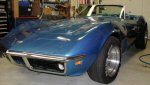
I hear you on the Octane booster. I had to try it but it made no difference. I haven't done the mapping thing yet but I have been reading the paper from your site. I printed it out and another member of this Forum who lives in the next town from me is going to show me how to do what you are saying this weekend. If you look at his post in this thread PWS69 , you will see he has a 69 convertible the same color as my 68 coupe and he was the one who steered me to the paint shop that did my paint job. We spoke of this mapping and the Lars method of 34-36 degrees timing and he knows how to do what you are speaking of and offered to do it for me Saturday or Sunday. Gotta love this forum. Oddly enough, the same shop that built my motor, also built his ,,small world isn't it.
Will let you all know how it turns out.
Thanks to all for all the help with my baby.
It was so great driving it today in the sunshine after all these years. I may never put the tops back on.
Kurt
I hear you on the Octane booster. I had to try it but it made no difference. I haven't done the mapping thing yet but I have been reading the paper from your site. I printed it out and another member of this Forum who lives in the next town from me is going to show me how to do what you are saying this weekend. If you look at his post in this thread PWS69 , you will see he has a 69 convertible the same color as my 68 coupe and he was the one who steered me to the paint shop that did my paint job. We spoke of this mapping and the Lars method of 34-36 degrees timing and he knows how to do what you are speaking of and offered to do it for me Saturday or Sunday. Gotta love this forum. Oddly enough, the same shop that built my motor, also built his ,,small world isn't it.
Will let you all know how it turns out.
Thanks to all for all the help with my baby.
It was so great driving it today in the sunshine after all these years. I may never put the tops back on.
Kurt
Le Mans Master
Joined: Apr 2004
Posts: 7,106
Likes: 38
From: Newark DE
Kurt
glad you are going to get some help on this.
Be aware there are some key differences between John's paper and Lars' tuning method.
Don't get me wrong, Lars does some excellent work and he tuned my '65 last year at one of his Tuning for Beer tours and it did make an improvement plus he just rebuilt my carb for my '78 and it works great!
Lars tuning typically is geared towards getting the best performance out of the car (nothing wrong with that ) and it's no surprise since Lars is a performance guy. John's paper is geared more setting the distributor up to a stock condition although if you read thru it carefully you will notice he does strive to good perforamnce as well also. You will notice I also have a lot of tech papers by Lars on my site because I do respect his abilities and his tech papers are great.
John's paper will take you step-by-step to totally Map your distributor so that you know exactly what it is doing and where the curve is.
With the issues you are having I'd recommend following John's paper to the letter to get your distributor set correctly to begin with. When you are done, not only will it be set up properly and the car running very good but you will know what curve you are getting out of it and if it's correct or not and when you are done it will be correct.
Only AFTER you have gone thru all that and you know your car is running good and your pinging and knocking is gone THAN you may want to go thru Lars method if you wish to try to pick up any additional performance gains on the car.
the problem you are having right now is that your distributor curve and overall timing settings are still a bit of a mystery so we don't know what the issue on your timing problem is yet to correct it.
You have set initial timing down to 6* but are you sure that the mechanical advance isn't kicking in yet? What's your total timing and when is it coming in and where is it all in? How much mechanical advance is your distributor giving you? etc.
See my point?
The first thing you need to do is be able to KNOW these things or you will never get the timing set up correctly.
On my '65 I didn't know this at first and was wondering why my total timing was too high even though I had dropped the initial down WAY below what it was suppose to be. Well, it turns out that my curve was all messed up and was giving me 32* mechanical advance instead of the correct 24* advance. That's a HUGE difference and was throwing me off really bad and to keep total timing from going to high and destroying my motor I had to have the initial way down to 4* instead of the correct 12*. Once I realized the problem I could get it corrected but until than I was pulling my hair out.
The point is you need to follow John's paper first and find out what your distributor is doing before you can begin to correct it and set it up properly. When you do it will make a HUGE difference
Remember, INITIAL TIMING is only one aspect of it, TOTAL TIMING is only one aspect of it, TOTAL TIMING PLUS VACUUM ADVANCE is only one aspect of it. You need to know how everything is working TOGETHER before you can getit set up and working right.
it's not that hard really, believe me, if an idiot like myself can do it anyone can, but you need to go thru the steps to find out where you are really starting from.
Barry
glad you are going to get some help on this.
Be aware there are some key differences between John's paper and Lars' tuning method.
Don't get me wrong, Lars does some excellent work and he tuned my '65 last year at one of his Tuning for Beer tours and it did make an improvement plus he just rebuilt my carb for my '78 and it works great!
Lars tuning typically is geared towards getting the best performance out of the car (nothing wrong with that
) and it's no surprise since Lars is a performance guy. John's paper is geared more setting the distributor up to a stock condition although if you read thru it carefully you will notice he does strive to good perforamnce as well also. You will notice I also have a lot of tech papers by Lars on my site because I do respect his abilities and his tech papers are great. John's paper will take you step-by-step to totally Map your distributor so that you know exactly what it is doing and where the curve is.
With the issues you are having I'd recommend following John's paper to the letter to get your distributor set correctly to begin with. When you are done, not only will it be set up properly and the car running very good but you will know what curve you are getting out of it and if it's correct or not and when you are done it will be correct.
Only AFTER you have gone thru all that and you know your car is running good and your pinging and knocking is gone THAN you may want to go thru Lars method if you wish to try to pick up any additional performance gains on the car.
the problem you are having right now is that your distributor curve and overall timing settings are still a bit of a mystery so we don't know what the issue on your timing problem is yet to correct it.
You have set initial timing down to 6* but are you sure that the mechanical advance isn't kicking in yet? What's your total timing and when is it coming in and where is it all in? How much mechanical advance is your distributor giving you? etc.
See my point?
The first thing you need to do is be able to KNOW these things or you will never get the timing set up correctly.
On my '65 I didn't know this at first and was wondering why my total timing was too high even though I had dropped the initial down WAY below what it was suppose to be. Well, it turns out that my curve was all messed up and was giving me 32* mechanical advance instead of the correct 24* advance. That's a HUGE difference and was throwing me off really bad and to keep total timing from going to high and destroying my motor I had to have the initial way down to 4* instead of the correct 12*. Once I realized the problem I could get it corrected but until than I was pulling my hair out.
The point is you need to follow John's paper first and find out what your distributor is doing before you can begin to correct it and set it up properly. When you do it will make a HUGE difference
Remember, INITIAL TIMING is only one aspect of it, TOTAL TIMING is only one aspect of it, TOTAL TIMING PLUS VACUUM ADVANCE is only one aspect of it. You need to know how everything is working TOGETHER before you can getit set up and working right.
it's not that hard really, believe me, if an idiot like myself can do it anyone can, but you need to go thru the steps to find out where you are really starting from.
Barry
Thread Starter
Melting Slicks
Joined: Apr 1999
Posts: 2,675
Likes: 13
From: Sudbury MA
Barry,
PWS69 of this forum kindly spent the bulk of this afternoon trying to get it to run right. He has more tools than I have collected in 30 years as he used to do auto mechanics for a living. He methodically checked all components to see that they are working one hundred percent correct. Even took time to explain all the theory behind what he was doing. This was not a half a--ed approach.
He has a 69 Corvette smallblock and it makes my car look like it is running on 2 cylinders , that's how big a difference. He changed out my distributor springs to get full advance of 34 degrees at 2500rpm. Total advance of 50 degrees when taking vacuum advance into consideration.
Tested the vacuum advance and it works perfect. Tested the ported and manifold vacuum and it is perfect. Checked all plug wires to be sure none were hooked up incorrectly. Perfect. Dwell is 30 degrees right on the money and the car runs like crap. Idles like a fine tuned watch but when you drive it and put event the slightest load to it , it pings and can't get out of its own way.
Everything is perfect and the car pings very bad at any small amount of acceleration.
I am beyond disgusted. Everything is new, engine was done by professional machine shop and it pings. Oddly enough, Paul, the gentleman who spent his afternoon trying to fix my car, had his engine built by the same machine shop and same individual as I did. His car is FAST!!
Question: What if the cam were installed one tooth off from where it should be.
PWS69 of this forum kindly spent the bulk of this afternoon trying to get it to run right. He has more tools than I have collected in 30 years as he used to do auto mechanics for a living. He methodically checked all components to see that they are working one hundred percent correct. Even took time to explain all the theory behind what he was doing. This was not a half a--ed approach.
He has a 69 Corvette smallblock and it makes my car look like it is running on 2 cylinders , that's how big a difference. He changed out my distributor springs to get full advance of 34 degrees at 2500rpm. Total advance of 50 degrees when taking vacuum advance into consideration.
Tested the vacuum advance and it works perfect. Tested the ported and manifold vacuum and it is perfect. Checked all plug wires to be sure none were hooked up incorrectly. Perfect. Dwell is 30 degrees right on the money and the car runs like crap. Idles like a fine tuned watch but when you drive it and put event the slightest load to it , it pings and can't get out of its own way.
Everything is perfect and the car pings very bad at any small amount of acceleration.
I am beyond disgusted. Everything is new, engine was done by professional machine shop and it pings. Oddly enough, Paul, the gentleman who spent his afternoon trying to fix my car, had his engine built by the same machine shop and same individual as I did. His car is FAST!!
Question: What if the cam were installed one tooth off from where it should be.
Last edited by ksbunting; Apr 29, 2006 at 08:32 PM.
Le Mans Master
Joined: Apr 2004
Posts: 7,106
Likes: 38
From: Newark DE
Kurt
now that is strange.
34* total and 50* on total plus vacuum advance should not be too much timing on a 327 L79 motor with 93 octane fuel.
I'd have to say at thins point there has to be something else in the system other than the distributor timing that is causing the issue but I'm sorry I'm not sure what else it can be. Someone else with more knowledge than me needs to come up with some ideas (almost EVERYONE has more knowledge than me so that shouldn't take much )
)
I have no clue on your question about the camshaft.
hmmmm, just thinking out loud here....... did Paul check that the harmonic balancer was actually indexed correctly?
Perhaps when the motor was rebuilt it was installed wrong or it has slipped. That would cause the index mark to be in the wrong position and give you a false timing reading. What you are reading as 34* total timing could end up very well being 44*, 48* or whatever. If it's installed wrong or it slipped that could possibly explain the problem also.
you should be able to check that by making sure the #1 cylinder is at correct TDC and checking to see where the index line on the balancer is in relation to the "0" mark on the index plate.
now that is strange.
34* total and 50* on total plus vacuum advance should not be too much timing on a 327 L79 motor with 93 octane fuel.
I'd have to say at thins point there has to be something else in the system other than the distributor timing that is causing the issue but I'm sorry I'm not sure what else it can be. Someone else with more knowledge than me needs to come up with some ideas (almost EVERYONE has more knowledge than me so that shouldn't take much
)I have no clue on your question about the camshaft.
hmmmm, just thinking out loud here....... did Paul check that the harmonic balancer was actually indexed correctly?
Perhaps when the motor was rebuilt it was installed wrong or it has slipped. That would cause the index mark to be in the wrong position and give you a false timing reading. What you are reading as 34* total timing could end up very well being 44*, 48* or whatever. If it's installed wrong or it slipped that could possibly explain the problem also.
you should be able to check that by making sure the #1 cylinder is at correct TDC and checking to see where the index line on the balancer is in relation to the "0" mark on the index plate.

Racer

Joined: Aug 2005
Posts: 355
Likes: 1
From: Ephrata PA
Barry: Not to confuse things further, but Duke has done studies on vacuum cans and feels the VC1765 is a better match to the L79 than the factory installed VC1810. He has written a paper on this. I have changed mine out to the 1765 for a noticeable improvement.