




It pings under acceleration; need advice

Thread Starter
Melting Slicks


Joined: Apr 1999
Posts: 2,675
Likes: 13
From: Sudbury MA
 It pings under acceleration; need advice
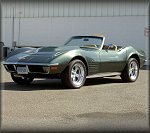
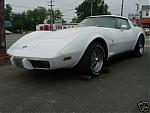
Small block 350 horsepower , just filled up with 93 octane highest I can get at $3.15 per gallon but it pings when accelerating. Does it mean my timing needs to be adjusted.
Any suggestions?
Thank you,
Kurt
Any suggestions?
Thank you,
Kurt

Pro


Joined: Apr 2005
Posts: 603
Likes: 2
From: Illinois, USA
Originally Posted by BarryK
yep, retard your timing.
try 2 degrees of timing at a time until the pinging stops.
try 2 degrees of timing at a time until the pinging stops.

Ping means that the fuel/air mixture is burning prior to the spark. In the old days, lead was there to counteract that (it cooled the combustion chamber), and today's fuels have a higher octane to combat it.
When you're running the highest octane that is practical, then retarding the timing will be your next course of action.
Of course, this does assume that you're not running hot at the time when this occurs -- as a overly warm engine can cause this, and then the timing can help reduce temps, but it might be "fixing the effect, not the cause".
Brian.

Race Director


Joined: Mar 2001
Posts: 11,322
Likes: 1
From: Living in the Hartland
Start with your vac adv, unplug it from the carb and plug the port then go for a drive, if the pinging stops then you need a diff vac adv can, if not adj the timing down as suggested, once the pinging stops hook up the vac adv can and drive it again, if no pinging you are good to go.

Le Mans Master

Joined: Apr 2004
Posts: 7,106
Likes: 38
From: Newark DE
Originally Posted by Fevre
Start with your vac adv, unplug it from the carb and plug the port then go for a drive, if the pinging stops then you need a diff vac adv can, if not adj the timing down as suggested, once the pinging stops hook up the vac adv can and drive it again, if no pinging you are good to go.
Assuming the can is working and that it's the correct can for his motor, each vacuum can was specified for different motors based upon the advance curve of that motor.
Changing to a different can will change the overall timing curve.
The vacuum can simply adds up to a specified amount of additional advance based on the specs of the can for a particular motor.
If he is pinging and assuming no other "problems" with the motor such as overheating, backing his timing down should cure the problem without having to change to a different can and therefore changing his entire advance curve.
On a '68 L79 motor I believe (someone correct me if i'm wrong) the correct vacuum can on todays replacement units is a Echlin VC-1810 can. If you are saying to change out to a replacement can of the same specs because his can may not be functioning correctly that is one thing, but I'd see no reason to need to change to a can of different specs.
It's easy enough to check to make sure his can is working - simply disconnect the vacuum line off the can and if the rpms drop the can is working (I believe the '68's were still hooked to a full manifold port rather than a timed port??)
Race Director
Joined: Mar 2001
Posts: 11,322
Likes: 1
From: Living in the Hartland
Unhooking the can is quick and easy and will let you know if your initial and mech adv is set right. When setting your timing you do it without the can hooked up, then you hook the can up and if it pings you need a can with less timing added, a can the releasing the added timing faster or a combination of both.
Just retarding will work but may yeild less performance. Of course it is up the car owner which route they choose to take to combat the problem.
Just retarding will work but may yeild less performance. Of course it is up the car owner which route they choose to take to combat the problem.
Corvette Stories
The Best of Corvette for Corvette Enthusiasts

Top 10 Most Expensive Corvettes Ever Sold on Bring A Trailer
Brett Foote
10 Things Every Corvette Owner Needs (2026 Edition)
Michael S. Palmer
8 Most "Only Corvette Owners Understand" Quirks and Problems
Pouria Savadkouei
10 Reasons the C6 Z06 is Still A Performance Benchmark After 20 Years
Joe Kucinski
How Much Horsepower Every Corvette Engine "LOST" in 1972
Joe Kucinski
Top 10 DOs and DON'Ts for Protecting Your Convertible Top!
Michael S. Palmer
Top 10 Most Explosive Corvettes Ever Made: Power-to-Weight Ratio Ranked!
Joe Kucinski
150 hp to 1,250 hp: Every Corvette Generation Compared by the Specs That Matter
Joe Kucinski
8 Coolest Corvette Pace Cars (and Replicas) of All Time
Verdad Gallardo
Le Mans Master
Joined: Apr 2004
Posts: 7,106
Likes: 38
From: Newark DE
i'm well aware to unhook the can when setting timing.
again, assuming he does have correct can installed currently there is no need to change out to a different spec'd can, all he needs to do is back off the timing slightly. Most likely a simple 2 degree retard will do the job for him.
It's easy enough to find out if he has the correct can installed. either look at the number stamped on the mounting flange or if there is no number, disconnect the can, see what total timing is, rehook up the cam and than see what the new total timing plus the vacuum advance is. That difference will give the spec on the can and we can determine if he is running the correct one.
again, assuming he does have correct can installed currently there is no need to change out to a different spec'd can, all he needs to do is back off the timing slightly. Most likely a simple 2 degree retard will do the job for him.
It's easy enough to find out if he has the correct can installed. either look at the number stamped on the mounting flange or if there is no number, disconnect the can, see what total timing is, rehook up the cam and than see what the new total timing plus the vacuum advance is. That difference will give the spec on the can and we can determine if he is running the correct one.
Thread Starter
Melting Slicks
Joined: Apr 1999
Posts: 2,675
Likes: 13
From: Sudbury MA
I am assuming this "can" you are refering to is the pie plate shaped thing sticking on the side of the distributor. It is the one that came with the car in 1972 when I bought it, and it was on the distributor when it was sent out to a machine shop to be checked. If there was anything wrong with it wouldn't they have noticed that? The distributor is the correct one for the car and since I have owned it (1972) it has always been in the car and never replaced or altered, including the "can".
Does that help?
Kurt
Does that help?
Kurt
Instructor


Joined: Aug 2005
Posts: 143
Likes: 0
From: Cranston R.I.
Might help to know, did it always ping, did it get worse after last tank of gas, did you do anything else to the motor? Any chance your vaccum line to the distributor is disconected, engine temp reading hotter than usual. Double check the points to make sure they are not burnt enough to make them arc.
Just a couple of things to check before you start moving the distributor on a motor that did not ping till now.
Just a couple of things to check before you start moving the distributor on a motor that did not ping till now.
Race Director
Joined: Mar 2001
Posts: 11,322
Likes: 1
From: Living in the Hartland
Originally Posted by BarryK
i'm well aware to unhook the can when setting timing.
again, assuming he does have correct can installed currently there is no need to change out to a different spec'd can, all he needs to do is back off the timing slightly. Most likely a simple 2 degree retard will do the job for him.
It's easy enough to find out if he has the correct can installed. either look at the number stamped on the mounting flange or if there is no number, disconnect the can, see what total timing is, rehook up the cam and than see what the new total timing plus the vacuum advance is. That difference will give the spec on the can and we can determine if he is running the correct one.
again, assuming he does have correct can installed currently there is no need to change out to a different spec'd can, all he needs to do is back off the timing slightly. Most likely a simple 2 degree retard will do the job for him.
It's easy enough to find out if he has the correct can installed. either look at the number stamped on the mounting flange or if there is no number, disconnect the can, see what total timing is, rehook up the cam and than see what the new total timing plus the vacuum advance is. That difference will give the spec on the can and we can determine if he is running the correct one.

Last edited by Fevre; Apr 22, 2006 at 09:50 PM.

Safety Car

Joined: Oct 2004
Posts: 3,725
Likes: 5
From: Minnesota
You could run some SeaFoam through your fuel system to help eliminate any excess carbon deposits which would raise the compression ratio causing detonation. If it still pings and the vacuum advance is working as it should you'll have to turn the distibutor clockwise a little bit to retard the timing. In a way vacuum advance is something of a misnomer since it's purpose is to retard the timing under load.
My engine runs great on 91 or 93 but starts to ping a little with 87.
My engine runs great on 91 or 93 but starts to ping a little with 87.
Le Mans Master
Joined: Apr 2004
Posts: 7,106
Likes: 38
From: Newark DE
Originally Posted by ksbunting
I am assuming this "can" you are refering to is the pie plate shaped thing sticking on the side of the distributor. It is the one that came with the car in 1972 when I bought it, and it was on the distributor when it was sent out to a machine shop to be checked. If there was anything wrong with it wouldn't they have noticed that? The distributor is the correct one for the car and since I have owned it (1972) it has always been in the car and never replaced or altered, including the "can".
Does that help?
Kurt
Does that help?
Kurt

Race Director

Joined: Sep 2004
Posts: 11,874
Likes: 263
From: Arlington Va Current ride 04 vert, previous vettes: 69 vert, 77 resto mod
pull the distributor cap off and check the operation of the distributor...make sure the shaft the weights are located on is moving freely and able to rotate....these often slowly sieze up and stop functioning perhaps yours siezed up with full advance....if this is siezed you will not be able to fix this timing issue until the shaft moves freely
Le Mans Master
Joined: Apr 2004
Posts: 7,106
Likes: 38
From: Newark DE
Originally Posted by Fevre
OK if the the adv can is factory correct and it should not be changed why would you change the timing if it is set factory correct?
Why re-enginner a system that was perfectly fine to begin with? Doing so you are only asking for trouble and poor performance and drivability. These vacuum advance units selected for each engine/tranny combinations were choosen on a whim or because Chevy got a good deal on a certain spec can so they decided all the cars would now get that same one.
Changing the timing is another matter. By retarding the timing back approx 2 degrees or so is not changing the curve of the whole system, it's only shifting it slightly down to avoid the timing being too high and having detonation which can easily destroy pistons if it isn't eliminated. Besides, how do you know his timing is currently "factory correct". although from the sounds of it he has the original vacuum can SOMEBODY, at SOMETIME has tuned up the car and readjusted the timing since it's left the factory! who knows what it's set at now. Also, look at the specs listed for the timing in any shop manual it it usually gives a range of values to set at - for example, on my '65 L76 motor the manual lists initial timing should be set at BETWEEN 12*-14* and total timing BETWEEN 34*-36*.
What if it was set currently at 36* and I backed it down 2* to 34* total. I'm still within 'factory correct" specs.
Another factor to consider from the early cars to todays cars is the difference in the fuels. Without the lead and the relatively lower octanes many, if not most of the cars, need to run slightly retarded on the timing to avoid detonation. This can be done without messing around with the correct advance curve for a particular motor.
Le Mans Master
Joined: Apr 2004
Posts: 7,106
Likes: 38
From: Newark DE
Originally Posted by Fevre
Guess I just like things simple, pull a vac line and take it for a drive.


make it even simpler - leave the vacuum line and just drive. Oh wait, still need to get rid of the pinging first before we can do that.
sorry, I've just learned the hard way, in a very short amount of time doing my own work on my cars that there aren't any real shortcuts to doing it the correct way and end up with the correct and proper results.
One reason I gave up taking my Vette (starting with the '65 and now the '78) to mechanics is that I went thru a good number of them and NONE of them seemed to have a clue about working on older cars, especially with points ignition systems and getting them set right.
their idea is setting the timing and setting the proper curve when they saw the timing was too high was to plug the vacuum hose to the can with a ball bearing so I had NO vacuum advance only. I'm not kidding, I gave up on the first mechanic that did that and tyried a second one. He did the same thing so I tried a third one. When he did the same thing I gave up and started to learn how to do my own work. Doing something like that just proves that they knew nothing about the workings of the vacuum advance system, why it's there and how it operates.
I'm NOT grouping you in with thses Bubba mechanics by any means, I'm just making a point that while there may be multiple ways to fix the symtoms of a problem, there is usually only one correct way to properly fix the problem itself.
Changing out to different can may eliminate the ping if he used a can with less total advance in it but that's changing the correct amount of advance that that distributor and that motor should have in it.


Race Director


Joined: Jan 2000
Posts: 13,018
Likes: 2,262
From: Corsicana, Tx
2020 C2 of the Year - Modified Winner
2020 Corvette of the Year (performance mods)
C2 of Year Winner (performance mods) 2019
2017 C2 of Year Finalist
Well, from reading what he's saying, I think the whole issue of a 'factory correct" anything on timing curve is a moot point. He says it's a small block making 350 HP and it has a '72 distributor in it. Those two things don't go together...so I'm guessing that this motor is NOT stock and has some aftermarket parts. Plus he said dist. was sent out somewhere to be checked...no telling what mechanical curve is in it now.
Give us some more info on the engine including compression ratio, heads (iron/aluminum?) intake, cam, carb, trans, gearing, A/C and other accy's etc etc and we can help you come up with what will work.
JIM
Give us some more info on the engine including compression ratio, heads (iron/aluminum?) intake, cam, carb, trans, gearing, A/C and other accy's etc etc and we can help you come up with what will work.
JIM
Le Mans Master
Joined: Apr 2004
Posts: 7,106
Likes: 38
From: Newark DE
Originally Posted by 427Hotrod
Well, from reading what he's saying, I think the whole issue of a 'factory correct" anything on timing curve is a moot point. He says it's a small block making 350 HP and it has a '72 distributor in it. Those two things don't go together...so I'm guessing that this motor is NOT stock and has some aftermarket parts. Plus he said dist. was sent out somewhere to be checked...no telling what mechanical curve is in it now.
JIM
JIM
He says it's a small block making 350hp and his profile lists the car as a L79 motor so that would be correct. I don't see where he said the distributor was from a '72 - he said the distributor is the correct one and the same one that was in the car when he bought the car in '72.
He also mentioned the can itself is the same one that was on the car when he bought it in '72.
Now, is it possible that in the four years the car existed before he bought it that the distributor was changed or the can was changed? Sure, anything is possible, but from the sounds of it it seems that he has the correct distributor and the what is most likey the correct can also.
In four years prior to his ownership who knws what else was changed in the distributor but chances are it was probably only springs if anything to maybe gain a bit of performance at the time. I agree though that the springs should probably be checked to assure they are the correct ones for a correct curve on that distributor.
In fact, after all these years it wouldn't be a bad idea to pull the entire unit and have it rebuilt, check the end and side plays, shim if needed, relubricate the unit, and get it on a Sun distributor machine to set it up for the proper curve.
on the other hand, if he checks the dwell and it's not fluctuating all over the place, than it should be fine for now and he could hold off on a complete distributor rebuild until next winter when the car is stored for the cold weather and just retard the timing a bit to eliminate the knocking and the detonation which is not good for the motor