



 ,,, oh i'm peepin' info
Fiberglass molding question.

Thread Starter
Le Mans Master

Joined: May 2003
Posts: 5,642
Likes: 1
 Fiberglass molding question.
If anyone can recommend a book I would appreciate it. I am familiar with fiberglass and have done many repairs but I am ready for the next step. I want to start making custom molds for my car for the dash and guages.
Thread Starter
Le Mans Master
Joined: May 2003
Posts: 5,642
Likes: 1
Gotta mold alot. I have all aftermarket guages. A 7 inch touch screen with a 1200 mgz computer going in. Aftermarket shifter. Need to mold something in for my .45 holster. Just a notch that the belt clip can slid into. I need to mold a camera into the front and rear for two cameras with night vision. (I am a big freaking nerd I know). There's more but I'm kicking to much booze right now and it's 3 am and I'm getting ready for a 2 day offshore fishing trip.

Team Owner


Joined: Sep 2003
Posts: 88,393
Likes: 2
From: eville in
Originally Posted by munday
Gotta mold alot. I have all aftermarket guages. A 7 inch touch screen with a 1200 mgz computer going in. Aftermarket shifter. Need to mold something in for my .45 holster. Just a notch that the belt clip can slid into. I need to mold a camera into the front and rear for two cameras with night vision. (I am a big freaking nerd I know). There's more but I'm kicking to much booze right now and it's 3 am and I'm getting ready for a 2 day offshore fishing trip.



Le Mans Master


Joined: Jul 1999
Posts: 9,206
Likes: 17
From: Sewell NJ
I don't know if this will help but I saw a show about how the Ford Cobra was designed. They made the modifications in full scale and then took impressions of it. If I were to think about doing fiberglass molds this is how I would go about it. I would model the part in clay in full scale creating a positive. Then I would take a plaster mold of the part to give me the negative. I would then coat the inside of the mold with gel coat and then lay in the fiberglass leaving enough overlap for trimming the final part. I've never done this but it seems like the right thing to do. You might want to check out some of the Hot Rod magazines like SuperRod or Street Rod Builder. Then often do in depth articles on fabrication that I've found helpful. Good luck.

Racer

Joined: Sep 2004
Posts: 424
Likes: 2
I build a model out of anything that works, card board, metal, plastic, wood, duct tape,clay. I then might coat it with somthing to aid in release, only if necessary, you might have to glass against the release surface in which case you will need to get the release agent off, wax paper works good but on small intricate peices it is hard to get to conform. Electrical tape is a throw away product that can aid in release. I then start with a thin layer of glass, let it set, remove the mold and build upon the glass. With a good mold you can lay up everything at once. Fiberglass resin has a wax type material in it that rises to the surface to aid in the cure. So you must clean cured surfaces with acetone before going to the next set of layers.

Instructor
Joined: May 2006
Posts: 168
Likes: 0
From: Florence NJ
Originally Posted by jimmygmartin
I build a model out of anything that works, card board, metal, plastic, wood, duct tape,clay. I then might coat it with somthing to aid in release, only if necessary, you might have to glass against the release surface in which case you will need to get the release agent off, wax paper works good but on small intricate peices it is hard to get to conform. Electrical tape is a throw away product that can aid in release. I then start with a thin layer of glass, let it set, remove the mold and build upon the glass. With a good mold you can lay up everything at once. Fiberglass resin has a wax type material in it that rises to the surface to aid in the cure. So you must clean cured surfaces with acetone before going to the next set of layers.

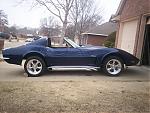
I use what ever I have at the time that will be the easiest to form the mold. I have even used cicken wire for parts of my custom headlight bezels. Wax paper does well for a release agent. I have even used pam cooking oil spray but ony as a last resort. Sometimes you will have to sand some of the wax paper off. I'll post pics of my build up for the headlight bezels I made when I get home tonight. It might help you to see a buildup with a mold.
Instructor

Joined: Dec 2005
Posts: 241
Likes: 0
From: Aubrey TX
Munday,
My son did the same thing, he molded a complete custom dash and center console. He used 1/4 inch plywood and 1x2's on the backside to mock up the mold along with some thin laminated cardboard type house sheething from Home Depot screwed to the plywood to make the contours. He used aluminum air duct tape over the complete mold so the fiberglass would not stick.
He applied several layers of fiberglass resin and matting over this mold which was still in the car. After it dried, he removed the complete assembly (mold and fiberglass) and released the mold from the fiberglass. The fiberglass has the silver tape on it on the backside (Heat shielding ).
).
In my opinion it came out very well, we still have some straightninig to do on it but overall it was pretty easy. It was probably not the best way to do it but it worked and was very inexpensive
My son did the same thing, he molded a complete custom dash and center console. He used 1/4 inch plywood and 1x2's on the backside to mock up the mold along with some thin laminated cardboard type house sheething from Home Depot screwed to the plywood to make the contours. He used aluminum air duct tape over the complete mold so the fiberglass would not stick.
He applied several layers of fiberglass resin and matting over this mold which was still in the car. After it dried, he removed the complete assembly (mold and fiberglass) and released the mold from the fiberglass. The fiberglass has the silver tape on it on the backside (Heat shielding
). In my opinion it came out very well, we still have some straightninig to do on it but overall it was pretty easy. It was probably not the best way to do it but it worked and was very inexpensive
Corvette Stories
The Best of Corvette for Corvette Enthusiasts

Top 10 Most Expensive Corvettes Ever Sold on Bring A Trailer
Brett Foote
10 Things Every Corvette Owner Needs (2026 Edition)
Michael S. Palmer
8 Most "Only Corvette Owners Understand" Quirks and Problems
Pouria Savadkouei
10 Reasons the C6 Z06 is Still A Performance Benchmark After 20 Years
Joe Kucinski
How Much Horsepower Every Corvette Engine "LOST" in 1972
Joe Kucinski
Top 10 DOs and DON'Ts for Protecting Your Convertible Top!
Michael S. Palmer
Top 10 Most Explosive Corvettes Ever Made: Power-to-Weight Ratio Ranked!
Joe Kucinski
150 hp to 1,250 hp: Every Corvette Generation Compared by the Specs That Matter
Joe Kucinski
8 Coolest Corvette Pace Cars (and Replicas) of All Time
Verdad Gallardo
Pro

Joined: Aug 2005
Posts: 613
Likes: 2
From: West Central Florida
If you want real good advice on fiberglass molding, go to a model boat forum like RumRunnerRacing, tons of info. Personally, I like to make a plug (model of the part you want) that has the shape and details you want. This part has to be close to perfect cause you need to make a mold of it to make the part. The better the plug the less work to fix the mold or final part. Then coat it with several layers of a good carnuba wax (wax on thick, then rub off about 5 times or more) then leave the last caot on and even. At this point you can either mold the model or coat it with a good couple of heavy coats of cheap hairspray like Aqua-Net or a couple mist coats of dish soap mixed with little water (no bubbles or puddles), this is your release coat and water washes it off. Once the mold is done, leave it on the model for at least 24-48 hours then separate carefully, if you have to break something geting them apart break the model so you can fix the mold and move on. Keep in mind, you dont want any parts of the model to have curve under causing the mold or final part to lock itself into the mold. Once the mold is all ready then wax it like the model and make a part of it. Also, wood as a structure for the model is okay but the surface to be molded needs to be non porous like fiberglass or pastic so the mold wont stick to it.

Instructor
Joined: Apr 2006
Posts: 243
Likes: 0
From: Canton MI
I spent 6 years building concept cars for a supplier of the Big 3 (Original Ford GT, Cadillac Sixteen, etc.). Fiberglass is really not that hard. In making a part, the better you make it up front, the less work you will have surfacing it out and making it fit.
Like the other people here, I would recommend using pretty much whatever you can to make a model of what you're desired casting will look like. I have always made the final shape out of clay, as it is much easier to remove from the mold. Whatever you use, be sure to use clear spray paint (several layers) and then either a spray wax or even a good paste wax. Again, use several layers and wipe it off as you go.
The only thing I read that I disagree with is pulling your mold before it is complete...if it were me, I would put down gelcoat, letting the first layer dry to a tach (stringy to the touch) and then add a second layer and let it set for about 1/2 of the time that the first one did. At that point, take your first layer of fiberglass and lay it directly into the gelcoat, being careful not to break the surface of the gelcoat. The first, hardened layer of gelcoat will help ensure this. Also, the first layer of cloth should be a lighter weight cloth. This is so no air will get trapped inside the part as you mold it. After the first layer of cloth is added, start adding your resin and add two additional layers of heavy cloth.
FYI: the first layer should be 10 ounce cloth, 6 ounce if its an intricate part. Then follow with 2 layers of heavy cloth (32 oz).
I don't know if I need to mention this, but when making a mold, its a good idea to leave a good flange on both the model and the mold (at 90 degrees to the part). This will give you an area to pry against when you pull your mold and when you pull your cast part.
Once you have a mold, its time to make a part. Just remember that the better the mold, the better the part. You want to surface out your mold with progressive steps of sand paper (start course and end around 320 grit) and use bondo where needed. Use the same wax as you did previously on the mold and cast your part the same way. Make sure to avoid air bubbles. In doing so, your part will be much better quality. If there are intricacies in the part, its helpful to put slits in the glass with a razor knife to make sure it lays down well.
Again, leaving a flange will help when pulling. For dash parts, 3 layers of 10 ounce cloth will do nicely.
OK, sorry for the long-winded response but I've made hundreds of parts from scratch this way and it works well with some practice.
As a quick alternative, you can make a model of your part and use a generous layer of bondo as a mold. Again, just make sure you use a lot of clear and good wax to make sure you can pull the mold.
Good luck, let me know if you have any questions
Like the other people here, I would recommend using pretty much whatever you can to make a model of what you're desired casting will look like. I have always made the final shape out of clay, as it is much easier to remove from the mold. Whatever you use, be sure to use clear spray paint (several layers) and then either a spray wax or even a good paste wax. Again, use several layers and wipe it off as you go.
The only thing I read that I disagree with is pulling your mold before it is complete...if it were me, I would put down gelcoat, letting the first layer dry to a tach (stringy to the touch) and then add a second layer and let it set for about 1/2 of the time that the first one did. At that point, take your first layer of fiberglass and lay it directly into the gelcoat, being careful not to break the surface of the gelcoat. The first, hardened layer of gelcoat will help ensure this. Also, the first layer of cloth should be a lighter weight cloth. This is so no air will get trapped inside the part as you mold it. After the first layer of cloth is added, start adding your resin and add two additional layers of heavy cloth.
FYI: the first layer should be 10 ounce cloth, 6 ounce if its an intricate part. Then follow with 2 layers of heavy cloth (32 oz).
I don't know if I need to mention this, but when making a mold, its a good idea to leave a good flange on both the model and the mold (at 90 degrees to the part). This will give you an area to pry against when you pull your mold and when you pull your cast part.
Once you have a mold, its time to make a part. Just remember that the better the mold, the better the part. You want to surface out your mold with progressive steps of sand paper (start course and end around 320 grit) and use bondo where needed. Use the same wax as you did previously on the mold and cast your part the same way. Make sure to avoid air bubbles. In doing so, your part will be much better quality. If there are intricacies in the part, its helpful to put slits in the glass with a razor knife to make sure it lays down well.
Again, leaving a flange will help when pulling. For dash parts, 3 layers of 10 ounce cloth will do nicely.
OK, sorry for the long-winded response but I've made hundreds of parts from scratch this way and it works well with some practice.
As a quick alternative, you can make a model of your part and use a generous layer of bondo as a mold. Again, just make sure you use a lot of clear and good wax to make sure you can pull the mold.
Good luck, let me know if you have any questions
Team Owner
Joined: Sep 2003
Posts: 88,393
Likes: 2
From: eville in
Originally Posted by 73C3
Munday,
My son did the same thing, he molded a complete custom dash and center console. He used 1/4 inch plywood and 1x2's on the backside to mock up the mold along with some thin laminated cardboard type house sheething from Home Depot screwed to the plywood to make the contours. He used aluminum air duct tape over the complete mold so the fiberglass would not stick.
He applied several layers of fiberglass resin and matting over this mold which was still in the car. After it dried, he removed the complete assembly (mold and fiberglass) and released the mold from the fiberglass. The fiberglass has the silver tape on it on the backside (Heat shielding ).
In my opinion it came out very well, we still have some straightninig to do on it but overall it was pretty easy. It was probably not the best way to do it but it worked and was very inexpensive
My son did the same thing, he molded a complete custom dash and center console. He used 1/4 inch plywood and 1x2's on the backside to mock up the mold along with some thin laminated cardboard type house sheething from Home Depot screwed to the plywood to make the contours. He used aluminum air duct tape over the complete mold so the fiberglass would not stick.
He applied several layers of fiberglass resin and matting over this mold which was still in the car. After it dried, he removed the complete assembly (mold and fiberglass) and released the mold from the fiberglass. The fiberglass has the silver tape on it on the backside (Heat shielding
). In my opinion it came out very well, we still have some straightninig to do on it but overall it was pretty easy. It was probably not the best way to do it but it worked and was very inexpensive
Racer
Joined: Sep 2004
Posts: 424
Likes: 2
[QUOTE=ajkogut]I spent 6 years building concept cars for a supplier of the Big 3 (Original Ford GT, Cadillac Sixteen, etc.). ........................
The only thing I read that I disagree with is pulling your mold before it is complete...
I said that I do this somtimes, but added if the mold is good you can lay up everything at once. Sometimes I'm slapping somthing together quick, and I do my sculpting on the part, not the mold. I agree a good mold is the best, but depending on the project, not always necessary.
The only thing I read that I disagree with is pulling your mold before it is complete...
I said that I do this somtimes, but added if the mold is good you can lay up everything at once. Sometimes I'm slapping somthing together quick, and I do my sculpting on the part, not the mold. I agree a good mold is the best, but depending on the project, not always necessary.

Burning Brakes

Joined: Mar 2006
Posts: 1,036
Likes: 2
From: Huntingburg Indiana
If you lay a few layers of mat and let it harden, make sure you rough up the area where you will be adding another layer of mat. 36 or 40 grit works great. Just don't get too crazy and cut through.

Advanced
Joined: Aug 2004
Posts: 60
Likes: 0
From: Galloway NJ
I would use a proper mold release agent. Mold release waxes are not much more than a normal carnuba. Meguiars #8 is widely available. I use semi-permanent products mostly.
If anyone has any specific questions on composite faberication, feel free to PM me.
If anyone has any specific questions on composite faberication, feel free to PM me.
Last edited by phillymike; Jun 7, 2006 at 11:25 PM.