



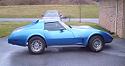


Octane Question.....for my 75

Thread Starter
Melting Slicks


Joined: Jan 2003
Posts: 2,713
Likes: 31
From: Shreveport LA
LA Events Coordinator
 Octane Question.....for my 75
my 75 has a "stock" 350, no smog stuff on it, mild cam, high rise intake, and a Holley 650 Street Avenger carb..and purrrrrrrs like a kitten and at WOT runs like a "raped ape"! Now here's the question....
What octane should I be running? Right now I am running Premium gasoline thru her 9and have been since I owned her ...the past 5 years) and thought "Do I need to?...could I use Regular or Plus" Premium gasoline was all the previous owner used.and 2) When I read the owner manual, it says
"Your Corvette engine is designed to operate ONLY ON unleaded gasoline of at least 91 Research Octane. The gasoline should have a Motor Octane of at least 83." Then it show the following formula: R+M/2=87
What does all that mean? Can I run Regular without doing any harm (performance wise and mechanical wise)....


What octane should I be running? Right now I am running Premium gasoline thru her 9and have been since I owned her ...the past 5 years) and thought "Do I need to?...could I use Regular or Plus" Premium gasoline was all the previous owner used.and 2) When I read the owner manual, it says
"Your Corvette engine is designed to operate ONLY ON unleaded gasoline of at least 91 Research Octane. The gasoline should have a Motor Octane of at least 83." Then it show the following formula: R+M/2=87
What does all that mean? Can I run Regular without doing any harm (performance wise and mechanical wise)....
Racer

Joined: Dec 2005
Posts: 344
Likes: 0
From: Washington DC
If you car runs on lower octane without knocking, that is all you have to put in it. Im guessing your 75 doesnt have anywhere near the compression to necessitate premium. Next time, fill it with regular and I would bet you dont see a difference.
Thread Starter
Melting Slicks
Joined: Jan 2003
Posts: 2,713
Likes: 31
From: Shreveport LA
LA Events Coordinator
"Your Corvette engine is designed to operate ONLY ON unleaded gasoline of at least 91 Research Octane. The gasoline should have a Motor Octane of at least 83." Then it show the following formula: R+M/2=87
What does all that mean? What is "Research Octane" and what is "Motor Octane"????
What does all that mean? What is "Research Octane" and what is "Motor Octane"????
Le Mans Master

Joined: Apr 2004
Posts: 7,106
Likes: 38
From: Newark DE
as been already stated, your '75 wasn't exactly a high compression motor to begin with! You very likey can run regular in there without a problem.
Easy way to find out though....... run her as empty as you dare (to get as much of the hi-test out of the tank as possible) than fill it up about half way with regular. If she runs without pinging and detonation than you are good to go. If she starts pinging than fill up the tank the rest of the way with hi-test to bring the octane level up a bit (the mix will be approx the same as "plus") to get you thru that tankful without harming the engine from detonation.
Easy way to find out though....... run her as empty as you dare (to get as much of the hi-test out of the tank as possible) than fill it up about half way with regular. If she runs without pinging and detonation than you are good to go. If she starts pinging than fill up the tank the rest of the way with hi-test to bring the octane level up a bit (the mix will be approx the same as "plus") to get you thru that tankful without harming the engine from detonation.
Thread Starter
Melting Slicks
Joined: Jan 2003
Posts: 2,713
Likes: 31
From: Shreveport LA
LA Events Coordinator
Originally Posted by BarryK
Easy way to find out though....... run her as empty as you dare (to get as much of the hi-test out of the tank as possible) than fill it up about half way with regular. If she runs without pinging and detonation than you are good to go. If she starts pinging than fill up the tank the rest of the way with hi-test to bring the octane level up a bit (the mix will be approx the same as "plus") to get you thru that tankful without harming the engine from detonation.
That's a great idea...THANKS!!

Corvette Stories
The Best of Corvette for Corvette Enthusiasts

Top 10 Most Explosive Corvettes Ever Made: Power-to-Weight Ratio Ranked!
Joe Kucinski
150 hp to 1,250 hp: Every Corvette Generation Compared by the Specs That Matter
Joe Kucinski
8 Coolest Corvette Pace Cars (and Replicas) of All Time
Verdad Gallardo
Top 10 Corvette Engines RANKED by Peak Torque (70+ Years of Muscle!)
Joe Kucinski
Corvette ZR1X Will Be Pacing the Indy 500, And Could Probably Race, Too!
Verdad Gallardo
Top 10 Corvettes Coming to Mecum Indy 2026!
Brett Foote
Top 10 C9 Corvette MUST-HAVES to Fix These C8 Generation Flaws!
Michael S. Palmer
10 Revolutionary 'Corvette Firsts' Most People Don't Know
Joe Kucinski
5 Reasons to Upgrade to an LS6-Powered Corvette; 5 Reasons to Stay LT2
Michael S. Palmer
Melting Slicks

Joined: Mar 2006
Posts: 3,456
Likes: 102
From: Piedmont Va
St. Jude Donor '11-'12-'13,'19-'20
Here is a Link that explains octane stuff....pretty interesting
http://www.prime-mover.org/Engines/G...es/octane.html
The pumps are labeled Motor Octane it appears...which is derived from Research Octane of the refined gasoline combined with other additives which make up the final composition of the pump gas.
I run 89 in my 73 based on recommendations in Corvette magazine on running leaded fuel era cars on todays unleaded gas...They also said advance the timing to the max to get max ignition power from the fuel.
Hope this helps...
http://www.prime-mover.org/Engines/G...es/octane.html
The pumps are labeled Motor Octane it appears...which is derived from Research Octane of the refined gasoline combined with other additives which make up the final composition of the pump gas.
I run 89 in my 73 based on recommendations in Corvette magazine on running leaded fuel era cars on todays unleaded gas...They also said advance the timing to the max to get max ignition power from the fuel.
Hope this helps...

Melting Slicks

Joined: May 2001
Posts: 2,131
Likes: 4
From: May help you? You can sure as hell try!
Originally Posted by vetteguy75
"Your Corvette engine is designed to operate ONLY ON unleaded gasoline of at least 91 Research Octane. The gasoline should have a Motor Octane of at least 83." Then it show the following formula: R+M/2=87
What does all that mean? What is "Research Octane" and what is "Motor Octane"????
What does all that mean? What is "Research Octane" and what is "Motor Octane"????
The auto and oil industries use a standard design, single cylinder engine to rate a fuel's octane by comparing it against a reference fuel. The reference fuel is a mixture of heptane and isooctane, both of which are basic hydrocarbons. Heptane has lousy anti-knock characteristics and iso-octane has excellent anti-knock characteristics. "Anti-knock characteristic" is the ability of the fuel to resist igniting on its own when exposed to heat and pressure, i.e, a fuel with good anti-knock characteristics will only ignite in the presence of a spark or flame.
Gasoline is a complex mixture of a lot of different hydrocarbons. When compared to the "reference" fuel I noted above, the octane rating of the gasoline means it will have similar knock characteristcs to the reference fuel mix that has the same percentage of iso-octane. In other words, a gasoline with an octane rating of 91 has the same knock characteristics as the reference fuel with 91% iso-octane and 9% heptane.
Now what is "motoring" and what is "research" octane rating? The single cylinder engine that I mentioned is an industry standard design that has a variable compression ratio. The gasoline mix being rated is run in the special engine and the compression ratio is increased until it begins to knock. Then the reference fuel is then run in the same engine using the same setup and the percentage of iso-octane varied until the knock characteristics of the two fuels are matched. The difference between "Motoring" and "Research" octane ratings has to do with the conditions under which the motor is run. Research method uses 125 'F intake air temperature, the motor is run at 600 rpm, and ignition timing is fixed at 13'. Motoring method uses 300 'F intake air, runs at 900 rpm and the timing is varied from 19-26'. The Motoring method is the more severe condition with respect to causing knock so it yields a lower value for octane rating than the Research method.
What the heck does all this mean for you? All pump gas ratings use the average between the Motoring method and the Research Method, thus the (R+M)/2 formula. Your car should run fine on 87 pump octane since your '75 was designed for it. If it knocks with that fuel you may have carbon deposit build up in your combustion chambers, improper ignition timing, or some other issue. Running higher octane fuel may act as a band-aid to supress the knock caused by an underlying issue. If it doesn't knock with 87 pump octane fuel, running a higher octane fuel will not do anything for you but cost you more money.
BTW, That's a sweet looking '75 'vert!
Melting Slicks
Joined: Mar 2006
Posts: 3,456
Likes: 102
From: Piedmont Va
St. Jude Donor '11-'12-'13,'19-'20
Motoring method and the Research Method, thus the (R+M)/2 formula.
"Decreasing exhaust backpressure increases octane requirements."... is your exhaust stock 75 with Y and Cat?...you also stated it's not a stock cam, intake or carb...I would say these changes are enough to render the factory recommendation questionable, so the only thing left to do is experiment....carefully.
Instructor
Joined: Sep 2005
Posts: 194
Likes: 0
From: Hamilton Ontario

Experiment and find out what works for you. How you drive the car is also important. For cruising 87 is fine. I know with mine, anything under 91 and the engine is soft, but it could run 87 if I chose not to do any lead footing. Good Luck.
Thread Starter
Melting Slicks
Joined: Jan 2003
Posts: 2,713
Likes: 31
From: Shreveport LA
LA Events Coordinator
WOW! That's a lot of good info, LemansBlue68. THANKS!! and thanks for the compliment!
I do have one other question....
The car "appears" to be running a little rich. The reason I say that is because when I run my finger inside the tailpipe, I get black soot on my finger...I've adjusted the carb (Holley 670) by doing everything it says to adjust in the Holley book...float adjustment...perfect, the idle mixture...max RPM's and vacuum. The timing 8* BDTC. New plugs, New distributor, New wires... It DOES NOT smoke (black or otherwise) when I start the car or when I'm driving....and it runs smooth and strong... I've had friends of mine stay behind me when I "put my foot into it" to see if it smokes....nothing. So I'm a little confused as to why the black soot. Oh yeah, it does not use any oil and the soot is dry (powedery)...is this normal?
and thanks for the compliment!I do have one other question....
The car "appears" to be running a little rich. The reason I say that is because when I run my finger inside the tailpipe, I get black soot on my finger...I've adjusted the carb (Holley 670) by doing everything it says to adjust in the Holley book...float adjustment...perfect, the idle mixture...max RPM's and vacuum. The timing 8* BDTC. New plugs, New distributor, New wires... It DOES NOT smoke (black or otherwise) when I start the car or when I'm driving....and it runs smooth and strong... I've had friends of mine stay behind me when I "put my foot into it" to see if it smokes....nothing. So I'm a little confused as to why the black soot. Oh yeah, it does not use any oil and the soot is dry (powedery)...is this normal?
Thread Starter
Melting Slicks
Joined: Jan 2003
Posts: 2,713
Likes: 31
From: Shreveport LA
LA Events Coordinator
Originally Posted by dosoctaves
Doh...I totally missed that part when I read the explanation...one other thing that was stated that may be of interest:
"Decreasing exhaust backpressure increases octane requirements."... is your exhaust stock 75 with Y and Cat?...you also stated it's not a stock cam, intake or carb...I would say these changes are enough to render the factory recommendation questionable, so the only thing left to do is experiment....carefully.
"Decreasing exhaust backpressure increases octane requirements."... is your exhaust stock 75 with Y and Cat?...you also stated it's not a stock cam, intake or carb...I would say these changes are enough to render the factory recommendation questionable, so the only thing left to do is experiment....carefully.
I have true duals with Borlas SS mufflers...


Safety Car

Joined: Dec 2004
Posts: 4,071
Likes: 0
From: San Diego CA
Originally Posted by andylmusic76
i have had the same problems with soot coming out of my sidepipes. i still have the stock q-jet, and i know it's running rich. how would i adjust this on the q-jet??

Tech Contributor

Joined: Jun 2004
Posts: 20,864
Likes: 960
From: I tend to be leery of any guy who doesn't own a chainsaw or a handgun.
Originally Posted by dosoctaves
Doh...I totally missed that part when I read the explanation...one other thing that was stated that may be of interest:
"Decreasing exhaust backpressure increases octane requirements."....
"Decreasing exhaust backpressure increases octane requirements."....

Drifting

Joined: Nov 2002
Posts: 1,688
Likes: 201
From: Loveland, CO
Don't forget altitude makes a difference. You don't need as much octane at altitude because the air is less dense effectively lowering your compression ratio.
Here in Denver the gas available ranges from 85 for regular to 89 for premium. The oil companies know your engine doesn't need the extra octane and they give you no choice.
Ralph
Here in Denver the gas available ranges from 85 for regular to 89 for premium. The oil companies know your engine doesn't need the extra octane and they give you no choice.
Ralph
Melting Slicks
Joined: May 2001
Posts: 2,131
Likes: 4
From: May help you? You can sure as hell try!
Decreasing exhaust restriction generally has the most effect at WOT conditions and higher engine RPM's. If you have spark knock issues at part throttle conditions, the recommendation about checking out the EGR valve function is a good one. The distributor's spark advance curve was calibrated taking a properly functioning EGR valve into account. If the EGR valve is disabled or is not flowing correctly, you will very likely experience part throttle spark knock. In the early days of emission controls many people would remove their EGR valve, block it off with a plate and plug the lines, but then neglect to change the spark curve and so would get part throttle knock. Later emission control schemes use feedback EGR systems that adjust spark advance based on EGR flow. However, sad to say, your '75 falls into the dark ages of emissions controls when feedback systems were just a dream.
If you're running slightly rich as you say, you might try going a couple primary jet sizes smaller. Your spark plugs can give you a rough idea of how rich you're running. Black soot on the electrodes and insulator indicate rich. You're close to correct jetting if the deposits are tan colored. Not as good an indicator as an 02 sensor, but close enough.
If you've noticed, the price of mid-grade gas is about 0.10 more than regular and premium about 0.10 more than mid-grade. This price difference has remained constant over that past few years despite the fact that gas has gone from $1 to $3 a gallon. So from a relative standpoint to a few years ago, premium has become a bargain!
If you're running slightly rich as you say, you might try going a couple primary jet sizes smaller. Your spark plugs can give you a rough idea of how rich you're running. Black soot on the electrodes and insulator indicate rich. You're close to correct jetting if the deposits are tan colored. Not as good an indicator as an 02 sensor, but close enough.
If you've noticed, the price of mid-grade gas is about 0.10 more than regular and premium about 0.10 more than mid-grade. This price difference has remained constant over that past few years despite the fact that gas has gone from $1 to $3 a gallon. So from a relative standpoint to a few years ago, premium has become a bargain!
Last edited by LemansBlue68; Jul 13, 2006 at 05:40 PM.
Melting Slicks
Joined: May 2001
Posts: 2,131
Likes: 4
From: May help you? You can sure as hell try!
Originally Posted by rponfick
Don't forget altitude makes a difference. You don't need as much octane at altitude because the air is less dense effectively lowering your compression ratio.
Here in Denver the gas available ranges from 85 for regular to 89 for premium. The oil companies know your engine doesn't need the extra octane and they give you no choice.
Ralph
Here in Denver the gas available ranges from 85 for regular to 89 for premium. The oil companies know your engine doesn't need the extra octane and they give you no choice.
Ralph
: :
: