









Under Carpet insulaltion

Le Mans Master


Joined: Jan 2006
Posts: 9,192
Likes: 27
From: Boca Raton Florida

Originally Posted by Durango_boy
So you put a stop between the water pump and the heater core? Doesn't that affect flow?
And by doing that, would I still need to block the vent? I'd assume with no hot coolant going through the core that the air blowing past it would be outside temp.
And by doing that, would I still need to block the vent? I'd assume with no hot coolant going through the core that the air blowing past it would be outside temp.
The drivers side is affected because the hot air comes in from the pass side and then over to the drivers side

Team Owner

Joined: Aug 2006
Posts: 24,125
Likes: 15
From: Columbia Missouri
Originally Posted by SIXFOOTER
Of course it does, matter of fact it stops the flow, thats the point. No reason to have hot water circulating thru the heater core which is in the cabin when heat is not required. There is a duct door on the pass side kick panel that you need to make sure it works and the seal is in tack (it probly has desentegrated) when it is closed it blocks outside air.
The drivers side is affected because the hot air comes in from the pass side and then over to the drivers side
The drivers side is affected because the hot air comes in from the pass side and then over to the drivers side
Okay, good to know. And this won't be a factor in an engine overheating? I know the fluid loses a good percentage of it's heat by going through the core.
Also, can someone maybe snap a pic of the inlet tube to the core, so I don't ever try to block the wrong one?
Thanks.

Team Owner

Joined: Oct 2004
Posts: 23,831
Likes: 10
From: Springfield MO
St. Jude Donor '07
Your car used to have A/C, right? It should have the old vacuum shutoff valve in the heater line. Two ways to go - replace that with a ball valve, or put in the newer plastic Delco valve and do a bit of tinkering so the heater is only on on the "heat" side of things.
Team Owner
Joined: Aug 2006
Posts: 24,125
Likes: 15
From: Columbia Missouri
Originally Posted by gliot1
The Reflectix is awesome! I did mine a couple of months ago and it makes a big difference. My A/C wasn't working it is was still amazingly cool.
Hey I was in Shaumberg a couple times last year. A buddy of mine went to school up there. Pretty cool area...loved the Hooters, wait, I think that was in Elgin. Nevermind abotu that then...

Corvette Stories
The Best of Corvette for Corvette Enthusiasts

Top 10 Most Expensive Corvettes Ever Sold on Bring A Trailer
Brett Foote
10 Things Every Corvette Owner Needs (2026 Edition)
Michael S. Palmer
8 Most "Only Corvette Owners Understand" Quirks and Problems
Pouria Savadkouei
10 Reasons the C6 Z06 is Still A Performance Benchmark After 20 Years
Joe Kucinski
How Much Horsepower Every Corvette Engine "LOST" in 1972
Joe Kucinski
Top 10 DOs and DON'Ts for Protecting Your Convertible Top!
Michael S. Palmer
Top 10 Most Explosive Corvettes Ever Made: Power-to-Weight Ratio Ranked!
Joe Kucinski
150 hp to 1,250 hp: Every Corvette Generation Compared by the Specs That Matter
Joe Kucinski
8 Coolest Corvette Pace Cars (and Replicas) of All Time
Verdad Gallardo
Instructor

Joined: Dec 2004
Posts: 236
Likes: 0
From: Clearwater Florida
Originally Posted by SIXFOOTER
There is a duct door on the pass side kick panel that you need to make sure it works and the seal is in tack (it probly has desentegrated) when it is closed it blocks outside air.
The passenger side duct door is closed and the cowl door is open at all times except when the AC switch is on MAX and OFF. This allows outside air to enter the cabin for all switch positions except MAX and OFF.
When the switch is on MAX, the passenger side duct door is open and the cowl door is closed. This forces the fan to suck air from inside the cabin and recirculate it.
Team Owner
Joined: Aug 2006
Posts: 24,125
Likes: 15
From: Columbia Missouri
Originally Posted by 67-73-76
If we are talking about an AC car, the duct door on the passenger side works in conjunction with the flapper doors inside the heater box and the cowl door. All are controlled by vacuum and the AC switch position.
The passenger side duct door is closed and the cowl door is open at all times except when the AC switch is on MAX and OFF. This allows outside air to enter the cabin for all switch positions except MAX and OFF.
When the switch is on MAX, the passenger side duct door is open and the cowl door is closed. This forces the fan to suck air from inside the cabin and recirculate it.
The passenger side duct door is closed and the cowl door is open at all times except when the AC switch is on MAX and OFF. This allows outside air to enter the cabin for all switch positions except MAX and OFF.
When the switch is on MAX, the passenger side duct door is open and the cowl door is closed. This forces the fan to suck air from inside the cabin and recirculate it.
In the case of colder air, which is a better position? Doesn't the cowl air pull in heat from the engine?
Instructor
Joined: Dec 2004
Posts: 236
Likes: 0
From: Clearwater Florida
Originally Posted by Durango_boy
In the case of colder air, which is a better position? Doesn't the cowl air pull in heat from the engine?
Assuming all components are installed and working properly and its 90 degrees outside.
You are running down the road with your AC switch on NORM. The cowl door is open and the passenger duct door is closed. The fan is pulling 90 degree air from the plenum area where the winshield wipers are and pushes it across the evaporator in the heater box, which cools the air to 80.
Then you turn the the AC switch to MAX.
The cowl door closes and the passenger duct door opens. The fan begins pulling 80 degree air from inside the car and pushes it across the evaporator which cools it to 70.
MAX is the setting that produces the coldest air after everything has stabilized.
Team Owner
Joined: Aug 2006
Posts: 24,125
Likes: 15
From: Columbia Missouri
Originally Posted by 67-73-76
MAX is the setting that produces the coldest air after everything has stabilized.
That still work even though my AC system has been removed? I took out the seized compressor and hoses. I left the box intact though, and all the doors and vac lines.
Instructor
Joined: Dec 2004
Posts: 236
Likes: 0
From: Clearwater Florida
Originally Posted by Durango_boy
That still work even though my AC system has been removed? I took out the seized compressor and hoses. I left the box intact though, and all the doors and vac lines.
The only thing controlled electrically is the compressor and the fan. Every thing else is controlled by vacuum except the COLD/HOT control.
The COLD/HOT control is by direct link with a bowden cable.
Last edited by 67-73-76; Aug 25, 2006 at 10:12 PM.
Team Owner
Joined: Aug 2006
Posts: 24,125
Likes: 15
From: Columbia Missouri
Originally Posted by 67-73-76
All the vacuum stuff should still work.
The only thing controlled electrically is the compressor and the fan. Every thing else is vacuum.
The only thing controlled electrically is the compressor and the fan. Every thing else is vacuum.
Cool, literaly. I'll have to try it, run with AC on max and see what differences I see. Thanks for the advice.
Instructor
Joined: Dec 2004
Posts: 236
Likes: 0
From: Clearwater Florida
Originally Posted by Durango_boy
Cool, literaly. I'll have to try it, run with AC on max and see what differences I see. Thanks for the advice.
If you have a GM service manual for any GM vehicle that's the same or close the year of your corvette, it describes how the system works.
I learned most of this while redoing the AC system on my 86 Chevy pickup. I started looking at the manuals for the corvettes and found that the AC systems work the same way as the truck with the same componets. They just look different.
Team Owner
Joined: Aug 2006
Posts: 24,125
Likes: 15
From: Columbia Missouri
Originally Posted by 67-73-76
You probably won't see any difference until you get the compressor fixed, the hoses replaced, and the system recharged.
If you have a GM service manual for any GM vehicle that's the same or close the year of your corvette, it describes how the system works.
I learned most of this while redoing the AC system on my 86 Chevy pickup. I started looking at the manuals for the corvettes and found that the AC systems work the same way as the truck with the same componets. They just look different.
If you have a GM service manual for any GM vehicle that's the same or close the year of your corvette, it describes how the system works.
I learned most of this while redoing the AC system on my 86 Chevy pickup. I started looking at the manuals for the corvettes and found that the AC systems work the same way as the truck with the same componets. They just look different.
Great to know. Thanks.
Burning Brakes

Joined: Aug 2005
Posts: 1,126
Likes: 0
From: Hudson Falls, N.Y. 76 Vette Modified L-48
Db...the heater hose shutoff will help "a little"....blocking that vent is the key...what happens is the seal between fender and body, behind that vent, dries and cracks and falls away over the many years, and heat is drawn from the engine compartment, right into the cabin thru the vent...my seals on the vent door were completely shot, so opted for the styrofoam treatment....and I'm tellin' ya, the first year I owned her, even with windows down and T's off, you couldn't take a long ride, just too damned hot with air temps over 70*...now it has no heat in the cabin other then outside ambiant temp...and the engine temp never changed with the shutoff in line on the inbound hose to the heater core...if you want to test the theory, get a large bath towel, pull the kick plate and stuff the towel in the vent and ride a while on a very hot day...I am SURE you will be pleasantly surprised...Good Luck 
Team Owner
Joined: Aug 2006
Posts: 24,125
Likes: 15
From: Columbia Missouri
Originally Posted by kb2fzq
Db...the heater hose shutoff will help "a little"....blocking that vent is the key...what happens is the seal between fender and body, behind that vent, dries and cracks and falls away over the many years, and heat is drawn from the engine compartment, right into the cabin thru the vent...my seals on the vent door were completely shot, so opted for the styrofoam treatment....and I'm tellin' ya, the first year I owned her, even with windows down and T's off, you couldn't take a long ride, just too damned hot with air temps over 70*...now it has no heat in the cabin other then outside ambiant temp...and the engine temp never changed with the shutoff in line on the inbound hose to the heater core...if you want to test the theory, get a large bath towel, pull the kick plate and stuff the towel in the vent and ride a while on a very hot day...I am SURE you will be pleasantly surprised...Good Luck
Thanks a lot. Batman and I were talking about that and he explained very clearly how to get in to fix the old braken seals with a 3M tar tape of some kind. I will check to see how bad mine are, but I wouldn't be suprized if they are still fine and in place. I've had good luck with stuff like that. I will test for sure by blocking that vent for a drive. Great idea.
Burning Brakes
Joined: Aug 2005
Posts: 1,126
Likes: 0
From: Hudson Falls, N.Y. 76 Vette Modified L-48
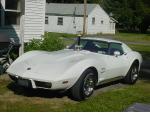
I see you've got a 77, mine's a 76.......if you have the foot heat, I'm almost positive that fender/body seal is gone...but you'll see with a towel test, I couldn't believe the night/day difference after sealing that vent...
Team Owner
Joined: Aug 2006
Posts: 24,125
Likes: 15
From: Columbia Missouri
Originally Posted by kb2fzq
I see you've got a 77, mine's a 76.......if you have the foot heat, I'm almost positive that fender/body seal is gone...but you'll see with a towel test, I couldn't believe the night/day difference after sealing that vent...
Is there a similar seal on the driver's side I need to worry about as well?