




Fuel test

Thread Starter
Cruising

Joined: Sep 2006
Posts: 13
Likes: 0
From: Pittsburgh Pa
 Fuel test
I have a quick question based on a test I performed the other night. Noting fully that my 1973 vette, (350 automatic) will always be a gas guzzler. FULLY AWARE.
The test I performed in my ongoing power loss/fuel issue/carb issue, was to disconnect the gas line from the gas tank to the fuel pump, and hook it up to a 1 gallon can next to the wheel-well. I was attempting to isolate the problem I am experiencing as the car does not recieve gasoline after a period of running and then upon full throttle. In any case, when using gasoline directly from the 1 gallon can, it seemed to be empty within two/three blocks. Less than 1 mile. Is this merely a function of the less efficient fuel supply? Am I answer my own dumb question?
Thanks
New vette owner trying to hit the road.
The test I performed in my ongoing power loss/fuel issue/carb issue, was to disconnect the gas line from the gas tank to the fuel pump, and hook it up to a 1 gallon can next to the wheel-well. I was attempting to isolate the problem I am experiencing as the car does not recieve gasoline after a period of running and then upon full throttle. In any case, when using gasoline directly from the 1 gallon can, it seemed to be empty within two/three blocks. Less than 1 mile. Is this merely a function of the less efficient fuel supply? Am I answer my own dumb question?
Thanks
New vette owner trying to hit the road.
Thread Starter
Cruising
Joined: Sep 2006
Posts: 13
Likes: 0
From: Pittsburgh Pa
Originally Posted by pef427
Let me ask you a dumb question back. Do you have a return fuel line located after this alternate fuel supply. If so, it may be sending it back to the tank. Some have it, some don't.
-P
-P
Presumeably, a return fuel line does what, send the excess fuel back to the tank when running. In my situation, it may be sending the excess back to the tank and not into the 1 gallon can.
Burning Brakes

Joined: Dec 2004
Posts: 1,020
Likes: 1
From: Nederland Texas
Yes, that's how it works. If your car is stock and hasn't been Bubba'd in the past it may have a return line off the fuel pump on the block.
In regards to the stalling, it sounds like vapor lock. Do a search as I have seen some good posts and solutions here in the past.
My car had original lines with dry rotting rubber in places and it was being pumped into the carb. Ran terrible. The lines looked OK from the outside but were crumbling inside. Also, my tank sock had disintegrated and was also being pulled into the fuel system. I dropped the tank and cleaned it and ran all new lines. Open the tank and look for particles in the bottom.
-P
In regards to the stalling, it sounds like vapor lock. Do a search as I have seen some good posts and solutions here in the past.
My car had original lines with dry rotting rubber in places and it was being pumped into the carb. Ran terrible. The lines looked OK from the outside but were crumbling inside. Also, my tank sock had disintegrated and was also being pulled into the fuel system. I dropped the tank and cleaned it and ran all new lines. Open the tank and look for particles in the bottom.
-P
Thread Starter
Cruising
Joined: Sep 2006
Posts: 13
Likes: 0
From: Pittsburgh Pa
Originally Posted by pef427
Yes, that's how it works. If your car is stock and hasn't been Bubba'd in the past it may have a return line off the fuel pump on the block.
In regards to the stalling, it sounds like vapor lock. Do a search as I have seen some good posts and solutions here in the past.
My car had original lines with dry rotting rubber in places and it was being pumped into the carb. Ran terrible. The lines looked OK from the outside but were crumbling inside. Also, my tank sock had disintegrated and was also being pulled into the fuel system. I dropped the tank and cleaned it and ran all new lines. Open the tank and look for particles in the bottom.
-P
In regards to the stalling, it sounds like vapor lock. Do a search as I have seen some good posts and solutions here in the past.
My car had original lines with dry rotting rubber in places and it was being pumped into the carb. Ran terrible. The lines looked OK from the outside but were crumbling inside. Also, my tank sock had disintegrated and was also being pulled into the fuel system. I dropped the tank and cleaned it and ran all new lines. Open the tank and look for particles in the bottom.
-P
Exactly what I determined from my test: that the tank looked like crap. Benefits of the vette is that you can see right into it. Little rust, some water floating on top. But I also think this return line is a problem.
Burning Brakes
Joined: Dec 2004
Posts: 1,020
Likes: 1
From: Nederland Texas
Daniel,
For me, please fill out your profile. If other forum members know where you're located they can give you great info as to who to talk with in your area. Sometimes, they even live close by and can be a great asset.
I'm not sure what your budget will allow or what your plans are for this car. But, dropping the tank and changing lines is not too difficult. Again, I don't know your skill level, so feel free to PM me for info.
-P
For me, please fill out your profile. If other forum members know where you're located they can give you great info as to who to talk with in your area. Sometimes, they even live close by and can be a great asset.
I'm not sure what your budget will allow or what your plans are for this car. But, dropping the tank and changing lines is not too difficult. Again, I don't know your skill level, so feel free to PM me for info.
-P

Race Director


Joined: Jul 2001
Posts: 15,892
Likes: 42
Originally Posted by Daniel James23
Noting fully that my 1973 vette, (350 automatic) will always be a gas guzzler. FULLY AWARE.
Burning Brakes
Joined: Feb 2006
Posts: 1,024
Likes: 1
From: AL
Presumeably, a return fuel line does what, send the excess fuel back to the tank when running.
Corvette Stories
The Best of Corvette for Corvette Enthusiasts

2027 Corvette vs The World: Every Model vs Closest Competitor
Joe Kucinski
10 Most Common Corvette Problems of the Last 20 Years!
Joe Kucinski
5 MOST and 5 LEAST Popular Corvette Model Years in History!
Joe Kucinski
2027 Corvette Buyer's Guide: Everything You Need to Know!
Joe Kucinski
10 Things C8 Corvette Owners Hate (But Won't Tell You)
Joe Kucinski
10 Best Corvettes Coming to Barrett-Jackson Palm Beach 2026!
Brett Foote
Every Corvette Grand Sport Explained! (C2, C4, C6, C7, & C8)
Joe Kucinski
Grand Sport & Grand Sport X Launch Alongside All-New 535hp LS6 V8!
Michael S. Palmer
5 Reasons Bad Drivers Crash & 5 Ways to Avoid a Costly Mistake!
Joe Kucinski
Le Mans Master


Joined: Jan 2006
Posts: 6,499
Likes: 137
From: Butler Pa
Originally Posted by Daniel James23
Little rust, some water floating on top.
Burning Brakes
Joined: Dec 2004
Posts: 1,020
Likes: 1
From: Nederland Texas
Originally Posted by S489
i thought that the "return" line simply connected the space above the top of the pump diaphragm to the top of the gasoline tank. if the event of a pump diaphragm failure, the fuel would not exit the vent (normally located above the diaphragm on earlier models) and hit the ground, potentially causing a fire. if this is how it works, then it is not really a "return" line per se; if it were, wouldn't it enter the gasoline tank down low like the newer model autos with fuel injection?
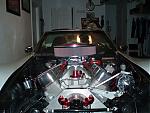
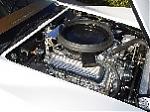
My new setup has a sumped tank, 2 -10AN lines into a Y-block then through an Aeromotive filter/1000 pump/filter and forward -10AN to the regulator. Then 2 -8's to the carb with another -8 returned to a bung on top of the tank. Here's a couple pics.
-P
Burning Brakes
Joined: Feb 2006
Posts: 1,024
Likes: 1
From: AL
pef427: The diaphram in the mechanical pump on the old 427 went bad and flooded the engine with gas!
Your setup looks good now! Did you weld on the sump yourself? did you have to do any baffling work? thanks pef427
Burning Brakes
Joined: Dec 2004
Posts: 1,020
Likes: 1
From: Nederland Texas
A buddy owns a sheetmetel fab shop and built the sump and then drilled a series of holes 1 1/4" in tank for a baffle. The sumps I found in go-fast catalogs were all too big to fit my stock tank.
-P
-P