



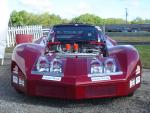



C3 rear Turbos
Melting Slicks


Joined: Mar 2006
Posts: 3,342
Likes: 7
From: Connecticut

Originally Posted by Kalway
Rides (on TLC before Overhaulin)
If somebody wrecked my car like they did to that 1957 I would hurt them very badly....
Took a beautiful car and made it look like a punked out POS.


Team Owner


Joined: Oct 2004
Posts: 23,831
Likes: 10
From: Springfield MO
St. Jude Donor '07
Originally Posted by Bob Onit
Speaking of overhauling ....did you see the ricer job on the 57 Corvette?
If somebody wrecked my car like they did to that 1957 I would hurt them very badly....
Took a beautiful car and made it look like a punked out POS.
If somebody wrecked my car like they did to that 1957 I would hurt them very badly....
Took a beautiful car and made it look like a punked out POS.

Team Owner
Joined: Oct 2004
Posts: 23,831
Likes: 10
From: Springfield MO
St. Jude Donor '07
Originally Posted by RPOZ4Z
look up forum member CajunDude in the C5 section.
He has rear mounted turbos, they basically replaced the mufflers with the turbos, and plumbed the intake back up front.
his works great!
He has rear mounted turbos, they basically replaced the mufflers with the turbos, and plumbed the intake back up front.
his works great!

Race Director


Joined: Dec 1999
Posts: 16,945
Likes: 9
...if it's so good, why do none of the "real" tuners do it (lingenfelter, callaway.....) because they KNOW that to maximize the efficiency they need to put it up front. Look at Nelson Racing engines, they have a lot of experience with turbos..you won't see a rear mounted system there.

Le Mans Master

Joined: Apr 2000
Posts: 7,562
Likes: 9
From: B'Ville NY
Cruise-In III Veteran
St. Jude Donor '05
Originally Posted by shafrs3
I'm confused here, did you do this or is this from someone else's car?
I was showing how simple it is too mount the turbo and what it would look like. The only thing needed was a bracket to mount it to the rear differential which in this case the IRS is a benefit because of it being in a fixed position. The plumbing would also be fairly simple. I just finished puttin my engine together so I decided to enjoy what I built before tearing it apart and having another set of custom pistons made

Le Mans Master
Joined: Apr 2000
Posts: 7,562
Likes: 9
From: B'Ville NY
Cruise-In III Veteran
St. Jude Donor '05
Originally Posted by RPOZ4Z
I'm not into turbos, so I don't know.
all I do know is that he did one hell of a burnout and made some deep a$$ grooves in the pavement at the cruise in!
all I do know is that he did one hell of a burnout and made some deep a$$ grooves in the pavement at the cruise in!

Corvette Stories
The Best of Corvette for Corvette Enthusiasts

Top 10 Most Expensive Corvettes Ever Sold on Bring A Trailer
Brett Foote
10 Things Every Corvette Owner Needs (2026 Edition)
Michael S. Palmer
8 Most "Only Corvette Owners Understand" Quirks and Problems
Pouria Savadkouei
10 Reasons the C6 Z06 is Still A Performance Benchmark After 20 Years
Joe Kucinski
How Much Horsepower Every Corvette Engine "LOST" in 1972
Joe Kucinski
Top 10 DOs and DON'Ts for Protecting Your Convertible Top!
Michael S. Palmer
Top 10 Most Explosive Corvettes Ever Made: Power-to-Weight Ratio Ranked!
Joe Kucinski
150 hp to 1,250 hp: Every Corvette Generation Compared by the Specs That Matter
Joe Kucinski
8 Coolest Corvette Pace Cars (and Replicas) of All Time
Verdad Gallardo
Thread Starter
Instructor

Joined: Jun 2005
Posts: 100
Likes: 0
From: Morton Grove Il
Rear Turbos
This forum is great. I was thinking about the rear mounts and based on all of the feedback. I think I will go with a front mount when I am ready. I thank you all for the feedback. I really learn a lot from you people. Thanks
Melting Slicks
Joined: Oct 2004
Posts: 2,662
Likes: 8
From: Knoxville Tennessee
I can't understand why hot air is better for a turbo than cool air. Hot air is less dense than cold air. Colder air going into the combustion chamber creates more HP than heated air. It would seem than the air being cooler before it reaches the rear turbo would be denser and provide more force to turn the turbo. After all, it is just a propeller of sorts pushing cooler air back to the engine. A cooler turbo will last longer than one subjected to the extreme heat of the engine just after combustion. Beside a little longer lag and having the air cleaner in a less than desirable location, in theory, it is a better design. Now what are the reason that contradict how I am thinking; and please understand I do not use a turbo. In fact, I would much rather use a supercharger instead.
Bernie
Bernie
Team Owner
Joined: Oct 2004
Posts: 23,831
Likes: 10
From: Springfield MO
St. Jude Donor '07
Originally Posted by BerniesVette
I can't understand why hot air is better for a turbo than cool air. Hot air is less dense than cold air. Colder air going into the combustion chamber creates more HP than heated air. It would seem than the air being cooler before it reaches the rear turbo would be denser and provide more force to turn the turbo. After all, it is just a propeller of sorts pushing cooler air back to the engine. A cooler turbo will last longer than one subjected to the extreme heat of the engine just after combustion. Beside a little longer lag and having the air cleaner in a less than desirable location, in theory, it is a better design. Now what are the reason that contradict how I am thinking; and please understand I do not use a turbo. In fact, I would much rather use a supercharger instead.
Bernie
Bernie
Why would you rather have a supercharger? Superchargers are driven off of the crank, and therefore use power to make power. Turbos use a waste product (heat) to make power. It's the closest thing to a free lunch you'll ever find.
Originally Posted by http://www.dsm.org/archives/1997/06/19970618.txt/28.html
It is a common misconception that the exhaust turbine half of a turbo is driven purely by the kinetic energy of the exhaust smacking into it (like holding a kid's tow pinwheel behind your tailpipe) While the kinetic energy of the exhaust flow does contribute to the work performed by the turbo, the vast majority of the energy transfered comes from a different source.
Keep in mind the relationship between heat, volume, and pressure when we talk about gasses. High heat, high pressure, and low volume are all high energy states, low heat, low pressure, and large volumes are low energy states.
So our exhaust pulse exits the cylinder at high temperature and high pressure. It gets merged with other exhaust pulses, and enters the turbine inlet - a very small space. At this point, we have very high pressure and very high heat, so our gas has a very high energy level. As it passes through the diffuser and into the turbine housing, it moves from a small space into a large one. Accordingly, it expands, cools, slows down, and dumps all that energy - into the turbine that we've so
cleverly positioned in tho housing so that as the gas expands, it pushes against the turbine blades, causing it to rotate. Presto! We've just recovered some energy from the heat of the exhaust, that otherwise would have been lost.
This is a measureable effect: Stick an EGT upstream and downstream of the turbo, and you see a tremendous difference in temperature.
So, in real world terms, what does this tell us?
All else being equal, _The amount of work that can be done across an exhaust turbine is determined by the pressure differential at the inlet and outlet_ (in english, raise the turbo inlet pressure, lower the outlet pressure, or both, and you make more power) Pressure is heat, heat is pressure.
Raising the inlet pressure is possible, but tough. Lowering the outlet pressure is easy - just bolt on a bigger, free flowing exhaust. I've seen a couple of posts from people who added aftermarket exhausts, who report "my turbo spools up faster now" Well, that's because by lowering the outlet pressure, you increased the pressure differential, and now the exhaust gas can expand more, and do more work. That increased work pushes harder on your turbo, and it spools up faster. You should also see less boost drop at redline, because if an exhaust system is flow-limited, once you pass the flow limit of the system, any additional gasses you try and force through it only raise the outlet pressure. Higher outlet pressure, lower pressure differential, less work, less boost.
Keep in mind the relationship between heat, volume, and pressure when we talk about gasses. High heat, high pressure, and low volume are all high energy states, low heat, low pressure, and large volumes are low energy states.
So our exhaust pulse exits the cylinder at high temperature and high pressure. It gets merged with other exhaust pulses, and enters the turbine inlet - a very small space. At this point, we have very high pressure and very high heat, so our gas has a very high energy level. As it passes through the diffuser and into the turbine housing, it moves from a small space into a large one. Accordingly, it expands, cools, slows down, and dumps all that energy - into the turbine that we've so
cleverly positioned in tho housing so that as the gas expands, it pushes against the turbine blades, causing it to rotate. Presto! We've just recovered some energy from the heat of the exhaust, that otherwise would have been lost.
This is a measureable effect: Stick an EGT upstream and downstream of the turbo, and you see a tremendous difference in temperature.
So, in real world terms, what does this tell us?
All else being equal, _The amount of work that can be done across an exhaust turbine is determined by the pressure differential at the inlet and outlet_ (in english, raise the turbo inlet pressure, lower the outlet pressure, or both, and you make more power) Pressure is heat, heat is pressure.
Raising the inlet pressure is possible, but tough. Lowering the outlet pressure is easy - just bolt on a bigger, free flowing exhaust. I've seen a couple of posts from people who added aftermarket exhausts, who report "my turbo spools up faster now" Well, that's because by lowering the outlet pressure, you increased the pressure differential, and now the exhaust gas can expand more, and do more work. That increased work pushes harder on your turbo, and it spools up faster. You should also see less boost drop at redline, because if an exhaust system is flow-limited, once you pass the flow limit of the system, any additional gasses you try and force through it only raise the outlet pressure. Higher outlet pressure, lower pressure differential, less work, less boost.

Last edited by I'm Batman; Sep 22, 2006 at 02:43 PM.
Racer

Joined: Mar 2005
Posts: 303
Likes: 2
From: southeast Idaho
pics.....
Here is my car domain page with a few pics. Its hard to tell very much about it from the pics and being as its a long ways from the finished product there are wires and hoses zip tied out of the way which clutters things up even more. This sumer has sucked as I havent had time to drive it much let alone work on it.
http://www.cardomain.com/ride/2143948
http://www.cardomain.com/ride/2143948
Melting Slicks
Joined: Nov 2001
Posts: 2,668
Likes: 43
From: Eastern US XX
Originally Posted by norvalwilhelm
I thought turbos would like hot gases. Having the turbo's so far back would contribute to turbo lag, cool running turbos and a long long intake trac.
Race Director
Joined: Dec 1999
Posts: 16,945
Likes: 9
REAd above, having no lag says nothing about efficiency, it just says they properly selected a turbine for the application, so if you use a smaller turbo it will spool up fine in the back, it does not mean it's as efficient as a front mount. In the front where the gas is much hotter you could have a larger one spool up just fine, stick that in the back and it'll most likely fall flat on it's face.



Melting Slicks
Joined: Dec 2005
Posts: 2,441
Likes: 0
Rear mount may not be optimal, but how much heat are you utilizing without any turbo?
Also, why couldn't the exhaust pipe be wrapped like a header to help retain the heat?
Here is an option for the scavenge pump.
http://www.turbowerx.com/page1/page2...FTl6GgodEz24Iw
Also, why couldn't the exhaust pipe be wrapped like a header to help retain the heat?
Here is an option for the scavenge pump.
http://www.turbowerx.com/page1/page2...FTl6GgodEz24Iw

Racer
Joined: May 2005
Posts: 462
Likes: 0
From: Tracy Ca
Originally Posted by Twin_Turbo
Quieter wastegates, especially if vented to atmosphere.
Wastegates vent to the atmosphere? THAT'S a BLOW OFF VALVE dummies, wastegates reroute energy rich (well poor in their case) exhaust gas past the turbine, robbing the turbine from it's energy and therefore slowing it down.

pic from www.gruppe-s.com
Now true, this one is back to the exhaust so its not straight to the atmosphere but some people dont weld that pipe back into the exhaust just dump it out.. Now the point i dont get is they say it is quiet. Ive seen a vr4 and an STi running this setup and the one thing it isnt is quiet. When the wastegate opens up it sounds like a 747 is taking off.
Couldnt find a better pic at the moment but here is a pic takin from www.ttmtechnical.com

That is a true atmosphere dump.
Mike
Last edited by PolishMike; Sep 22, 2006 at 07:55 PM.

Drifting

Joined: Jul 2003
Posts: 1,253
Likes: 1
From: East China MI
A lot of people dis STS, but the fact is: nobody here has a Turbo system designed, manufactured and sold to the public with a warranty. While everbody is dumping on them, they are moving forward with new ideas and putting out product to satisfied custoners. They were thinking "outside the box". New technology always brings out the nay sayers.
There is nothing wrong with taking the time to modify a Corvette to add turbo chargers. My hat is off to those who have done it. But someone offering a one day installation! Don't you wish you had thaught of that? Well they did and they are making it work! The proof is on the street.
There is nothing wrong with taking the time to modify a Corvette to add turbo chargers. My hat is off to those who have done it. But someone offering a one day installation! Don't you wish you had thaught of that? Well they did and they are making it work! The proof is on the street.
Team Owner
Joined: Oct 2004
Posts: 23,831
Likes: 10
From: Springfield MO
St. Jude Donor '07
Originally Posted by jpatrick636
A lot of people dis STS, but the fact is: nobody here has a Turbo system designed, manufactured and sold to the public with a warranty. While everbody is dumping on them, they are moving forward with new ideas and putting out product to satisfied custoners. They were thinking "outside the box". New technology always brings out the nay sayers.
There is nothing wrong with taking the time to modify a Corvette to add turbo chargers. My hat is off to those who have done it. But someone offering a one day installation! Don't you wish you had thaught of that? Well they did and they are making it work! The proof is on the street.
There is nothing wrong with taking the time to modify a Corvette to add turbo chargers. My hat is off to those who have done it. But someone offering a one day installation! Don't you wish you had thaught of that? Well they did and they are making it work! The proof is on the street.

Racer
Joined: Jan 2005
Posts: 499
Likes: 0
From: Enfield CT
We installed one of these on a late model Transam.The install was done in a days time.It was a nice kit and the car sounded awesome and went like stink!!!I am sure a front mounted turbo is better, but this is surely a nice option.The kit was lacking larger injectors,that the owner found out he needed.The install was done by my lead tech with lots of years experience in a fully equiped shop
shop
shop