






Fuel Pump Pressure
Thread Starter
Melting Slicks


Joined: Mar 2004
Posts: 3,472
Likes: 18
From: Lake Ozark, MO
 Fuel Pump Pressure
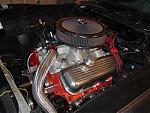
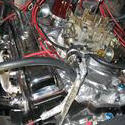
I'm only showing 3 PSI of fuel pressure once I get RPMS above 2000. Engine is 454 with Speed Demon 750. Is this too low to supply fuel needed? I am using a stock pump, 3/8 line to a filter (it may be 1/4 - whatever the stock steel line was off the pump), to the guage, to the fuel rail.

Race Director


Joined: Mar 2006
Posts: 14,112
Likes: 28
From: Florida
A lot of people get carried away with the fuel pump. It only needs to get gas into the fuel bowl at a minimum pressure.

Race Director


Joined: Dec 1999
Posts: 19,610
Likes: 778
From: Forked River NJ
If you are only getting 3psi with it in the garage under no load I might think you have a problem. The best way to check if it is going to empty the bowls is take it out in 3rd or 4th gear and do a long hard acceleration. If you feel it leaning out I would suspect a lack of fuel.
I ran mine on the dyno with a 4th gear pull from 2000 rpm to 6200 rpm and my fuel pressure stayed rock steady at 6 PSI.
I ran mine on the dyno with a 4th gear pull from 2000 rpm to 6200 rpm and my fuel pressure stayed rock steady at 6 PSI.

Drifting

Joined: Jul 2002
Posts: 1,944
Likes: 20
From: The only Corvettes in Highett Victoria
Fuel, Pressure or Volume?
G'day,
One thing that has intrigued me for a while is the inertia of petrol (gasoline). If you think about it, you're idling at the lights and the pump sucks a very small amount of petrol about eight feet from the rear mounted fuel tank to the engine along a 3/8" metal pipe and everything is rosy.
Then you nail the throttle and the car leaps forward and the petrol in the long fuel line has two forces acting on it. One is its inertia, i.e. it wants to stay where it is, and the other is air pressure in the tank being slightly higher than the pressure at the pump inlet and this tries to force it forward to the engine. The petrol is being forced forward along the fuel line by (ambient) air pressure in the tank while everything that is not bolted down is being forced backward by the forward motion of the vehicle while it is accelerating. Including the petrol in the main fuel line.
This could lead briefly to a lack of fuel (or air) at the inlet to the pump while the petrol is fighting its inertia. The result could well be a brief flat spot due to there not being enought fuel available to feed the engine while under harsh acceleration.
To overcome this problem, (if indeed there is one!!!), one would need to have a fuel tank mounted ahead of the engine so that under acceleration, the petrol would be forced rearward to the pump pick up and there would be no starvation. As this only occurs under harsh acceleration, which is usually in the lower gears, only a small or supplementary fuel tank would need to be fitted up front.
While the car is cruising, the inertial forces of the fuel are similar to when the car is stationary and there is no starvation. Only when accelerating. I'm not a scientist and this is only a theory. What do you think?
Regards from Down Under
aussiejohn
One thing that has intrigued me for a while is the inertia of petrol (gasoline). If you think about it, you're idling at the lights and the pump sucks a very small amount of petrol about eight feet from the rear mounted fuel tank to the engine along a 3/8" metal pipe and everything is rosy.
Then you nail the throttle and the car leaps forward and the petrol in the long fuel line has two forces acting on it. One is its inertia, i.e. it wants to stay where it is, and the other is air pressure in the tank being slightly higher than the pressure at the pump inlet and this tries to force it forward to the engine. The petrol is being forced forward along the fuel line by (ambient) air pressure in the tank while everything that is not bolted down is being forced backward by the forward motion of the vehicle while it is accelerating. Including the petrol in the main fuel line.
This could lead briefly to a lack of fuel (or air) at the inlet to the pump while the petrol is fighting its inertia. The result could well be a brief flat spot due to there not being enought fuel available to feed the engine while under harsh acceleration.
To overcome this problem, (if indeed there is one!!!), one would need to have a fuel tank mounted ahead of the engine so that under acceleration, the petrol would be forced rearward to the pump pick up and there would be no starvation. As this only occurs under harsh acceleration, which is usually in the lower gears, only a small or supplementary fuel tank would need to be fitted up front.
While the car is cruising, the inertial forces of the fuel are similar to when the car is stationary and there is no starvation. Only when accelerating. I'm not a scientist and this is only a theory. What do you think?
Regards from Down Under
aussiejohn
Thread Starter
Melting Slicks
Joined: Mar 2004
Posts: 3,472
Likes: 18
From: Lake Ozark, MO
Well Aussie John...that sounds like something Norville W. would thiink about......got me....
The pump in there now is just a new standard BB pump. Not a corvette specific or heavy duty. I do have an edlebrock HP pump, but am hesitant to use it since there is no return line provision.
The pump in there now is just a new standard BB pump. Not a corvette specific or heavy duty. I do have an edlebrock HP pump, but am hesitant to use it since there is no return line provision.
Last edited by Hvymtlc5; Jan 20, 2007 at 07:07 PM.
Corvette Stories
The Best of Corvette for Corvette Enthusiasts

Top 10 Most Expensive Corvettes Ever Sold on Bring A Trailer
Brett Foote
10 Things Every Corvette Owner Needs (2026 Edition)
Michael S. Palmer
8 Most "Only Corvette Owners Understand" Quirks and Problems
Pouria Savadkouei
10 Reasons the C6 Z06 is Still A Performance Benchmark After 20 Years
Joe Kucinski
How Much Horsepower Every Corvette Engine "LOST" in 1972
Joe Kucinski
Top 10 DOs and DON'Ts for Protecting Your Convertible Top!
Michael S. Palmer
Top 10 Most Explosive Corvettes Ever Made: Power-to-Weight Ratio Ranked!
Joe Kucinski
150 hp to 1,250 hp: Every Corvette Generation Compared by the Specs That Matter
Joe Kucinski
8 Coolest Corvette Pace Cars (and Replicas) of All Time
Verdad Gallardo
Race Director
Joined: Mar 2006
Posts: 14,112
Likes: 28
From: Florida
Well Aussie John...that sounds like something Norville W. would thiink about......got me....
The pump in there now is just a new standard BB pump. Not a corvette specific or heavy duty. I do have an edlebrock HP pump, but am hesitant to use it since there is no return line provision.
The pump in there now is just a new standard BB pump. Not a corvette specific or heavy duty. I do have an edlebrock HP pump, but am hesitant to use it since there is no return line provision.
but am hesitant to use it since there is no return line provision

Works perfectly for the 350. drilled return line to .035". Still gets more than enough for sustained WOT.
Someday will drill and tap for a pressure adapter like as in a FI fuel rail to connect test presure gauge, but couldn't find them in my mess.
More people overcome needle and seat with too much pressure and create flooding condtitions than starve for gas.
Le Mans Master

Joined: Oct 2002
Posts: 7,098
Likes: 378
From: Las Vegas - Just stop perpetuating myths please.
Nice fix Noonie. That recirc is much better than letting the pumps internal bypass do all the work - adds heat to the fuel. I rigged a similar return but all the way to the carb inlet - kind'a overkill really.
Hvymtlc5, i don't know what your measuring fuel press with but most of those tiny in-line gauges are junk. If u don't have a hand held test gauge then only use the non-filled (no liguid filled) type in-line and average the readings.
A dead ended fuel line to the carb is always a problem to measure as the internal relief fights the carbs needle and seat at idle.
aussiejohn, your think'n ahead and the real fix for hard launches is to mount an electric pmp behind the fuel tank. But for most of us the stock sys does fine as long as the fuel line has no sharp bend, turns, restrictions etc. With <400rwhp (my guess) just race with a full tank for the extra press head and u will be fine.
cardo0
That recirc is much better than letting the pumps internal bypass do all the work - adds heat to the fuel. I rigged a similar return but all the way to the carb inlet - kind'a overkill really.Hvymtlc5, i don't know what your measuring fuel press with but most of those tiny in-line gauges are junk. If u don't have a hand held test gauge then only use the non-filled (no liguid filled) type in-line and average the readings.
A dead ended fuel line to the carb is always a problem to measure as the internal relief fights the carbs needle and seat at idle.
aussiejohn, your think'n ahead and the real fix for hard launches is to mount an electric pmp behind the fuel tank. But for most of us the stock sys does fine as long as the fuel line has no sharp bend, turns, restrictions etc. With <400rwhp (my guess) just race with a full tank for the extra press head and u will be fine.
cardo0
Pro

Joined: Mar 2001
Posts: 633
Likes: 1
From: Hamilton, ON, Canada
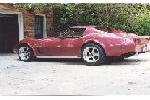
Pressure should be about 6 psi. Return line is not required. My '75 originally had a return line. I put an aftermarket Carter pump which has no provision for a return line. Car runs well with pressure at about 6 psi. Valving in carbs is made to handle 6 psi.
Thread Starter
Melting Slicks
Joined: Mar 2004
Posts: 3,472
Likes: 18
From: Lake Ozark, MO
Hvymtlc5, i don't know what your measuring fuel press with but most of those tiny in-line gauges are junk. If u don't have a hand held test gauge then only use the non-filled (no liguid filled) type in-line and average the readings.
