



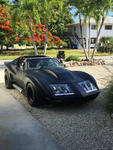

c3 aerodynamic speculation

Thread Starter
Melting Slicks

Joined: Dec 2004
Posts: 2,161
Likes: 0
From: pr, frederick md.
 c3 aerodynamic speculation
recently ive read threads concerning c3 aero and l88 style hoods and how they work. ive read JPHILS most excellent theory on this subject, but im forced to disagree with some of his terms and assesments. when he says that the air moving over a c3 is tear drop shaped, that is a little extreme. consider the frontal area of a c3. the grills and surronding body is 10 " tall by about 4 feet long, if you dont consider my 78 has a chin spoiler. this is very little frontal area, and any given rake, meaning downward angle of the body towards the front, will further reduce this area. weve all seen windtunnel tests were the dude has a wand that has smoke coming out of it and it glides across the hood of the car, yes? well imagine that being done to a c3. and there goes your tear drop theory! the only time you see waves that react like a tear drop or any deviation of that magnitude or measurability, is at extreme mach speeds. a c3 moving under 200 mph is NOT going to see this kind of "WAVE". IMHO.
as for the l88 hoods or any type of cowl hood, they do or "CAN" extract air from the cowl/ base of windsheild area. but the part i disagree with is that JPHIL calls this an "high pressure area". that is false. it is a LOW pressure area. as air moves over the profile of any car, a turbulence or an "eddie" is created at the base of the windsheild. imagine that line of smoke leaving a gap in the cowl area and rushing over the roof. the air trapped inside this area "eddie's" or turns back on itself, and is not moving at high speed like the air rushing over it. therfore, LOW PRESSURE! this air is sucked into an engine if sealed off properly and/ or taken advantage of. look under the hood of any nascar , car and you will see the carb sealed off to the cowl area ONLY! the same principle is true for tailgates on trucks. air moves over the roof and an eddie is formed immediatlly behind the cab. driving with the gate down diffuses this eddie, and air cannot move over the truck as efficiently, as with the gate up!( proven fact!)
i would be very interested in seeing a c3 go into a wind tunnel test, as it is my opinion that they are a little more aero than people think. the only problem areas i can think of are the t- tops sticking out above the windsheild, the flat, vertical area behind the sidewindows, the sides of a c3 dips inward at the doors, air moving under the car, and the fact that c3 grills are pointing downward like a " / " forcing air under the nose, instead of a " \ " forcing air over the top like a modern car. i am in no way an aero expert but it doesnt take an einstien to see ( at least on my 78 ) that with the chin spoiler and overall shape and frontal area that this thing isnt slippery. at least for an old car. any pro opinions?
as for the l88 hoods or any type of cowl hood, they do or "CAN" extract air from the cowl/ base of windsheild area. but the part i disagree with is that JPHIL calls this an "high pressure area". that is false. it is a LOW pressure area. as air moves over the profile of any car, a turbulence or an "eddie" is created at the base of the windsheild. imagine that line of smoke leaving a gap in the cowl area and rushing over the roof. the air trapped inside this area "eddie's" or turns back on itself, and is not moving at high speed like the air rushing over it. therfore, LOW PRESSURE! this air is sucked into an engine if sealed off properly and/ or taken advantage of. look under the hood of any nascar , car and you will see the carb sealed off to the cowl area ONLY! the same principle is true for tailgates on trucks. air moves over the roof and an eddie is formed immediatlly behind the cab. driving with the gate down diffuses this eddie, and air cannot move over the truck as efficiently, as with the gate up!( proven fact!)
i would be very interested in seeing a c3 go into a wind tunnel test, as it is my opinion that they are a little more aero than people think. the only problem areas i can think of are the t- tops sticking out above the windsheild, the flat, vertical area behind the sidewindows, the sides of a c3 dips inward at the doors, air moving under the car, and the fact that c3 grills are pointing downward like a " / " forcing air under the nose, instead of a " \ " forcing air over the top like a modern car. i am in no way an aero expert but it doesnt take an einstien to see ( at least on my 78 ) that with the chin spoiler and overall shape and frontal area that this thing isnt slippery. at least for an old car. any pro opinions?
Last edited by redc3; Jan 22, 2007 at 05:13 PM.

Team Owner


Joined: Apr 1999
Posts: 21,953
Likes: 1,445
From: Reno Nevada
2024 C3 of the Year Finalist- Modified
Properly designed Cowl inductions like (NASCAR) have recorded as much as 3 psi at 150+ mph. Yes, that is pressure in the air box from the high pressure at the base of the window. Yes, the cowl has to be stratigically placed to get the most benefit.
I've driven my Vette at high speed in the rain with a good wax job. You can see the the back 1/3 of the front where water just puddles and sits still.
I've driven my Vette at high speed in the rain with a good wax job. You can see the the back 1/3 of the front where water just puddles and sits still.
Thread Starter
Melting Slicks
Joined: Dec 2004
Posts: 2,161
Likes: 0
From: pr, frederick md.
hold your hand out of the window at 60mph. even that is more than 3 psi. the area at the back of the hood doesnt get presurrized THAT much, if at all. just my opinion. if its getting anything it is getting a sort of ram air effect as the " eddieing " air is moving backwards so to speak, towards the front of the hood, thus entering the cowl area at speed. i suppose that could be considered " psi " now that i think of it. the psi recorded could also be air speed velocity induced by the vacuum of the engine, or a combination of the two. im still trying to figure that one out myself.

Burning Brakes

Joined: Oct 2004
Posts: 763
Likes: 0
From: Loveland Colo
red,
When I started that thread, I was going by aerodynamics stuff I had been reading on other forums. In particular, there was a Mustang hot rod site which had posts from a man who did have computer flow test results and sounded like knowledgeable professional. Unfortunately, my computer got destroyed by lightning a week later, and I was never able to find that sight/discussion again. I looked and looked, I was bummed. I also found a Citroen site which had good graphics to illustrate this. I could probably find that one again, but it would take a while.
I now agree that I don't think the 'teardrop' envelope has much bearing on our cars at our speeds, after seeing the yarn tests I did. (Those pics are no longer on the thread, and at the moment I don't have the time to try to repost them.)
The cowl induction was proven to be effective even at low speeds, and even with an open engine bay. I saw that for myself, as did rihwoods in his yarn tests. Both of us have photos of this.
I too find this query of great interest and any info or discussion is anticipated and appreciated.
See what you can find! Lots of us are curious!
http://forums.corvetteforum.com/showthread.php?t=571930
http://www.edmunds.com/advice/specia...4/article.html
Here is a 2003 CF thread and a magazine article I still have saved. I have heard that the coeffient of drag of a C3 is around .47 for older models and .43 for the later ones with all the air dams and spoilers.
John
When I started that thread, I was going by aerodynamics stuff I had been reading on other forums. In particular, there was a Mustang hot rod site which had posts from a man who did have computer flow test results and sounded like knowledgeable professional. Unfortunately, my computer got destroyed by lightning a week later, and I was never able to find that sight/discussion again. I looked and looked, I was bummed. I also found a Citroen site which had good graphics to illustrate this. I could probably find that one again, but it would take a while.
I now agree that I don't think the 'teardrop' envelope has much bearing on our cars at our speeds, after seeing the yarn tests I did. (Those pics are no longer on the thread, and at the moment I don't have the time to try to repost them.)
The cowl induction was proven to be effective even at low speeds, and even with an open engine bay. I saw that for myself, as did rihwoods in his yarn tests. Both of us have photos of this.
I too find this query of great interest and any info or discussion is anticipated and appreciated.
See what you can find! Lots of us are curious!
http://forums.corvetteforum.com/showthread.php?t=571930
http://www.edmunds.com/advice/specia...4/article.html
Here is a 2003 CF thread and a magazine article I still have saved. I have heard that the coeffient of drag of a C3 is around .47 for older models and .43 for the later ones with all the air dams and spoilers.
John

Burning Brakes

Joined: Sep 2005
Posts: 832
Likes: 0
From: Sarasota Florida
all i can say is that chevrolet stated that the c4 coupe is like 23% more aerodynamic than the '82 c3, and the 82 was more aerodynamic than mine ('77), which is a little more aerodynamic than the late '60s.

Drifting

Joined: Sep 2004
Posts: 1,959
Likes: 1
From: North Bend Ohio
the air trapped inside this area "eddie's" or turns back on itself, and is not moving at high speed like the air rushing over it. therfore, LOW PRESSURE! this air is sucked into an engine if sealed off properly and/ or taken advantage of. look under the hood of any nascar , car and you will see the carb sealed off to the cowl area ONLY! the same principle is true for tailgates on trucks. air moves over the roof and an eddie is formed immediatlly behind the cab. driving with the gate down diffuses this eddie, and air cannot move over the truck as efficiently, as with the gate up!( proven fact!)
The purpose of cowl induction systems is to provide pressurized air to the induction system of the engine. The General spent large amounts of money on this research and we all know how fond he was of putting stuff on his cars that had no function. The way that it does this is to take suction from the base of the windshield where high velocity air is abruptly slowing down in an attempt to get over the top of the car. When air moving at high speed slows down it's pressure rises. This is a law of physics known as conservation of energy. The high speed air has a certain value as far as energy goes. This energy can not be erased, it most be absorbed or have it's nature changed. The cowl induction system changes high speed air into pressure. This is why the smoke can never quite get to the base of the windshield, there is higher pressure air stacking up in this area.
The same principle is used in all centrifugal pumps and blowers. High speed air (or fluid) is directed into a "volute" to create a pressure. The volute is an area of increasing diameter at the pump or blower discharge.
Question: Why would Nascar teams want their engines drawing air from a low pressure area?
As far as the pickup truck tailgate thing goes, if driving with the gate up improves the air flow efficiency over the top of the truck, why do you get better gas mileage when you drive with the gate down? If driving with the gate up improves air flow efficiency across the top of the truck then I would think that deploying a parachute behind the vehicle would actually push it forward. SHAZAAM!
BigBlockk
Later.....
Corvette Stories
The Best of Corvette for Corvette Enthusiasts

5 Best & 5 Worst Corvette Daily Drivers
Joe Kucinski
The Headlights of Every Corvette Generation Explained
Joe Kucinski
5 Best & 5 Most Overrated Corvette Track Packages of All Time!
Joe Kucinski
Every 2027 Corvette Engine Explained
Joe Kucinski
Designer Imagines A Corvette That Looks More Like a Corvette Than the Corvette
Verdad Gallardo
10 Ugly Corvettes That We Still Kinda Love
Joe Kucinski
Top 10 Most Expensive Corvettes Ever Sold on Bring A Trailer
Brett Foote
10 Things Every Corvette Owner Needs (2026 Edition)
Michael S. Palmer
8 Most "Only Corvette Owners Understand" Quirks and Problems
Pouria Savadkouei
Racer

Joined: Aug 2005
Posts: 456
Likes: 0
From: Forty Fort PA
I am a little confused. Is this thread about the overall coefficient of drag for a C3,or the pressure distribution in the vicinity of the hood? There is a positive pressure region at the base of the windshield where it joins the hood. The magnitude depends on the speed and whatever else may be done to disturb the flow in front of that. If you really look at the smoke trace, particularly along the centerline, you will see that the streamline curves up over the windshield and gets further away from the surface. The pressure in the streamline is lower than the air closer to the surface and lower than the pressure above it. This is called the Bernoulli effect and is what makes airplnes stay up. With the right shape, at an optimum relative velocity of air to surface, The pressure in the region of relatively static air can approach the 'impact' pressure equivalent to the air velocity. In this case, the smoke trace will be relatively farther from the surface of the windshield at the base.
The only other ways of getting this same amount of pressure are 1) in front of the car, at the grille, or, 2) A scoop raised up above the hood far enough to get it out of the accelerated (low pressure) airflow region into the region where the air veocity is at the free stream velocity (same as car speed). The raised scoop adds drag.
The only other ways of getting this same amount of pressure are 1) in front of the car, at the grille, or, 2) A scoop raised up above the hood far enough to get it out of the accelerated (low pressure) airflow region into the region where the air veocity is at the free stream velocity (same as car speed). The raised scoop adds drag.
Racer

Joined: Oct 2006
Posts: 473
Likes: 6
From: New Port Richey FL
Just looking at the C3s and you can tell they are not an areodynamic beast. Sure they look great and fluidlike, but you'd have to be an absolute mad man to take these cars to the limit. In stock trim, they ride high and suffer a design made 15 years prior to significant wind tunnel development. Ever wonder why the don't make anything today like the cool cars of yesteryear? They didn't know the first thing about areodymanics and they built things that LOOKED areodynamic. Bring one of these cars up to speed (100+) and you WILL feel the front lifting up. No one complained back then because this was the best that they had. Just my two cents.
Burning Brakes
Joined: Oct 2004
Posts: 763
Likes: 0
From: Loveland Colo


Just a few of the Stringray photos. You judge what you see and what it means......As I said before, I did not see what I expected from what I had read. However, the cowl suction began before 30 MPH, and was there throughout the runs. Note the strings taped on front of the grill itself, you can only see a dot because they are sucked in. One is just barely to the right of the flipping long one in the middle, inside its curl. But notice too how that long one is tight and straight against the hood until just before the windshield, where it seems to be caught in a swirling eddy.....And how at speed, it is sucked straight down in.

Melting Slicks
Joined: Apr 2000
Posts: 3,341
Likes: 6



Drifting
Joined: Sep 2006
Posts: 1,986
Likes: 21
From: Columbus MN
Just a few of the Stringray [73?] photos. You judge what you see and what it means......As I said before, I did not see what I expected from what I had read. However, the cowl suction began before 30 MPH, and was there throughout the runs. Note the strings taped on front of the grill itself, you can only see a dot because they are sucked in. One is just barely to the right of the flipping long one in the middle, inside its curl. But notice too how that long one is tight and straight against the hood until just before the windshield, where it seems to be caught in a swirling eddy.....And how at speed, it is sucked straight down in.
The airflow to the radiator was reportedly improved 50% in 1980. It will be interesting to see the differences far up front and underneath.
There is no "vent" space between the rear of the hood to the engine compartment, so it will be interesting to see the differences between the '73 pix and the '80.
BTW, my speedometer is the original '80, so it stops at 85 mph. I haven't felt any lift at any "85 mph" speed.
Last edited by MN80Vette; Jan 22, 2007 at 11:33 PM.

Instructor
Joined: Mar 2006
Posts: 245
Likes: 1
From: Jackson MN

Burning Brakes
Joined: Oct 2004
Posts: 763
Likes: 0
From: Loveland Colo
for the story behind these photos, see here:
http://forums.corvetteforum.com/show...t=aerodynamics
Gotta say, with my ol' car, 110 MPH+ gets a wee bit...."touchy", shall we say. I know I have other chassis "issues" to deal with along this line, and I'm working on them, too. But I can feel front end uplift exacerbating my other handling problems, so I'm doing what I can in whatever areas I can, as I can. "It's getting better all the time, just a little better all the time..." (John Lennon)
I will be very interested to see if I notice any difference with my new air dam (pictured in this thread: ) when I can get out again for some midnight hi-speed runs.
http://forums.corvetteforum.com/show....php?t=1557415
Sorry if I get carried away with this, but I find the subject fascinating, and every time it comes up--on any forum, not just here on CF--there is a bit more to learn.
Anybody can buy a C4 or C5 and have a superior car from the git-go, it's more fun to take something old and archaic and make it better.
John
http://forums.corvetteforum.com/show...t=aerodynamics
Gotta say, with my ol' car, 110 MPH+ gets a wee bit...."touchy", shall we say. I know I have other chassis "issues" to deal with along this line, and I'm working on them, too. But I can feel front end uplift exacerbating my other handling problems, so I'm doing what I can in whatever areas I can, as I can. "It's getting better all the time, just a little better all the time..." (John Lennon)
I will be very interested to see if I notice any difference with my new air dam (pictured in this thread: ) when I can get out again for some midnight hi-speed runs.
http://forums.corvetteforum.com/show....php?t=1557415
Sorry if I get carried away with this, but I find the subject fascinating, and every time it comes up--on any forum, not just here on CF--there is a bit more to learn.
Anybody can buy a C4 or C5 and have a superior car from the git-go, it's more fun to take something old and archaic and make it better.
John
Last edited by JPhil; Jan 23, 2007 at 01:00 AM.




Le Mans Master

Joined: Jul 2006
Posts: 8,117
Likes: 104
From: charlotte north carolina
i remember an article from many years ago in road and track or car and driver that said the "new" (at that time) corvettes were only a poorly designed wing, and significant lifting could be expected. the picture of aerodynamic flow demonstrated by using string taped to the body only indicates relative smoothness of air flow. it doesn't indicate absolute pressures. also, most lift created by an airplane's wings is not the result of the bernoulli effect. it is caused by the angle of attack of the wing, which increases the air presure under the wing. hence the spoilers at the front of car to prevent air from getting under the car.