



c3 aerodynamic speculation

Burning Brakes

Joined: Oct 2004
Posts: 763
Likes: 0
From: Loveland Colo

Here are some places I found, but don't have time right now to thoroughly read....
http://www.aerodyn.org/Frames/1roadv.html
http://aerodyn.org/Resources/roadvehicles.html
http://www.letstalkcars.com/1612951780.html
(scroll down)
http://www.sae.org/servlets/SiteSear...e=ALL&x=17&y=8
It goes on and on....
Gotta go. John
http://www.aerodyn.org/Frames/1roadv.html
http://aerodyn.org/Resources/roadvehicles.html
http://www.letstalkcars.com/1612951780.html
(scroll down)
http://www.sae.org/servlets/SiteSear...e=ALL&x=17&y=8
It goes on and on....
Gotta go. John
Last edited by JPhil; Jan 23, 2007 at 09:41 PM.
Instructor

Joined: Sep 2005
Posts: 194
Likes: 0
From: Hamilton Ontario
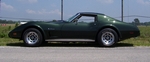
They do lift at high speed, but every vette will do it differently depending on the particular front end design. The later aero vettes probably stay down the best because of their front airdams. Mine starts to get front end light at 130mph. I decided not to test the limit any further.

Thread Starter
Melting Slicks

Joined: Dec 2004
Posts: 2,161
Likes: 0
From: pr, frederick md.
There is a lot here that is not correct.
The purpose of cowl induction systems is to provide pressurized air to the induction system of the engine. The General spent large amounts of money on this research and we all know how fond he was of putting stuff on his cars that had no function. The way that it does this is to take suction from the base of the windshield where high velocity air is abruptly slowing down in an attempt to get over the top of the car. When air moving at high speed slows down it's pressure rises. This is a law of physics known as conservation of energy. The high speed air has a certain value as far as energy goes. This energy can not be erased, it most be absorbed or have it's nature changed. The cowl induction system changes high speed air into pressure. This is why the smoke can never quite get to the base of the windshield, there is higher pressure air stacking up in this area.
The same principle is used in all centrifugal pumps and blowers. High speed air (or fluid) is directed into a "volute" to create a pressure. The volute is an area of increasing diameter at the pump or blower discharge.
Question: Why would Nascar teams want their engines drawing air from a low pressure area?
As far as the pickup truck tailgate thing goes, if driving with the gate up improves the air flow efficiency over the top of the truck, why do you get better gas mileage when you drive with the gate down? If driving with the gate up improves air flow efficiency across the top of the truck then I would think that deploying a parachute behind the vehicle would actually push it forward. SHAZAAM!
BigBlockk
Later.....
The purpose of cowl induction systems is to provide pressurized air to the induction system of the engine. The General spent large amounts of money on this research and we all know how fond he was of putting stuff on his cars that had no function. The way that it does this is to take suction from the base of the windshield where high velocity air is abruptly slowing down in an attempt to get over the top of the car. When air moving at high speed slows down it's pressure rises. This is a law of physics known as conservation of energy. The high speed air has a certain value as far as energy goes. This energy can not be erased, it most be absorbed or have it's nature changed. The cowl induction system changes high speed air into pressure. This is why the smoke can never quite get to the base of the windshield, there is higher pressure air stacking up in this area.
The same principle is used in all centrifugal pumps and blowers. High speed air (or fluid) is directed into a "volute" to create a pressure. The volute is an area of increasing diameter at the pump or blower discharge.
Question: Why would Nascar teams want their engines drawing air from a low pressure area?
As far as the pickup truck tailgate thing goes, if driving with the gate up improves the air flow efficiency over the top of the truck, why do you get better gas mileage when you drive with the gate down? If driving with the gate up improves air flow efficiency across the top of the truck then I would think that deploying a parachute behind the vehicle would actually push it forward. SHAZAAM!
BigBlockk
Later.....

Thread Starter
Melting Slicks
Joined: Dec 2004
Posts: 2,161
Likes: 0
From: pr, frederick md.
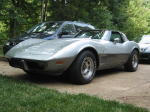
Just looking at the C3s and you can tell they are not an areodynamic beast. Sure they look great and fluidlike, but you'd have to be an absolute mad man to take these cars to the limit. In stock trim, they ride high and suffer a design made 15 years prior to significant wind tunnel development. Ever wonder why the don't make anything today like the cool cars of yesteryear? They didn't know the first thing about areodymanics and they built things that LOOKED areodynamic. Bring one of these cars up to speed (100+) and you WILL feel the front lifting up. No one complained back then because this was the best that they had. Just my two cents.
Thread Starter
Melting Slicks
Joined: Dec 2004
Posts: 2,161
Likes: 0
From: pr, frederick md.
Thread Starter
Melting Slicks
Joined: Dec 2004
Posts: 2,161
Likes: 0
From: pr, frederick md.
Burning Brakes


Joined: Nov 2004
Posts: 1,193
Likes: 176
From: Hillsborough NC
Here's a few quotes from the book, 'Sports Car Color History, Corvette 1968 - 1982." I recommend the book to anyone interested in reading up on the subject.
Did Duntov like the shape of the much beloved C2?
"As always, improving performance was Duntov's prime goal. And this time he desperately wanted to concentrate on one particularly disappointing aspect of the second-generation Corvette's go-fast personality. A Car and Driver report later in 1971 described 'the contempt Duntov feels for the body shape of the 1963-1967 Sting Ray.' In Zora's own words, that body possesed 'just enough lift to be a bad airplane.'"
"Designer Larry SHinoda, Mitchell's right-hand man, described the situation to Corvette Fever contributor Don Sherman in 1989. 'GM wind tunnel engineers attempting to justify their theories spent untold sums studying the 1963 Corvette,' said Shinoda. 'What they found was a drag coefficient of 0.53. In essence, it was a flying machine.'"
"An engineering test vehicle was touring GM's Milford Proving Grounds as early as the fall of 1965. A new 1965 Corvette was also run around the track to serve as a measuring stick. Duntov's 'Bad Airplane,' tended to lift at both ends at highway speeds. At 120 miles per hour, the 1965 Stingray's nose rose 2.25 inches, the rear 1/2 inch. In comparison, Engineering's test car hunkered down in backat speed thanks to that large rear spoiler. At 120 miles per hour, it's tail dropped 1/4 inch. This depression in turn helped raise the nose, a task the car could already handle well enough on it's own. Lift at 120 miles per hour measured 3.75 inches."
"For the record, the 1965 Corvette had to deliver 155 horsepower to the road to attain 120 miles per hour. Engineering's test machine initially required 210 horsepower to hit the same speed."
Ever Wonder why C3's have working gills on the front fender? Read on....
"Bringing things back down to Earth was first acheived by venting the front fenders.... These vents allowed trapped airflow up front a quicker exit.... Opening the fenders brought the prototype's lift down close to stock 1965 Sting Ray levels. At the same time, the modification meant that only 175 horsepower were needed to move the car up to 120 miles per hour. Adding a chin spoiler up front reduced that power requirement to a mere 105 horses. That spoiler also sliced lift to a measley 5/8 of an inch."
Did Duntov like the shape of the much beloved C2?
"As always, improving performance was Duntov's prime goal. And this time he desperately wanted to concentrate on one particularly disappointing aspect of the second-generation Corvette's go-fast personality. A Car and Driver report later in 1971 described 'the contempt Duntov feels for the body shape of the 1963-1967 Sting Ray.' In Zora's own words, that body possesed 'just enough lift to be a bad airplane.'"
"Designer Larry SHinoda, Mitchell's right-hand man, described the situation to Corvette Fever contributor Don Sherman in 1989. 'GM wind tunnel engineers attempting to justify their theories spent untold sums studying the 1963 Corvette,' said Shinoda. 'What they found was a drag coefficient of 0.53. In essence, it was a flying machine.'"
"An engineering test vehicle was touring GM's Milford Proving Grounds as early as the fall of 1965. A new 1965 Corvette was also run around the track to serve as a measuring stick. Duntov's 'Bad Airplane,' tended to lift at both ends at highway speeds. At 120 miles per hour, the 1965 Stingray's nose rose 2.25 inches, the rear 1/2 inch. In comparison, Engineering's test car hunkered down in backat speed thanks to that large rear spoiler. At 120 miles per hour, it's tail dropped 1/4 inch. This depression in turn helped raise the nose, a task the car could already handle well enough on it's own. Lift at 120 miles per hour measured 3.75 inches."
"For the record, the 1965 Corvette had to deliver 155 horsepower to the road to attain 120 miles per hour. Engineering's test machine initially required 210 horsepower to hit the same speed."
Ever Wonder why C3's have working gills on the front fender? Read on....
"Bringing things back down to Earth was first acheived by venting the front fenders.... These vents allowed trapped airflow up front a quicker exit.... Opening the fenders brought the prototype's lift down close to stock 1965 Sting Ray levels. At the same time, the modification meant that only 175 horsepower were needed to move the car up to 120 miles per hour. Adding a chin spoiler up front reduced that power requirement to a mere 105 horses. That spoiler also sliced lift to a measley 5/8 of an inch."
Burning Brakes
Joined: Oct 2004
Posts: 763
Likes: 0
From: Loveland Colo
Looking thru the SAE publication site, found a couple books I'm gonna have to get:
http://www.sae.org/technical/books/PT-49
http://www.sae.org/technical/books/R-168
http://www.sae.org/technical/books/PT-49
http://www.sae.org/technical/books/R-168
Corvette Stories
The Best of Corvette for Corvette Enthusiasts

5 Best & 5 Worst Corvette Daily Drivers
Joe Kucinski
The Headlights of Every Corvette Generation Explained
Joe Kucinski
5 Best & 5 Most Overrated Corvette Track Packages of All Time!
Joe Kucinski
Every 2027 Corvette Engine Explained
Joe Kucinski
Designer Imagines A Corvette That Looks More Like a Corvette Than the Corvette
Verdad Gallardo
10 Ugly Corvettes That We Still Kinda Love
Joe Kucinski
Top 10 Most Expensive Corvettes Ever Sold on Bring A Trailer
Brett Foote
10 Things Every Corvette Owner Needs (2026 Edition)
Michael S. Palmer
8 Most "Only Corvette Owners Understand" Quirks and Problems
Pouria Savadkouei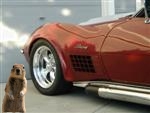
Race Director


Joined: Nov 1999
Posts: 10,643
Likes: 8
From: Foxfield CO 1970 Convertible
As far as the pickup truck tailgate thing goes, if driving with the gate up improves the air flow efficiency over the top of the truck, why do you get better gas mileage when you drive with the gate down? If driving with the gate up improves air flow efficiency across the top of the truck then I would think that deploying a parachute behind the vehicle would actually push it forward. SHAZAAM!

Race Director

Joined: Nov 2000
Posts: 16,416
Likes: 1
From: NC,USA
Here's a few quotes from the book, 'Sports Car Color History, Corvette 1968 - 1982." I recommend the book to anyone interested in reading up on the subject.
Did Duntov like the shape of the much beloved C2?
"As always, improving performance was Duntov's prime goal. And this time he desperately wanted to concentrate on one particularly disappointing aspect of the second-generation Corvette's go-fast personality. A Car and Driver report later in 1971 described 'the contempt Duntov feels for the body shape of the 1963-1967 Sting Ray.' In Zora's own words, that body possesed 'just enough lift to be a bad airplane.'"
"Designer Larry SHinoda, Mitchell's right-hand man, described the situation to Corvette Fever contributor Don Sherman in 1989. 'GM wind tunnel engineers attempting to justify their theories spent untold sums studying the 1963 Corvette,' said Shinoda. 'What they found was a drag coefficient of 0.53. In essence, it was a flying machine.'"
"An engineering test vehicle was touring GM's Milford Proving Grounds as early as the fall of 1965. A new 1965 Corvette was also run around the track to serve as a measuring stick. Duntov's 'Bad Airplane,' tended to lift at both ends at highway speeds. At 120 miles per hour, the 1965 Stingray's nose rose 2.25 inches, the rear 1/2 inch. In comparison, Engineering's test car hunkered down in backat speed thanks to that large rear spoiler. At 120 miles per hour, it's tail dropped 1/4 inch. This depression in turn helped raise the nose, a task the car could already handle well enough on it's own. Lift at 120 miles per hour measured 3.75 inches."
"For the record, the 1965 Corvette had to deliver 155 horsepower to the road to attain 120 miles per hour. Engineering's test machine initially required 210 horsepower to hit the same speed."
Ever Wonder why C3's have working gills on the front fender? Read on....
"Bringing things back down to Earth was first acheived by venting the front fenders.... These vents allowed trapped airflow up front a quicker exit.... Opening the fenders brought the prototype's lift down close to stock 1965 Sting Ray levels. At the same time, the modification meant that only 175 horsepower were needed to move the car up to 120 miles per hour. Adding a chin spoiler up front reduced that power requirement to a mere 105 horses. That spoiler also sliced lift to a measley 5/8 of an inch."
Did Duntov like the shape of the much beloved C2?
"As always, improving performance was Duntov's prime goal. And this time he desperately wanted to concentrate on one particularly disappointing aspect of the second-generation Corvette's go-fast personality. A Car and Driver report later in 1971 described 'the contempt Duntov feels for the body shape of the 1963-1967 Sting Ray.' In Zora's own words, that body possesed 'just enough lift to be a bad airplane.'"
"Designer Larry SHinoda, Mitchell's right-hand man, described the situation to Corvette Fever contributor Don Sherman in 1989. 'GM wind tunnel engineers attempting to justify their theories spent untold sums studying the 1963 Corvette,' said Shinoda. 'What they found was a drag coefficient of 0.53. In essence, it was a flying machine.'"
"An engineering test vehicle was touring GM's Milford Proving Grounds as early as the fall of 1965. A new 1965 Corvette was also run around the track to serve as a measuring stick. Duntov's 'Bad Airplane,' tended to lift at both ends at highway speeds. At 120 miles per hour, the 1965 Stingray's nose rose 2.25 inches, the rear 1/2 inch. In comparison, Engineering's test car hunkered down in backat speed thanks to that large rear spoiler. At 120 miles per hour, it's tail dropped 1/4 inch. This depression in turn helped raise the nose, a task the car could already handle well enough on it's own. Lift at 120 miles per hour measured 3.75 inches."
"For the record, the 1965 Corvette had to deliver 155 horsepower to the road to attain 120 miles per hour. Engineering's test machine initially required 210 horsepower to hit the same speed."
Ever Wonder why C3's have working gills on the front fender? Read on....
"Bringing things back down to Earth was first acheived by venting the front fenders.... These vents allowed trapped airflow up front a quicker exit.... Opening the fenders brought the prototype's lift down close to stock 1965 Sting Ray levels. At the same time, the modification meant that only 175 horsepower were needed to move the car up to 120 miles per hour. Adding a chin spoiler up front reduced that power requirement to a mere 105 horses. That spoiler also sliced lift to a measley 5/8 of an inch."


Burning Brakes
Joined: Oct 2004
Posts: 763
Likes: 0
From: Loveland Colo
Burning Brakes
Joined: Oct 2004
Posts: 763
Likes: 0
From: Loveland Colo
Burning Brakes
Joined: Oct 2004
Posts: 763
Likes: 0
From: Loveland Colo
Got my SAE book "Vehicle Aerodynamics" yesterday. Holy shlamoley. It's 8 1/2" X 11" hardbound, 2" thick.
From the Preface:
"This volume is primarily an assemblage of published papers selected to illustrate current activity in the field of vehicle aerodynamics." (copyright 1996)
From the Table of Contents:
"Section I Historical Background/Overveiw"
"Section II Wind Tunnel Testing: Testing Methodology, Ground-Simulation, Measurement Techniques"
"Section III On-Road Testing"
"Section IV Computational Fluid Dynamics"
"Section V Vehicle Aerodynamic Development and Drag Reduction"
"Section VI Aerodynamics of Engine Cooling"
"Section VII Vehicle Areodynamics and Aeroacoustics"
Just skipping through it I see such stuff as "Example of velocity distribution behind a rotating shrouded fan"...."Crosswind sensitivity of passenger cars and the influence of chassis and aerodynamic properties on driver preferences"...."Computed yaw effects on streamlines, seperation zones, and wake shape for Corvette ZR-1"....."Simultaneous computation of the external flow around a car body and the internal flow through its engine compartment"....."Cooling air inlets"...."Engine compartment flow losses with smooth and rough underbodies"..."Investigation of lift behaviour"....
I think you get the idea. Lots of charts, graphs, illustrations and equations. This is primarily an engineering book--most of it is way over my head, but I know I can still get a lot out of it. Gonna take me a while, though.
Some of you folks out there with engineering backgrounds could probably really get a lot from it (and hopefully share with us, in more layman-like terms).
Even if I only understand 5% of it, it will have easily been worth the $19.95 + $10.00 shipping.
http://www.sae.org/technical/books/PT-49
John
From the Preface:
"This volume is primarily an assemblage of published papers selected to illustrate current activity in the field of vehicle aerodynamics." (copyright 1996)
From the Table of Contents:
"Section I Historical Background/Overveiw"
"Section II Wind Tunnel Testing: Testing Methodology, Ground-Simulation, Measurement Techniques"
"Section III On-Road Testing"
"Section IV Computational Fluid Dynamics"
"Section V Vehicle Aerodynamic Development and Drag Reduction"
"Section VI Aerodynamics of Engine Cooling"
"Section VII Vehicle Areodynamics and Aeroacoustics"
Just skipping through it I see such stuff as "Example of velocity distribution behind a rotating shrouded fan"...."Crosswind sensitivity of passenger cars and the influence of chassis and aerodynamic properties on driver preferences"...."Computed yaw effects on streamlines, seperation zones, and wake shape for Corvette ZR-1"....."Simultaneous computation of the external flow around a car body and the internal flow through its engine compartment"....."Cooling air inlets"...."Engine compartment flow losses with smooth and rough underbodies"..."Investigation of lift behaviour"....
I think you get the idea. Lots of charts, graphs, illustrations and equations. This is primarily an engineering book--most of it is way over my head, but I know I can still get a lot out of it. Gonna take me a while, though.
Some of you folks out there with engineering backgrounds could probably really get a lot from it (and hopefully share with us, in more layman-like terms).
Even if I only understand 5% of it, it will have easily been worth the $19.95 + $10.00 shipping.
http://www.sae.org/technical/books/PT-49
John
Last edited by JPhil; Jan 30, 2007 at 10:40 PM.

Melting Slicks
Joined: Feb 2006
Posts: 3,428
Likes: 5
From: Japan
Just an observation here....has anybody familiar with the Chaparrals of the mid-sixties (the 2A, 2C, and 2D in particular) noticed the faint similarities between their chiseled shapes and that of the C3 Corvette? When the original Chaparral 2 (which is to say, the first mid-engined, composite-chassised Chaparral) was morphed into the 2A its body shape was changed from a rounded form with an upturned nose to one that looked a lot more like General Motors' GSIIb research vehicle which was provided to Jim Hall for chassis research- it had a downward-sloping, pointed nose profile and sharp fender creases like the Mako Shark show car which soon followed. Obviously the backdoor support that Hall was getting from GM (aluminum 327 blocks, automatic transaxles, etc.) was given with the understanding that Hall would in turn incorporate some pointy, angular styling cues from the Corvette into the race cars in order to convey the idea to the rather gullible car-buying public that their new Corvette had race car aerodynamic technology incorporated. Ford was doing the same thing with the Mustang in 1964- the fake side scoops and abbreviated 'fastback' roof profile faintly mimicked certain elements of the GT40 (whose original aerodynamics were diabolical and required lots of tweaking to prevent them from flying at high speed). What I'm getting at here is that any pretentions that C3 vettes might make toward aerodynamic sophistication is pretty much coincidental- they do look swoopy and racy but compared to the smoother, more seamless profiles found on newer cars they're really pretty crude (and those Chaparrals even had added-on chin spoilers to help keep their front ends stuck).
Pro


Joined: Oct 2004
Posts: 624
Likes: 24
From: Shoreline WA
There are quite a few of us here that would dearly love to have a copy of a C3 body/frame in CAD format. If per chance someone offers one up could you mention it here?
