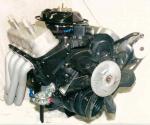
Dry sump oiling


Thread Starter
Le Mans Master


Joined: Apr 2006
Posts: 5,403
Likes: 95
 Dry sump oiling
I would probably not do this if for no other reason cost. A lot of
motorcycles have been built with gear driven dry sumps and I
believe the new LS7 engine has a gear driven dry sump. I have
always wondered how the belt driven extenal oil pumps you
see on race cars do in the way of dependability, are they something
that needs to be rebuilt or messed with often ? how do the belts
last are they prone to breaking or need replacing pretty often.
Just trying to learn something that I have no experience with.
motorcycles have been built with gear driven dry sumps and I
believe the new LS7 engine has a gear driven dry sump. I have
always wondered how the belt driven extenal oil pumps you
see on race cars do in the way of dependability, are they something
that needs to be rebuilt or messed with often ? how do the belts
last are they prone to breaking or need replacing pretty often.
Just trying to learn something that I have no experience with.

Safety Car


Joined: Apr 2005
Posts: 3,624
Likes: 431
From: Dale City VA
We get about 1/4 of a season (250-350 laps) out of the belts on our Dirt Late Models. Now that is a hard enviroment (all the clay and dirt/rocks) also the engines turn 8500-9500rpm for 50-100 laps a night depending on how big the show is. They make 800-850hp and use a 4-6 stage pump depending. Motors with valve spring oilers get a stage for the heads to evac all that oil out of there, a couple on the pan, one in the cam valley and of course one to pull vacum.
On our drag engines we change the belt at least every year. I would like to see some of our bracket engines get maintained a little better (like one belt every half season) but you know racers... cheap and that little $40 belt is going to make them go broke. HP here depends on the motor but usually we have a 3-4 stage pump on drag cars to cut down on parasidic drag and they don't normally have valve spring oilers and stuff that requires all those extra stages in the pump.
As for reliability of the pumps themselves. We use Barnes and have use some Weaver's, and Avaid's in the past. We have pumps currently running for over 6-7yrs that have been on as many different motors in that time period. Some have had had parts of them re-built (ie gears housings ect) when they get big peices of trash through them (like from a motor explosion) or they do just wear out - but for the most part our dry sump pumps are the least of our worries with engines.
I had a guy last year bring me an old 4 stage SCR (Stock Car Racing Prouducts) dry sump pump that was over 25yrs old, to use on his engine. It looked thrashed from the out side like it had been used hard. I pulled it down and it needed nothing inside but to have the side clearance re-set in a few of the gears/housings. The pumps will last a long time as long as you use good oil strainers/filters.
Will
On our drag engines we change the belt at least every year. I would like to see some of our bracket engines get maintained a little better (like one belt every half season) but you know racers... cheap and that little $40 belt is going to make them go broke. HP here depends on the motor but usually we have a 3-4 stage pump on drag cars to cut down on parasidic drag and they don't normally have valve spring oilers and stuff that requires all those extra stages in the pump.
As for reliability of the pumps themselves. We use Barnes and have use some Weaver's, and Avaid's in the past. We have pumps currently running for over 6-7yrs that have been on as many different motors in that time period. Some have had had parts of them re-built (ie gears housings ect) when they get big peices of trash through them (like from a motor explosion) or they do just wear out - but for the most part our dry sump pumps are the least of our worries with engines.
I had a guy last year bring me an old 4 stage SCR (Stock Car Racing Prouducts) dry sump pump that was over 25yrs old, to use on his engine. It looked thrashed from the out side like it had been used hard. I pulled it down and it needed nothing inside but to have the side clearance re-set in a few of the gears/housings. The pumps will last a long time as long as you use good oil strainers/filters.
Will

Drifting

Joined: Jul 2002
Posts: 1,944
Likes: 20
From: The only Corvettes in Highett Victoria
Mouse,
Almost all oil pumps are "gear driven" and most common V8 engines have them sitting in the sump of the oil pan, or at least the oil pump pick-up is, and are driven indirectly by the camshaft. Exceptions are the big block Chryslers and the Holden V8 which have the oil pumps mounted externally and driven by a shaft with a bevel gear at the top that meshes with a gear on the front of the camshaft.
Older Chevrolet and Holden V8s have two spur gears that create pressure by forcing the oil around the outside of the gears on the inside of the housing while Ford uses a gerotor type pump. The new Chev engines have a pump that is driven off the front of the crankshaft at crankshaft speed (obviously!) compared to the other engines that are driven at camshaft speed which is half crankshaft speed.
Race cars (and bikes) that use dry sump pumps place the oil pump outside the crankcase and most use a toothed belt drive. There are several reasons for this. One is that the pump speed does not have to be at the same speed as the crank or camshaft. Another is that the engine can sit lower in the chassis yet still have good ground clearance by virtue of not having a big sump in the oil pan.
The main reason though, is that several separate pumps can be driven at once with one, two or three pumps being used to scavenge oil (and oil foam) from the oil pan and dumped into a single external oil tank which may include a foam separator and another pump takes oil from the bottom of this tank straight, or via a filter, to the main oil passage(s) in the engine.
This is great in a race car, but not needed in a street car, even a dual purpose street/drag car. As long as oil pressure is good for the whole quarter mile, you need do nothing to the stock system. Modifying the oil system is a rod for your own back, your factory reliability will be ofset by questionable gains.
Regards from Down Under
aussiejohn
Almost all oil pumps are "gear driven" and most common V8 engines have them sitting in the sump of the oil pan, or at least the oil pump pick-up is, and are driven indirectly by the camshaft. Exceptions are the big block Chryslers and the Holden V8 which have the oil pumps mounted externally and driven by a shaft with a bevel gear at the top that meshes with a gear on the front of the camshaft.
Older Chevrolet and Holden V8s have two spur gears that create pressure by forcing the oil around the outside of the gears on the inside of the housing while Ford uses a gerotor type pump. The new Chev engines have a pump that is driven off the front of the crankshaft at crankshaft speed (obviously!) compared to the other engines that are driven at camshaft speed which is half crankshaft speed.
Race cars (and bikes) that use dry sump pumps place the oil pump outside the crankcase and most use a toothed belt drive. There are several reasons for this. One is that the pump speed does not have to be at the same speed as the crank or camshaft. Another is that the engine can sit lower in the chassis yet still have good ground clearance by virtue of not having a big sump in the oil pan.
The main reason though, is that several separate pumps can be driven at once with one, two or three pumps being used to scavenge oil (and oil foam) from the oil pan and dumped into a single external oil tank which may include a foam separator and another pump takes oil from the bottom of this tank straight, or via a filter, to the main oil passage(s) in the engine.
This is great in a race car, but not needed in a street car, even a dual purpose street/drag car. As long as oil pressure is good for the whole quarter mile, you need do nothing to the stock system. Modifying the oil system is a rod for your own back, your factory reliability will be ofset by questionable gains.
Regards from Down Under
aussiejohn