




Self Inflicted brake caliper problem???
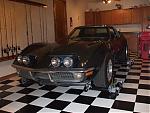
Thread Starter
Drifting


Joined: Mar 2008
Posts: 1,900
Likes: 3
From: Nixa Missouri
 Self Inflicted brake caliper problem???
I went to install my passenger caliper on the roter last night and let the wooden spacer keeping the brake pads separated slip out before I was able to stab it on the rotor. The pads slid in on the pad pin letting the pistons push out slightly. I managed to stab the spacer back in between the pads and then was able to palce the caliper on the rotor.
OK, once on and before installing the caliper mounting bolts, there was a pool of brake fluid about the size of a silver dollar on the floor. Feeling for the area the fluid came from I would have to say it was from the inside piston/seal. This cant be good.
Sence the caliper has been on the rotor there has not been any more brake fluid leaking or dripping.
Ouestions: Will I need to do anything to this caliper or should I rebuild it and or will I have to bleed it down.
History: The brakes are, where perfect before I did this. The vette is a 70 with stock brakes & the car is up on jacks and I wont be able to start it for some time to apply PB assist pressure to the calipers.
Any information will be gratefully appreciated.

Post Script, I'm brake illiterate so please be gentle. LoL
OK, once on and before installing the caliper mounting bolts, there was a pool of brake fluid about the size of a silver dollar on the floor. Feeling for the area the fluid came from I would have to say it was from the inside piston/seal. This cant be good.
Sence the caliper has been on the rotor there has not been any more brake fluid leaking or dripping.
Ouestions: Will I need to do anything to this caliper or should I rebuild it and or will I have to bleed it down.
History: The brakes are, where perfect before I did this. The vette is a 70 with stock brakes & the car is up on jacks and I wont be able to start it for some time to apply PB assist pressure to the calipers.
Any information will be gratefully appreciated.
Post Script, I'm brake illiterate so please be gentle. LoL

Team Owner

Joined: Aug 2006
Posts: 24,125
Likes: 15
From: Columbia Missouri
Okay, first, are the calipers the stock calipers that came on the car in 1970? If so, the leaking is probably more because the piston bores are corroded and pitted, and not because you were a a bit rough on it. Now, maybe the seal was damaged during installation...because a 38 year old rubber seal won't last forever, and maybe they do need to be rebuilt.
That being said, I think it would be better, unless you like the challenge, to buy S/S sleeved calipers to replace your old stock ones that will get more and more prone to leaking without the sleeves or new seals and springs.
That being said, I think it would be better, unless you like the challenge, to buy S/S sleeved calipers to replace your old stock ones that will get more and more prone to leaking without the sleeves or new seals and springs.
Thread Starter
Drifting
Joined: Mar 2008
Posts: 1,900
Likes: 3
From: Nixa Missouri
Hey DB,
I'm pretty sure the guts in the caliper are not the originals (front). There all but new pads and the pistons are clean and a nice gold color.
With out going back to look at my notes for the caliper numbers which I cant find at this time I think there the original calipers that have been rebuilt some years ago but keep in mind that this car has had only 400 plus miles put on it in the last 10 years and now it's up on jacks for the next year or longer.
So let say that everything is up to date on the calipers. Buy letting the piston / seal push out and letting some fluid leak by, will this cause a problem with the brake ( passenger side) and or overall system. I'm in no hurry or have to fix this problem right at this time, but need to address the problem when the car is ready for the road.
Was looking thur the parts books and thinking about going ahead and rebuilding when I get a chance or when it's next on the list.
Also not sure about the fluid in the system, again down the road I'll bleed the system over to the DOT-5 fluid to make sure.
Was reading the thread about the motive bleeder so I'll have to add this to my list.
I may call the 2nd PO and see if he remembers anything. He,s pretty cool guy and he could help.
Thanks, Again.
I'm pretty sure the guts in the caliper are not the originals (front). There all but new pads and the pistons are clean and a nice gold color.
With out going back to look at my notes for the caliper numbers which I cant find at this time I think there the original calipers that have been rebuilt some years ago but keep in mind that this car has had only 400 plus miles put on it in the last 10 years and now it's up on jacks for the next year or longer.
So let say that everything is up to date on the calipers. Buy letting the piston / seal push out and letting some fluid leak by, will this cause a problem with the brake ( passenger side) and or overall system. I'm in no hurry or have to fix this problem right at this time, but need to address the problem when the car is ready for the road.
Was looking thur the parts books and thinking about going ahead and rebuilding when I get a chance or when it's next on the list.
Also not sure about the fluid in the system, again down the road I'll bleed the system over to the DOT-5 fluid to make sure.
Was reading the thread about the motive bleeder so I'll have to add this to my list.
I may call the 2nd PO and see if he remembers anything. He,s pretty cool guy and he could help.
Thanks, Again.

Racer

Joined: Oct 2006
Posts: 488
Likes: 0
From: Australia Victoria
First of all - I'd be checking the seals.
If they are damaged it's not a big job to clean out the cylinders (use metho) clean it all up. Check for grooves etc. Clean the pistons and springs with metho as well. Replacing the rubbers and seals (o-ring kit) is a good thing on these old cars.
Make sure to use the correct piston/calliper grease on the rubbers and not normal grease! VERY important. Make sure to not "push" them in but to pry they on so you do not peel back the rubber or split it in any way or you're back to square one.
A trick for getting the seal seated properly is to but a wobble bar or any steel bar through the center of the caliper and push the piston back into the cylinder so the bar is pushing down on the seal. Hammer the side of the bar as close to the caliper as you can on both sides sliding it forward and backward and it will seat very quickly and even. If you need pics of this let me know as I have a set of calipers off the car at the moment.
Also - what are you talking about with a block of wood??? I've always simply put a vice grip squeezing on the brake hose, not too tight to split it though, loosen off a bleeder and open the pads up with my fingers. They'll just slide on. No need for gimmicky piston holders or blocks of wood. Sure you need to bleed the brakes a bit afterwards, but that's a good thing to do every now and then.
If they are damaged it's not a big job to clean out the cylinders (use metho) clean it all up. Check for grooves etc. Clean the pistons and springs with metho as well. Replacing the rubbers and seals (o-ring kit) is a good thing on these old cars.
Make sure to use the correct piston/calliper grease on the rubbers and not normal grease! VERY important. Make sure to not "push" them in but to pry they on so you do not peel back the rubber or split it in any way or you're back to square one.
A trick for getting the seal seated properly is to but a wobble bar or any steel bar through the center of the caliper and push the piston back into the cylinder so the bar is pushing down on the seal. Hammer the side of the bar as close to the caliper as you can on both sides sliding it forward and backward and it will seat very quickly and even. If you need pics of this let me know as I have a set of calipers off the car at the moment.
Also - what are you talking about with a block of wood??? I've always simply put a vice grip squeezing on the brake hose, not too tight to split it though, loosen off a bleeder and open the pads up with my fingers. They'll just slide on. No need for gimmicky piston holders or blocks of wood. Sure you need to bleed the brakes a bit afterwards, but that's a good thing to do every now and then.
Last edited by demonx; Aug 24, 2008 at 03:26 AM.
Thread Starter
Drifting
Joined: Mar 2008
Posts: 1,900
Likes: 3
From: Nixa Missouri
First of all - I'd be checking the seals.
If they are damaged it's not a big job to clean out the cylinders (use metho) clean it all up. Check for grooves etc. Clean the pistons and springs with metho as well. Replacing the rubbers and seals (o-ring kit) is a good thing on these old cars.
Make sure to use the correct piston/calliper grease on the rubbers and not normal grease! VERY important. Make sure to not "push" them in but to pry they on so you do not peel back the rubber or split it in any way or you're back to square one.
A trick for getting the seal seated properly is to but a wobble bar or any steel bar through the center of the caliper and push the piston back into the cylinder so the bar is pushing down on the seal. Hammer the side of the bar as close to the caliper as you can on both sides sliding it forward and backward and it will seat very quickly and even. If you need pics of this let me know as I have a set of calipers off the car at the moment.
Also - what are you talking about with a block of wood??? I've always simply put a vice grip squeezing on the brake hose, not too tight to split it though, loosen off a bleeder and open the pads up with my fingers. They'll just slide on. No need for gimmicky piston holders or blocks of wood. Sure you need to bleed the brakes a bit afterwards, but that's a good thing to do every now and then.
If they are damaged it's not a big job to clean out the cylinders (use metho) clean it all up. Check for grooves etc. Clean the pistons and springs with metho as well. Replacing the rubbers and seals (o-ring kit) is a good thing on these old cars.
Make sure to use the correct piston/calliper grease on the rubbers and not normal grease! VERY important. Make sure to not "push" them in but to pry they on so you do not peel back the rubber or split it in any way or you're back to square one.
A trick for getting the seal seated properly is to but a wobble bar or any steel bar through the center of the caliper and push the piston back into the cylinder so the bar is pushing down on the seal. Hammer the side of the bar as close to the caliper as you can on both sides sliding it forward and backward and it will seat very quickly and even. If you need pics of this let me know as I have a set of calipers off the car at the moment.
Also - what are you talking about with a block of wood??? I've always simply put a vice grip squeezing on the brake hose, not too tight to split it though, loosen off a bleeder and open the pads up with my fingers. They'll just slide on. No need for gimmicky piston holders or blocks of wood. Sure you need to bleed the brakes a bit afterwards, but that's a good thing to do every now and then.
Yes you can send the pic's if you have time.
Metho, Is this stuff legal? Sounds like a controlled substance.LOL
I assume I can get it at most auto parts store.
Thanks for the info on the grease. Is this due to the high temp of the calipers can achieve?
From your discription I think I understand what you mean by pushing down and tapping the bar to seat the seals.
Again the pictures will help. You see I from Missouri so you have to Show Me. Old saying.
If the caliper cylinder walls are scored/mared/discolored in any way then I assume the caliper is shot?
The reason this all happened is I found this rust remover and wanted to try it out & clean up the calipers and mostly the rotors. Well it works great and I'll send you some pictures for helping me if you ever want to try using it.
The block of wood idea I used was from the Van Steel DVD I have. The DVD is rebuilding the suspension on a 70 vette, which included showing how when they removed the calipers from the rotor they slid a correct measured with of wood between the pads as they were removing the caliper from the rotor. Hell it looked good to me, but my **** up was I let it slip out, and thats when the leak/drip happened. I had all ready cleaned the DS and had it back together and was doing the PS. Also by using the wood I didnt think it would bother or scratch the pads.
Currently i'm running a 100 degree fever and have some god awful flu going around and trying to muster all the energy to respond to your reply.
Again thank you for the info.
Racer
Joined: Oct 2006
Posts: 488
Likes: 0
From: Australia Victoria
Ok- I'll try to take some pics later of the caliper when I'm at the shed.
As far as scratching pads, you wont. They are tough. You can lever them with a screw driver if you want and wont damage them.
Rust removal on calipers without special tools you can simply add a wire brush to a drill and grind the dust off. Might take you 15 minutes to get a caliper from rust to looking like new. Then paint them up with caliper paint of your color choice. Don't use normal paint as caliper paint is heat resistant.
Metho = Methylated Spirits and you should be able to get it from and hardware or Supermarket.
The Grease is special as it will not eat away your rubber like normal grease will.
Rebuilding Corvette Suspension is a BIG job. I've just finished rebuilding a 70. Front and rear. Toook me weeks (I only get very limited time due to work and other commitments)
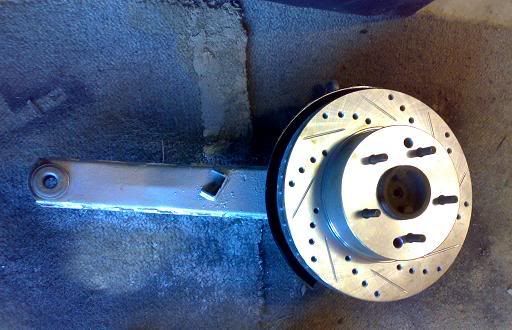
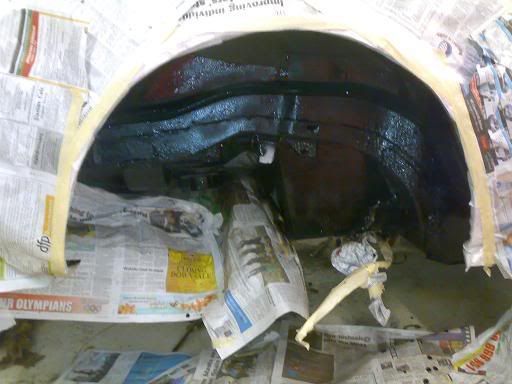
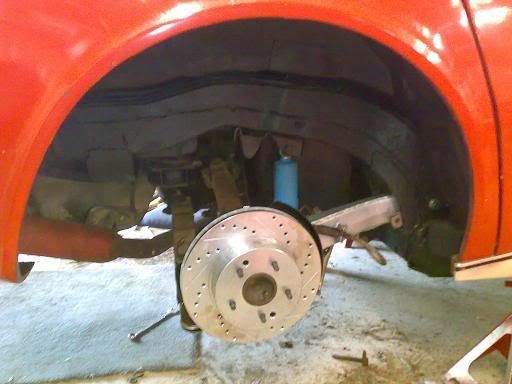
Heres a couple of pics:
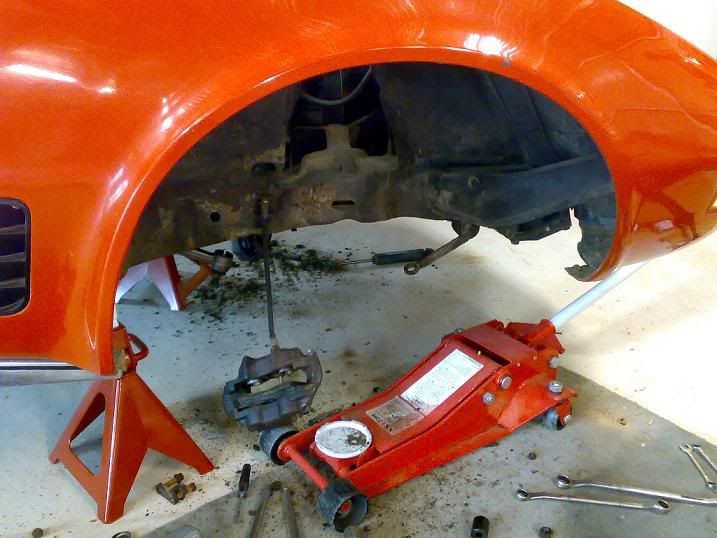
Old caliper:
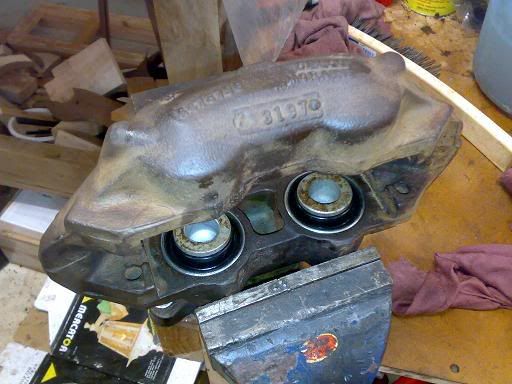
Cleaned back:
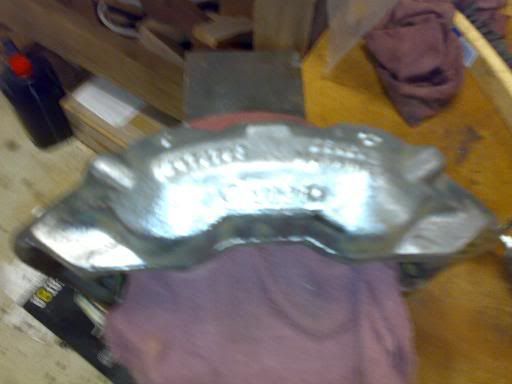
Before:
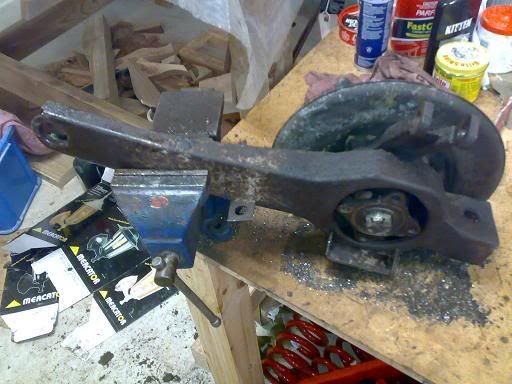
After:
As far as scratching pads, you wont. They are tough. You can lever them with a screw driver if you want and wont damage them.
Rust removal on calipers without special tools you can simply add a wire brush to a drill and grind the dust off. Might take you 15 minutes to get a caliper from rust to looking like new. Then paint them up with caliper paint of your color choice. Don't use normal paint as caliper paint is heat resistant.
Metho = Methylated Spirits and you should be able to get it from and hardware or Supermarket.
The Grease is special as it will not eat away your rubber like normal grease will.
Rebuilding Corvette Suspension is a BIG job. I've just finished rebuilding a 70. Front and rear. Toook me weeks (I only get very limited time due to work and other commitments)
Heres a couple of pics:
Old caliper:
Cleaned back:
Before:
After:
Thread Starter
Drifting
Joined: Mar 2008
Posts: 1,900
Likes: 3
From: Nixa Missouri
 This is the before pic if the rotor before I used the rust remover and its the left rotor but the pic above is the right rotor after I finished it.
Demonx, Thanks for the pictures you sent and for all the advice. Your project is a big one and is turning out very nice.
I really like your T/As and the rotors. How much time (being patient) am I looking at when rebuilding one caliper, cause I'm like you, I get to work on this car based around time windows. So I'm thinking if everything were to break apart fine and I have all the parts I could do all the calipers in a couple of days, of course if all goes well.
Thanks again.
Corvette Stories
The Best of Corvette for Corvette Enthusiasts

Top 10 Most Expensive Corvettes Ever Sold on Bring A Trailer
Brett Foote
10 Things Every Corvette Owner Needs (2026 Edition)
Michael S. Palmer
8 Most "Only Corvette Owners Understand" Quirks and Problems
Pouria Savadkouei
10 Reasons the C6 Z06 is Still A Performance Benchmark After 20 Years
Joe Kucinski
How Much Horsepower Every Corvette Engine "LOST" in 1972
Joe Kucinski
Top 10 DOs and DON'Ts for Protecting Your Convertible Top!
Michael S. Palmer
Top 10 Most Explosive Corvettes Ever Made: Power-to-Weight Ratio Ranked!
Joe Kucinski
150 hp to 1,250 hp: Every Corvette Generation Compared by the Specs That Matter
Joe Kucinski
8 Coolest Corvette Pace Cars (and Replicas) of All Time
Verdad Gallardo
Racer
Joined: Oct 2006
Posts: 488
Likes: 0
From: Australia Victoria
Originally Posted by GPGG70
How much time (being patient) am I looking at when rebuilding one caliper,
After you've done one, the rest will just flow. It also lets you know if they need to be re-sleeved. If there are grooves etc, take them to a joint that can re-sleeve them.
Racer
Joined: Oct 2006
Posts: 488
Likes: 0
From: Australia Victoria
To remove the seals, just hammer a screw driver under the edge of the metal lip and lever them out. You can hit hard as you won't damage anything underneath and you are replacing the seals. They should come out relatively easy.

Heres the pic I was talking about. Simply put the caliper in a vice - insert the piston (don't forget the spring!) carefully edging the rubber in (remember correct grease) and then push the metal seal down with your fingers.
Lay a bar across the top like pictured and hit it a couple times with a hammer sliding left and right. Hit on both sides and it'll seat well without damaging the seal.
Heres the pic I was talking about. Simply put the caliper in a vice - insert the piston (don't forget the spring!) carefully edging the rubber in (remember correct grease) and then push the metal seal down with your fingers.
Lay a bar across the top like pictured and hit it a couple times with a hammer sliding left and right. Hit on both sides and it'll seat well without damaging the seal.
Last edited by demonx; Aug 25, 2008 at 05:16 AM.
Burning Brakes

Joined: May 2005
Posts: 1,145
Likes: 5
From: South of London, Engerland
I rebuilt my brake calipers as part of my body-off.
IMHO if you're replacing piston seals then you may as well split the calipers into two halves to make it easier when installing the seals and dust boots. VBandP replacement seal kits come with the little O rings that you put between the caliper halves so you'd have everything you need to do this fully. I'm glad I split mine - the O rings were hard and not sealing very well.
Splitting a caliper in half on my body-off thread:
http://www.corvetteclub.org.uk/viewt...tart=140#37817
Replacing caliper piston seals step-by-step:
http://www.corvetteclub.org.uk/viewt...tart=210#44407
Reassembling caliper:
http://www.corvetteclub.org.uk/viewt...tart=230#45105
Maybe that helps.

IMHO if you're replacing piston seals then you may as well split the calipers into two halves to make it easier when installing the seals and dust boots. VBandP replacement seal kits come with the little O rings that you put between the caliper halves so you'd have everything you need to do this fully. I'm glad I split mine - the O rings were hard and not sealing very well.
Splitting a caliper in half on my body-off thread:
http://www.corvetteclub.org.uk/viewt...tart=140#37817
Replacing caliper piston seals step-by-step:
http://www.corvetteclub.org.uk/viewt...tart=210#44407
Reassembling caliper:
http://www.corvetteclub.org.uk/viewt...tart=230#45105
Maybe that helps.
Thread Starter
Drifting
Joined: Mar 2008
Posts: 1,900
Likes: 3
From: Nixa Missouri
I rebuilt my brake calipers as part of my body-off.
IMHO if you're replacing piston seals then you may as well split the calipers into two halves to make it easier when installing the seals and dust boots. VBandP replacement seal kits come with the little O rings that you put between the caliper halves so you'd have everything you need to do this fully. I'm glad I split mine - the O rings were hard and not sealing very well.
Splitting a caliper in half on my body-off thread:
http://www.corvetteclub.org.uk/viewt...tart=140#37817
Replacing caliper piston seals step-by-step:
http://www.corvetteclub.org.uk/viewt...tart=210#44407
Reassembling caliper:
http://www.corvetteclub.org.uk/viewt...tart=230#45105
Maybe that helps.
IMHO if you're replacing piston seals then you may as well split the calipers into two halves to make it easier when installing the seals and dust boots. VBandP replacement seal kits come with the little O rings that you put between the caliper halves so you'd have everything you need to do this fully. I'm glad I split mine - the O rings were hard and not sealing very well.
Splitting a caliper in half on my body-off thread:
http://www.corvetteclub.org.uk/viewt...tart=140#37817
Replacing caliper piston seals step-by-step:
http://www.corvetteclub.org.uk/viewt...tart=210#44407
Reassembling caliper:
http://www.corvetteclub.org.uk/viewt...tart=230#45105
Maybe that helps.