




solid lifter adjustment advise
Thread Starter
Racer

Joined: May 2008
Posts: 323
Likes: 0
From: ********** New York
 solid lifter adjustment advise
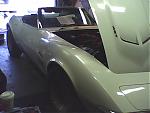
Okay 1st let me start by saying I've never done this on a car only on a harley. So I'm going to humble myself and ask is this something I should attempt myself or just let a real mechanic handle ? I found a garage thru a car club and a few mechanics that does probably 90% of the hotrod & high end engine builds for other shops and people in this county. So if this is something you guys think I shouldn't attempt myself how much doyou think I should belooking to pay for extensive tune up assuming this is what I need.
Tri-power carb tuning , Timing adjustment , Lifter adjustment ,
Last question if I'm going to bring it in for this tuning should I install the point conversion myself or leave it up to him if he feels it willup my performance. Cause I feel like I'm driving a mid 80's 350 Z-28 instead of a 69 427ci 435 hp vette.
If you say I should do it myself can someone give me a break down on how to do it or book toshow me.
PS I dont know exactly what current cam & lifters is in the motor now. I believe it is original
Tri-power carb tuning , Timing adjustment , Lifter adjustment ,
Last question if I'm going to bring it in for this tuning should I install the point conversion myself or leave it up to him if he feels it willup my performance. Cause I feel like I'm driving a mid 80's 350 Z-28 instead of a 69 427ci 435 hp vette.
If you say I should do it myself can someone give me a break down on how to do it or book toshow me.
PS I dont know exactly what current cam & lifters is in the motor now. I believe it is original
Last edited by BB427; Aug 25, 2008 at 07:40 PM.

Race Director


Joined: Dec 1999
Posts: 19,610
Likes: 778
From: Forked River NJ
If it is an original cam it should be a solid lifter cam. I would not trust anyone but myself to do it but that is me. I have done this so many times I can do it in my sleep. Not very difficult but take your time and check it twice. There are books on this and some good some not to accurate on solid lifter adjustment. You need to find out if the cam is the original or original specs to find out what the clearance is supposed to be. You are kind of shooting in the dark without the specs. Some cams run a tight lash of around .014 to .016 some run a loose spec of around .026 to .028.

Le Mans Master


Joined: Oct 2006
Posts: 7,123
Likes: 433
From: Gladstone MO
C3 of Year Finalist (appearance mods) 2019
I'm with Gordonm on this one. Not difficult at all. The most time consuming part is getting the covers off.
Hook up a remote start button unless you have some help to bump the engine over-
1. Engine fully warmed up, shut off
2. Set intakes as exhaust opens
3. Set exhaust as intake closes
4. Put cover back on that side
5. warm it up again and repeat
I use .030 all across on the valves, your cam specs may be different- my cam calls for .026/ .028 I think- I just use .030 and set them a little tight.
When you adjust, look for anything that dosen't seem right- the stock rocker nuts lose the tension in the crimp- if one seems easy to turn, replace it. (or take it off and tap it with a hammer to increase the crimp)
Hook up a remote start button unless you have some help to bump the engine over-
1. Engine fully warmed up, shut off
2. Set intakes as exhaust opens
3. Set exhaust as intake closes
4. Put cover back on that side
5. warm it up again and repeat
I use .030 all across on the valves, your cam specs may be different- my cam calls for .026/ .028 I think- I just use .030 and set them a little tight.
When you adjust, look for anything that dosen't seem right- the stock rocker nuts lose the tension in the crimp- if one seems easy to turn, replace it. (or take it off and tap it with a hammer to increase the crimp)
Thread Starter
Racer
Joined: May 2008
Posts: 323
Likes: 0
From: ********** New York
If it is an original cam it should be a solid lifter cam. I would not trust anyone but myself to do it but that is me. I have done this so many times I can do it in my sleep. Not very difficult but take your time and check it twice. There are books on this and some good some not to accurate on solid lifter adjustment. You need to find out if the cam is the original or original specs to find out what the clearance is supposed to be. You are kind of shooting in the dark without the specs. Some cams run a tight lash of around .014 to .016 some run a loose spec of around .026 to .028.

Le Mans Master

Joined: Jan 2006
Posts: 8,319
Likes: 7
From: Wilmington DE, Drive it like you stole it, 68 327 4 speed coupe
advice above will get you there


Drifting


Joined: Jan 2006
Posts: 1,832
Likes: 38
From: Cedar,BC
I use a slight variation on TimAT's method.Do all the intakes first in the order of the firing order,then all the exhausts.A lot less turning of the engine,nice if you are using a breker bar to spin it!Also the exhaust valves are usually slightly looser(.002 most of the time) because they get hotter and expand slightly more.I don't bother repeating the process,you may want to the first few times to double check your work.

Race Director
Joined: Dec 1999
Posts: 11,095
Likes: 990
From: Sierra Foothills CA
Good advise already posted here. I'll add one thing- once you get them properly adjusted hot let the engine cool off completely, as in overnight. Then measure clearance cold and write down the numbers. You can now adjust them cold in the future, which keeps the discomfort/burn factor away and also eliminates the need for another warmup between doing each side.
As for how to determine if you have the factory cam, the only way I know of is to open up the front of the motor & look at the stampings on the cam.
As for how to determine if you have the factory cam, the only way I know of is to open up the front of the motor & look at the stampings on the cam.
Last edited by Les; Aug 26, 2008 at 01:15 PM.

Race Director
Joined: Nov 2002
Posts: 12,142
Likes: 54
From: Taylor Michigan
I'm with Gordonm on this one. Not difficult at all. The most time consuming part is getting the covers off.
Hook up a remote start button unless you have some help to bump the engine over-
1. Engine fully warmed up, shut off
2. Set intakes as exhaust opens
3. Set exhaust as intake closes
4. Put cover back on that side
5. warm it up again and repeat
I use .030 all across on the valves, your cam specs may be different- my cam calls for .026/ .028 I think- I just use .030 and set them a little tight.
When you adjust, look for anything that dosen't seem right- the stock rocker nuts lose the tension in the crimp- if one seems easy to turn, replace it. (or take it off and tap it with a hammer to increase the crimp)
Hook up a remote start button unless you have some help to bump the engine over-
1. Engine fully warmed up, shut off
2. Set intakes as exhaust opens
3. Set exhaust as intake closes
4. Put cover back on that side
5. warm it up again and repeat
I use .030 all across on the valves, your cam specs may be different- my cam calls for .026/ .028 I think- I just use .030 and set them a little tight.
When you adjust, look for anything that dosen't seem right- the stock rocker nuts lose the tension in the crimp- if one seems easy to turn, replace it. (or take it off and tap it with a hammer to increase the crimp)
 Cant go wrong,good advice on the procedure and the simplest way......
 :
:I would almost guarantee that it`s the correct solid cam. NO one should have or would have screwed up a 435. The stock cam is factory set at 20-20 both intake and exhaust with 519 lift at zero lash. It`s basically L72 427 cam specs. You can run it with more lash as many do. I have some engines at 24-26. It`s merely a tuners choice and with the correct gas the total spark lead is 37. BB Chevies like a lot of lead...

Corvette Stories
The Best of Corvette for Corvette Enthusiasts

Top 10 Most Explosive Corvettes Ever Made: Power-to-Weight Ratio Ranked!
Joe Kucinski
150 hp to 1,250 hp: Every Corvette Generation Compared by the Specs That Matter
Joe Kucinski
8 Coolest Corvette Pace Cars (and Replicas) of All Time
Verdad Gallardo
Top 10 Corvette Engines RANKED by Peak Torque (70+ Years of Muscle!)
Joe Kucinski
Corvette ZR1X Will Be Pacing the Indy 500, And Could Probably Race, Too!
Verdad Gallardo
Top 10 Corvettes Coming to Mecum Indy 2026!
Brett Foote
Top 10 C9 Corvette MUST-HAVES to Fix These C8 Generation Flaws!
Michael S. Palmer
10 Revolutionary 'Corvette Firsts' Most People Don't Know
Joe Kucinski
5 Reasons to Upgrade to an LS6-Powered Corvette; 5 Reasons to Stay LT2
Michael S. Palmer
Drifting
Joined: Sep 2006
Posts: 1,259
Likes: 2
From: MS
Still have to verify what cam is in there. Many LT-1 and other solid lifter engine owners had their cams
swapped to hydraulic because they were too lazy or afraid to tackle the lash adjustments. What is the
best way to know for sure? Measure the lift/duration and pull the intake to check the lifters?
All 68-72 cars had aluminum body mounts.
swapped to hydraulic because they were too lazy or afraid to tackle the lash adjustments. What is the
best way to know for sure? Measure the lift/duration and pull the intake to check the lifters?
All 68-72 cars had aluminum body mounts.
Thread Starter
Racer
Joined: May 2008
Posts: 323
Likes: 0
From: ********** New York
Okay so I now know 1 I was a A-hole to switch to GM rubber bodymount and 2 that I definately have a solid set up cause as my boy brought up to me today in his words " Don't think hydraulic would make a solid lifter noise do you now fix it and beat it "
I'm going to attemp this this weekend let you know how it works out
I'm going to attemp this this weekend let you know how it works out
Thread Starter
Racer
Joined: May 2008
Posts: 323
Likes: 0
From: ********** New York

Advanced
Joined: May 2006
Posts: 68
Likes: 4
Have not seen anything stating 435 HP tripowers (remember L88's were also rated @ 435 HP) required Transistor ignition. The cam should be a solid, some books show it @ .500 lift, some .520. There are some tricks you can do without disassembly to tell if it's mechanical and what the lift is. Put a piston on TDC. Crank one of the rocker nuts down slowly while monitoring the same valve spring with a dial indicator. Once you remove the lash, if the valve starts moving, it's mechanical. You should get a couple turns before valve movement if it's hydraulic (the lifter will bleed down). To determine the lift: again, take the lash out of a valve while on TDC. Monitor that valve with a dial indicator (indicator must measure >1/2" stroke). Zero indicator, rotate the motor slowly while monitoring dial indicator. Determine how far the valve opened. That is the lift.
Converting from points to electronic is a no-brainer, buiy one with an adjustable rev limiter. I think mine was a Crane.
All that being said, if you're saying this thing is a dog, you've got problems (unless you've got a highway gear in it). I had a Nova with a 396/375. That is basically the same design as the your 435 except for the carbs and displacement. All forged, 11-1, 4 bolt mains, same cam, big port heads. I couldn't hold it down. It screamed compared to my '69 vette 427/390, and every 350 HP 396 I blew away by 8 cars.
I would go thru it myself. Adjust valves, do the ignition upgrade, etc. and see whre you end up with performance. Carbs I'm not sure about. Most tri's I've seen (rochesters), the outside carbs are fuel dumps with no mixture screws. If teh holleys have mixture screws it is really just a matter of going around the screws several times adjusting to maximum manifold vacuum. They are vacuum secondaries though, and if they have the wrong springs you will get a severe bog problem, or they might not be opening at all.
Good luck, Dan
Converting from points to electronic is a no-brainer, buiy one with an adjustable rev limiter. I think mine was a Crane.
All that being said, if you're saying this thing is a dog, you've got problems (unless you've got a highway gear in it). I had a Nova with a 396/375. That is basically the same design as the your 435 except for the carbs and displacement. All forged, 11-1, 4 bolt mains, same cam, big port heads. I couldn't hold it down. It screamed compared to my '69 vette 427/390, and every 350 HP 396 I blew away by 8 cars.
I would go thru it myself. Adjust valves, do the ignition upgrade, etc. and see whre you end up with performance. Carbs I'm not sure about. Most tri's I've seen (rochesters), the outside carbs are fuel dumps with no mixture screws. If teh holleys have mixture screws it is really just a matter of going around the screws several times adjusting to maximum manifold vacuum. They are vacuum secondaries though, and if they have the wrong springs you will get a severe bog problem, or they might not be opening at all.
Good luck, Dan
Drifting
Joined: Sep 2006
Posts: 1,259
Likes: 2
From: MS
Good post Dan, but all solid lifter C3's except one did either require TI or had it as standard equipment,
the 72 LT1 being the lone solid lifter C3 delivered with points. Oh and the L88/ZL1 was actually rated at 430 hp.
the 72 LT1 being the lone solid lifter C3 delivered with points. Oh and the L88/ZL1 was actually rated at 430 hp.

Team Owner

Joined: Apr 1999
Posts: 21,953
Likes: 1,445
From: Reno Nevada
2024 C3 of the Year Finalist- Modified
The best thing to do is get a magnetic base flexible arm dial indicator. They are a couple hundred bucks, but worth every penny of it.
Forget about iffy settings from using a feeler gauge. Once you do the valves 3-4 times you be the man doing them for everybody and pay for your $200 dial indicator
Forget about iffy settings from using a feeler gauge. Once you do the valves 3-4 times you be the man doing them for everybody and pay for your $200 dial indicator
Thread Starter
Racer
Joined: May 2008
Posts: 323
Likes: 0
From: ********** New York
Race Director
Joined: Dec 1999
Posts: 19,610
Likes: 778
From: Forked River NJ
I think he is saying that if it has points and a condenser that it is not a 435 HP car. Also it has to have the correct redline which yours does. Does yours have points or is it a TI ignition. Also many guys took out the TI ignition when it broke and put in points but the mounting of the TI ignition module should be there.
Thread Starter
Racer
Joined: May 2008
Posts: 323
Likes: 0
From: ********** New York
I think he is saying that if it has points and a condenser that it is not a 435 HP car. Also it has to have the correct redline which yours does. Does yours have points or is it a TI ignition. Also many guys took out the TI ignition when it broke and put in points but the mounting of the TI ignition module should be there.
Heres a pic of my distributor cap off:
http://i39.photobucket.com/albums/e1...utorcapoff.jpg
Race Director
Joined: Dec 1999
Posts: 19,610
Likes: 778
From: Forked River NJ
Understood I just assume that after almost 40 yr I'm sure previous of all of our vehicals have made changes over the years from , points , distributors , cams I mean .I look at it as it would be a lot of trouble to change the everything in the car>"tach , console, Heavy duty BW clutch< [which I took the original 1 out myself] , The heads , 3x2 intake , Block and all the other stuff that comes with the 435. Just to make it look like it was a 435 car . I guess anything is possible I mean when the original motor spun a bearing it could have damaged the cam and distributor gear and the own could have bought junk yard parts. The block is a C replacement . I'm not that guy that would argue it is but I would like to know.IS THERE ANY OTHER WAY I could find out ?
Heres a pic of my distributor cap off:
http://i39.photobucket.com/albums/e1...utorcapoff.jpg
Heres a pic of my distributor cap off:
http://i39.photobucket.com/albums/e1...utorcapoff.jpg

That is definitly points in there and not a Ti but it could have been changed like you said.
Thread Starter
Racer
Joined: May 2008
Posts: 323
Likes: 0
From: ********** New York
So does this mean the car was not a BB 435 ? How else could I tell ? Not that I we ever plan to sell it but I was planing to eventually as soon as I get some extra coin to install a MSD Billet distributor < is this Bad move or is a HEI good enough for $40 hehehe ?