




Please, some L88 information?
Advanced

Joined: Feb 2008
Posts: 88
Likes: 0
From: PORT ST LUCIE FLORIDA

A guy came to my house to buy some parts, in a big Chevy dually truck with a 454. Sounded like a top fuel car, and he said he had close to 15.0:1 compression and ran on E85. Think that's true or was he talking out of his butt? Sure smelled like E85 from the exhaust and it didn't sound normal.
Last edited by tjl82; Nov 26, 2008 at 08:34 PM.

Drifting

Joined: Sep 2006
Posts: 1,259
Likes: 2
From: MS
Going off memory but I remember an article where an NOS ZL1 was built and tested and in 100% stock trim with only the addition of open headers, it made 523 gross flywheel hp. With tuning and cylinder head porting obviously there would be more. The factory 430 hp rating was always laughed at but in the test if I remember correctly, this engine with stock exhaust manifolds in place peaked at exactly 430 hp at 5200 rpm just like Chevy said it did. This engine used the second design open chamber heads and L88/ZL1 cam so numbers should be correct for the mid to late 69 L88.
Team Owner


Joined: Apr 2002
Posts: 62,198
Likes: 1
From: All humans are vermin in the eyes of Guru VA
Cruise-In IV Veteran
Cruise-In V Veteran
Here is what I am thinking for a "modern" L88:
Dart Pro 1 310cc heads with the larger valve
the old weiand Team G
1050 Dominator
headers
Scat 5140 crankshart
SRP makes some open chamber 12:1 pistons (should be fine check out the cam)
Scat 6.135" rods
a titan or moroso georotor oil pump
roller rockers
crane 138641 262/270 at .05 solid street roller camshaft (L88 solid cam specs were 264/269)
should be about there.
Dart Pro 1 310cc heads with the larger valve
the old weiand Team G
1050 Dominator
headers
Scat 5140 crankshart
SRP makes some open chamber 12:1 pistons (should be fine check out the cam)
Scat 6.135" rods
a titan or moroso georotor oil pump
roller rockers
crane 138641 262/270 at .05 solid street roller camshaft (L88 solid cam specs were 264/269)
should be about there.
Thread Starter
Team Owner
Joined: Aug 2006
Posts: 24,125
Likes: 15
From: Columbia Missouri
Here is what I am thinking for a "modern" L88:
Dart Pro 1 310cc heads with the larger valve
the old weiand Team G
1050 Dominator
headers
Scat 5140 crankshart
SRP makes some open chamber 12:1 pistons (should be fine check out the cam)
Scat 6.135" rods
a titan or moroso georotor oil pump
roller rockers
crane 138641 262/270 at .05 solid street roller camshaft (L88 solid cam specs were 264/269)
should be about there.
Dart Pro 1 310cc heads with the larger valve
the old weiand Team G
1050 Dominator
headers
Scat 5140 crankshart
SRP makes some open chamber 12:1 pistons (should be fine check out the cam)
Scat 6.135" rods
a titan or moroso georotor oil pump
roller rockers
crane 138641 262/270 at .05 solid street roller camshaft (L88 solid cam specs were 264/269)
should be about there.
That's a very cool list. Maybe I'll sort out some part numbers to go along with it, generate kind of a parts list, and see what a vague cost would be for just parts.

Team Owner


Joined: Apr 1999
Posts: 21,953
Likes: 1,445
From: Reno Nevada
2024 C3 of the Year Finalist- Modified
I would like to see someone build an clone L88 to exact factory specs and put it on an engine dyno and see what HP it actually made, someone has probably done it but I have never seen the numbers, the myth goes on.
Other than that why bother, not pump gas friendly compression ration and you can make a ton more HP these days with modern parts.
Other than that why bother, not pump gas friendly compression ration and you can make a ton more HP these days with modern parts.
 It is just an old piece of junk that sounded like a drag car with a barely streetable lumpy cam. any body with any smarts would not recreate 40 year old junk that only produces something over 500 HP. It is only 427 ci Your 454 through 509's would just leave it in the dust.
You bring your L88 against my small block 434 and we will have a one mile drag race and see who wins.

Drifting


Joined: Jan 2006
Posts: 1,540
Likes: 12
From: TX
It is just an old piece of junk that sounded like a drag car with a barely streetable lumpy cam. any body with any smarts would not recreate 40 year old junk that only produces something over 500 HP. It is only 427 ci Your 454 through 509's would just leave it in the dust.You bring your L88 against my small block 434 and we will have a one mile drag race and see who wins.
That piece of junk propelled the lemans corvette to 190 mph. I guess some comments are just flat uneducated.
Drifting
Joined: Jan 2006
Posts: 1,540
Likes: 12
From: TX
Why mess with building a modern day L88? That gets done by the thousands these days. The original engine
is an icon that racers still use today. It made history just like the L88 corvette did. A duntov idea that rocked the world for years.
is an icon that racers still use today. It made history just like the L88 corvette did. A duntov idea that rocked the world for years.
Thread Starter
Team Owner
Joined: Aug 2006
Posts: 24,125
Likes: 15
From: Columbia Missouri
I guess I'm just curious. I was not around when engines like the L88 were in production or popular and I just can't get an understanding of them like the people that got to experience them. There are a lot of engines I would like to someday build just to experience them. I'd love to build an L88 just because of the reputation though it won't be for a long time.
Corvette Stories
The Best of Corvette for Corvette Enthusiasts

Top 10 Most Explosive Corvettes Ever Made: Power-to-Weight Ratio Ranked!
Joe Kucinski
150 hp to 1,250 hp: Every Corvette Generation Compared by the Specs That Matter
Joe Kucinski
8 Coolest Corvette Pace Cars (and Replicas) of All Time
Verdad Gallardo
Top 10 Corvette Engines RANKED by Peak Torque (70+ Years of Muscle!)
Joe Kucinski
Corvette ZR1X Will Be Pacing the Indy 500, And Could Probably Race, Too!
Verdad Gallardo
Top 10 Corvettes Coming to Mecum Indy 2026!
Brett Foote
Top 10 C9 Corvette MUST-HAVES to Fix These C8 Generation Flaws!
Michael S. Palmer
10 Revolutionary 'Corvette Firsts' Most People Don't Know
Joe Kucinski
5 Reasons to Upgrade to an LS6-Powered Corvette; 5 Reasons to Stay LT2
Michael S. Palmer
Drifting

Joined: Apr 2007
Posts: 1,892
Likes: 3
From: Springfield Illinois
It is just an old piece of junk that sounded like a drag car with a barely streetable lumpy cam. any body with any smarts would not recreate 40 year old junk that only produces something over 500 HP. It is only 427 ci Your 454 through 509's would just leave it in the dust.You bring your L88 against my small block 434 and we will have a one mile drag race and see who wins.
Yager's red L88 was clocked going 212 mph at LeMans. I believe that happened in '71 but i could be wrong.
Team Owner
Joined: Apr 1999
Posts: 21,953
Likes: 1,445
From: Reno Nevada
2024 C3 of the Year Finalist- Modified
The problem with all the higher HP factory cars of the 60's - early 70's was metal technology. The valve springs back then were one of the limitations. So these off road factory cams were limited to low lift and durations that really did not make them functional.
I've looked at the old factory mechanical flat tappet cams and the lobes are wimpy compared to modern roller profiles. The older cams were also ground on very narrow lobe centers like 104 and 106 degrees giving them zero power at lower rpm and a very lumpy sound along with a very narrow peaky power bands. When we build these historic small and big block motors we have to use mech. flat tappet cams. But we use modern thinking and springs so the motors put out much more power than the originals could have only dreamed about.
everything about these modern motors make a real 302, LT1, L88 look like old farmer tractors in comparison. Modern forged cranks, rod, pistons. The modern valves now are nearly indestructible compared to 40 year old metal technology.
All our motors make superior power than they did back in the day when they were new


Racer
Joined: Jul 2006
Posts: 315
Likes: 0
Well I'm educated more than most people when it comes to old racing cars that have American v-8's in them. I am a racing mechanic on exotic historic race cars. We have quite a few in the shop and when we travel to the races we often get pitted right next to real historic racing Vettes. We only have a couple of Vettes and European cars with American v-8s, but my favorites are the big block Can - Am cars
The problem with all the higher HP factory cars of the 60's - early 70's was metal technology. The valve springs back then were one of the limitations. So these off road factory cams were limited to low lift and durations that really did not make them functional.
I've looked at the old factory mechanical flat tappet cams and the lobes are wimpy compared to modern roller profiles. The older cams were also ground on very narrow lobe centers like 104 and 106 degrees giving them zero power at lower rpm and a very lumpy sound along with a very narrow peaky power bands. When we build these historic small and big block motors we have to use mech. flat tappet cams. But we use modern thinking and springs so the motors put out much more power than the originals could have only dreamed about.
everything about these modern motors make a real 302, LT1, L88 look like old farmer tractors in comparison. Modern forged cranks, rod, pistons. The modern valves now are nearly indestructible compared to 40 year old metal technology.
All our motors make superior power than they did back in the day when they were new
The problem with all the higher HP factory cars of the 60's - early 70's was metal technology. The valve springs back then were one of the limitations. So these off road factory cams were limited to low lift and durations that really did not make them functional.
I've looked at the old factory mechanical flat tappet cams and the lobes are wimpy compared to modern roller profiles. The older cams were also ground on very narrow lobe centers like 104 and 106 degrees giving them zero power at lower rpm and a very lumpy sound along with a very narrow peaky power bands. When we build these historic small and big block motors we have to use mech. flat tappet cams. But we use modern thinking and springs so the motors put out much more power than the originals could have only dreamed about.
everything about these modern motors make a real 302, LT1, L88 look like old farmer tractors in comparison. Modern forged cranks, rod, pistons. The modern valves now are nearly indestructible compared to 40 year old metal technology.
All our motors make superior power than they did back in the day when they were new
So "g", what you're saying is that there has been some technical advancements in engine technology (material science) in the last 60yrs. I would agree with that. It's not even debatable. Heck, just look at the computer that was in the apollo that went to the moon in the 60's. You can get that type of computing power today in a calulator that's included with your mcdonalds happy meal for $2.00. And, that includes the drink and a cookie!
The thing that I like about the L-88 is that it went 200mph in the early 70's which was only 20 years or so after the end of the war. That's when most people rarely had anything but "guts". 200 in a corvette - that took guts. 200mph in a corvette in 68 must have been like standing on top of a flag pole at the Stratosphere in Vegas in a 50mph crosswind at night.
If you could show me a motor today that could do 200mph and you could buy it in a street car from a dealer, for 25% more money than the barebones stocker ... that would worth a drive down to the dealer. The miracle of modern GM technology, the Z06 had to steal the Z06 name from the 63 car. It couldn't generate the excitement on its own merit. So, all the material science in the world could not generate excitement. People just wait for the next model year. Yawn!
What you're talking about today is money is no object engine building game. That's a different game than Chevy played in the early 70's.
Personally, if there was an L-88 at a show that was going to be started up at noon and a modern engine that would be started at noon, I'd be in front of the L-88. That thing was cool.

Le Mans Master


Joined: Jun 2004
Posts: 6,231
Likes: 65
From: Seattle WA
St. Jude Donor '14
No question that engine technology has advanced - the LS6 in my '03 Z06 makes 405HP at the flywheel...and idles nice, has A/C and gets 28 MPG on the highway ;-)
This doesn't invalidate at all the excitement and fun of an engine "the way it was". I've had a chance to drive some 60's iron and while there's no pushback that today's engines and cars are better in every way...there is something very real about an LT-1 or L-88.
I think we can agree that there's room for both the old, and the new. Saying that nobody "with smarts" would build a period-correct engine just to enjoy a piece of history is kinda
This doesn't invalidate at all the excitement and fun of an engine "the way it was". I've had a chance to drive some 60's iron and while there's no pushback that today's engines and cars are better in every way...there is something very real about an LT-1 or L-88.
I think we can agree that there's room for both the old, and the new. Saying that nobody "with smarts" would build a period-correct engine just to enjoy a piece of history is kinda
Last edited by billla; Nov 27, 2008 at 05:32 PM.

Race Director

Joined: May 2005
Posts: 10,674
Likes: 122
From: Millington Illinois
St. Jude Donor '08-'09
Here is an interesting link. Mid 10's in the quarter on G70 bias ply tires.
http://www.fastraces.org/fastraces/f...7!OpenDocument
http://www.fastraces.org/fastraces/f...7!OpenDocument
Team Owner
Joined: Apr 1999
Posts: 21,953
Likes: 1,445
From: Reno Nevada
2024 C3 of the Year Finalist- Modified
Mako the article tells you allot. Like under the pure stock class with minimal cheating from how it was 39 years ago it was only able to break into the 11.s with a 11.99
Anybody with some thought can do 11.70's with a modern 383. The this Vette owner said screw it and put in modern components and turned it into a bad *** 10.50 car.
Anybody with some thought can do 11.70's with a modern 383. The this Vette owner said screw it and put in modern components and turned it into a bad *** 10.50 car.

Instructor
Joined: Feb 2005
Posts: 160
Likes: 3
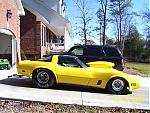
These heads were used on the L-88 and L-89 427 engines.
What is the dates on the heads?
Early dates are for 1967 and later dates for 1968 builds.
Thanks,
Drew Papsun
Team Owner
Joined: Apr 1999
Posts: 21,953
Likes: 1,445
From: Reno Nevada
2024 C3 of the Year Finalist- Modified
The thing that I like about the L-88 is that it went 200mph in the early 70's which was only 20 years or so after the end of the war. That's when most people rarely had anything but "guts". 200 in a corvette - that took guts. 200mph in a corvette in 68 must have been like standing on top of a flag pole at the Stratosphere in Vegas in a 50mph crosswind at night.
If you could show me a motor today that could do 200mph and you could buy it in a street car from a dealer, for 25% more money than the barebones stocker ... that would worth a drive down to the dealer. .
If you could show me a motor today that could do 200mph and you could buy it in a street car from a dealer, for 25% more money than the barebones stocker ... that would worth a drive down to the dealer. .
Back in the day of factory racing they had to sell a certain amount of "Stock cars" to the public to get them in as legal production vehicles.
I think the 2009 ZR1 Vette might be the 200 mph car waiting for you at the dealer for just a little more than the base model
Last edited by gkull; Nov 28, 2008 at 09:18 AM.
Team Owner
Joined: Apr 1999
Posts: 21,953
Likes: 1,445
From: Reno Nevada
2024 C3 of the Year Finalist- Modified
Guru - Vettes really have not changed that much in price in relations to wages. I've always had pretty good jobs. I still have the window sticker from my 79 Vette with nearly every optioned L-82 The sticker price is $12, 458 MSRP.
Well that in 1979 was a years worth of pay for your above average worker. Well now in 2008 I work about a year to buy the most expensive vette on the lot. Nothing has changed
I looked up Vette racing. Lots of myths out there.
http://blogs.vetteweb.com/6255217/mi...acy/index.html
Here is another blurb about John greenwood. Yenco and ZL-1 aluminum blocks are a far cry from L-88 in the show room
1973 was the last year that John Greenwood raced his Corvettes with the near-stock body panels. His paint scheme changed again, but that didn't change his winning ways!
He went on to develop even wider fender flares, cross-ram fuel injections for his 8 liter ZL-1 all aluminum engines, and ground effects for battleagainst Europe's newly dominating Porsches and BMW's.
We will have the complete story of John Greenwoods Wild Fendered Corvettes
in our Racing book which will be in print soon! So please check with us
periodically and we will post the information on this website!
Thanks John!
Well that in 1979 was a years worth of pay for your above average worker. Well now in 2008 I work about a year to buy the most expensive vette on the lot. Nothing has changed
I looked up Vette racing. Lots of myths out there.
http://blogs.vetteweb.com/6255217/mi...acy/index.html
Here is another blurb about John greenwood. Yenco and ZL-1 aluminum blocks are a far cry from L-88 in the show room
1973 was the last year that John Greenwood raced his Corvettes with the near-stock body panels. His paint scheme changed again, but that didn't change his winning ways!
He went on to develop even wider fender flares, cross-ram fuel injections for his 8 liter ZL-1 all aluminum engines, and ground effects for battleagainst Europe's newly dominating Porsches and BMW's.
We will have the complete story of John Greenwoods Wild Fendered Corvettes
in our Racing book which will be in print soon! So please check with us
periodically and we will post the information on this website!
Thanks John!
Team Owner
Joined: Apr 1999
Posts: 21,953
Likes: 1,445
From: Reno Nevada
2024 C3 of the Year Finalist- Modified
In The Beginning
As the horsepower and cubic inches race escalated in 1965, Zora Duntov knew that it would be only a matter of time before he had to place the Mark IV big block engine in his beloved Corvette. With the availability of the Cobra with either a street or full race version of Ford's 427 early in '65, the decision was made for the option of the big block Chevrolet engine for the Corvette.
The 396 cubic inch version was available with 425 horses in the Spring of '65. But in order for the Corvette to remain the King, a better power to weight ratio than the 427 racing Cobra was necessary.
After four years of chasing Cobras, Duntov and his crew knew that they had to do something to put the Corvette back in the winner's circle. Endurance racing was the pinnacle of sports car racing. More horse power was needed. In the fall of '65, a special high performance engine code named L-88 was developed for testing. The sights of Chevrolet were set on the 1967 24 Hours at Le Mans in France.
The Build
The Corvette L-88’s were created to blow the doors off everything else on the tracks of the USA and Europe. Duntov worked to produce as much power as possible within the limits of the existing Chevy 427 cubic inch V-8. Aluminum heads and a number of special, heavy-duty components were added to the engine. The L-88 was intended for racing only and prone to overheating at low speeds, but it was fully street legal and came with complete emissions equipment.
The L88 was so close to being an all-out race car that Duntov deliberately had the engine rated at 430 horsepower at a low 5,200 rpm. The true rating was 460 horsepower at 6,400 rpm. With open headers, 103 octane gas and a few other tricks, the power was over 500hp. All creature comforts were missing. There was no A/C, heater, defroster, radio, power steering, windows, carburetor choke, or radiator shroud. The J56 brake option was required with competition-only brake pads. Also mandatory was the F41 special suspension, and the M22 "rock crusher" four-speed transmission. To further discourage the L88’s use on the street, a warning sticker glued to the center console pointed out that the radically cammed, high compression engine required fuel with a research octane number of at least 103.
Using the same four-bolt main cast iron block as the street Corvette, special parts were added. The forged steel crank was cross-drilled and tuftrided. Rods were shot-peened and magnafluxed. The forged aluminum pistons had 12.5:1-compression. The L88 used a radical camshaft and solid lifters. A huge 830-cfm Holley four-barrel sat on top of an aluminum high-rise intake manifold, flowing to aluminum heads. The entire valvetrain was heavy duty. A K66 transistor ignition was used. Also there was an aluminum radiator and a special cold-air induction, hood scoop.
In 1966, Chevrolet Central Office authorized a C.O.P.O. (Central Office Production Order) Corvette to be built with the first factory 427 L-88 engine. The competition race package included J-56 brakes, 36 gallon fuel tank, F-41 suspension, prototype 2:73 G81 positraction rear axle, K66 transistorized ignition, M-22 transmission, off road exhaust, radio and heater delete, teakwood steering wheel, telescopic column and a special prototype cowl induction hood.
The car was released to Roger Penske who had worked in Chevrolet's race program since pre-Grand Sport Days. Penske wanted the racer prepared for the 24 hour Endurance Race at Daytona. He based on Zora Duntov's recommendation, hired Dick Guldstrand to assemble a team for the Daytona race.
Guldstrand picked up the red car at the St. Louis assembly plant. As some assembly line workers stood by, Dick fired up the car and found that it was content to idle at 1500 rpms. Since the car was prepared and not equipped with a heater, Guldstrand was given a blanket to keep from freezing for the drive to Roger Penske's shop.
Penske's Newtown Square Garage then prepared the car for the Daytona Race. After shoveling out of the snow, the team headed for the 1966 running of the 24 Hours of Daytona.
First Run, First Win
Roger was able to strike a one race only sponsorship deal with Sunoco, so with their help a good pit crew was available as well. Sunoco 260 was the fuel of choice. Penske assembled the experienced team of Dick Guldstand, Ben Moore and George Wintersteen for the race.
In practice laps the Factory L-88 was one of the quickest ever recorded at Daytona. Chevrolet sent a second engine to Traco to be prepared, and just before the race the fresh 540 h.p. motor was installed in the car.
The L-88 was placed under the microscope by Daytona inspectors. After the hassle of getting the Sunoco 260 into a track which was dominated by Pure Petroleum, the L-88 was finally on the track.
As the race progressed into the night, Wintersteen rear-ended a slower car tearing off half the front end. The damaged radiator was replaced with one from a Corvette located in the spectator's parking lot and Guldstrand had to drive his portion of the race with two flashlights taped to the fenders! Guldstand was able to continue the race by following the taillights of the Ferrari Team Car and by doing so broke the GT record. The L-88 finished 1st. in the GT Class and placed 11th overall in the race.
This accomplishment so impressed Sunoco that it extended it's sponsorship for another race .... The 12 Hours of Sebring! This L-88 was matched up with one of the last Grand Sports to make a two car team.
To impress Sunoco executives for future
sponsorships (Camaro and Lola), the original factory red L-88 was painted blue and yellow for practice for Sebring 1966. Sebring produced a 1st in class, and 9th overall, tying the record as the highest finish ever for a Corvette.
The #9 L-88 racer is nationally recognized as one of the of the most important Corvette's ever manufactured. This car represents the first acknowledged L-88 Corvette and the only "mid-year" to win first in class consecutively at Daytona and Sebring.
Corvette Repair Inc. of Valley Stream, NY performed a state of the art restoration for debut at the Monterey Historic Automobile Races in August 2002.
This car has a prototype hood. One of Three made by GM. The other two went on the Corvette Grand Sports. This one was installed at the factory.
L-88 Gains Speed
Duntov was so impressed that he gave the order for more L-88 Corvettes (425 HP) to be made available to "special friends" who would race this new motor on road racing courses and drag strips in 1966. He was hoping that all the bugs could be worked out before the L-88 became a regular production option (RPO) for the 1967 model year.
In Le Mans, the 1967 L88 debuted with Corvette legends Dick Guldstrand, Bob Bondurant and Dick Yenko sharing driving duties. The Dana Chevrolet, red, white and blue coupe blitzed the Mulsanne Straight at 171.5 mph. While leading the GT class, the L-88's engine ended short of the 24hr. halfway point with one of the stock wrist pins failing at the 11-1/2 hour mark, putting the L88 out of the race. Guldstrand commented: "Nobody was getting in your way... we showed them the short way around the track."
The L-88 proved to be a world class winner it's first year out and it would continue with it's winning ways for six more years. These mid year Corvettes had a top speed of about 172 MPH. Duntov knew that with the improving sports racers of the sixties, the huge improvements seen each season, created instant obsolescence for last year's winners.
When the Camaro Z/28 appeared for Trans Am series in the SCCA , the Corvette L-88's passed to George Wintersteen for Sebring 1967. George took a Second Place finish in GT behind a '67 Sunray DX Motorsports #8, red, white and blue, L-88 driven by Don Yenko and Dave Morgan who claimed First Place in GT class, and 10th overall, despite spending the final forty minutes of the race perched on a sand bank after brake failure going into the hairpin.
On March 9th, barely three weeks before Sebring, the Sunray #8, C.O.P.O. built, L88 Corvette, rolled out of the St. Louis Assembly Plant. The purchaser of this Corvette was the Motorsports Division of Sunray DX Oil Corporation. Road racer and Sebring competitor Dave Morgan traveled to the St. Louis Corvette Assembly plant to take immediate delivery of the car.
“They were just finishing up when I got there,” he recalls, “and I watched it fail the water test at the end of the assembly line. It was built several hundred pounds lighter than a regular Corvette and the leak test people didn’t realize all of the body putty and sealant had been left out to save weight!” Morgan drove the L-88 from St. Louis to Yenko’s facility in Canonsburg, Pennsylvania where it was immediately disassembled and race prepared.
Morgan campaigned the car solo for the remainder of 1967, taking home the SCCA mid-west division title for his efforts.
Besides its racing duties, in 1967 and continuing into ’68 the car was used extensively as a test bed for other Corvettes raced under the DX banner and for retail product development. Some of the more notable names who drove the Corvette in 1968 include Peter Revson, Pedro Rodriguez, Bob Bondurant, Dick Guldstrand, and Jerry Grant. The most significant outing for the car in that year came at the Daytona 24 Hour race, where Grant and Morgan co-drove to a first in class, tenth overall finish. The car ran perfectly at Daytona for the entire 24 hours and, assisted by special differential gearing provided by Chevrolet Engineering and centrifugal forces generated by the superspeedway’s severe banking, achieved speeds in excess of 194 mph.
From 1967 to 1968 only 100 L88 optioned Corvettes were built.
The L-88 needed to be improved and evolve. A sleeker, more aerodynamic body style would be needed for increased top speed and improved handling.
The 1968-1969 L-88's
Other modifications to the 1968 Corvette L-88 included a cold air intake hood, while the 1969 Corvette L-88’s added fender flares that came in the trunk rather than installed on the car. The four-wheel disc brakes were heavy-duty, along with a Muncie M-22 "Rock-Crusher" 4-speed transmission, heavy-duty suspension, and positraction. Radio and air conditioning were not available, but there was a heater/defroster.
Chevrolet approved the 1968-style L-88 for international competition with the Paris-based Federation International de l’Automobile from January 1, 1968. Duntov kept an L-88 Corvette test car at the GM proving grounds for several years, complete with fender flares, roll bar, and racing wheels. Chevrolet produced 80 Corvette L-88’s in 1968 and 116 in 1969.
The Racing Legends
The Sunray 1967 Corvette was sold and campaigned through 1971, by Bob Luebbe, whos greatest success was a class victory at the Watkins Glen Six-Hour enduro. A series of new owners raced it until 1987.
In the 1969 Sports Car Club of America’s (SCCA) American Road Race of Champions (ARRC) at Daytona, Jerry Thompson’s Corvette L-88 won the A-Production Class. John Greenwood won the A-Production ARRC at Road Atlanta in 1970 and 1971. Jerry Hansen won the Road Atlanta ARRC in 1972.
International GT racing in the USA got off to a good start when Dave Morgan/Hap Sharp drove to 6th overall and 1st in GT class at the 1968 Sebring 12 Hour race. At the 1969 Watkins Glen 6 Hour race, Dick Lang/Tony DeLorenzo finished 7th overall and first in GT. 1970 Daytona 24 Hour GT honors and a 6th place overall finish were taken by Thompson/John Mahler. DeLorenzo/Lang were 10th overall and 1st in GT at Sebring in 1970. DeLorenzo/Mahler/Don Yenko teamed up for 4th overall and 1st in GT at Daytona in 1971—best ever at Daytona for a Corvette. Greenwood/Dick Smothers finished 7th overall and won the GT class at Sebring in 1971.
Henri Greder drove his Corvette L-88 in the 1969 Tour de France to a 2nd place overall finish. From 1968 Corvettes raced without success at Le Mans till 1972, when Heinz/Johnson finished 15th. Greder/Marie-Claude "Beaumont" finished 12th at Le Mans in 1973, the best result ever for an L-88 at Le Mans. Greder/"Beaumont" would return to place 18th in 1974, the last finish by a Corvette at Le Mans for twenty years.
In 1972, Dave Heinz/Bob Johnson swept the GT class wins in Florida, scoring 8th overall at Daytona (a six hour race in ’72) and 4th overall (best ever) at a Sebring international race.
In 1973, Ron Grable/Greenwood/Mike Brockman finished 3rd overall at Sebring, which no longer had an international field of prototype racers competing, but had become part of the domestic International Motor Sports Association (IMSA) series. John Greenwood won at Elkhart Lake and Edmonton in the 1973 SCCA Trans-Am series.
Specs
0-60 mph: 4.2 seconds
1/4 mile: 11.0 seconds @130mph
Engine: 427 cubic inch displacement, aluminum heads
Rated horsepower: 430 @5200rpm
Actual horsepower: 550+ @6400rpm
Torque, foot-pounds: 485 @4000rpm
Carburetor: Holly 4-barrel, R3418
Fuel: 103 (Research Octane)
Transmissions:
M22 Close-Ratio 4-Speed M/T with fine spline input shaft, a large diameter ouput shaft and helix angled gear teeth.
1st: 2.20:1
2nd: 1.64:1
3rd: 1.27:1
4th: 1.00:1.
M40 Turbo-Hydramatic A/T with his 3-element hydraulic torque converter and compound planetary gear set (only available in '69/L88)
1st: 2.48:1
2nd: 1.48:1
3rd: 1.00:1.
Wheels: 7-inch Kelsey Hayes
Wheelbase: 98 inches
Weight: 2,776 pounds
1967-68
19437 Coupe $4,663.00
19467 Convertible $4,232.00
C48 Deletion Option (heater, defroster, radio)
F41 Special F/R HD Suspension (coil springs, shocks, 7 leaf rear spring). $36.90 (80)
G81 Positraction Rear Axle $46.35 (80)
J50 Vacuum Power Brakes $42.15 (80)
J56 Special Heavy Duty Brakes $342.30 with proportioning valve, HD brake shoes, and dual pin front brake calipers. (80)
K66 Transistor Ignition $73.75 (80)
L88 427ci, 430hp Engine $947.90 (80)
M22 Heavy Duty, close-ratio, 4-speed M/T $263.30 (80)
(No heater deletion credit in 1968.)
1969
19437 Coupe $4,781.00
19467 Convertible $4,438.00
F41 Special Front and Rear Suspension $36.90 (116)
G81 Positraction Rear Axle $46.35 (116)
J50 Vacuum Power Brakes $42.15 (116)
J56 Special Heavy Duty Brakes $384.45 (116)
K66 Transistor Ignition $81.10 (116)
L88 427ci, 430hp Engine $1,032.15 (116)
MA6 Heavy Duty, 10" Diameter Disc Clutch Assembly
M22 Heavy Duty, close-ratio, 4-speed manual trans. $290.40 (99)
M40 Turbo hydramatic automatic Trans. $221.80 (17)
MA6 10" diameter heavy duty disk clutch assembly and open chambered heads (avaialable mid-'69).
[Available for purchase, not factory installed, shipped in the car, were Kustom tubular headers and body fender flairs.]
Just in case the L88’s inability to cold start or its rough idle, ravenous fuel consumption, and total lack of creature comforts were not enough to dissuade street driving, the folks at Chevrolet devised a couple of more impediments. The first was the price. The engine alone added $947.90 to the bottom line and when all of the other, mandatory options were added in the price of the base car was increased by nearly 50%! If all else failed, the final deterrent was the L88’s advertised power rating. It was quoted at 430 horsepower, five fewer than the L71 427/435 engine that cost less than half as much. Why would any buyer in his right mind pay more than twice as much for an engine that made fewer ponies?
Restoration
Ref.
Ref.
Ref.
Ref.
Ref.
For more photos and information on the L-88's:
Corvette Thunder, 50 years of Corvette Racing 1953-2003, D. Friedman/Dick Guldstrand.
Sting Ray Color History 1963-1967
Corvette, America's Sports Car
Corvette, A Piece of the Action
Corvette, America's Sports Car
As the horsepower and cubic inches race escalated in 1965, Zora Duntov knew that it would be only a matter of time before he had to place the Mark IV big block engine in his beloved Corvette. With the availability of the Cobra with either a street or full race version of Ford's 427 early in '65, the decision was made for the option of the big block Chevrolet engine for the Corvette.
The 396 cubic inch version was available with 425 horses in the Spring of '65. But in order for the Corvette to remain the King, a better power to weight ratio than the 427 racing Cobra was necessary.
After four years of chasing Cobras, Duntov and his crew knew that they had to do something to put the Corvette back in the winner's circle. Endurance racing was the pinnacle of sports car racing. More horse power was needed. In the fall of '65, a special high performance engine code named L-88 was developed for testing. The sights of Chevrolet were set on the 1967 24 Hours at Le Mans in France.
The Build
The Corvette L-88’s were created to blow the doors off everything else on the tracks of the USA and Europe. Duntov worked to produce as much power as possible within the limits of the existing Chevy 427 cubic inch V-8. Aluminum heads and a number of special, heavy-duty components were added to the engine. The L-88 was intended for racing only and prone to overheating at low speeds, but it was fully street legal and came with complete emissions equipment.
The L88 was so close to being an all-out race car that Duntov deliberately had the engine rated at 430 horsepower at a low 5,200 rpm. The true rating was 460 horsepower at 6,400 rpm. With open headers, 103 octane gas and a few other tricks, the power was over 500hp. All creature comforts were missing. There was no A/C, heater, defroster, radio, power steering, windows, carburetor choke, or radiator shroud. The J56 brake option was required with competition-only brake pads. Also mandatory was the F41 special suspension, and the M22 "rock crusher" four-speed transmission. To further discourage the L88’s use on the street, a warning sticker glued to the center console pointed out that the radically cammed, high compression engine required fuel with a research octane number of at least 103.
Using the same four-bolt main cast iron block as the street Corvette, special parts were added. The forged steel crank was cross-drilled and tuftrided. Rods were shot-peened and magnafluxed. The forged aluminum pistons had 12.5:1-compression. The L88 used a radical camshaft and solid lifters. A huge 830-cfm Holley four-barrel sat on top of an aluminum high-rise intake manifold, flowing to aluminum heads. The entire valvetrain was heavy duty. A K66 transistor ignition was used. Also there was an aluminum radiator and a special cold-air induction, hood scoop.
In 1966, Chevrolet Central Office authorized a C.O.P.O. (Central Office Production Order) Corvette to be built with the first factory 427 L-88 engine. The competition race package included J-56 brakes, 36 gallon fuel tank, F-41 suspension, prototype 2:73 G81 positraction rear axle, K66 transistorized ignition, M-22 transmission, off road exhaust, radio and heater delete, teakwood steering wheel, telescopic column and a special prototype cowl induction hood.
The car was released to Roger Penske who had worked in Chevrolet's race program since pre-Grand Sport Days. Penske wanted the racer prepared for the 24 hour Endurance Race at Daytona. He based on Zora Duntov's recommendation, hired Dick Guldstrand to assemble a team for the Daytona race.
Guldstrand picked up the red car at the St. Louis assembly plant. As some assembly line workers stood by, Dick fired up the car and found that it was content to idle at 1500 rpms. Since the car was prepared and not equipped with a heater, Guldstrand was given a blanket to keep from freezing for the drive to Roger Penske's shop.
Penske's Newtown Square Garage then prepared the car for the Daytona Race. After shoveling out of the snow, the team headed for the 1966 running of the 24 Hours of Daytona.
First Run, First Win
Roger was able to strike a one race only sponsorship deal with Sunoco, so with their help a good pit crew was available as well. Sunoco 260 was the fuel of choice. Penske assembled the experienced team of Dick Guldstand, Ben Moore and George Wintersteen for the race.
In practice laps the Factory L-88 was one of the quickest ever recorded at Daytona. Chevrolet sent a second engine to Traco to be prepared, and just before the race the fresh 540 h.p. motor was installed in the car.
The L-88 was placed under the microscope by Daytona inspectors. After the hassle of getting the Sunoco 260 into a track which was dominated by Pure Petroleum, the L-88 was finally on the track.
As the race progressed into the night, Wintersteen rear-ended a slower car tearing off half the front end. The damaged radiator was replaced with one from a Corvette located in the spectator's parking lot and Guldstrand had to drive his portion of the race with two flashlights taped to the fenders! Guldstand was able to continue the race by following the taillights of the Ferrari Team Car and by doing so broke the GT record. The L-88 finished 1st. in the GT Class and placed 11th overall in the race.
This accomplishment so impressed Sunoco that it extended it's sponsorship for another race .... The 12 Hours of Sebring! This L-88 was matched up with one of the last Grand Sports to make a two car team.
To impress Sunoco executives for future
sponsorships (Camaro and Lola), the original factory red L-88 was painted blue and yellow for practice for Sebring 1966. Sebring produced a 1st in class, and 9th overall, tying the record as the highest finish ever for a Corvette.
The #9 L-88 racer is nationally recognized as one of the of the most important Corvette's ever manufactured. This car represents the first acknowledged L-88 Corvette and the only "mid-year" to win first in class consecutively at Daytona and Sebring.
Corvette Repair Inc. of Valley Stream, NY performed a state of the art restoration for debut at the Monterey Historic Automobile Races in August 2002.
This car has a prototype hood. One of Three made by GM. The other two went on the Corvette Grand Sports. This one was installed at the factory.
L-88 Gains Speed
Duntov was so impressed that he gave the order for more L-88 Corvettes (425 HP) to be made available to "special friends" who would race this new motor on road racing courses and drag strips in 1966. He was hoping that all the bugs could be worked out before the L-88 became a regular production option (RPO) for the 1967 model year.
In Le Mans, the 1967 L88 debuted with Corvette legends Dick Guldstrand, Bob Bondurant and Dick Yenko sharing driving duties. The Dana Chevrolet, red, white and blue coupe blitzed the Mulsanne Straight at 171.5 mph. While leading the GT class, the L-88's engine ended short of the 24hr. halfway point with one of the stock wrist pins failing at the 11-1/2 hour mark, putting the L88 out of the race. Guldstrand commented: "Nobody was getting in your way... we showed them the short way around the track."
The L-88 proved to be a world class winner it's first year out and it would continue with it's winning ways for six more years. These mid year Corvettes had a top speed of about 172 MPH. Duntov knew that with the improving sports racers of the sixties, the huge improvements seen each season, created instant obsolescence for last year's winners.
When the Camaro Z/28 appeared for Trans Am series in the SCCA , the Corvette L-88's passed to George Wintersteen for Sebring 1967. George took a Second Place finish in GT behind a '67 Sunray DX Motorsports #8, red, white and blue, L-88 driven by Don Yenko and Dave Morgan who claimed First Place in GT class, and 10th overall, despite spending the final forty minutes of the race perched on a sand bank after brake failure going into the hairpin.
On March 9th, barely three weeks before Sebring, the Sunray #8, C.O.P.O. built, L88 Corvette, rolled out of the St. Louis Assembly Plant. The purchaser of this Corvette was the Motorsports Division of Sunray DX Oil Corporation. Road racer and Sebring competitor Dave Morgan traveled to the St. Louis Corvette Assembly plant to take immediate delivery of the car.
“They were just finishing up when I got there,” he recalls, “and I watched it fail the water test at the end of the assembly line. It was built several hundred pounds lighter than a regular Corvette and the leak test people didn’t realize all of the body putty and sealant had been left out to save weight!” Morgan drove the L-88 from St. Louis to Yenko’s facility in Canonsburg, Pennsylvania where it was immediately disassembled and race prepared.
Morgan campaigned the car solo for the remainder of 1967, taking home the SCCA mid-west division title for his efforts.
Besides its racing duties, in 1967 and continuing into ’68 the car was used extensively as a test bed for other Corvettes raced under the DX banner and for retail product development. Some of the more notable names who drove the Corvette in 1968 include Peter Revson, Pedro Rodriguez, Bob Bondurant, Dick Guldstrand, and Jerry Grant. The most significant outing for the car in that year came at the Daytona 24 Hour race, where Grant and Morgan co-drove to a first in class, tenth overall finish. The car ran perfectly at Daytona for the entire 24 hours and, assisted by special differential gearing provided by Chevrolet Engineering and centrifugal forces generated by the superspeedway’s severe banking, achieved speeds in excess of 194 mph.
From 1967 to 1968 only 100 L88 optioned Corvettes were built.
The L-88 needed to be improved and evolve. A sleeker, more aerodynamic body style would be needed for increased top speed and improved handling.
The 1968-1969 L-88's
Other modifications to the 1968 Corvette L-88 included a cold air intake hood, while the 1969 Corvette L-88’s added fender flares that came in the trunk rather than installed on the car. The four-wheel disc brakes were heavy-duty, along with a Muncie M-22 "Rock-Crusher" 4-speed transmission, heavy-duty suspension, and positraction. Radio and air conditioning were not available, but there was a heater/defroster.
Chevrolet approved the 1968-style L-88 for international competition with the Paris-based Federation International de l’Automobile from January 1, 1968. Duntov kept an L-88 Corvette test car at the GM proving grounds for several years, complete with fender flares, roll bar, and racing wheels. Chevrolet produced 80 Corvette L-88’s in 1968 and 116 in 1969.
The Racing Legends
The Sunray 1967 Corvette was sold and campaigned through 1971, by Bob Luebbe, whos greatest success was a class victory at the Watkins Glen Six-Hour enduro. A series of new owners raced it until 1987.
In the 1969 Sports Car Club of America’s (SCCA) American Road Race of Champions (ARRC) at Daytona, Jerry Thompson’s Corvette L-88 won the A-Production Class. John Greenwood won the A-Production ARRC at Road Atlanta in 1970 and 1971. Jerry Hansen won the Road Atlanta ARRC in 1972.
International GT racing in the USA got off to a good start when Dave Morgan/Hap Sharp drove to 6th overall and 1st in GT class at the 1968 Sebring 12 Hour race. At the 1969 Watkins Glen 6 Hour race, Dick Lang/Tony DeLorenzo finished 7th overall and first in GT. 1970 Daytona 24 Hour GT honors and a 6th place overall finish were taken by Thompson/John Mahler. DeLorenzo/Lang were 10th overall and 1st in GT at Sebring in 1970. DeLorenzo/Mahler/Don Yenko teamed up for 4th overall and 1st in GT at Daytona in 1971—best ever at Daytona for a Corvette. Greenwood/Dick Smothers finished 7th overall and won the GT class at Sebring in 1971.
Henri Greder drove his Corvette L-88 in the 1969 Tour de France to a 2nd place overall finish. From 1968 Corvettes raced without success at Le Mans till 1972, when Heinz/Johnson finished 15th. Greder/Marie-Claude "Beaumont" finished 12th at Le Mans in 1973, the best result ever for an L-88 at Le Mans. Greder/"Beaumont" would return to place 18th in 1974, the last finish by a Corvette at Le Mans for twenty years.
In 1972, Dave Heinz/Bob Johnson swept the GT class wins in Florida, scoring 8th overall at Daytona (a six hour race in ’72) and 4th overall (best ever) at a Sebring international race.
In 1973, Ron Grable/Greenwood/Mike Brockman finished 3rd overall at Sebring, which no longer had an international field of prototype racers competing, but had become part of the domestic International Motor Sports Association (IMSA) series. John Greenwood won at Elkhart Lake and Edmonton in the 1973 SCCA Trans-Am series.
Specs
0-60 mph: 4.2 seconds
1/4 mile: 11.0 seconds @130mph
Engine: 427 cubic inch displacement, aluminum heads
Rated horsepower: 430 @5200rpm
Actual horsepower: 550+ @6400rpm
Torque, foot-pounds: 485 @4000rpm
Carburetor: Holly 4-barrel, R3418
Fuel: 103 (Research Octane)
Transmissions:
M22 Close-Ratio 4-Speed M/T with fine spline input shaft, a large diameter ouput shaft and helix angled gear teeth.
1st: 2.20:1
2nd: 1.64:1
3rd: 1.27:1
4th: 1.00:1.
M40 Turbo-Hydramatic A/T with his 3-element hydraulic torque converter and compound planetary gear set (only available in '69/L88)
1st: 2.48:1
2nd: 1.48:1
3rd: 1.00:1.
Wheels: 7-inch Kelsey Hayes
Wheelbase: 98 inches
Weight: 2,776 pounds
1967-68
19437 Coupe $4,663.00
19467 Convertible $4,232.00
C48 Deletion Option (heater, defroster, radio)
F41 Special F/R HD Suspension (coil springs, shocks, 7 leaf rear spring). $36.90 (80)
G81 Positraction Rear Axle $46.35 (80)
J50 Vacuum Power Brakes $42.15 (80)
J56 Special Heavy Duty Brakes $342.30 with proportioning valve, HD brake shoes, and dual pin front brake calipers. (80)
K66 Transistor Ignition $73.75 (80)
L88 427ci, 430hp Engine $947.90 (80)
M22 Heavy Duty, close-ratio, 4-speed M/T $263.30 (80)
(No heater deletion credit in 1968.)
1969
19437 Coupe $4,781.00
19467 Convertible $4,438.00
F41 Special Front and Rear Suspension $36.90 (116)
G81 Positraction Rear Axle $46.35 (116)
J50 Vacuum Power Brakes $42.15 (116)
J56 Special Heavy Duty Brakes $384.45 (116)
K66 Transistor Ignition $81.10 (116)
L88 427ci, 430hp Engine $1,032.15 (116)
MA6 Heavy Duty, 10" Diameter Disc Clutch Assembly
M22 Heavy Duty, close-ratio, 4-speed manual trans. $290.40 (99)
M40 Turbo hydramatic automatic Trans. $221.80 (17)
MA6 10" diameter heavy duty disk clutch assembly and open chambered heads (avaialable mid-'69).
[Available for purchase, not factory installed, shipped in the car, were Kustom tubular headers and body fender flairs.]
Just in case the L88’s inability to cold start or its rough idle, ravenous fuel consumption, and total lack of creature comforts were not enough to dissuade street driving, the folks at Chevrolet devised a couple of more impediments. The first was the price. The engine alone added $947.90 to the bottom line and when all of the other, mandatory options were added in the price of the base car was increased by nearly 50%! If all else failed, the final deterrent was the L88’s advertised power rating. It was quoted at 430 horsepower, five fewer than the L71 427/435 engine that cost less than half as much. Why would any buyer in his right mind pay more than twice as much for an engine that made fewer ponies?
Restoration
Ref.
Ref.
Ref.
Ref.
Ref.
For more photos and information on the L-88's:
Corvette Thunder, 50 years of Corvette Racing 1953-2003, D. Friedman/Dick Guldstrand.
Sting Ray Color History 1963-1967
Corvette, America's Sports Car
Corvette, A Piece of the Action
Corvette, America's Sports Car