




drilling into fiberglass
Thread Starter
Instructor

Joined: Feb 2008
Posts: 128
Likes: 0
 drilling into fiberglass
Hey guys,
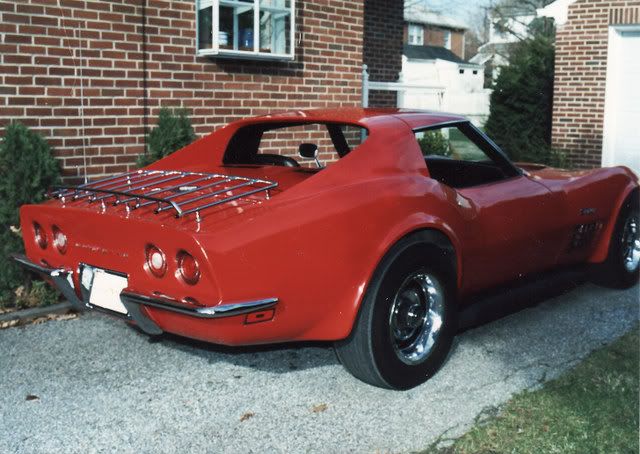
Working on the resto still and need some advice from the people that know best. I'm wanting to drill holes into my fiberglass in order to install a luggage rack but don't want to take any chances on ripping or cracking the area in the process. What do you all recommend as far as drill bits go? Also your experiences will be great. Thanks once again. Hope you are all having a wonderful Christmas time.
Working on the resto still and need some advice from the people that know best. I'm wanting to drill holes into my fiberglass in order to install a luggage rack but don't want to take any chances on ripping or cracking the area in the process. What do you all recommend as far as drill bits go? Also your experiences will be great. Thanks once again. Hope you are all having a wonderful Christmas time.

Instructor
Joined: Nov 2008
Posts: 106
Likes: 1
If I was going to drill any holes in the fiberglass, especially where you would not want any ragged holes. Get a high speed drill bit " New" and as sharp as it is ever going to be , not some old worn out drill bit, as they will rip through instead of "Cut cleanly" through.
2nd thing and very important too. Where you will not have "Tear out" on the back side or very possibly crack the fiberglass. Take a piece of wood and apply an upward pressure to the underside where you are drilling the holes. This might be a two person job and very careful not to drill a hole into the hand holding the piece of wood underneath. The bit will go into the piece of wood but the piece of wood will help you get a clean hole on both sides. Another thought! I believe I would first drill a small pilot hole through the very center of the holes, (Wood underneath used here too!) to make sure the drill bit you actually need to use makes the hole exactly where you want it to be. Especially the first hole. You might be able to use your rack as a guide to drill the holes after you get the first hole, put the bolt in, set the rack exactly where you want it, then one at a time. Make sure the bit is long enough, where the drill don't tear into the rack. Take your time and plan out every thing you are planning on doing where you don't end up with extra holes where they can't be covered up and it looks like a professional did the job. Also make sure the drill you are using is charged up. If you where close by I would let you use my Hitachi 18 volt drill. It would do a great job. Again take your time and plan every move before you drill holes in your car. The piece of wood will not only support the fiberglass but will help if not prevent all tear out underneath. I usually use scrap piece of a 2"x4", and let the bit go into it, instead of ripping out the bottom side of the hole. Do not jerk and ****** on the drill and drill bit if it were to hang up while drilling the holes. The easier you are with the fiberglass the better it will look when you are finished.
hope this helps,
Have a great day,
Ray/aka/Pa
2nd thing and very important too. Where you will not have "Tear out" on the back side or very possibly crack the fiberglass. Take a piece of wood and apply an upward pressure to the underside where you are drilling the holes. This might be a two person job and very careful not to drill a hole into the hand holding the piece of wood underneath. The bit will go into the piece of wood but the piece of wood will help you get a clean hole on both sides. Another thought! I believe I would first drill a small pilot hole through the very center of the holes, (Wood underneath used here too!) to make sure the drill bit you actually need to use makes the hole exactly where you want it to be. Especially the first hole. You might be able to use your rack as a guide to drill the holes after you get the first hole, put the bolt in, set the rack exactly where you want it, then one at a time. Make sure the bit is long enough, where the drill don't tear into the rack. Take your time and plan out every thing you are planning on doing where you don't end up with extra holes where they can't be covered up and it looks like a professional did the job. Also make sure the drill you are using is charged up. If you where close by I would let you use my Hitachi 18 volt drill. It would do a great job. Again take your time and plan every move before you drill holes in your car. The piece of wood will not only support the fiberglass but will help if not prevent all tear out underneath. I usually use scrap piece of a 2"x4", and let the bit go into it, instead of ripping out the bottom side of the hole. Do not jerk and ****** on the drill and drill bit if it were to hang up while drilling the holes. The easier you are with the fiberglass the better it will look when you are finished.
hope this helps,
Have a great day,
Ray/aka/Pa
Last edited by Ray/aka/Pa; Dec 27, 2008 at 07:26 AM. Reason: left something out

Le Mans Master


Joined: Jun 2008
Posts: 5,284
Likes: 235
From: Rockledge FL
use a unibit.
its what we use to mount the race spec fiberglass to our trackbikes.
they have a sharp tip to bite immediatly and the hole gets bigger as you drill deeper.
it makes a perfect hole.
its what we use to mount the race spec fiberglass to our trackbikes.
they have a sharp tip to bite immediatly and the hole gets bigger as you drill deeper.
it makes a perfect hole.

Le Mans Master


Joined: Jul 1999
Posts: 9,206
Likes: 17
From: Sewell NJ
When I mounted my luggage rack I had the same concerns. I ended up using a forstner bit instead of the regular drill bits. The forstner bit cuts from the outside in instead of from the inside out. It made perfect holes without any tearout.


Racer

Joined: Mar 2006
Posts: 454
Likes: 0
From: SAN CLEMENTE CALIFORNIA
Any time you use a drill bit on plastic you need a negative rake this will stop all pulling and will stop any damage to the area around the hole.
(Rake is the inside of the cutting edge, it is curved use a grinder and make it flat note the drill will only be good on plastic.
(Rake is the inside of the cutting edge, it is curved use a grinder and make it flat note the drill will only be good on plastic.

Team Owner


Joined: Sep 2006
Posts: 31,285
Likes: 4,375
From: Westminster Maryland
Hi J2,
There are about 2 inches between the fiberglass deck and the top of the tank. Where I mounted my tank the rear 4 holes were just to the rear of the tank and the 2 front holes were just to the left and right of the tank
I used an old fashion hand drill that you crank yourself. I put masking tape over the spot. And, the original rubber well nuts have a little shoulder on them that hides the cut edge of the fiberglass and about 1/8" of the deck around the hole.
Good Luck, it's pretty easy if you're careful.
Regards,
Alan
There are about 2 inches between the fiberglass deck and the top of the tank. Where I mounted my tank the rear 4 holes were just to the rear of the tank and the 2 front holes were just to the left and right of the tank
I used an old fashion hand drill that you crank yourself. I put masking tape over the spot. And, the original rubber well nuts have a little shoulder on them that hides the cut edge of the fiberglass and about 1/8" of the deck around the hole.
Good Luck, it's pretty easy if you're careful.
Regards,
Alan
Last edited by Alan 71; Dec 28, 2008 at 09:57 AM.
Corvette Stories
The Best of Corvette for Corvette Enthusiasts

Top 10 Most Expensive Corvettes Ever Sold on Bring A Trailer
Brett Foote
10 Things Every Corvette Owner Needs (2026 Edition)
Michael S. Palmer
8 Most "Only Corvette Owners Understand" Quirks and Problems
Pouria Savadkouei
10 Reasons the C6 Z06 is Still A Performance Benchmark After 20 Years
Joe Kucinski
How Much Horsepower Every Corvette Engine "LOST" in 1972
Joe Kucinski
Top 10 DOs and DON'Ts for Protecting Your Convertible Top!
Michael S. Palmer
Top 10 Most Explosive Corvettes Ever Made: Power-to-Weight Ratio Ranked!
Joe Kucinski
150 hp to 1,250 hp: Every Corvette Generation Compared by the Specs That Matter
Joe Kucinski
8 Coolest Corvette Pace Cars (and Replicas) of All Time
Verdad Gallardo
Melting Slicks


Joined: Feb 2004
Posts: 2,040
Likes: 105
From: State of Confusion!!!
2018 C2 of Year Winner

Racer
Joined: May 2006
Posts: 264
Likes: 0
From: Fort Myers, Fl / St. Paul, Mn
Safest way to drill into any brittle material is to drill a small pilot hole and then enlarge with a good step bit. Always go slow with the step bit and know (mark it) which step you're stopping at.

Melting Slicks
Joined: Sep 2007
Posts: 2,429
Likes: 0
From: Tucson AZ
Use a unibit, with good 3M masking tape on the spot to be drilled. If you can get to teh back side of the hole area, put some kind of a backing materal, a hammer handle, a wood block, rubber block, ets. You should be using a high speed drill and bit. Use light pressure and let the unibit do the work.
BBTank
BBTank
Instructor
Joined: Nov 2008
Posts: 106
Likes: 1
Use a unibit, with good 3M masking tape on the spot to be drilled. If you can get to teh back side of the hole area, put some kind of a backing materal, a hammer handle, a wood block, rubber block, ets. You should be using a high speed drill and bit. Use light pressure and let the unibit do the work.
BBTank
BBTank
 Use light pressure, the masking tape,the pilot hole, and something for backing material, at least try to tape up the back side and if you are concerned about going to deep. You can get a "Collar" and set the depth that the bit will go. You can very simply take some tape and wrap around the bit about an 1/8"to a 1/4" out from the side of the bit to set the depth and stop it from going to deep and ventilating your gas tank. Use light pressure and a sharp bit.
Ray/aka/Pa

 Sorry!
Melting Slicks

Joined: Mar 2008
Posts: 2,989
Likes: 198
From: Meriden CT
For what it is worth, Use light pressure, the masking tape,the pilot hole, and something for backing material, at least try to tape up the back side and if you are concerned about going to deep. You can get a "Collar" and set the depth that the bit will go. You can very simply take some tape and wrap around the bit about an 1/8"to a 1/4" out from the side of the bit to set the depth and stop it from going to deep and ventilating your gas tank. Use light pressure and a sharp bit.
Ray/aka/Pa
Use light pressure, the masking tape,the pilot hole, and something for backing material, at least try to tape up the back side and if you are concerned about going to deep. You can get a "Collar" and set the depth that the bit will go. You can very simply take some tape and wrap around the bit about an 1/8"to a 1/4" out from the side of the bit to set the depth and stop it from going to deep and ventilating your gas tank. Use light pressure and a sharp bit.Ray/aka/Pa
Melting Slicks
Joined: Mar 2008
Posts: 2,989
Likes: 198
From: Meriden CT
Use a unibit, with good 3M masking tape on the spot to be drilled. If you can get to teh back side of the hole area, put some kind of a backing materal, a hammer handle, a wood block, rubber block, ets. You should be using a high speed drill and bit. Use light pressure and let the unibit do the work.
BBTank
BBTank


Melting Slicks
Joined: Feb 2006
Posts: 3,428
Likes: 5
From: Japan
I wasn't going to chime in here until I saw this one.....fiberglass gets VERY hot when you drill through using too much speed; it and will INSTANTLY take the edge off a new bit. SLOW speed with light pressure is the key with glass. Sorry to stomp on your post SH-60B (I spent some years on '60s myself)-hope I didn't hurt anybody's feelings!
Melting Slicks
Joined: Sep 2007
Posts: 2,429
Likes: 0
From: Tucson AZ

Melting Slicks
Joined: Sep 2007
Posts: 2,429
Likes: 0
From: Tucson AZ
I wasn't going to chime in here until I saw this one.....fiberglass gets VERY hot when you drill through using too much speed; it and will INSTANTLY take the edge off a new bit. SLOW speed with light pressure is the key with glass. Sorry to stomp on your post SH-60B (I spent some years on '60s myself)-hope I didn't hurt anybody's feelings!
Slow speed will tear the fibers in the glass. If it's a good unibit, which I refered to, it won't harm it at all. If it's a garbage (harbour) freight one, yep, it will. Light pressure will not generate that much heat, slow or fast speed. Try it.
Use tape on the drilling side, tape, hammer handle, wood, rubber block, etc on the back side.
BBTank
Melting Slicks
Joined: Feb 2006
Posts: 3,428
Likes: 5
From: Japan
Actually BBT I was kinda hesitant to post that.....I made that accidental discovery when drilling and countersinking fiberglass 'milk stools' for the space shuttle (really!!!) when working at the Late Great Convair in 1980. When I splained the problem to one of the old coots (grrrr....now I'm one myself!) he told me to slow my motor way down and I'd quit burning up all those bits. Of course, the glass used on those things was a little finer than the stuff Vette bodies are made of...
Melting Slicks
Joined: Mar 2008
Posts: 2,989
Likes: 198
From: Meriden CT
I wasn't going to chime in here until I saw this one.....fiberglass gets VERY hot when you drill through using too much speed; it and will INSTANTLY take the edge off a new bit. SLOW speed with light pressure is the key with glass. Sorry to stomp on your post SH-60B (I spent some years on '60s myself)-hope I didn't hurt anybody's feelings!
Last edited by SH-60B; Dec 30, 2008 at 09:43 AM.