





Engine heat inside the vehicle

Thread Starter
Heel & Toe

Joined: Sep 2008
Posts: 20
Likes: 0
From: Marion Texas
 Engine heat inside the vehicle
I recently had a 383 installed in my 77. As you all know, this engine gets warm pretty fast. On a nice cool day, it is very comfortable to drive in but on hot summer days, especially here in Texas, it actually can be quite miserable. Does anyone have any ideas or suggesstions on a way or ways to help reduce the engine heat from seeping inside the vehicle? Thanks for your time.

NCM Grand Opening Veteran


Joined: Sep 2005
Posts: 20,979
Likes: 384
From: South of giving a damn
St. Jude Donor '11, '17
Sorry, the 383 doesn't get hotter than the 350, it's just that C3s had really poor heat insulation. Best thing is pull the carpet & fully insulate the cabin with Cool-it, Reflectix, DynoMat, or something similar. Thermo-Tec makes a sleeve that fits over your exhaust pipes (not wrap) to help control the heat. Also look for any holes in the firewall that are not plugged. Grommets may have gone bad, you can leak a lot of heat there. Header coatings help lower the underhood temps too.

Team Owner


Joined: Jan 2006
Posts: 37,637
Likes: 3,116
From: Crossville TN
Yohon 75:
There are about a dozen common problems that can cause unwanted heat to get into the interior of a C3. They are in various 'categories'... 1) engine/exhaust running hotter than it should; 2) engine heat leaking into the interior (via faulty ducting/seals/etc. or unsealed passages into the interior; 3) inadequate insulation under the carpeting [this is a given, you must correct this one to even have a chance at solving your heat problem]; heat/vent/A/C system allowing heater core to vent heat into cabin when it shouldn't.
And there are several sub-causes that can fit into each of the above 'categories'. There are some good manuals that detail all of the possible issues and solutions for each. You really need to do a good assessment to find out which ones are affecting your car. I can guarantee you that there will be more than one cause...probably 5 or 6 items you need to resolve to get the heat down. I would tell you the title and author of the manual I used to fix mine...but I can't find it, sorry.
P.S. DynaMat is a sound insulator, not a heat insulator. It will take the cabin longer to reach a stabilized heat level using DynaMat; but it will (eventually) get just as hot with it as without it. I used Reflectix and it works well; it is also the least expensive of that type of fix.
There are about a dozen common problems that can cause unwanted heat to get into the interior of a C3. They are in various 'categories'... 1) engine/exhaust running hotter than it should; 2) engine heat leaking into the interior (via faulty ducting/seals/etc. or unsealed passages into the interior; 3) inadequate insulation under the carpeting [this is a given, you must correct this one to even have a chance at solving your heat problem]; heat/vent/A/C system allowing heater core to vent heat into cabin when it shouldn't.
And there are several sub-causes that can fit into each of the above 'categories'. There are some good manuals that detail all of the possible issues and solutions for each. You really need to do a good assessment to find out which ones are affecting your car. I can guarantee you that there will be more than one cause...probably 5 or 6 items you need to resolve to get the heat down. I would tell you the title and author of the manual I used to fix mine...but I can't find it, sorry.
P.S. DynaMat is a sound insulator, not a heat insulator. It will take the cabin longer to reach a stabilized heat level using DynaMat; but it will (eventually) get just as hot with it as without it. I used Reflectix and it works well; it is also the least expensive of that type of fix.

Le Mans Master


Joined: Jan 2006
Posts: 9,192
Likes: 27
From: Boca Raton Florida
 With all the above. One of the keys is to stop the heat from getting to the floor. There is a product out there called Lizard skin, it is a thick paint that you would paint on both sides of the floor pans and up onto the firewall. It cost about $175 for 2 gallons last time I looked. Fortunately you can make the stuff with Home Depot Oops paint and some stuff called "Micro Spheres" availabe at Aircraft restoration suppliers (Moodys?) can't remember the name of the place right off hand. It cost about $10/gal and you only need 1.
Like 7T1 says the heat comes from several places, you have to fix them all.

Pro


Joined: Dec 2006
Posts: 665
Likes: 0
From: wilmington nc
Here"s a good example of what 7t1vette is talking about (various locations). At a stop light my fresh air vents would fill with engine comparment heat, thru the wiper tray. When you took off the cabin would go to 130 degrees!!!!!!!!! I now allways close the vents when i stop, wait till fresh air starts coming in thru the hood cowel before i re-open the vents. Makes quiet a differance an it"s free.

Drifting

Joined: Sep 2006
Posts: 1,259
Likes: 2
From: MS
One way to find holes and faulty grommets and seals is to get one of those utility lights (light bulb with a hood) and put it on the floorboards of your car pointing forward. Go in your dark garage and open the hood and any holes or leaks will be easy to spot with the light shining through.
Corvette Stories
The Best of Corvette for Corvette Enthusiasts

150 hp to 1,250 hp: Every Corvette Generation Compared by the Specs That Matter
Joe Kucinski
8 Coolest Corvette Pace Cars (and Replicas) of All Time
Verdad Gallardo
Top 10 Corvette Engines RANKED by Peak Torque (70+ Years of Muscle!)
Joe Kucinski
Corvette ZR1X Will Be Pacing the Indy 500, And Could Probably Race, Too!
Verdad Gallardo
Top 10 Corvettes Coming to Mecum Indy 2026!
Brett Foote
Top 10 C9 Corvette MUST-HAVES to Fix These C8 Generation Flaws!
Michael S. Palmer
10 Revolutionary 'Corvette Firsts' Most People Don't Know
Joe Kucinski
5 Reasons to Upgrade to an LS6-Powered Corvette; 5 Reasons to Stay LT2
Michael S. Palmer
2027 Corvette vs The World: Every C8 vs Its Closest Competitor
Joe Kucinski
Burning Brakes


Joined: Dec 2003
Posts: 1,004
Likes: 7
From: Adelaide South Australia
I too had issues with extraordinary heat buildup in cabin.
Like Texas, here in Adelaide, South Australia we also have extremely hot summers... it'll be over 105* this week
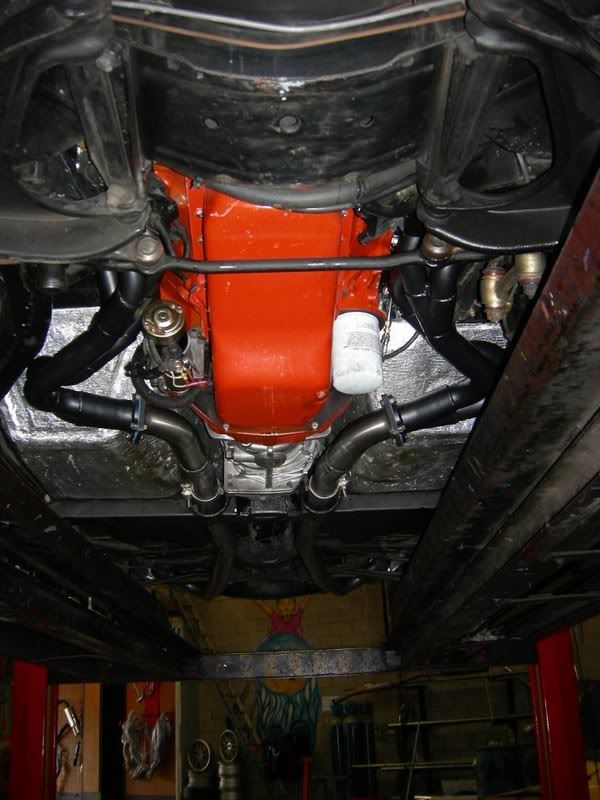
A combination of fitting reflective aluminium fibreglass matting on the underside of my firewall and floor pan including trans tunnel, ceramic coating of headers (note custom headers to route the pipes along tunnel, rather than under floor pan) and under carpet insulation inside the cabin have improved the situation immensely.
Airconditioning now actually has a chance to work effectively
Like Texas, here in Adelaide, South Australia we also have extremely hot summers... it'll be over 105* this week
A combination of fitting reflective aluminium fibreglass matting on the underside of my firewall and floor pan including trans tunnel, ceramic coating of headers (note custom headers to route the pipes along tunnel, rather than under floor pan) and under carpet insulation inside the cabin have improved the situation immensely.
Airconditioning now actually has a chance to work effectively

Safety Car

Joined: Nov 2004
Posts: 4,359
Likes: 57
From: Mundelein Illinois
I had the same problem and I used Dynamat on the interior but my biggest problem was the air coming in through the vents. That temp was always 100 degrees once the engine warmed up. I placed a thermometer in the vent to check temp. What I found was engine compartment air seeping into the air ducts. I went and resealed everything and now the temp from the air cond vents is the same as the outside air when set on vent. The air conditioning in the car gets down to 30 degrees and the car stays cold with glass tops.
The body does let heat in, but I think most time there's more heat coming in through the air conditioning housing or firewall leaks.
I agrree with the above also
The body does let heat in, but I think most time there's more heat coming in through the air conditioning housing or firewall leaks.
I agrree with the above also

Former Vendor
Joined: Aug 2006
Posts: 76,656
Likes: 1,851
From: Jeffersonville Indiana 812-288-7103
St. Jude Donor '08-'09-'10-'11-'12-'13-'14-'15
You guys have to remember too! Some cars did not have the hot water shut off valve and with a blower motor that always runs this is bad! You will always be circulating hot water over the heater core and this will hinder the output of your AC system as well.
While the factory never used any of the heat barriers like you guys have installed, they are highly recommended on any C3 car. (Robricci and Ozytom both have done real nice jobs intalling theirs).
You may also want to take a look at this page if you have heat coming in from around your console area. http://willcoxcorvette.com/repairand...lp.php?hID=163
Ozzytom, I'd take 1/2 of your temp today, were around 12 degrees right now and boy it's cold outside.
Willcox Inc.
While the factory never used any of the heat barriers like you guys have installed, they are highly recommended on any C3 car. (Robricci and Ozytom both have done real nice jobs intalling theirs).
You may also want to take a look at this page if you have heat coming in from around your console area. http://willcoxcorvette.com/repairand...lp.php?hID=163
Ozzytom, I'd take 1/2 of your temp today, were around 12 degrees right now and boy it's cold outside.
Willcox Inc.
Pro
Joined: Oct 2006
Posts: 545
Likes: 2
From: Peoplez Republik (communist portland) Orygun
I love the heat!!! I removed all heat/duct/heater core etc for track days, weight savings, ease & simplicity. It's all fine & dandy until days like today when it's not rainy & I decide to drive the Vette to work... (it's sunny, but 29 degree's!!!!)
wishin' I had some more cabin warmth.
btw... Your ride is coming together nicely
wishin' I had some more cabin warmth.
btw... Your ride is coming together nicely

Racer
Joined: Mar 2001
Posts: 326
Likes: 44
From: Newberg,Oregon,U.S.A.
I love the heat!!! I removed all heat/duct/heater core etc for track days, weight savings, ease & simplicity. o It's all fine & dandy until days like today when it's not rainy & I decide t drive the Vette to work... (it's sunny, but 29 degree's!!!!)
wishin' I had some more cabin warmth.
wishin' I had some more cabin warmth.


Instructor
Joined: Aug 2008
Posts: 159
Likes: 0
From: Northern California
You guys have to remember too! Some cars did not have the hot water shut off valve and with a blower motor that always runs this is bad! You will always be circulating hot water over the heater core and this will hinder the output of your AC system as well.
While the factory never used any of the heat barriers like you guys have installed, they are highly recommended on any C3 car. (Robricci and Ozytom both have done real nice jobs intalling theirs).
You may also want to take a look at this page if you have heat coming in from around your console area. http://willcoxcorvette.com/repairand...lp.php?hID=163
Ozzytom, I'd take 1/2 of your temp today, were around 12 degrees right now and boy it's cold outside.
Willcox Inc.
While the factory never used any of the heat barriers like you guys have installed, they are highly recommended on any C3 car. (Robricci and Ozytom both have done real nice jobs intalling theirs).
You may also want to take a look at this page if you have heat coming in from around your console area. http://willcoxcorvette.com/repairand...lp.php?hID=163
Ozzytom, I'd take 1/2 of your temp today, were around 12 degrees right now and boy it's cold outside.
Willcox Inc.
While I'm on the subject, quick question..... if my heater hose is 3/4", is the hose going to fit over a 3/4" Ball Valve with solder ends or do I need to buy something slightly smaller to get the end of the hose over the edge of the valve? I purchased a 3/4" ball valve and the width of the openings looks really close to that of the hose. I'd hate to hack the hose or go through the trouble of draining and disconnecting if it's not going to fit over that valve. Also, any way to verify which one is the output hose and which is the return? One is 3/4" and the other appears 1/2"... just want to be sure I install it on the right one.


