




Car will not start

Thread Starter
Advanced


Joined: Jan 2009
Posts: 76
Likes: 0
 Car will not start
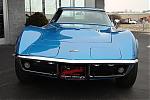
I purchased a 1969 corvette that will not start. Have to use a remote trigger to spin the motor. I have 6 volts to the + side of the coil when the ignition is on. Have put in new plugs and coil and still no spark to the plugs ( I use and inline plug tester). My next step is to put new points and condensor. Other than that, any other ideas?

Team Owner


Joined: Jun 2000
Posts: 38,923
Likes: 1,482
From: Southbound
Cruise-In II Veteran
Do you have fuel at the carb? Do you have power to the distributor? Check the point gap; points could be closed or too wide; could be burned.
What's the static timing? 4 BTDC ought to get you close enough to start.

What's the static timing? 4 BTDC ought to get you close enough to start.
Thread Starter
Advanced
Joined: Jan 2009
Posts: 76
Likes: 0
I have not done a compression test. As far as fuel, I don't know if the pump is working. I just pour a little gas down the carb just to see if it will pop (which is does not). I guess that i could put the spark plug tester between the coil and the distributor to see if there is power.
Instructor
Joined: Mar 2003
Posts: 217
Likes: 1
From: Buffalo MO
i think you need closer to 8.5 - 9 volts instead of 6 at the coil.
my advise, is to upgrade to an electronic conversion... would be the best investment you would ever make as far as dependability, ease, performance and longevity.
my advise, is to upgrade to an electronic conversion... would be the best investment you would ever make as far as dependability, ease, performance and longevity.
Instructor

Joined: May 2006
Posts: 223
Likes: 1
From: Kennesaw GA
car won't start
You say that you have 6v at the coil, which sounds low, should be closer to 8 or 9, but do you have a full 12v when the engine is turning over? There should be a second lead running from the starter to the coil to give full 12v during cranking to get it fired.
As a quick test, to make sure that the points are making and breaking, disconnect the positive lead on the coil, and hook a test light to a positive batter source, probably from the lug on the starter, and put the probe end on the negative side of the coil. Turn the engine over and the test light should go on and off as the points make and break the ground.
If you get no light, then the points aren't closing or you have a bad lead from the distributor, and if the light never goes out, the points are badly burned or misadjusted.
Good luck.
As a quick test, to make sure that the points are making and breaking, disconnect the positive lead on the coil, and hook a test light to a positive batter source, probably from the lug on the starter, and put the probe end on the negative side of the coil. Turn the engine over and the test light should go on and off as the points make and break the ground.
If you get no light, then the points aren't closing or you have a bad lead from the distributor, and if the light never goes out, the points are badly burned or misadjusted.
Good luck.
Corvette Stories
The Best of Corvette for Corvette Enthusiasts

Top 10 Most Expensive Corvettes Ever Sold on Bring A Trailer
Brett Foote
10 Things Every Corvette Owner Needs (2026 Edition)
Michael S. Palmer
8 Most "Only Corvette Owners Understand" Quirks and Problems
Pouria Savadkouei
10 Reasons the C6 Z06 is Still A Performance Benchmark After 20 Years
Joe Kucinski
How Much Horsepower Every Corvette Engine "LOST" in 1972
Joe Kucinski
Top 10 DOs and DON'Ts for Protecting Your Convertible Top!
Michael S. Palmer
Top 10 Most Explosive Corvettes Ever Made: Power-to-Weight Ratio Ranked!
Joe Kucinski
150 hp to 1,250 hp: Every Corvette Generation Compared by the Specs That Matter
Joe Kucinski
8 Coolest Corvette Pace Cars (and Replicas) of All Time
Verdad Gallardo
Instructor
Joined: May 2006
Posts: 223
Likes: 1
From: Kennesaw GA
wire color
I think it's pink.. but I don't remember for sure. The white cloth covered one is the resistor wire from the ignition switch. There should be two wires on either side of the starter solenoid, one purple one which is from the 'start' side of the ignition switch and the other one is the pink one (I think) that runs up to the + side of the coil.

Team Owner


Joined: Jul 2008
Posts: 23,419
Likes: 22
From: In limbo
St. Jude Donor '13-'15, '17 thru '22
First, 6 volts at the coil sounds wrong, as others have said.
Second, you know you have fuel, since you dumped some in the carb, you know you have comperssion since you tested it, I'll assume that there is nothing preventing air from entering the carb, so we are comfortable with 3 of the 4 things needed to fire the engine, we must be missing spark.
I'm assuming since you just bought it, that it was running before, then it was parked, and now it won't start. If this occurred while you were working on the electrical system, 90% of what I am about to write will not be applicable. You have been warned.
Assuming that your battery is good (has sufficient cranking power) and is fully charged (might be a good idea here to test the voltage across your battery, 12.6 - 12.8 volts sounds good to me), connect one contact of your voltmeter to the hot contact on the coil and the other to the block, turn the ignition switch to "on" (as in not "start" or "accessory") and look at the voltage. If you don't have close to 12 volts, you have a bad connection somewhere between the battery and the coil (note: the connection runs through the starter motor). If you get 12 volts or close, turn the engine over with the starter and watch the voltmeter. If upon turning the engine, the voltage at the coil drops, same conclusion as before, bad connection somewhere between the battery, starter and coil. If the voltage remains 12 volts, but you get no fire in the engine, you have a bad component somewhere between the hot connection to the coil and your spark plugs.
If in the above example, the starter motor turns fine and the voltage drops at the coil, I would bet a nice cold Budweiser that you either have a bad wire or a bad connection between the starter and the coil. Getting 6 volts to start off with could also be caused by this so if my assumptions above are correct, I am getting ready to put a pilsner glass in the freezer. Off the top of my head, the wire I speak of on my '70 is yellow (meaning, I would appreciate not being shot if it is wrong). I don't remember if it was the same color on my '69 or not, but they didn't seem to change those colors very often.
If my assumptions above are wrong, please give us more background on how you came upon this problem.
PK
Second, you know you have fuel, since you dumped some in the carb, you know you have comperssion since you tested it, I'll assume that there is nothing preventing air from entering the carb, so we are comfortable with 3 of the 4 things needed to fire the engine, we must be missing spark.
I'm assuming since you just bought it, that it was running before, then it was parked, and now it won't start. If this occurred while you were working on the electrical system, 90% of what I am about to write will not be applicable. You have been warned.
Assuming that your battery is good (has sufficient cranking power) and is fully charged (might be a good idea here to test the voltage across your battery, 12.6 - 12.8 volts sounds good to me), connect one contact of your voltmeter to the hot contact on the coil and the other to the block, turn the ignition switch to "on" (as in not "start" or "accessory") and look at the voltage. If you don't have close to 12 volts, you have a bad connection somewhere between the battery and the coil (note: the connection runs through the starter motor). If you get 12 volts or close, turn the engine over with the starter and watch the voltmeter. If upon turning the engine, the voltage at the coil drops, same conclusion as before, bad connection somewhere between the battery, starter and coil. If the voltage remains 12 volts, but you get no fire in the engine, you have a bad component somewhere between the hot connection to the coil and your spark plugs.
If in the above example, the starter motor turns fine and the voltage drops at the coil, I would bet a nice cold Budweiser that you either have a bad wire or a bad connection between the starter and the coil. Getting 6 volts to start off with could also be caused by this so if my assumptions above are correct, I am getting ready to put a pilsner glass in the freezer. Off the top of my head, the wire I speak of on my '70 is yellow (meaning, I would appreciate not being shot if it is wrong). I don't remember if it was the same color on my '69 or not, but they didn't seem to change those colors very often.
If my assumptions above are wrong, please give us more background on how you came upon this problem.
PK
Last edited by Derrick Reynolds; Feb 5, 2009 at 03:09 PM.
Thread Starter
Advanced
Joined: Jan 2009
Posts: 76
Likes: 0
I did not start the car before purchasing because of the dash being removed and the battery being dead and therefore have not checked the compression. Before hammering on me about why I didn't try starting the car before purchasing, I purchased it so cheap it was not even funny. The previous owner told me that it was running good before he parked it a couple of years and and he seemed to be very honest (his hours were cut way back at and work and he seemed pretty emotional as I was loading it on the trailer).
Last edited by iceref63; Feb 6, 2009 at 08:43 AM.
Team Owner
Joined: Jul 2008
Posts: 23,419
Likes: 22
From: In limbo
St. Jude Donor '13-'15, '17 thru '22
I did not start the car before purchasing because of the dash being removed and the battery being dead and therefore have not checked the compression. Before hammering on me about why I didn't try starting the car before purchasing, I purchased it so cheap it was not even funny. The previous owner told me that it was running good before he parked it a couple of years and and he seemed to be very honest (his hours were cut way back at and work and he seemed pretty emotional as I was loading it on the trailer).
Anyway, if the car ran and then sat for a few years, I doubt anything magical happened to cause it to not have any compression, so if it was my car, I would be comfortable with the assumption for the time being that it still has enough compression to run. That being the case, we are still at the point we were at my previous post. You can check for spark by taking a spark plug out, reconnecting the spark plug wire to it, grounding it to the block and turning the engine with the starter and looking for the spark. If it was me, and I only had 6 volts at the coil, I would think my time was better spent elsewhere though.
Burning Brakes

Joined: Jul 2008
Posts: 876
Likes: 0
From: Canastota Ny
will anything turn at all? will it atleast try to start? you need spark and fuel and air that thing should start. otherwise if you have no movement its the battery i would assume dead after all this time sitting.
Thread Starter
Advanced
Joined: Jan 2009
Posts: 76
Likes: 0
I put a good battery in it when I got it home, hence spinning the motor with a remote trigger from first post. New spark plug and tested with spark plug checker and still no spark. My guess is that the point or condensor are bad so I will replace both this weekend and see what happens.
Last edited by iceref63; Feb 6, 2009 at 10:13 AM.
Instructor
Joined: May 2006
Posts: 223
Likes: 1
From: Kennesaw GA
Cam?
Have you verified that the distributor is actually turning? There might be more wrong than it appears.
Did you try my suggestion earlier in the thread to verify that the points are making and breaking properly?
Have you also replaced the coil?
Do you have any pictures of the engine and components... we might be able to see something that's wrong.
Did you try my suggestion earlier in the thread to verify that the points are making and breaking properly?
Have you also replaced the coil?
Do you have any pictures of the engine and components... we might be able to see something that's wrong.
Thread Starter
Advanced
Joined: Jan 2009
Posts: 76
Likes: 0
The distributor does turn. I did put a test light from the + on the alternator to the - on the coil and turned it over. It did flash as I turned over the engine with the remote trigger. I am beginning to wonder if its not the rotor and the distributor. Both look brand new but it looks like there is no wear what so ever on the rotor button contact nor the distributor cap contacts.
Instructor
Joined: May 2006
Posts: 223
Likes: 1
From: Kennesaw GA
Just for fun, put the spark plug checker on the coil wire, just to verify that the coil is putting something out.
If that works take a dab of white lithium grease (or equivalent) and put it on the top of the rotor where it contacts the center of the cap, and on the end where it contacts the terminals on the cap. Then gently put the cap back on and bump the engine over a couple of times. Take off the cap and check to see that the grease transferred to the terminals on the cap. If so then you've proved that the cap and rotor are working as they should and the car has no reason not to have spark at the plugs.
If that works take a dab of white lithium grease (or equivalent) and put it on the top of the rotor where it contacts the center of the cap, and on the end where it contacts the terminals on the cap. Then gently put the cap back on and bump the engine over a couple of times. Take off the cap and check to see that the grease transferred to the terminals on the cap. If so then you've proved that the cap and rotor are working as they should and the car has no reason not to have spark at the plugs.