



rear suspension issues- handling

Thread Starter
Burning Brakes


Joined: Sep 2008
Posts: 753
Likes: 0
 rear suspension issues- handling
on both my vettes ( 79 and 427 69) I have always experienced a strange car behaviour at rear ( rear suspension)
in fast lane's change ( car's overtaking ) the car behaves in a strange manner , hard to say, like going away...
an experienced Vette owner told me that behaviour is due to the camber variation at rear suspension during body roll and that is easily solved by fitting the "smarts struts".
Is that true ? or there's something else to check and correct?
my 79 had pretty worn trailing arms bushing but my 69 is out of a frame off made in 2001 and drives tight and straight also at high speed ( no or little plays, seems to me)
I'm looking for best handling possible...
in fast lane's change ( car's overtaking ) the car behaves in a strange manner , hard to say, like going away...
an experienced Vette owner told me that behaviour is due to the camber variation at rear suspension during body roll and that is easily solved by fitting the "smarts struts".
Is that true ? or there's something else to check and correct?
my 79 had pretty worn trailing arms bushing but my 69 is out of a frame off made in 2001 and drives tight and straight also at high speed ( no or little plays, seems to me)
I'm looking for best handling possible...
Last edited by elle88; Mar 15, 2009 at 01:55 PM.
Drifting

Joined: Jun 2007
Posts: 1,404
Likes: 1
From: Ansonia/NYC CT
What's going on is, under speed, any change of direction causes body roll, which causes your tire to change angle, meaning less tread on the road.
You fix that by adjusting the camber angle, based on how agresively you drive. Idea being, if the tire angle is a little off while going in a straigt line, when you DO go into a turn, and get the roll, the tire will then be flat on, perfect for increased traction.
Smart struts make camber adjustments very easy.
You fix that by adjusting the camber angle, based on how agresively you drive. Idea being, if the tire angle is a little off while going in a straigt line, when you DO go into a turn, and get the roll, the tire will then be flat on, perfect for increased traction.
Smart struts make camber adjustments very easy.

Le Mans Master


Joined: Apr 2007
Posts: 7,353
Likes: 72
From: Graceland in a Not Correctly Restored Stingray
First, verify that worn components aren't the cause. That said...
Smart struts also make screwing up the camber curve (how camber changes during roll) all too easy. For everywhere except the drag strip, you want the camber curve to provide negative camber gain in "bump" when the body rolls to help keep the footprint of the tire in good contact with the road surface, as Zora intended. A proper camber curve reduces the need for excessive static camber alignment.
For those using the VB&P/SS bracket (available separately for those who prefer heim-jointed struts, btw) I suggest adjusting the inner strut rod link bolts to the upper most position, which should result in being ~1/2" below the OEM height as suggested by John Greenwood for optimum geometry. Positioning the inner bolt too low will result in insufficient camber gain, so unless you're up to doing the engineering and testing to prove out a better setup for your specific car, this is likely the only setting you'll need worry about, other than for drag racing.
FWIW, at the strip it is desirable to position the struts parallel with the half-shafts so as to virtually eliminate camber gain in order to help keep the tire planted squarely during launch. However, keep in mind that such a setup will (NOT "maybe") result in the outside rear tire leaning towards or even into positive camber when cornering ( ).
).

TSW
Smart struts also make screwing up the camber curve (how camber changes during roll) all too easy. For everywhere except the drag strip, you want the camber curve to provide negative camber gain in "bump" when the body rolls to help keep the footprint of the tire in good contact with the road surface, as Zora intended. A proper camber curve reduces the need for excessive static camber alignment.
For those using the VB&P/SS bracket (available separately for those who prefer heim-jointed struts, btw) I suggest adjusting the inner strut rod link bolts to the upper most position, which should result in being ~1/2" below the OEM height as suggested by John Greenwood for optimum geometry. Positioning the inner bolt too low will result in insufficient camber gain, so unless you're up to doing the engineering and testing to prove out a better setup for your specific car, this is likely the only setting you'll need worry about, other than for drag racing.
FWIW, at the strip it is desirable to position the struts parallel with the half-shafts so as to virtually eliminate camber gain in order to help keep the tire planted squarely during launch. However, keep in mind that such a setup will (NOT "maybe") result in the outside rear tire leaning towards or even into positive camber when cornering (
).TSW
Thread Starter
Burning Brakes
Joined: Sep 2008
Posts: 753
Likes: 0
thanks
here is what I have bought ( not handy now) but I see 1 hole only per side on the bracket , so no provision for height adjustment...or am i wrong?
http://www.ecklers.com/product.asp?p...8&dept_id=1843
I suppose that the "strange behavior" at rear end is possibly due to an asimmetrical toe variation during body roll . should smart struts and stiff rear suspension +sway bar cure this ? -due to a reduced geometry chance. Or should I check for other sources of toe change? i.e. play at half shaft ,play at trailing arms pivot...
my 69 drives very tight and stable on straight line,no wandering, no torque-steer. so I suppose that nothing is worn out...
here is what I have bought ( not handy now) but I see 1 hole only per side on the bracket , so no provision for height adjustment...or am i wrong?
http://www.ecklers.com/product.asp?p...8&dept_id=1843
I suppose that the "strange behavior" at rear end is possibly due to an asimmetrical toe variation during body roll . should smart struts and stiff rear suspension +sway bar cure this ? -due to a reduced geometry chance. Or should I check for other sources of toe change? i.e. play at half shaft ,play at trailing arms pivot...
my 69 drives very tight and stable on straight line,no wandering, no torque-steer. so I suppose that nothing is worn out...
Last edited by elle88; Mar 16, 2009 at 03:55 AM.
Tech Contributor


Joined: Aug 1999
Posts: 15,166
Likes: 3,967
From: Connecticut, USA
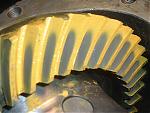
Check the side yokes on the 79. The originals were bad and wear fast. If you have more then 050" endplay watch them, over .100 replace them. My 69 was so worn out when I got it year ago I could feel the rear sway on the highway at 65 mph. Once I rebuilt and blueprinted the T/A's and diff it was back to a good handling car. I used stock rods with rubber bushings along with the other parts.
Le Mans Master
Joined: Apr 2007
Posts: 7,353
Likes: 72
From: Graceland in a Not Correctly Restored Stingray
Again, if you have a bad alignment, or overlook worn or broken component(s), all the add-ons in the world won't make it better.
Now, the picture in that link appears to be of heim-jointed struts w/lock plates, while the written description says "poly-adjustable struts". Assuming you have what is in the photo, beneath the square lock plates (in place of eccentrics) should be a slot similar to that of the the OEM bracket, only vertical as opposed to horizontal (see pic below). This re-orientation is what affords camber curve adjustments previously discussed. Inner bolt heights can be changed by fabbing up different sets of lock plates which re-position the hole. Not as easy as with the old eccentrics, but you don't have to worry about them moving about under heavy loads over time.
FWIW, if everything is up to snuff, you may simply be sensing rear toe-steer or roll-steer, similar to front bump steer, wherein the rear toe changes with suspension travel during bump, squat and/or roll. This is the inherent flaw in the C2/C3 IRS rear suspension geometry, which many an owner never realizes. Bad alignment and/or worn components only serve to magnify this issue, which is not the fault of your non-OEM struts. Minimizing rear suspension travel will reduce the effects of this, but stiffening up the rear w/o likewise stiffening the front will shift balance towards oversteer. This toe-steer condition may also be worsened if rear ride height is so low that the inner yoke end of the half-shafts are or move below the outer stub axle end, as any suspension travel beyond level in this direction results in rear geometry moving towards toe out (not good when cornering hard or trying to put down power). In this case, one can either raise rear ride height back up or raise the diff in the chassis to avoid this geometric menace to handling.
Again, start by making sure there's nothing wrong with the alignment or anything else. Hope between this and the other advice you've gotten that you find the source of and solve your problem.
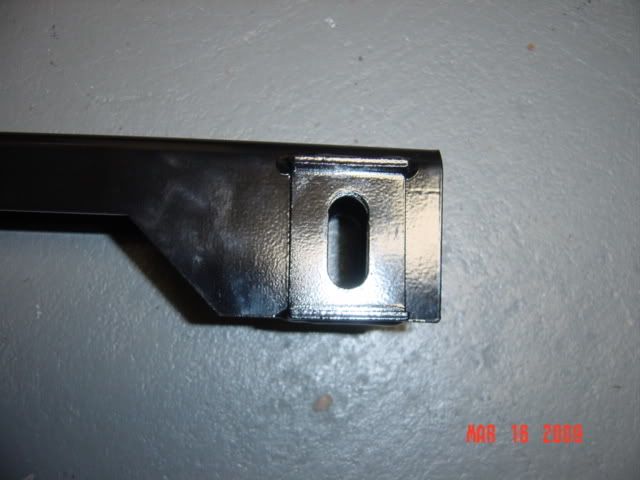
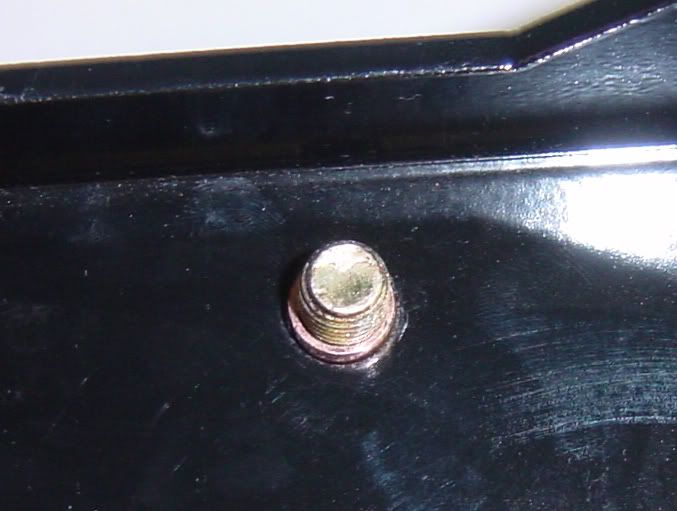
edit - One more thing. Unless the SS bracket has been recently revised, you may find that the attachment bolt holes need bushed down...
Now, the picture in that link appears to be of heim-jointed struts w/lock plates, while the written description says "poly-adjustable struts". Assuming you have what is in the photo, beneath the square lock plates (in place of eccentrics) should be a slot similar to that of the the OEM bracket, only vertical as opposed to horizontal (see pic below). This re-orientation is what affords camber curve adjustments previously discussed. Inner bolt heights can be changed by fabbing up different sets of lock plates which re-position the hole. Not as easy as with the old eccentrics, but you don't have to worry about them moving about under heavy loads over time.
FWIW, if everything is up to snuff, you may simply be sensing rear toe-steer or roll-steer, similar to front bump steer, wherein the rear toe changes with suspension travel during bump, squat and/or roll. This is the inherent flaw in the C2/C3 IRS rear suspension geometry, which many an owner never realizes. Bad alignment and/or worn components only serve to magnify this issue, which is not the fault of your non-OEM struts. Minimizing rear suspension travel will reduce the effects of this, but stiffening up the rear w/o likewise stiffening the front will shift balance towards oversteer. This toe-steer condition may also be worsened if rear ride height is so low that the inner yoke end of the half-shafts are or move below the outer stub axle end, as any suspension travel beyond level in this direction results in rear geometry moving towards toe out (not good when cornering hard or trying to put down power). In this case, one can either raise rear ride height back up or raise the diff in the chassis to avoid this geometric menace to handling.
Again, start by making sure there's nothing wrong with the alignment or anything else. Hope between this and the other advice you've gotten that you find the source of and solve your problem.
edit - One more thing. Unless the SS bracket has been recently revised, you may find that the attachment bolt holes need bushed down...
Last edited by TheSkunkWorks; Mar 16, 2009 at 04:33 PM. Reason: additional info

Melting Slicks

Joined: Mar 2002
Posts: 2,164
Likes: 7
From: Beringen
on both my vettes ( 79 and 427 69) I have always experienced a strange car behaviour at rear ( rear suspension)
in fast lane's change ( car's overtaking ) the car behaves in a strange manner , hard to say, like going away...
an experienced Vette owner told me that behaviour is due to the camber variation at rear suspension during body roll and that is easily solved by fitting the "smarts struts".
Is that true ? or there's something else to check and correct?
my 79 had pretty worn trailing arms bushing but my 69 is out of a frame off made in 2001 and drives tight and straight also at high speed ( no or little plays, seems to me)
I'm looking for best handling possible...
in fast lane's change ( car's overtaking ) the car behaves in a strange manner , hard to say, like going away...
an experienced Vette owner told me that behaviour is due to the camber variation at rear suspension during body roll and that is easily solved by fitting the "smarts struts".
Is that true ? or there's something else to check and correct?
my 79 had pretty worn trailing arms bushing but my 69 is out of a frame off made in 2001 and drives tight and straight also at high speed ( no or little plays, seems to me)
I'm looking for best handling possible...
Thread Starter
Burning Brakes
Joined: Sep 2008
Posts: 753
Likes: 0
Again, if you have a bad alignment, or overlook worn or broken component(s), all the add-ons in the world won't make it better.
Now, the picture in that link appears to be of heim-jointed struts w/lock plates, while the written description says "poly-adjustable struts". Assuming you have what is in the photo, beneath the square lock plates (in place of eccentrics) should be a slot similar to that of the the OEM bracket, only vertical as opposed to horizontal (see pic below). This re-orientation is what affords camber curve adjustments previously discussed. Inner bolt heights can be changed by fabbing up different sets of lock plates which re-position the hole. Not as easy as with the old eccentrics, but you don't have to worry about them moving about under heavy loads over time.
FWIW, if everything is up to snuff, you may simply be sensing rear toe-steer or roll-steer, similar to front bump steer, wherein the rear toe changes with suspension travel during bump, squat and/or roll. This is the inherent flaw in the C2/C3 IRS rear suspension geometry, which many an owner never realizes. Bad alignment and/or worn components only serve to magnify this issue, which is not the fault of your non-OEM struts. Minimizing rear suspension travel will reduce the effects of this, but stiffening up the rear w/o likewise stiffening the front will shift balance towards oversteer. This toe-steer condition may also be worsened if rear ride height is so low that the inner yoke end of the half-shafts are or move below the outer stub axle end, as any suspension travel beyond level in this direction results in rear geometry moving towards toe out (not good when cornering hard or trying to put down power). In this case, one can either raise rear ride height back up or raise the diff in the chassis to avoid this geometric menace to handling.
Again, start by making sure there's nothing wrong with the alignment or anything else. Hope between this and the other advice you've gotten that you find the source of and solve your problem.
edit - One more thing. Unless the SS bracket has been recently revised, you may find that the attachment bolt holes need bushed down...
Now, the picture in that link appears to be of heim-jointed struts w/lock plates, while the written description says "poly-adjustable struts". Assuming you have what is in the photo, beneath the square lock plates (in place of eccentrics) should be a slot similar to that of the the OEM bracket, only vertical as opposed to horizontal (see pic below). This re-orientation is what affords camber curve adjustments previously discussed. Inner bolt heights can be changed by fabbing up different sets of lock plates which re-position the hole. Not as easy as with the old eccentrics, but you don't have to worry about them moving about under heavy loads over time.
FWIW, if everything is up to snuff, you may simply be sensing rear toe-steer or roll-steer, similar to front bump steer, wherein the rear toe changes with suspension travel during bump, squat and/or roll. This is the inherent flaw in the C2/C3 IRS rear suspension geometry, which many an owner never realizes. Bad alignment and/or worn components only serve to magnify this issue, which is not the fault of your non-OEM struts. Minimizing rear suspension travel will reduce the effects of this, but stiffening up the rear w/o likewise stiffening the front will shift balance towards oversteer. This toe-steer condition may also be worsened if rear ride height is so low that the inner yoke end of the half-shafts are or move below the outer stub axle end, as any suspension travel beyond level in this direction results in rear geometry moving towards toe out (not good when cornering hard or trying to put down power). In this case, one can either raise rear ride height back up or raise the diff in the chassis to avoid this geometric menace to handling.
Again, start by making sure there's nothing wrong with the alignment or anything else. Hope between this and the other advice you've gotten that you find the source of and solve your problem.
edit - One more thing. Unless the SS bracket has been recently revised, you may find that the attachment bolt holes need bushed down...
once I'll have my car jacked up , I'll check for play at trailing arms bushings and diff side yokes...
then the new position of inner struts , just 1/2" below OEM position
rear camber adj : should I try between 1/2 and 1 deg? I have bought also that tool to adjust the camber-caster at home...
I start to think that the main problem on my car is the excessive body roll at rear suspension. the front is pretty stiff instead.
on the 69 427 I have
front: stock spring ( I suppose , not 550 for sure) , bilstein HD , 1 1/8 sway bar , if I remember ( 79 f41)
rear : 7 leaf 79 spring ( not to specs anymore ) Bilstein HD ( to be replaced with Sports ) , large BB sway bar ( 9/16 ? ).
the rear sits pretty high because ground clearance
the strange thing is that : I moved all the 79 F41 components from the 79 to the 69 , but the 79 was much stiffer than my 69 at rear suspension ( 7 leaf +bilstein HD ). with same comps , my 69 is intead "jumping "at rear end and rolling...I don't know why.
I hope to fix the problem with the Bilstein sports instead of HD, otherwise I have to go for leaf spring rearching or replacement
p.s. I have seen that in another topic on this forum, the Duntov motors car ( videos) handles great on the track with OEM camber struts...
Last edited by elle88; Mar 17, 2009 at 03:49 AM.
Corvette Stories
The Best of Corvette for Corvette Enthusiasts

How Much Horsepower Every Corvette Engine "LOST" in 1972
Joe Kucinski
Top 10 DOs and DON'Ts for Protecting Your Convertible Top!
Michael S. Palmer
Top 10 Most Explosive Corvettes Ever Made: Power-to-Weight Ratio Ranked!
Joe Kucinski
150 hp to 1,250 hp: Every Corvette Generation Compared by the Specs That Matter
Joe Kucinski
8 Coolest Corvette Pace Cars (and Replicas) of All Time
Verdad Gallardo
Top 10 Corvette Engines RANKED by Peak Torque (70+ Years of Muscle!)
Joe Kucinski
Corvette ZR1X Will Be Pacing the Indy 500, And Could Probably Race, Too!
Verdad Gallardo
Top 10 Corvettes Coming to Mecum Indy 2026!
Brett Foote
Top 10 C9 Corvette MUST-HAVES to Fix These C8 Generation Flaws!
Michael S. Palmer
Le Mans Master
Joined: Apr 2007
Posts: 7,353
Likes: 72
From: Graceland in a Not Correctly Restored Stingray
As you've brought up your rear ride height being "pretty high", you could have high jacking forces in action, which could make the rear feel as if it's rolling excessively (BTDT). Preferably with fluids to capacity, full tank of gas, and driver's weight aboard, and the suspension fully settled, compare your "Z" and "D" heights. Adding the difference below OEM height at which your inner camber strut bolts are (see example, if applicable), IMCO the "D" height measurement should not be more than 1/4" more than the "Z" height and no more than about 2 1/4" itself, which would still be about 1/2" higher than '69 F41 "D" height specs.
Example: If your inner strut bolts are 1" below OEM, lets say your "D" height measures 3/4" in that setup. Adding that 1" to the observed measurement would give you 1 3/4" for a correct comparison to "Z" and to F41 "D" height specs.

I'm curious to see if this might be an issue, so post up with your measurements when you can, but don't omit checking out everything else for wear...
Example: If your inner strut bolts are 1" below OEM, lets say your "D" height measures 3/4" in that setup. Adding that 1" to the observed measurement would give you 1 3/4" for a correct comparison to "Z" and to F41 "D" height specs.
I'm curious to see if this might be an issue, so post up with your measurements when you can, but don't omit checking out everything else for wear...
Last edited by TheSkunkWorks; Mar 17, 2009 at 01:02 PM.

Race Director

Joined: Dec 2007
Posts: 14,345
Likes: 4
From: Hartselle AL
St. Jude Donor '09
elle88, I hope you don't mind if I elbow in here and pick TSW's brain a bit....
Am in the process of tightening up the handling of our '78 SA (L-82 4spd). So far have:
1. New 330# composite spring
2. New Bilstein Sports on the rear, new monroes on the front (fronts were done first early last year before the spring).
3. New rear TA rubber bushings.
4. New side yokes and half shafts with new Spicers.
5. VBP smart struts.
6. Recent alignment (less than 400 miles)
7. Stock 15" wheels with 255/60/15 tires
8. New steering CV kit (early last year)
The front sits too high for my liking and am experiencing some bump steer, especially on rutted roads.
Here's my measurements:
Z: 10.5 & 7.75 = 2.75
D: 7.75 & 6 = 1.75
J: 7.5
K 7
Next will be 17" wheels and 255/50/17 tires keeping the overall tire hight the same but better quality tires.
I am undecided between cutting the current original stock springs or replacing with either 550# or 474# TRW coils to both stiffen and lower the front. Suggestion/recommendation?
Looking at the car and the numbers above, you can see she's not balanced and is causing a light front effect.
Am in the process of tightening up the handling of our '78 SA (L-82 4spd). So far have:
1. New 330# composite spring
2. New Bilstein Sports on the rear, new monroes on the front (fronts were done first early last year before the spring).
3. New rear TA rubber bushings.
4. New side yokes and half shafts with new Spicers.
5. VBP smart struts.
6. Recent alignment (less than 400 miles)
7. Stock 15" wheels with 255/60/15 tires
8. New steering CV kit (early last year)
The front sits too high for my liking and am experiencing some bump steer, especially on rutted roads.
Here's my measurements:
Z: 10.5 & 7.75 = 2.75
D: 7.75 & 6 = 1.75
J: 7.5
K 7
Next will be 17" wheels and 255/50/17 tires keeping the overall tire hight the same but better quality tires.
I am undecided between cutting the current original stock springs or replacing with either 550# or 474# TRW coils to both stiffen and lower the front. Suggestion/recommendation?
Looking at the car and the numbers above, you can see she's not balanced and is causing a light front effect.



Thread Starter
Burning Brakes
Joined: Sep 2008
Posts: 753
Likes: 0
TSW thanks...
in these days I have the cylinder heads off due to replacement ( new Alus) so no way to take full measurements. I can just measure at rear susp. BTW I can't stay with the low ride f41 set up because my car will hit the ground when used on the bad italian town roads. so I need anyway my car to sit higher than i would like.
btw , which are the specs for the 69 f41 Z, D, J and K ?
in these days I have the cylinder heads off due to replacement ( new Alus) so no way to take full measurements. I can just measure at rear susp. BTW I can't stay with the low ride f41 set up because my car will hit the ground when used on the bad italian town roads. so I need anyway my car to sit higher than i would like.
btw , which are the specs for the 69 f41 Z, D, J and K ?
Le Mans Master
Joined: Apr 2007
Posts: 7,353
Likes: 72
From: Graceland in a Not Correctly Restored Stingray
'69 L88/F41 coupe ride heights at curb weight (fluids to capacity, full fuel tank, suspension settled) were:
Z = 1.66" / 42mm
D = 1.84" / 47mm
J = 7.31" / 186mm
K = 7.53" / 191mm
Note that J & K may be influenced by body and trim fit, as they are taken from the underside of the sill molding and not the frame. Thus, Z & D are a bit more reliable. D will be effected by some amount due to the front being a little light. Also, my preference is to check/set ride heights w/driver's approx weight aboard. IMHO, if these heights aren't practical for you, I'd try to maintain the same basic relationship between these however much higher you must run.
Z = 1.66" / 42mm
D = 1.84" / 47mm
J = 7.31" / 186mm
K = 7.53" / 191mm
Note that J & K may be influenced by body and trim fit, as they are taken from the underside of the sill molding and not the frame. Thus, Z & D are a bit more reliable. D will be effected by some amount due to the front being a little light. Also, my preference is to check/set ride heights w/driver's approx weight aboard. IMHO, if these heights aren't practical for you, I'd try to maintain the same basic relationship between these however much higher you must run.
Thread Starter
Burning Brakes
Joined: Sep 2008
Posts: 753
Likes: 0
TSW,
thanks.
just 1 hour ago is arrived the big package with GM Cyl heads, smart struts, bumps steer kit, bilsteins...I'm like a kid under the christmas tree!
I'll work on the engine for a week , then i'll be back to suspensions settings and back to this topic with measurements , tests...
again thanks
thanks.
just 1 hour ago is arrived the big package with GM Cyl heads, smart struts, bumps steer kit, bilsteins...I'm like a kid under the christmas tree!
I'll work on the engine for a week , then i'll be back to suspensions settings and back to this topic with measurements , tests...
again thanks

Racer


Joined: Dec 2004
Posts: 410
Likes: 0
From: Wichita Kansas
Great suggestions. Last year at SCCA National Championships I spun during a run on the East course and almost spun on my last run on the West course. Thought it was me overdriving but two weeks ago I checked my alignment and the right rear thrust anngle was off which I'm sure was causing the tire to toe out in a left hand turn. Oh yea and both spins were left handers. Half shaft play is also very impotant as GTR told you. I place shims between my spider gears and the snap rings to take all the play out I can. I wouldn't suggest this for a street car as they need a small amount of play to prevent premature wear but should be within factory specs.
Thread Starter
Burning Brakes
Joined: Sep 2008
Posts: 753
Likes: 0
For those using the VB&P/SS bracket (available separately for those who prefer heim-jointed struts, btw) I suggest adjusting the inner strut rod link bolts to the upper most position, which should result in being ~1/2" below the OEM height as suggested by John Greenwood for optimum geometry. Positioning the inner bolt too low will result in insufficient camber gain, so unless you're up to doing the engineering and testing to prove out a better setup for your specific car, this is likely the only setting you'll need worry about, other than for drag racing.
TSW
TSW , considering what written above , looks to be that the optimal D measure should be , for OEM ride height , about 2,5" ( 3" less 1/2"). Or not ?
by using th 69 F41 D measure ( 1.84") seems that the camber gain is less than at D= 2.5".
so , regardless of the ride height ( the inner point where smart struts attach can be lowered with VB&P) which is the D measure optimal for having the best footprint in turns having quite stiff but not racing suspensions?and how much negative camber with this setting?
Of course I'll do my own tests trying different settings, but I would like to start from a good starting point
Last edited by elle88; Mar 19, 2009 at 02:31 AM.
Le Mans Master
Joined: Apr 2007
Posts: 7,353
Likes: 72
From: Graceland in a Not Correctly Restored Stingray
My understanding for John Greenwood's recommendation to lower the inner strut position by 1/2" is that the camber gain geometry developed in the era of bias ply tires has been found to be a bit more than that necessary for "modern" radials. In addition, that 1/2" lowering of the struts also lowers rear roll center, which serves to decrease jacking forces. However, roll moment is increased (which means you could end up having to compensate with additional rear roll stiffness). If it's not one thing, it's another, no?
By making this 1/2" adjustment, the rate of camber gain will be altered regardless of ride height, but while it is significantly reduced by this mod, lowering ride heights only causes relatively minor deviations to the camber gain curve in view of the bigger picture. The optimum camber gain for a particular car may well differ with this 1/2" adjustment, especially given so many tire options, but only thru methodical testing (read, "investments of time and money") can that be established. FWIW, the C2 has even more camber gain than does the C3.
Keeping in mind that higher ride heights mean higher CG, higher roll centers, larger jacking forces... 3" - 0.5" = 2.5" isn't exactly what I'd refer to as "optimal" D height math for any C3, even if specified for a particular model. The OEM F41/L88 1.84" D height spec (or 1.34" with 1/2" lowered struts), while it might seem very low, is still over 1/2" above Chevy Power RR prep recommendations. The nearer to a D of 1.25" (minus how much lower are your camber struts) and Z of 1" to 1.25" you can come (some say even lower), the better from a purely performance standpoint. That said, such low settings are not always practical, and compromises often become necessary. Mine was to run fairly stiff 860# coils (which offer benefits other than simply reduced bottoming), and on the street, no less.
As intriguing as all of this may be, and whether or not it yields anything applicable for your eventual setup, don't get lost in all this theory and overlook anything pointed out by others here, as messing around with this stuff won't get you anywhere if you still have a fundamental problem lurking about which is not related to such "engineering".
By making this 1/2" adjustment, the rate of camber gain will be altered regardless of ride height, but while it is significantly reduced by this mod, lowering ride heights only causes relatively minor deviations to the camber gain curve in view of the bigger picture. The optimum camber gain for a particular car may well differ with this 1/2" adjustment, especially given so many tire options, but only thru methodical testing (read, "investments of time and money") can that be established. FWIW, the C2 has even more camber gain than does the C3.
Keeping in mind that higher ride heights mean higher CG, higher roll centers, larger jacking forces... 3" - 0.5" = 2.5" isn't exactly what I'd refer to as "optimal" D height math for any C3, even if specified for a particular model. The OEM F41/L88 1.84" D height spec (or 1.34" with 1/2" lowered struts), while it might seem very low, is still over 1/2" above Chevy Power RR prep recommendations. The nearer to a D of 1.25" (minus how much lower are your camber struts) and Z of 1" to 1.25" you can come (some say even lower), the better from a purely performance standpoint. That said, such low settings are not always practical, and compromises often become necessary. Mine was to run fairly stiff 860# coils (which offer benefits other than simply reduced bottoming), and on the street, no less.
As intriguing as all of this may be, and whether or not it yields anything applicable for your eventual setup, don't get lost in all this theory and overlook anything pointed out by others here, as messing around with this stuff won't get you anywhere if you still have a fundamental problem lurking about which is not related to such "engineering".
Thread Starter
Burning Brakes
Joined: Sep 2008
Posts: 753
Likes: 0
My understanding for John Greenwood's recommendation to lower the inner strut position by 1/2" is that the camber gain geometry developed in the era of bias ply tires has been found to be a bit more than that necessary for "modern" radials. In addition, that 1/2" lowering of the struts also lowers rear roll center, which serves to decrease jacking forces. However, roll moment is increased (which means you could end up having to compensate with additional rear roll stiffness). If it's not one thing, it's another, no?
By making this 1/2" adjustment, the rate of camber gain will be altered regardless of ride height, but while it is significantly reduced by this mod, lowering ride heights only causes relatively minor deviations to the camber gain curve in view of the bigger picture. The optimum camber gain for a particular car may well differ with this 1/2" adjustment, especially given so many tire options, but only thru methodical testing (read, "investments of time and money") can that be established. FWIW, the C2 has even more camber gain than does the C3.
Keeping in mind that higher ride heights mean higher CG, higher roll centers, larger jacking forces... 3" - 0.5" = 2.5" isn't exactly what I'd refer to as "optimal" D height math for any C3, even if specified for a particular model. The OEM F41/L88 1.84" D height spec (or 1.34" with 1/2" lowered struts), while it might seem very low, is still over 1/2" above Chevy Power RR prep recommendations. The nearer to a D of 1.25" (minus how much lower are your camber struts) and Z of 1" to 1.25" you can come (some say even lower), the better from a purely performance standpoint. That said, such low settings are not always practical, and compromises often become necessary. Mine was to run fairly stiff 860# coils (which offer benefits other than simply reduced bottoming), and on the street, no less.
As intriguing as all of this may be, and whether or not it yields anything applicable for your eventual setup, don't get lost in all this theory and overlook anything pointed out by others here, as messing around with this stuff won't get you anywhere if you still have a fundamental problem lurking about which is not related to such "engineering".
By making this 1/2" adjustment, the rate of camber gain will be altered regardless of ride height, but while it is significantly reduced by this mod, lowering ride heights only causes relatively minor deviations to the camber gain curve in view of the bigger picture. The optimum camber gain for a particular car may well differ with this 1/2" adjustment, especially given so many tire options, but only thru methodical testing (read, "investments of time and money") can that be established. FWIW, the C2 has even more camber gain than does the C3.
Keeping in mind that higher ride heights mean higher CG, higher roll centers, larger jacking forces... 3" - 0.5" = 2.5" isn't exactly what I'd refer to as "optimal" D height math for any C3, even if specified for a particular model. The OEM F41/L88 1.84" D height spec (or 1.34" with 1/2" lowered struts), while it might seem very low, is still over 1/2" above Chevy Power RR prep recommendations. The nearer to a D of 1.25" (minus how much lower are your camber struts) and Z of 1" to 1.25" you can come (some say even lower), the better from a purely performance standpoint. That said, such low settings are not always practical, and compromises often become necessary. Mine was to run fairly stiff 860# coils (which offer benefits other than simply reduced bottoming), and on the street, no less.
As intriguing as all of this may be, and whether or not it yields anything applicable for your eventual setup, don't get lost in all this theory and overlook anything pointed out by others here, as messing around with this stuff won't get you anywhere if you still have a fundamental problem lurking about which is not related to such "engineering".
you know , when i get into brainstorming, it's hard to get out...
measured my D height : about 2.9-3" . stock ride height. and I have to stay with that until I solve my ground clearance problems ( hooker sidepipes would probably allow me to sit the car lower)
so I'm going to place the smart struts with the supplied plates and so getting probably about D=2". And stiffen the rear as much as I can
I think I can't do better than this now
after a fast check , looks to be no play at half shafts. little play at trailing arms bushing , but being them the OEM rubbers , I suppose that some play is usual.I have some VB&P Poly to place there, but too hard?
I'll do better checks about as soon as I dismantle the rear suspension for servicing - next week- and fiting SS, sport bilstein...
where do I find the Greenwood article about Vette improvement? A friend told me about but I've been not able to find it on the net.
thanks
Aldo