




Holley 750
Thread Starter
Le Mans Master


Joined: Oct 2007
Posts: 6,007
Likes: 1,746
From: Richmond Kentucky
2025 Corvette of the Year Winner- Modified
2024 C2 of the Year Winner - Modified
2022 Corvette of the Year Finalist -- Modified
2021 C2 of the Year Winner - Modified
2021 C1 of the Year Winner - Modified
2020 Corvette of the Year (stock)
C2 of Year Winner (stock) 2019
2017 C1 of the Year Finalist
 Holley 750
Will a 750 Holley DP carb function well for street use if the power valve is replaced with a plug?

Drifting


Joined: Aug 2005
Posts: 1,682
Likes: 3
From: League City TX
Not really. It will either be too lean under power if you dont jet up to compensate, or it will be really rich during normal driving if you do jet up.
Blocked power valves really only belong on the race track.
Blocked power valves really only belong on the race track.

Le Mans Master

Joined: Jun 2008
Posts: 5,284
Likes: 235
From: Rockledge FL
what is the idea behind plugging the PV?
i have heard of that before from people who have said that they dont have enough idle vacuum to stay above the opening limit but in that case they just decided to get a lower rated PV.
just curious
i have heard of that before from people who have said that they dont have enough idle vacuum to stay above the opening limit but in that case they just decided to get a lower rated PV.
just curious

Safety Car

Joined: Aug 2000
Posts: 3,711
Likes: 43
From: San Antonio TX
To better control the fuel curve on an engine that sees track time only. It's almost always a bad idea to plug the PV on the primary side for an engine used on the street.
Also, the PV has no affect on anything going on in the idle circuit. The PV only flows fuel when the boosters are flowing. If you plugged the vacuum hole in the bottom of the PV chamber and removed the valve -fully exposing the PV fuel channel restrictors- the car would still idle fine.
Also, the PV has no affect on anything going on in the idle circuit. The PV only flows fuel when the boosters are flowing. If you plugged the vacuum hole in the bottom of the PV chamber and removed the valve -fully exposing the PV fuel channel restrictors- the car would still idle fine.
Thread Starter
Le Mans Master
Joined: Oct 2007
Posts: 6,007
Likes: 1,746
From: Richmond Kentucky
2025 Corvette of the Year Winner- Modified
2024 C2 of the Year Winner - Modified
2022 Corvette of the Year Finalist -- Modified
2021 C2 of the Year Winner - Modified
2021 C1 of the Year Winner - Modified
2020 Corvette of the Year (stock)
C2 of Year Winner (stock) 2019
2017 C1 of the Year Finalist
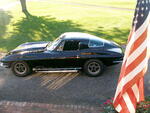
I thought this was resolved, but apparently not. Just took the 67 for a drive and it runs like crap. Thought it was in the ignition, so I replaced the "replacement" coil with a used Delco Remy one...............no change. It's like when the engine warms up, it starts running poorly. Finally, it just quit on its own while idling, then I noticed gas pouring into the carb, so I guess the PV is shot again. I had replaced the last bad one with a 5.5. BTW, the carb is a Holley 750 DP, new, out of the box, on a new BB engine. Ignition is stock tach drive, point type. Also, I noticed today when setting the timing that the vac port on the side of the carb metering body was not pulling any vac, perhaps because the PV was shot???? So, I connected the vac hose to the ported vac fitting on the base of the carb. Anyway, off to get another PV, probably a 6.5 this time because that's what came in the carb.
I'm open to any and all suggestions. Someone said to replace the condenser, so maybe I'll do that as well. May even replace the carb with the 600 Holley off the 327.
Thanks,
Rex
I'm open to any and all suggestions. Someone said to replace the condenser, so maybe I'll do that as well. May even replace the carb with the 600 Holley off the 327.
Thanks,
Rex

Melting Slicks


Joined: Oct 2002
Posts: 2,317
Likes: 111
From: St Louis MO
To better control the fuel curve on an engine that sees track time only. It's almost always a bad idea to plug the PV on the primary side for an engine used on the street.
Also, the PV has no affect on anything going on in the idle circuit. The PV only flows fuel when the boosters are flowing. If you plugged the vacuum hole in the bottom of the PV chamber and removed the valve -fully exposing the PV fuel channel restrictors- the car would still idle fine.
Also, the PV has no affect on anything going on in the idle circuit. The PV only flows fuel when the boosters are flowing. If you plugged the vacuum hole in the bottom of the PV chamber and removed the valve -fully exposing the PV fuel channel restrictors- the car would still idle fine.
The function of the PV is to cause enrichment at the vacuum setting of the PV, but this is only true if fuel is flowing in the main circuit up to and through the boosters (at idle, there is NO main circuit fuel flow). In other words, when adding throttle beyond approximately half and the vacuum drops below, say 6.5 inches, the PV opens and admits more fuel into the main well creating a richer mixture for near and full WOT.
Safety Car
Joined: Aug 2000
Posts: 3,711
Likes: 43
From: San Antonio TX
What makes you think it's the PV? The vacuum port for the PV is below the thottle blades. On a non-running engine, you'd only see some fuel puddling in the plenum if you opened the throttle and took a peek down the bores. On a running engine, you wouldn't see anything. It would just have a noticeably rich idle.
You wrote you had fuel pouring into the carb. I think you found the cause of your problem. Address it. If you're seeing fuel coming out of the boosters, then you have a problem in the float or needle and seat assembly or your fuel pressure is too high.
If the vacuum fitting you measured didn't have any vacuum at idle, congratulations. You've found the ported vacuum, which doesn't have vacuum when the throttle blades are at idle. There is no relationship whatsoever between the PV and the ported vacuum. They are completely different and isolated parts of the carbs system.
Condensors are cheap but I doubt it will do any good. They fail once they start to get hot. The car will buck, like someone put an on/off switch on the ignition
You wrote you had fuel pouring into the carb. I think you found the cause of your problem. Address it. If you're seeing fuel coming out of the boosters, then you have a problem in the float or needle and seat assembly or your fuel pressure is too high.
If the vacuum fitting you measured didn't have any vacuum at idle, congratulations. You've found the ported vacuum, which doesn't have vacuum when the throttle blades are at idle. There is no relationship whatsoever between the PV and the ported vacuum. They are completely different and isolated parts of the carbs system.
Condensors are cheap but I doubt it will do any good. They fail once they start to get hot. The car will buck, like someone put an on/off switch on the ignition

Racer

Joined: Jan 2008
Posts: 288
Likes: 0
From: Schaumburg Illinois
I thought this was resolved, but apparently not. Just took the 67 for a drive and it runs like crap. Thought it was in the ignition, so I replaced the "replacement" coil with a used Delco Remy one...............no change. It's like when the engine warms up, it starts running poorly. Finally, it just quit on its own while idling, then I noticed gas pouring into the carb, so I guess the PV is shot again. I had replaced the last bad one with a 5.5. BTW, the carb is a Holley 750 DP, new, out of the box, on a new BB engine. Ignition is stock tach drive, point type. Also, I noticed today when setting the timing that the vac port on the side of the carb metering body was not pulling any vac, perhaps because the PV was shot???? So, I connected the vac hose to the ported vac fitting on the base of the carb. Anyway, off to get another PV, probably a 6.5 this time because that's what came in the carb.
I'm open to any and all suggestions. Someone said to replace the condenser, so maybe I'll do that as well. May even replace the carb with the 600 Holley off the 327.
Thanks,
Rex
I'm open to any and all suggestions. Someone said to replace the condenser, so maybe I'll do that as well. May even replace the carb with the 600 Holley off the 327.
Thanks,
Rex

Corvette Stories
The Best of Corvette for Corvette Enthusiasts

Top 10 Most Expensive Corvettes Ever Sold on Bring A Trailer
Brett Foote
10 Things Every Corvette Owner Needs (2026 Edition)
Michael S. Palmer
8 Most "Only Corvette Owners Understand" Quirks and Problems
Pouria Savadkouei
10 Reasons the C6 Z06 is Still A Performance Benchmark After 20 Years
Joe Kucinski
How Much Horsepower Every Corvette Engine "LOST" in 1972
Joe Kucinski
Top 10 DOs and DON'Ts for Protecting Your Convertible Top!
Michael S. Palmer
Top 10 Most Explosive Corvettes Ever Made: Power-to-Weight Ratio Ranked!
Joe Kucinski
150 hp to 1,250 hp: Every Corvette Generation Compared by the Specs That Matter
Joe Kucinski
8 Coolest Corvette Pace Cars (and Replicas) of All Time
Verdad Gallardo
Burning Brakes

Joined: Oct 2001
Posts: 911
Likes: 5
From: TN
Holley 750
gerry72 identified your ported vacuum on the metering block. I concur with that finding. It is also identified as such with the Holley information sheet that came with my double pumper.
My new Holley developed a problem of letting gas into the carb when the engine was shut off. The float leaked and gas entered the float, so it was to heavy. It also affected my engine when running. I replaced both plastic/nylon floats with Holley metal replacemets.
My new Holley developed a problem of letting gas into the carb when the engine was shut off. The float leaked and gas entered the float, so it was to heavy. It also affected my engine when running. I replaced both plastic/nylon floats with Holley metal replacemets.
Thread Starter
Le Mans Master
Joined: Oct 2007
Posts: 6,007
Likes: 1,746
From: Richmond Kentucky
2025 Corvette of the Year Winner- Modified
2024 C2 of the Year Winner - Modified
2022 Corvette of the Year Finalist -- Modified
2021 C2 of the Year Winner - Modified
2021 C1 of the Year Winner - Modified
2020 Corvette of the Year (stock)
C2 of Year Winner (stock) 2019
2017 C1 of the Year Finalist
Recently changed vac cannister from B28 to B20. Was told by a very well known TI specialist that the B28 was not correct for my engine, so I installed a new VC1802 from NAPA. Since doing that, the vacuum has not been acting right. Will try a different carb today. Am considering installing a NOS I distributor.
