




Zero to 200 and Back! Nice article

Thread Starter
Team Owner


Joined: Apr 1999
Posts: 21,953
Likes: 1,445
From: Reno Nevada
2024 C3 of the Year Finalist- Modified
 Zero to 200 and Back! Nice article
But thanks to advances in electronics and turbocharging, several companies today claim to produce modified production cars with 1000 and more horsepower that run on 93-octane pump gas and are civilized enough for everyday driving.
To prove this seemingly preposterous notion, we gathered five speed sleds—four tuned cars and one production unit. The severely souped-up entries are a Ford GT, a Dodge Viper, a Chevrolet Corvette Z06, and a Lamborghini Gallardo. The lone production car is the most powerful domestic available, the 750-hp Saleen S7 Twin Turbo.
We knew this competition would be a trip into uncharted territory—particularly the part about stopping from 200 mph—and would require some additional space to perform. So we rented an 11,800-foot airstrip in Oscoda, Michigan, that had once been part of the Wurtsmith U.S. Air Force base. To make sure all the cars were using 93-octane pump fuel, we embarked on a 200-mile, 5000-hp road trip the day before the test to burn off the fuel the cars came with.
After reading the article did you notice the brake rotor failures? Did you notice the smarter team switched to hoosier A6 tires got the best stopping distance? The power to weight ratio was a big factor and you want a rear weight bias. I have 42% front and 58% rear on my 79 Vette
http://comcast.vehix.com/articles/ca...-back/?cid=800
To prove this seemingly preposterous notion, we gathered five speed sleds—four tuned cars and one production unit. The severely souped-up entries are a Ford GT, a Dodge Viper, a Chevrolet Corvette Z06, and a Lamborghini Gallardo. The lone production car is the most powerful domestic available, the 750-hp Saleen S7 Twin Turbo.
We knew this competition would be a trip into uncharted territory—particularly the part about stopping from 200 mph—and would require some additional space to perform. So we rented an 11,800-foot airstrip in Oscoda, Michigan, that had once been part of the Wurtsmith U.S. Air Force base. To make sure all the cars were using 93-octane pump fuel, we embarked on a 200-mile, 5000-hp road trip the day before the test to burn off the fuel the cars came with.
After reading the article did you notice the brake rotor failures? Did you notice the smarter team switched to hoosier A6 tires got the best stopping distance? The power to weight ratio was a big factor and you want a rear weight bias. I have 42% front and 58% rear on my 79 Vette
http://comcast.vehix.com/articles/ca...-back/?cid=800

Race Director


Joined: Jan 2007
Posts: 14,948
Likes: 3,351
From: NYC NY
Pretty interesting article - thanks for posting. 
The Corvette had it's issues 1st the engine then the brakes.
What's with those rotors cracking? A brake failure is not exactly what you want to be dealing with when you're slowing down from 200 Mph.
The Corvette had it's issues 1st the engine then the brakes.
What's with those rotors cracking?
A brake failure is not exactly what you want to be dealing with when you're slowing down from 200 Mph.
Race Director
Joined: Jan 2007
Posts: 14,948
Likes: 3,351
From: NYC NY
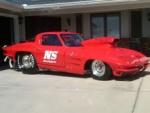
 Could you help me to understand something about front to rear weight distribution and how it effects a C3? I thought 50/50 was ideal to make the car handle "neutral". Wheren't most of the pony cars nose heavy so they understeered because the car manufacturers thought that was safer? I also remember that Zora was thrilled to have the weight distribution on the ZL1 43/57 because that was mid-engine sports car territory (like your own car). So is the idea the more weight on the rear the better the traction but then doesn't that create oversteer (which more often than not gets the novice in trouble)? I know that there are several forum members here (you included of course) that have lots of track experience so you guys know how to deal with it. Is it better to have a car that has more traction at the expense of oversteer or does the C3 chassis lay out remain neutral with tuning (spring rates and sway bar diameters) even though the weight is baised toward the rear? I'm sorry to take this off topic but would like a better understanding of how the weight distribution effects the handling of a C3. Thanks.
Safety Car


Joined: Aug 2001
Posts: 3,892
Likes: 13
From: Pettis Performance 565 with two stages of Nitrous Supply nitrous 1.082, 4.61 at 155, 7.17 at 192
That was a very cool article George. I wonder how long it would take me to go 0-200 and back to 0 in my race car.???
Thread Starter
Team Owner
Joined: Apr 1999
Posts: 21,953
Likes: 1,445
From: Reno Nevada
2024 C3 of the Year Finalist- Modified
When we first ran the 220 inch frame I pulled the hand brake to make the first exit turn around road and the big slicks started hopping. Just like you years ago running off the end!!!!!!!!!!!!!
Thread Starter
Team Owner
Joined: Apr 1999
Posts: 21,953
Likes: 1,445
From: Reno Nevada
2024 C3 of the Year Finalist- Modified
Could you help me to understand something about front to rear weight distribution and how it effects a C3? I thought 50/50 was ideal to make the car handle "neutral". Wheren't most of the pony cars nose heavy so they understeered because the car manufacturers thought that was safer? I also remember that Zora was thrilled to have the weight distribution on the ZL1 43/57 because that was mid-engine sports car territory (like your own car). So is the idea the more weight on the rear the better the traction but then doesn't that create oversteer (which more often than not gets the novice in trouble)? I know that there are several forum members here (you included of course) that have lots of track experience so you guys know how to deal with it. Is it better to have a car that has more traction at the expense of oversteer or does the C3 chassis lay out remain neutral with tuning (spring rates and sway bar diameters) even though the weight is baised toward the rear? I'm sorry to take this off topic but would like a better understanding of how the weight distribution effects the handling of a C3. Thanks.Now look at a drag car or road race car you want max weight x-fer to the rear to put the power down instead of going up in smoke or having the rear hang out like a drifter car.
The whole BS of over steer under steer is just a matter of the best setup. Just watch NASCAR and those guys are driving so much on the edge flat tracking around turns at 180 mph and 1 pound of air pressure makes a difference.
I only get about 3 event days or about sub 6 hours of run time on a set of my slicks.
Any car can change from over or under steer depending on how fast you enter the turn and how much gas petal is applied during the turn.
Just think about it. do the late braking and then turn in with way too much speed the front end pushes. More turn in doesn't help. Punch the gas and now you have 4 wheel drift. Keep it floored and the rear swings out exiting the turn. You just had everything.
I have 335/35 rear tires for the street and most of the time they keep me going straight

Thread Starter
Team Owner
Joined: Apr 1999
Posts: 21,953
Likes: 1,445
From: Reno Nevada
2024 C3 of the Year Finalist- Modified
Just think about any super car you see. They all went to rear engine placement. To get as much weight as they can on the rear tires. In extreme machines this might be as much as 30% front and 70% rear static wight bias and then they add wings to get the front and rear to work how they want.
Corvette Stories
The Best of Corvette for Corvette Enthusiasts

Top 10 Most Expensive Corvettes Ever Sold on Bring A Trailer
Brett Foote
10 Things Every Corvette Owner Needs (2026 Edition)
Michael S. Palmer
8 Most "Only Corvette Owners Understand" Quirks and Problems
Pouria Savadkouei
10 Reasons the C6 Z06 is Still A Performance Benchmark After 20 Years
Joe Kucinski
How Much Horsepower Every Corvette Engine "LOST" in 1972
Joe Kucinski
Top 10 DOs and DON'Ts for Protecting Your Convertible Top!
Michael S. Palmer
Top 10 Most Explosive Corvettes Ever Made: Power-to-Weight Ratio Ranked!
Joe Kucinski
150 hp to 1,250 hp: Every Corvette Generation Compared by the Specs That Matter
Joe Kucinski
8 Coolest Corvette Pace Cars (and Replicas) of All Time
Verdad Gallardo
Race Director
Joined: Jan 2007
Posts: 14,948
Likes: 3,351
From: NYC NY
Just think about any super car you see. They all went to rear engine placement. To get as much weight as they can on the rear tires. In extreme machines this might be as much as 30% front and 70% rear static wight bias and then they add wings to get the front and rear to work how they want.
 Makes perfect sense when you put it that way. I need to get out of the American muscle car mode and start thinking in terms of world class sports cars. Thanks again.
