




Driveline angle? After installing a Tremec.
Thread Starter
Burning Brakes


Joined: Dec 2008
Posts: 971
Likes: 45
From: Middlesex NJ
 Driveline angle? After installing a Tremec.
Has anyone installed a tremec and questioned the drive line angle?
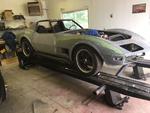
My body is off so I can really see things well. Maybe I am missing something or making something out of nothing. The instructions seem to leave it up to you to figure this one out. I was figuring with the complete kit I should not really have an issue. But my motor seems to be noticeably lower at the trans tail shaft than it was before. I did install a big block over a small block along with the trans but that should not have changed the drive angle given the mounting dimension on the small and big blocks are common for chevys.
It just seems the trans tail shaft is lower by almost an inch? I have installed a vintage air front runner serpentine system on the engine as well and I was supposed to have to notch the front cross member for clearance. Well with the serpentine system on I have 1/2 inch clearance between the lower pulley and the cross member without notching. So I really think something is not right. The tremec kit comes with a normal trans mount isolator and a new cross member bracket and does not call for a spacer of any type. From what I can gather the trans is at a 4degree slope down and the differential is at a 2 degree slope down. I believe the two angles should small, equal but opposite for proper universal life. Has anyone else run into this?
My body is off so I can really see things well. Maybe I am missing something or making something out of nothing. The instructions seem to leave it up to you to figure this one out. I was figuring with the complete kit I should not really have an issue. But my motor seems to be noticeably lower at the trans tail shaft than it was before. I did install a big block over a small block along with the trans but that should not have changed the drive angle given the mounting dimension on the small and big blocks are common for chevys.
It just seems the trans tail shaft is lower by almost an inch? I have installed a vintage air front runner serpentine system on the engine as well and I was supposed to have to notch the front cross member for clearance. Well with the serpentine system on I have 1/2 inch clearance between the lower pulley and the cross member without notching. So I really think something is not right. The tremec kit comes with a normal trans mount isolator and a new cross member bracket and does not call for a spacer of any type. From what I can gather the trans is at a 4degree slope down and the differential is at a 2 degree slope down. I believe the two angles should small, equal but opposite for proper universal life. Has anyone else run into this?
Racer


Joined: Mar 2008
Posts: 414
Likes: 130
From: Newcastle California
Same situation
My body is off on my 67 and the new tremac is installed. I want to take some drive line angle measuremnts before dropping body. Does anyone have step by step instructions on how to do this-the instructions I have found I cannot seem to understand. Can we keep this thread going until everyone throughly understands how to get those angles and corrrect them if needed??- even the slow learners!! Please!!!

Le Mans Master

Joined: Jul 2006
Posts: 8,117
Likes: 104
From: charlotte north carolina

Melting Slicks

Joined: Jan 2006
Posts: 3,028
Likes: 2
From: North NJ
I need to get a pinion angle tool also to measure mine to see if that is causing my vibrations at certain RPM's.
2GuysGarage did a few shows not too long ago about building their own hot rod frame on a jig. When they setup the diff pinion angle they set it at 3 degrees up and the trans at 3 degrees down. They mentioned 3 degrees should be the proper pinion angle. Not sure if it is different for the vette or kiesler kit.

Tools:
http://www.jegs.com/i/Competition-En.../5020/10002/-1
http://www.jegs.com/i/Intercomp/541/360051/10002/-1
2GuysGarage did a few shows not too long ago about building their own hot rod frame on a jig. When they setup the diff pinion angle they set it at 3 degrees up and the trans at 3 degrees down. They mentioned 3 degrees should be the proper pinion angle. Not sure if it is different for the vette or kiesler kit.
Tools:
http://www.jegs.com/i/Competition-En.../5020/10002/-1
http://www.jegs.com/i/Intercomp/541/360051/10002/-1
Last edited by 68 NJConv 454; Sep 15, 2009 at 02:54 PM.

Le Mans Master
Joined: Dec 2003
Posts: 5,727
Likes: 38
From: Fremont CA
You possibly have the wrong front motor mounts for your Vette. The driveshaft should have about a 1" offset to the passenger side, this is done to allow the needle bearings in the U-joints to rotate and keep them from wearing out prematurely if there is no offset in the driveshaft (or half shafts for that matter) the needles in the cups stay in static positions and rapidly wear out. Finding the correct motor s can be a chore, you need to locate a good auto parts store and find the correct ones, there are 2 kinds (I call the "big block" and "small block" but that isn't necissarily true for a Corvette.) One mount will raise the motor the other will lower it.
Advanced
Joined: Jul 2009
Posts: 57
Likes: 0
From: Uddevalla Västra Götaland
Tko high as possible in tunnel
Install the Tko high as possible in tunnel without rubbing floor!.
Then if your diffpinion points down you could modifie your diff-bracket! and change diff-angle to point up same degree your tailshaft pointing down then reweld diff-bracket. Thats what i did and no vibration,sorry for my bad english.
Then if your diffpinion points down you could modifie your diff-bracket! and change diff-angle to point up same degree your tailshaft pointing down then reweld diff-bracket. Thats what i did and no vibration,sorry for my bad english.

Race Director


Joined: Sep 1999
Posts: 11,361
Likes: 383
From: Plano TX
There is no proper angle. Depending on the length of the drive shaft and rpm there is a maximum permissible angle. For a C3 the max angle is 4-5 degr.
The front and rear angle must match within 1 dgr (less is better). If you have different angles from tranny to drive shaft, and drive shaft to pinion you'll get a vibration.
For our C3's and tremecs, you need to raise the tailhousing of the Tremec as much as you can. Even with it almost rubbing the floor, the angles are not perfect, but OK.
The front and rear angle must match within 1 dgr (less is better). If you have different angles from tranny to drive shaft, and drive shaft to pinion you'll get a vibration.
For our C3's and tremecs, you need to raise the tailhousing of the Tremec as much as you can. Even with it almost rubbing the floor, the angles are not perfect, but OK.
Corvette Stories
The Best of Corvette for Corvette Enthusiasts

Top 10 Most Expensive Corvettes Ever Sold on Bring A Trailer
Brett Foote
10 Things Every Corvette Owner Needs (2026 Edition)
Michael S. Palmer
8 Most "Only Corvette Owners Understand" Quirks and Problems
Pouria Savadkouei
10 Reasons the C6 Z06 is Still A Performance Benchmark After 20 Years
Joe Kucinski
How Much Horsepower Every Corvette Engine "LOST" in 1972
Joe Kucinski
Top 10 DOs and DON'Ts for Protecting Your Convertible Top!
Michael S. Palmer
Top 10 Most Explosive Corvettes Ever Made: Power-to-Weight Ratio Ranked!
Joe Kucinski
150 hp to 1,250 hp: Every Corvette Generation Compared by the Specs That Matter
Joe Kucinski
8 Coolest Corvette Pace Cars (and Replicas) of All Time
Verdad Gallardo
Burning Brakes

Joined: Dec 2003
Posts: 1,004
Likes: 7
From: Adelaide South Australia
Just be wary that if you do set the driveline perfectly, you may end up with the trans tunnel fouling on the trans, which then prompts you to either: change driveline angles, or cut trans tunnel for clearance.
Best you do a trial body fit to see how much room you have to play with before finalising driveline angles and securing body mounts!


Melting Slicks
Joined: Jul 2006
Posts: 2,291
Likes: 493
From: Salmon Arm, BC
I used a string from the bottom of the bellhousing to the centre of the pinion to align the engine-trans-rearend. It was out about 3/8" to the pax side. All I had to do was loosen the bolts and shift things over/tighten and that was done.
To get things aligned horizontally, I used an angle finder on the flat part of the bottom of the rearend, and on the flat part of the tranny yolk. It required 3/8" of shims under the tranny to get the angles within one degree of each other.
Test drive got great results.....no vibrations
To get things aligned horizontally, I used an angle finder on the flat part of the bottom of the rearend, and on the flat part of the tranny yolk. It required 3/8" of shims under the tranny to get the angles within one degree of each other.
Test drive got great results.....no vibrations

Race Director
Joined: Apr 2000
Posts: 17,676
Likes: 201
From: Who says "Nothing is impossible" ? I've been doing nothing for years.
I have no vibration but I did check my driveshaft to tranny/motor angle and it was 2 degs. difference. I also have my tranny up as high as it will go in the tunnel 

Safety Car

Joined: Aug 2001
Posts: 4,883
Likes: 11
From: North Easton Mass
I need to get a pinion angle tool also to measure mine to see if that is causing my vibrations at certain RPM's.
2GuysGarage did a few shows not too long ago about building their own hot rod frame on a jig. When they setup the diff pinion angle they set it at 3 degrees up and the trans at 3 degrees down. They mentioned 3 degrees should be the proper pinion angle. Not sure if it is different for the vette or kiesler kit.
Tools:
http://www.jegs.com/i/Competition-En.../5020/10002/-1
http://www.jegs.com/i/Intercomp/541/360051/10002/-1
2GuysGarage did a few shows not too long ago about building their own hot rod frame on a jig. When they setup the diff pinion angle they set it at 3 degrees up and the trans at 3 degrees down. They mentioned 3 degrees should be the proper pinion angle. Not sure if it is different for the vette or kiesler kit.
Tools:
http://www.jegs.com/i/Competition-En.../5020/10002/-1
http://www.jegs.com/i/Intercomp/541/360051/10002/-1
Rick B.

Race Director


Joined: Feb 1999
Posts: 19,659
Likes: 34
From: Lenoir City Tennessee
Ci 6, 8 & 10 Veteran
St. Jude Donor '05-'06-'07-'08-'09-'10-'11-'12-'13-'14-'15
I have my Tremec up as far as possible and the vibration is somewhat gone. There is still a hint of vibes up at interstate speeds. I know it is possible, but which way should I take the diff yoke, up or down?
Safety Car
Joined: Aug 2001
Posts: 4,883
Likes: 11
From: North Easton Mass
I don't know which Tremec you are installing, but the T56 is considerably longer than the Muncie. If you look down on the driveshaft you will see that there is a significant sideways angle to the u-joint so I don't think the verticle angle is that critical. A T56 has to be lowered almost to the bottom of the crossmember just to clear the transmission tunnel anyway so I think you cross your fingers and hope for the best for vibration and deal with it if it occurs.
Rick B.
Rick B.

Melting Slicks


Joined: Aug 2006
Posts: 3,429
Likes: 20
From: Kingston Ontario
Install the Tko high as possible in tunnel without rubbing floor!.
Then if your diffpinion points down you could modifie your diff-bracket! and change diff-angle to point up same degree your tailshaft pointing down then reweld diff-bracket. Thats what i did and no vibration,sorry for my bad english.
Then if your diffpinion points down you could modifie your diff-bracket! and change diff-angle to point up same degree your tailshaft pointing down then reweld diff-bracket. Thats what i did and no vibration,sorry for my bad english.
Thread Starter
Burning Brakes
Joined: Dec 2008
Posts: 971
Likes: 45
From: Middlesex NJ
Txs for all the good info everyone. Just for your info the trans is a keisler tko 600 kit. I have the energy suspension front (short) motor mounts and the stock trans mount that came with the kit. So the engine should sit were it used to. The poly mounts are the same height as the old mounts.
Looks like I'm gonna notch my front cross member now before the body goes back on. The vintage air front runner will most likely not make it if I start brining up the trans tail shaft.
For those of you that pushed your tail shaft up.... could you share how much of a shim you put in and I am guessing you put it between the trans pad and the exhaust bracket so the exhaust would still line up properly (not between the isolator and the cross member bracket?
If its not too much to ask could someone measure the distance between the bottom of their yoke and the top of their cross member using a straight edge laying on top of the cross member extending out under the yoke and tell me what you have. Mine is currently 2 inches. My budy up the street has about 3 1/8 with the muncie. I know the tremec is a little longer so maybe 2 3/4 to 3 maybe a good starting point. But thats a 1 inch spacer!!
Looks like I'm gonna notch my front cross member now before the body goes back on. The vintage air front runner will most likely not make it if I start brining up the trans tail shaft.
For those of you that pushed your tail shaft up.... could you share how much of a shim you put in and I am guessing you put it between the trans pad and the exhaust bracket so the exhaust would still line up properly (not between the isolator and the cross member bracket?
If its not too much to ask could someone measure the distance between the bottom of their yoke and the top of their cross member using a straight edge laying on top of the cross member extending out under the yoke and tell me what you have. Mine is currently 2 inches. My budy up the street has about 3 1/8 with the muncie. I know the tremec is a little longer so maybe 2 3/4 to 3 maybe a good starting point. But thats a 1 inch spacer!!
Advanced
Joined: Jul 2009
Posts: 57
Likes: 0
From: Uddevalla Västra Götaland
Txs for all the good info everyone. Just for your info the trans is a keisler tko 600 kit. I have the energy suspension front (short) motor mounts and the stock trans mount that came with the kit. So the engine should sit were it used to. The poly mounts are the same height as the old mounts.
Looks like I'm gonna notch my front cross member now before the body goes back on. The vintage air front runner will most likely not make it if I start brining up the trans tail shaft.
For those of you that pushed your tail shaft up.... could you share how much of a shim you put in and I am guessing you put it between the trans pad and the exhaust bracket so the exhaust would still line up properly (not between the isolator and the cross member bracket?
If its not too much to ask could someone measure the distance between the bottom of their yoke and the top of their cross member using a straight edge laying on top of the cross member extending out under the yoke and tell me what you have. Mine is currently 2 inches. My budy up the street has about 3 1/8 with the muncie. I know the tremec is a little longer so maybe 2 3/4 to 3 maybe a good starting point. But thats a 1 inch spacer!!
Looks like I'm gonna notch my front cross member now before the body goes back on. The vintage air front runner will most likely not make it if I start brining up the trans tail shaft.
For those of you that pushed your tail shaft up.... could you share how much of a shim you put in and I am guessing you put it between the trans pad and the exhaust bracket so the exhaust would still line up properly (not between the isolator and the cross member bracket?
If its not too much to ask could someone measure the distance between the bottom of their yoke and the top of their cross member using a straight edge laying on top of the cross member extending out under the yoke and tell me what you have. Mine is currently 2 inches. My budy up the street has about 3 1/8 with the muncie. I know the tremec is a little longer so maybe 2 3/4 to 3 maybe a good starting point. But thats a 1 inch spacer!!

Melting Slicks
Joined: May 2005
Posts: 2,826
Likes: 3
From: Tennessee
I have read 15 "opinions" of driveline angles and how they should be set and I got 15 different suggestions. There seems to be no clear, precise answer to this.
Here is how I set driveline angles on the installs we do here in house......
With the car sitting on all 4's get a measurement from the bottom of the tail housing case, near the end of it (call this reading " A "). Next, get a reading off of the middle of the driveshaft itself, (call this one " B ") and finally, with the pinion yoke turned vertically, use a socket the same diameter as the u-joint cup and place the socket directly on the u-joint cup and get a reading from it (call this one " C "). None of these readings can exceed 5*.
Now, do some math...... A - B = front u-joint working angle and then C - B = rear u-joint working angle. These 2 working angles need to be equal but opposite i.e. +2* and -2* or +3* and -3*. They cannot vary by more than 1/2* (if not equal) and ideally, they need to be in the 1.5* to no more than 3* range.
As mentioned, drivelines are also offset left and right between the transmission slip yoke and the pinion. I am not as well versed in the amount of offset this angle needs to be so I will not comment on that......
It is also important to know if the driveshaft is going at a downward angle as it exits the transmission and goes towards the pinion or an upward angle....? I have attached a crude drawing to illustrate this. Notice how in the "drawing" on the top, the angles created at the front of the driveshaft is on "top" of the driveline and the angle at the rear of the driveshaft is on the "bottom" This is considered "opposite" in my phrase above regarding EQUAL BUT OPPOSITE......
It is also important to try and get the tail housing and pinion yoke on the same angle but in opposite planes as in my "drawings". On a vette with a fixed rear end, it is not as important as the pinion does not wrap up under torque but it is still somewhat critical as it plays a role in whether or not you have a vibration.
To the OP or anyone else here ....Please contact me if you have any more questions regarding this (or anything that has to do with our kit).
Richard
Tech Support
Here is how I set driveline angles on the installs we do here in house......
With the car sitting on all 4's get a measurement from the bottom of the tail housing case, near the end of it (call this reading " A "). Next, get a reading off of the middle of the driveshaft itself, (call this one " B ") and finally, with the pinion yoke turned vertically, use a socket the same diameter as the u-joint cup and place the socket directly on the u-joint cup and get a reading from it (call this one " C "). None of these readings can exceed 5*.
Now, do some math...... A - B = front u-joint working angle and then C - B = rear u-joint working angle. These 2 working angles need to be equal but opposite i.e. +2* and -2* or +3* and -3*. They cannot vary by more than 1/2* (if not equal) and ideally, they need to be in the 1.5* to no more than 3* range.
As mentioned, drivelines are also offset left and right between the transmission slip yoke and the pinion. I am not as well versed in the amount of offset this angle needs to be so I will not comment on that......
It is also important to know if the driveshaft is going at a downward angle as it exits the transmission and goes towards the pinion or an upward angle....? I have attached a crude drawing to illustrate this. Notice how in the "drawing" on the top, the angles created at the front of the driveshaft is on "top" of the driveline and the angle at the rear of the driveshaft is on the "bottom" This is considered "opposite" in my phrase above regarding EQUAL BUT OPPOSITE......
It is also important to try and get the tail housing and pinion yoke on the same angle but in opposite planes as in my "drawings". On a vette with a fixed rear end, it is not as important as the pinion does not wrap up under torque but it is still somewhat critical as it plays a role in whether or not you have a vibration.
To the OP or anyone else here ....Please contact me if you have any more questions regarding this (or anything that has to do with our kit).
Richard
Tech Support
Last edited by rj8806; Sep 16, 2009 at 02:49 PM.