



Engine in death throes?

Thread Starter
Advanced

Joined: Jun 2009
Posts: 92
Likes: 0
 Engine in death throes?
Last Update!
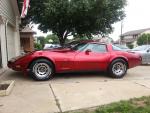
I've had the corvette back roughly a month now. Put on a new 600cfm edelbrock carb, switched air cleaners, cut new wires for new plugs (new headers ate the last ones). New headers meant new exhaust... straight 2.5 to 3 inch flowmasters. Did a little thermal wrapping on the headers as well as some for the new plug wires. Thinking switching from the factory (?) 1.5 rockers to some 1.6 as my next project. Once again thanks for all the help!
Pics:


Maintaining everything below for prosperity!
Update: Thanks all for the help. New engine is going in by the 5th/6th of January! I'll keep posting once I know more about the issues with my old engine or to respond to you guys.
http://s28.photobucket.com/albums/c236/jneal00f/ neal pics/vids uploaded
TL: DR (Too Long: Didn't Read) What do I do if my #1 cylinder is 'dead'?
For those of you not familiar with me... I am not, by even the most generous definition, mechanically inclined (computer geek at heart). I purchased my 1978 about 5-6 months ago in an effort to educate and occupy myself. This forum's members have been of great help so far and I come to you again. However this time my problem seems a little more serious than my headlights not coming up, etc, etc.
This morning on my way through the front gate, while showing my I.D. to security, my car died. I was in drive with the brakes applied. The engine hadn't sounded exactly right (knocking?) during the drive in but I had attributed this to the colder weather.
The car would not re-start until sometime later when I arrived with a tow truck. I traced the noise, still knocking, to the number 1 cylinder. Feeling daring I unplugged the wire connecting the spark plug to the distributor. No perceivable change to the engine. I went ahead with the tow fearing that continuing to drive the car with a whole cylinder/piston/plug not working would do more harm than good.
So its at my house and I'm back at work researching the issue. The last 3 things I've done to the car were switching from a breather to a cap on the passengers side valve cover, putting new 'gaskets?' between my valve cover and the engine, and fitting a new aluminum edelbrock intake manifold. I fear that even though I took precautions (imagination, tin foil, vacuum) to keep any debris from entering deeper into the engine during these changes that something might have slipped through. The engine has smoked a lot since I bought it my research leads me to believe that I have an overabundance of 'blow-by'. So much that I have oil all over my engine compartment.
Tomorrow I intend to pull the #1 spark plug to see if its fouled and possibly buy a compression test kit and riddle my way through that. As I've previously stressed, I'm fairly ignorant to the inner workings of my 350 but I do have a vague idea about what lies beneath the parts I have removed and replaced thus far. I mention this ask that any responses I receive be written for an 8th grade audience and illustrated if possible.
I'll reply and supply as much addition information as I can. I have some cash, tools, and access to an on-base auto hobby shop. I'm taking it by a certified base mechanic to get his opinion on the knocking first thing tomorrow morning.
Thanks for your efforts on fighting ignorance!
TL: DR What do I do if my #1 cylinder is 'dead'?
TO DO LIST
1. Pull, clean, and re-gap #1 spark plug. (DONE)
2. Test #1 wire from distributor. (DONE)
3. Confirm the points are not stuck or worn out and gapped correctly. (Not Applicable?)
4. Check for loose wires. (DONE)
5. A compression test.
6. Pull valve cover for visual inspection and upload pics. Look for broken valve springs, slipped/broken rocker arms/studs. Check all valves to make sure they close entirely. (IN PROGRESS)
7. Intake/Exhaust Lob on cam is 'wiped'. Call NASA and FBI.
7. Check the rotor and distributor cap. (DONE)
8. Fail miserably.
9. Buy crate engine.
I've had the corvette back roughly a month now. Put on a new 600cfm edelbrock carb, switched air cleaners, cut new wires for new plugs (new headers ate the last ones). New headers meant new exhaust... straight 2.5 to 3 inch flowmasters. Did a little thermal wrapping on the headers as well as some for the new plug wires. Thinking switching from the factory (?) 1.5 rockers to some 1.6 as my next project. Once again thanks for all the help!
Pics:
Maintaining everything below for prosperity!
Update: Thanks all for the help. New engine is going in by the 5th/6th of January! I'll keep posting once I know more about the issues with my old engine or to respond to you guys.
http://s28.photobucket.com/albums/c236/jneal00f/ neal pics/vids uploaded
TL: DR (Too Long: Didn't Read) What do I do if my #1 cylinder is 'dead'?
For those of you not familiar with me... I am not, by even the most generous definition, mechanically inclined (computer geek at heart). I purchased my 1978 about 5-6 months ago in an effort to educate and occupy myself. This forum's members have been of great help so far and I come to you again. However this time my problem seems a little more serious than my headlights not coming up, etc, etc.
This morning on my way through the front gate, while showing my I.D. to security, my car died. I was in drive with the brakes applied. The engine hadn't sounded exactly right (knocking?) during the drive in but I had attributed this to the colder weather.
The car would not re-start until sometime later when I arrived with a tow truck. I traced the noise, still knocking, to the number 1 cylinder. Feeling daring I unplugged the wire connecting the spark plug to the distributor. No perceivable change to the engine. I went ahead with the tow fearing that continuing to drive the car with a whole cylinder/piston/plug not working would do more harm than good.
So its at my house and I'm back at work researching the issue. The last 3 things I've done to the car were switching from a breather to a cap on the passengers side valve cover, putting new 'gaskets?' between my valve cover and the engine, and fitting a new aluminum edelbrock intake manifold. I fear that even though I took precautions (imagination, tin foil, vacuum) to keep any debris from entering deeper into the engine during these changes that something might have slipped through. The engine has smoked a lot since I bought it my research leads me to believe that I have an overabundance of 'blow-by'. So much that I have oil all over my engine compartment.
Tomorrow I intend to pull the #1 spark plug to see if its fouled and possibly buy a compression test kit and riddle my way through that. As I've previously stressed, I'm fairly ignorant to the inner workings of my 350 but I do have a vague idea about what lies beneath the parts I have removed and replaced thus far. I mention this ask that any responses I receive be written for an 8th grade audience and illustrated if possible.
I'll reply and supply as much addition information as I can. I have some cash, tools, and access to an on-base auto hobby shop. I'm taking it by a certified base mechanic to get his opinion on the knocking first thing tomorrow morning.
Thanks for your efforts on fighting ignorance!
TL: DR What do I do if my #1 cylinder is 'dead'?
TO DO LIST
1. Pull, clean, and re-gap #1 spark plug. (DONE)
2. Test #1 wire from distributor. (DONE)
3. Confirm the points are not stuck or worn out and gapped correctly. (Not Applicable?)
4. Check for loose wires. (DONE)
5. A compression test.
6. Pull valve cover for visual inspection and upload pics. Look for broken valve springs, slipped/broken rocker arms/studs. Check all valves to make sure they close entirely. (IN PROGRESS)
7. Intake/Exhaust Lob on cam is 'wiped'. Call NASA and FBI.
7. Check the rotor and distributor cap. (DONE)
8. Fail miserably.
9. Buy crate engine.
Last edited by Nealjr; Jan 31, 2010 at 08:14 PM. Reason: Formatting/List Building

Pro

Joined: May 2003
Posts: 593
Likes: 0
From: London England
I'm afraid there are too many possibles based on your description.
the first thing to do would be to pull the valve covers for a visual inspection and do a compression test.
If it's any help I'll give you either ends of the spectrum.
It could be something as simple as a broken rocker (unlikely bearing in mind the stall and the no restart) or at worst a seized or holed piston requiring a complete rebuild or new short motor.
the first thing to do would be to pull the valve covers for a visual inspection and do a compression test.
If it's any help I'll give you either ends of the spectrum.
It could be something as simple as a broken rocker (unlikely bearing in mind the stall and the no restart) or at worst a seized or holed piston requiring a complete rebuild or new short motor.

Le Mans Master


Joined: Aug 2006
Posts: 7,431
Likes: 1,561
From: mount holly NC
2025 c3 ('74-'82) of the Year Finalist - Unmodified
2019 C3 of Year Finalist (appearance mods)
Kiss!
Ever changed all the spark plugs, or at least check #1 first.
How old are the plug wires and is #1 wire good?
Check the rotor and distributor cap.
Confirm the points are not stuck or worn out and gaped correctly.
Check for loose wires.
A compression test should be done one a warm motor with all the plugs out and the carb open, but you can check for SOME compression by just checking #1 hole with the other plugs still in.
Then follow goldens advice.
How old are the plug wires and is #1 wire good?
Check the rotor and distributor cap.
Confirm the points are not stuck or worn out and gaped correctly.
Check for loose wires.
A compression test should be done one a warm motor with all the plugs out and the carb open, but you can check for SOME compression by just checking #1 hole with the other plugs still in.
Then follow goldens advice.
Burning Brakes

Joined: May 2006
Posts: 774
Likes: 1
From: Round Rock Texas
Sounds bad. A good time to really get the motor rebuilt and put some new pep into the motor. It will make you smile the first time you start it and take it down the road. I had the original motor that started knocking badly on my 75. My answer was to pull the motor, set it aside for later rebuild and installed a new crate motor. I'm happy and so is my wife since she doesn't see my hang dog look all the time.
Thread Starter
Advanced
Joined: Jun 2009
Posts: 92
Likes: 0
Golden: Thanks for the post. I've seen some of your posts before and you seem fairly knowledgeable. Going to upload pics of valve covers off tomorrow morning and I would appreciate it if you get a chance to take a look and tell me if you see anything obvious. Just for clarification the vehicle didn't restart right after dieing on me. It was trying to turn over but seemed really sluggish. A few hours later when I returned it started immediately. Cross your fingers for me.
Pete: I really appreciate the list. Easiest stuff first with likely suspects taking priority. I'll definitely take your advice and I've posted the list in my original just to keep track of my progress and make additions if anyone supplies them. I did have one question though... to what is "4. Confirm the points are not stuck or worn out and gaped correctly." referring to? Spark Plugs? P.S. I have a brand new distributor sitting in my house but have thus far neglected to put it in. I had it in at one time but magnets went bad somehow so the speed shop switch me out. Currently using the distributor that came with the car. I hesitate only because my friend set my timing right before he deployed and he's not here to help me a second time. I have the tools but my towering ignorance is quite a hurdle to jump.
Marz: Thanks for the vote of confidence lol. I'm going to try to eek out at least a few more months from this engine before I switch to a crate. I have a reenlistment bonus coming up that will open up a lot of options in terms of what engine i could afford. Any suggestions? I keep hearing 383 stroker and theres a small voice somewhere saying EFI. Thanks for posting!
Pete: I really appreciate the list. Easiest stuff first with likely suspects taking priority. I'll definitely take your advice and I've posted the list in my original just to keep track of my progress and make additions if anyone supplies them. I did have one question though... to what is "4. Confirm the points are not stuck or worn out and gaped correctly." referring to? Spark Plugs? P.S. I have a brand new distributor sitting in my house but have thus far neglected to put it in. I had it in at one time but magnets went bad somehow so the speed shop switch me out. Currently using the distributor that came with the car. I hesitate only because my friend set my timing right before he deployed and he's not here to help me a second time. I have the tools but my towering ignorance is quite a hurdle to jump.
Marz: Thanks for the vote of confidence lol.
I'm going to try to eek out at least a few more months from this engine before I switch to a crate. I have a reenlistment bonus coming up that will open up a lot of options in terms of what engine i could afford. Any suggestions? I keep hearing 383 stroker and theres a small voice somewhere saying EFI. Thanks for posting!
Last edited by Nealjr; Dec 20, 2009 at 08:48 PM.
Thread Starter
Advanced
Joined: Jun 2009
Posts: 92
Likes: 0
ZZ71S: Let me preface by saying I have no experience with either knocks or ticks coming from engines until today. However, to my recollection, the sound was a loud knock coming from the, I hesitate to say, top of my engine near the #1. I didn't put my ear to the ground to see if it got louder near the bottom though. It just seemed to originate from that point.
Corvette Stories
The Best of Corvette for Corvette Enthusiasts

Every 2027 Corvette Engine Explained
Joe Kucinski
Designer Imagines A Corvette That Looks More Like a Corvette Than the Corvette
Verdad Gallardo
10 Ugly Corvettes That We Still Kinda Love
Joe Kucinski
Top 10 Most Expensive Corvettes Ever Sold on Bring A Trailer
Brett Foote
10 Things Every Corvette Owner Needs (2026 Edition)
Michael S. Palmer
8 Most "Only Corvette Owners Understand" Quirks and Problems
Pouria Savadkouei
10 Reasons the C6 Z06 is Still A Performance Benchmark After 20 Years
Joe Kucinski
How Much Horsepower Every Corvette Engine "LOST" in 1972
Joe Kucinski
Top 10 DOs and DON'Ts for Protecting Your Convertible Top!
Michael S. Palmer
Thread Starter
Advanced
Joined: Jun 2009
Posts: 92
Likes: 0
Mike: It had started billowing smoke at random times when stopping at lights. I found that if I shifted into neutral it seemed to stop. Upon closer inspection I noticed that it all seemed to be coming out of the passenger side breather. The hole for the breather looked like it was meant to fit a cap so I asked around, got the okay, and made the switch. The engine has always covered itself in oil but has recently gotten worse. Thanks for bending your mind around this.
P.S. I'm not sure what a point is when referring to distributors so I'm 'removing' it from the list as per your advice. Following is a pic I uploaded awhile ago while addressing some vacuum issues. It shows my distributor. Keep in mind the vacuum hoses are now, hopefully, all in the right place ALTHOUGH THE PIC DOES NOT SHOW THEM THERE.

P.S. I'm not sure what a point is when referring to distributors so I'm 'removing' it from the list as per your advice. Following is a pic I uploaded awhile ago while addressing some vacuum issues. It shows my distributor. Keep in mind the vacuum hoses are now, hopefully, all in the right place ALTHOUGH THE PIC DOES NOT SHOW THEM THERE.
Last edited by Nealjr; Dec 20, 2009 at 09:27 PM.

Team Owner


Joined: Jan 2006
Posts: 37,637
Likes: 3,118
From: Crossville TN
Unless you have a fouled spark plug or a broken (open) plug wire in #1 cylinder, your ignition system is not the problem. The other seven cylinders are working OK, so ignition module/distributor are not likely the cause. Your most likely causes (in priority order) are:
1. Bad or fouled plug; 2. plug wire to #1 is not making good connection, is broken internally, or is shorting out to the engine block somewhere {get a new piece of plug wire to try or swap wires with another plug to test}; 3. valve train problem...broken valve spring, rocker arm slipped out of position or broken, broken rocker arm stud, etc. 4. stuck valve (not closing entirely); 5. intake and/or exhaust lobe on cam is 'wiped' on #1 cylinder so that the valve doesn't open; 6. burned piston [unlikely].
My 'gut' guess is a bad spark plug ($3) or a bad plug wire (buy 5 feet of resistance plug wire at auto parts store...off the roll). I hope it's an easy fix.
1. Bad or fouled plug; 2. plug wire to #1 is not making good connection, is broken internally, or is shorting out to the engine block somewhere {get a new piece of plug wire to try or swap wires with another plug to test}; 3. valve train problem...broken valve spring, rocker arm slipped out of position or broken, broken rocker arm stud, etc. 4. stuck valve (not closing entirely); 5. intake and/or exhaust lobe on cam is 'wiped' on #1 cylinder so that the valve doesn't open; 6. burned piston [unlikely].
My 'gut' guess is a bad spark plug ($3) or a bad plug wire (buy 5 feet of resistance plug wire at auto parts store...off the roll). I hope it's an easy fix.
Thread Starter
Advanced
Joined: Jun 2009
Posts: 92
Likes: 0
7T1vette: What you're saying makes sense to me. I'll move checking the distributor down on the list but I assume that if my #1 plug wire passes its test that I can mark the distributor off completely. As far as anything you mentioned after item number two... I'm going to have to research the terminology or find a nice diagram to know what you're talking about. Regardless I'll add it to the list. Thanks much and I'm hoping with you!
Team Owner
Joined: Jan 2006
Posts: 37,637
Likes: 3,118
From: Crossville TN
Where the heck is your PCV valve hose running (red line in your photo)? It looks like it is going back to the firewall. It should be going into the base of the carb to be fed into the intake charge for burning (rather than getting dumped into your engine compartment).
That isn't your problem {at least, not the one you are asking about}, but that needs to be resolved later.
That isn't your problem {at least, not the one you are asking about}, but that needs to be resolved later.
Thread Starter
Advanced
Joined: Jun 2009
Posts: 92
Likes: 0
7T1vette: My PCV is running to the 3/8 hole in my intake manifold between my distributor and carb. The pic is an old one that I posted here to get help. After switched my manifold I didn't need the spacer between it and the carb. Thats where my PCV hooked up to previously. My carb doesn't seem to have a port for the PCV. I was advised to put it to the manifold.
Last edited by Nealjr; Dec 20, 2009 at 09:27 PM.

Race Director


Joined: Jul 2001
Posts: 15,892
Likes: 42
Where the heck is your PCV valve hose running (red line in your photo)? It looks like it is going back to the firewall. It should be going into the base of the carb to be fed into the intake charge for burning (rather than getting dumped into your engine compartment).
That isn't your problem {at least, not the one you are asking about}, but that needs to be resolved later.
That isn't your problem {at least, not the one you are asking about}, but that needs to be resolved later.

Race Director
Joined: Mar 2006
Posts: 14,112
Likes: 28
From: Florida
7T1vette: My PCV is running to the 3/8 hole in my intake manifold between my distributor and carb. The pic is an old one that I posted here to get help. After switched my manifold I didn't need the spacer between it and the carb. Thats where my PCV hooked up to previously. My carb doesn't seem to have a port for the PCV. I was advised to put it to the manifold.
The 3/8" port on the Holley is for the pcv (distributed to all cylinders in the throttle plate so no single cylinder can become oil contaminated).
The booster doesn't care, so a single runner is fine.
This isn't your current problem, but could foul a plug down the road.
Start with your wires and plugs and a compression check when the plugs are out. Triple check your plug wires are connected correctly.
Don't jump over hoops to get the engine warm for the compression check, a bad cylinder will show up cold too, all will just not have as high a reading as possible.
The condition of the plugs will tell a lot before you start taking things apart.
Pro
Joined: May 2003
Posts: 593
Likes: 0
From: London England
I don't want to sound like the voice of doom and hope for your sake I'm wrong but I think this may be more terminal than a broken spark plug.
One cylinder with dud ignition is not normally enough to a) stall the engine, b) stop it from restarting.
The stall combined with refusal to start and slow turning on the starter suggests a partial engine seizure to me
Add to this the fact that it did start once it had cooled down and it does start to sound like either a partial bearing or piston seizure. Combine this with the fact that No1 cylinder doesn't seem to be doing anything and it starts to sound like a broken piston land, localised over heating or maybe small end failure.
Bear in mind this diagnosis over a router
One cylinder with dud ignition is not normally enough to a) stall the engine, b) stop it from restarting.
The stall combined with refusal to start and slow turning on the starter suggests a partial engine seizure to me
Add to this the fact that it did start once it had cooled down and it does start to sound like either a partial bearing or piston seizure. Combine this with the fact that No1 cylinder doesn't seem to be doing anything and it starts to sound like a broken piston land, localised over heating or maybe small end failure.
Bear in mind this diagnosis over a router
Thread Starter
Advanced
Joined: Jun 2009
Posts: 92
Likes: 0
Noonie: I'll make the PCV swap you suggested. Makes sense to me. I'll upload a bunch of pics if the problem doesn't appear to be obvious this morning. Thanks for the input.
Golden: Diagnosis over a router is what I'm here for. I don't mind you preparing me for the worst.
Golden: Diagnosis over a router is what I'm here for. I don't mind you preparing me for the worst.
Team Owner
Joined: Jan 2006
Posts: 37,637
Likes: 3,118
From: Crossville TN
Golden...
But that doesn't change the order of things to be checked, however...
To the poster: If plug/plug wire is not the problem, remove the valve cover on the left cylinder bank. Look at the valve system for cylinder #1 to see if it looks like the others on that bank (the cam will cause the various valves to be in different positions, of course). If all the parts seem to be there and hooked up the same (look carefully at valve springs...broken springs can be more difficult to spot), the next thing to do is to remove the primary [spark] feed wire from your ignition coil...so the car won't start...and have someone else crank the engine while you watch the valve movements on #1 cylinder. If the valves seem to move similarly to the others and have approximately the same valve "lift", then the valve train probably isn't the problem either. Should you get to this point without finding anything significant, your problem is likely more complex and deeper into the engine.
But, check those first few items and give us feedback on your findings. When you get to a point where you are uncomfortable with further disassembly/diagnosis, it's time to find a GOOD [meaning, reputable, honest, knowledgable on Corvettes, and resonably priced] mechanic.
But that doesn't change the order of things to be checked, however...
To the poster: If plug/plug wire is not the problem, remove the valve cover on the left cylinder bank. Look at the valve system for cylinder #1 to see if it looks like the others on that bank (the cam will cause the various valves to be in different positions, of course). If all the parts seem to be there and hooked up the same (look carefully at valve springs...broken springs can be more difficult to spot), the next thing to do is to remove the primary [spark] feed wire from your ignition coil...so the car won't start...and have someone else crank the engine while you watch the valve movements on #1 cylinder. If the valves seem to move similarly to the others and have approximately the same valve "lift", then the valve train probably isn't the problem either. Should you get to this point without finding anything significant, your problem is likely more complex and deeper into the engine.
But, check those first few items and give us feedback on your findings. When you get to a point where you are uncomfortable with further disassembly/diagnosis, it's time to find a GOOD [meaning, reputable, honest, knowledgable on Corvettes, and resonably priced] mechanic.
Thread Starter
Advanced
Joined: Jun 2009
Posts: 92
Likes: 0
7T1: Good morning! I checked the #1 and a few others. Pulled plugs, checked wires, shocked myself several times and as far as I can tell my ignition system is working correctly. The vette starts and runs, albeit craptastically. Next I removed my valve covers and got to work taking some pics and vids for everyone. It APPEARS that everything is working but I have an untrained eye. I still have a knocking sound but theres also a scuffing noise akin to sliding the rubber sole of your boot over a linoleum floor? I'm starting to think its time for a real mechanic unless you guys can see something from these pics or can guide my hand further. I'm down for a phone call (813.385.6516) if you'd like to 'hear' the noises or advise me via that route.
Last edited by Nealjr; Dec 21, 2009 at 08:25 AM.
Thread Starter
Advanced
Joined: Jun 2009
Posts: 92
Likes: 0
Attempt to embed pics and vids.
Before lifting the valve covers but after checking ignition system:

Passenger's side:

Driver's side:

This is me shifting from neutral to drive to park:


Passenger's side:
Driver's side:
This is me shifting from neutral to drive to park:


Last edited by Nealjr; Dec 21, 2009 at 08:24 AM.