


From stock to smart Camber Struts


Thread Starter
Racer

Joined: Jan 2008
Posts: 465
Likes: 0
 From stock to smart Camber Struts
1980 Corvette
Dismantled the monospring, shocks and the strut rod shaft.
Only thing left is to unscrew the strut rod bracket from the diff.
1. Before unscrewing the bracket and the unit coming off, should I need to take notes on anything ?
I purchased the Smart kit from Ecklers.
One sheet of instructions in the kit
I'm the type that needs diagrams, pictures :o
Pictures of anyone completed the above work would be appreciated !
PART 2
Since everything is out of the way and hanging/accessable, how do I check if my rear wheel bearing needs to be changed ?
Will turning the wheel and listening for "grinding" noise be possible ?
Tips and suggestions please.
Tks
S80
Dismantled the monospring, shocks and the strut rod shaft.
Only thing left is to unscrew the strut rod bracket from the diff.
1. Before unscrewing the bracket and the unit coming off, should I need to take notes on anything ?
I purchased the Smart kit from Ecklers.
One sheet of instructions in the kit
I'm the type that needs diagrams, pictures :o
Pictures of anyone completed the above work would be appreciated !
PART 2
Since everything is out of the way and hanging/accessable, how do I check if my rear wheel bearing needs to be changed ?
Will turning the wheel and listening for "grinding" noise be possible ?
Tips and suggestions please.
Tks
S80
Last edited by Spitfire80; Feb 25, 2010 at 10:37 AM.
Le Mans Master


Joined: Apr 2001
Posts: 5,000
Likes: 1
From: Minneapolis, Mn USA
Your supposed to be checking for movement in the 12-6 o'clock and 3-9 o'clock planes. I forget, but one of those will also cause your side yokes to move, skewing your efforts. I think it is the 12-6 check.
If you were to remove your halfshafts (serious PITA if they have never been removed before), you could easily spin the hub and check for any resistance or un-smooth movement as well.
B.
If you were to remove your halfshafts (serious PITA if they have never been removed before), you could easily spin the hub and check for any resistance or un-smooth movement as well.
B.

Le Mans Master


Joined: Apr 2007
Posts: 7,353
Likes: 72
From: Graceland in a Not Correctly Restored Stingray
PART 1
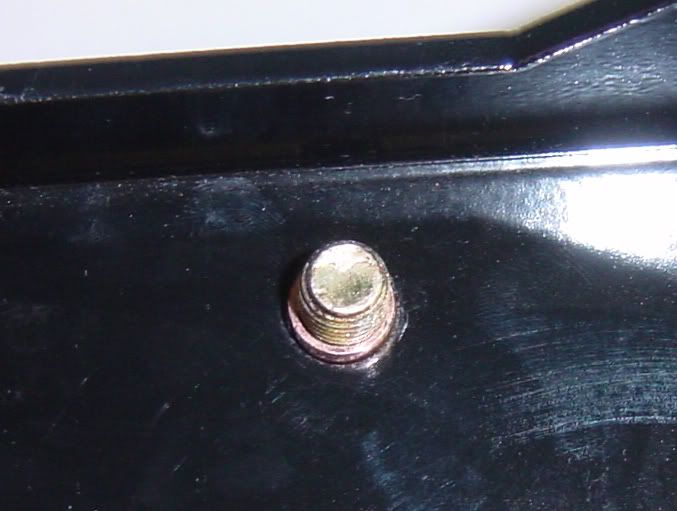
If you are referring to the VBP Smart Struts, before attaching the new bracket check to see if you need to bush down the bolt holes, as illustrated below. Unless they've addressed this issue since I brought it to their attention they are likely still well oversized, which might possibly lead to the bracket shifting under heavy cornering loads.
As for "inclination" (or more correctly, the camber gain) adjustment, the baseline setting for anything but drag racing should be locating the inner strut link bolts to the top most position of the vertical slot in the bracket. The wider your tires and/or the more power you have the further from the top might be the optimum setting for your car, but it's unlikely you'll actually "need" to drop the struts to parallel with the half shafts for anything except drag racing. IMCO, you should NEVER drop the inner point to where the struts go below level...
PART 2
The best way to check the outer spindle bearings is with a dial indicator. I run mine at 0.001", but IMHO anything more than ~0.003" end play is in need of some work. While it's apart, since the half-shafts also operate as the rear suspension's upper links, it would also be a good idea to check for excessive end play at the side yokes which can cause dynamic alignment issues. 0.001-0.015" here is thought to be good to go, and as much as 0.040" still OK, but the less the better in my book.
Sorry, but you'll need to re-align your rear camber anytime you relocate the inner camber strut link. Doesn't require a shop tho. FWIW, four vinyl tiles and a little grease makes for a couple of poor man's turntables so you don't have to keep resettling the suspension between adjustments.
Hope that helps.

TSW
If you are referring to the VBP Smart Struts, before attaching the new bracket check to see if you need to bush down the bolt holes, as illustrated below. Unless they've addressed this issue since I brought it to their attention they are likely still well oversized, which might possibly lead to the bracket shifting under heavy cornering loads.
As for "inclination" (or more correctly, the camber gain) adjustment, the baseline setting for anything but drag racing should be locating the inner strut link bolts to the top most position of the vertical slot in the bracket. The wider your tires and/or the more power you have the further from the top might be the optimum setting for your car, but it's unlikely you'll actually "need" to drop the struts to parallel with the half shafts for anything except drag racing. IMCO, you should NEVER drop the inner point to where the struts go below level...
PART 2
The best way to check the outer spindle bearings is with a dial indicator. I run mine at 0.001", but IMHO anything more than ~0.003" end play is in need of some work. While it's apart, since the half-shafts also operate as the rear suspension's upper links, it would also be a good idea to check for excessive end play at the side yokes which can cause dynamic alignment issues. 0.001-0.015" here is thought to be good to go, and as much as 0.040" still OK, but the less the better in my book.
Sorry, but you'll need to re-align your rear camber anytime you relocate the inner camber strut link. Doesn't require a shop tho. FWIW, four vinyl tiles and a little grease makes for a couple of poor man's turntables so you don't have to keep resettling the suspension between adjustments.
Hope that helps.
TSW
Last edited by TheSkunkWorks; Feb 25, 2010 at 07:32 PM.







