


Cobfree


Team Owner


Joined: Jan 2006
Posts: 37,637
Likes: 3,116
From: Crossville TN

Well, my 'original' engine just passed the 200,000 mile mark and it's had just one rebuild (.040" over pistons) and no ridge at the top of the cylinders [after the last 60,000 following that rebuild].... so I think I'll stay with the synthetic stuff. I change the oil once a year and put a new filter in every three months. So, I think I spend less money on oil changes than those who change the oil every three months, as well.
I have no problem with folks doing what they choose, after they have the info necessary to make that choice. What I do have a problem with is someone trying to convince others of a specific direction by way of 'tainted' information. "Tell it like it really is", then let folks make up their minds.
I have no problem with folks doing what they choose, after they have the info necessary to make that choice. What I do have a problem with is someone trying to convince others of a specific direction by way of 'tainted' information. "Tell it like it really is", then let folks make up their minds.



Race Director


Joined: Jul 2001
Posts: 15,892
Likes: 42
Synthetic oil's two biggest advantages are it's ability in extreme heat and extended service intervals.
On a stock car that is not used every day (as so many C3's are) it makes far more sense to do more regular oil changes with a cheaper oil.
Lets not forget that as well as lubricating the engine, the oil also holds in suspension many chemicals and particulates which we could remove by a simple oil change.
I'm not anti synthetic, it's a fantastic development in oil technology. It's a must in a highly tuned motor or a daily driver doing proper mileage, what it's not is the 'only' option.
On a stock car that is not used every day (as so many C3's are) it makes far more sense to do more regular oil changes with a cheaper oil.
Lets not forget that as well as lubricating the engine, the oil also holds in suspension many chemicals and particulates which we could remove by a simple oil change.
I'm not anti synthetic, it's a fantastic development in oil technology. It's a must in a highly tuned motor or a daily driver doing proper mileage, what it's not is the 'only' option.
I read the three links provided by 7T1Vette-
The first starts off with In becoming an Amsoil Synthetic Lubricants dealer in 1998 I...... so there goes any unbiased POV from this guy. Nonetheless, I continued until I read "increased fuel mileage of nearly 10%, noticeably lower operating temperatures.......
10% better fuel mileage? Engine runs so much cooler it shows on the gauge?
 Sorry, zero credibility.
The second article is from a well known magazine and does make note of a minimal (three) HP increase using synthetic, but at a cost of 10 pounds of oil pressure. Who knows what this reduced pressure will do over an extended period of time. It is interesting to note the volume of sponsorship logos on the page with good old Mobil right there at the top.
Magazines NEVER bite the hand that feeds them (more than once)- they're not given the chance.
Third article. OK, I lied earlier, I didn't read every word. It's advertising for Amsoil and the article is exclusively for motorcycles, so what's the relevance and what's the unbiased credibility. Ironic that the next post to 7T1's is from an Amsoil dealer offering a super duper deal.

7T1 is correct that most industry studies are proprietary and not available to the public. That's exactly the point- the proprietary study I participated in first handed (on engines, not transmissions) showed no PRACTICAL benefits of synthetics for engines that NEVER reach the temperature peaks and stress levels these oils were designed for. Push rod engines like the SBC and BBC do just fine on dino oil.There's hundreds of millions of them around that are testament to the ability of going 100K, 200K, 300K miles with no problems at all. In spite of themselves and the old fashioned oils.
To paraphrase Golden's statement, synthetics are not the only option. Far from being a 'no brainer' as some like to think.

Pro

Joined: May 2003
Posts: 593
Likes: 0
From: London England
I haven't read all through those links but I have to agree with Mike.
I've looked at the Amsoil 'data' for cars and it's probably some of the most misleading sales BS I've ever seen.
Proving that your oil is slightly better at -4 Fahrenheit or using ball friction tests that have no relevance to the internal combustion engine is just bull.
Some of the tests they quote aren't even the right SAE tests!
I've looked at the Amsoil 'data' for cars and it's probably some of the most misleading sales BS I've ever seen.
Proving that your oil is slightly better at -4 Fahrenheit or using ball friction tests that have no relevance to the internal combustion engine is just bull.
Some of the tests they quote aren't even the right SAE tests!
Burning Brakes


Joined: Sep 2009
Posts: 1,124
Likes: 140
From: Western New York
CobFree,
No matter what oil you decide to go with, make sure you buy a good quality oil filter like a K & N or a Mobil 1. Do not just pick up a Fram at Wallymart. That's a mistake.
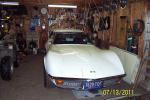
I've owned my '72 since '73 and it has 59,000 miles. The majority of it's life has been with synthetic oil. When I pull a valve cover, there is absolutely no gunk or crud on any of the rocker arms or in the oil galley or the oil pan. Everything looks "as new". Now, when I pulled the valve covers on my '98 Silverado that gets oil changes every 3000 miles with Dino oil, it was a totally different story. Wish I'd gone with the synthetic on the truck from day 1.
BUT, the choice is yours! Good luck. Enjoy your new ride!
No matter what oil you decide to go with, make sure you buy a good quality oil filter like a K & N or a Mobil 1. Do not just pick up a Fram at Wallymart. That's a mistake.
I've owned my '72 since '73 and it has 59,000 miles. The majority of it's life has been with synthetic oil. When I pull a valve cover, there is absolutely no gunk or crud on any of the rocker arms or in the oil galley or the oil pan. Everything looks "as new". Now, when I pulled the valve covers on my '98 Silverado that gets oil changes every 3000 miles with Dino oil, it was a totally different story. Wish I'd gone with the synthetic on the truck from day 1.
BUT, the choice is yours! Good luck. Enjoy your new ride!

Drifting


Joined: Jul 2009
Posts: 1,532
Likes: 14
From: Dallas-Fort Worth TX
Congrats on the new car... Send some pics.
I am going to go with synthetic on my new engine rebuild. Why not.... right....
She deserves the best, so I will provide what I can.
Got the ignition key on dash, correct?
I am going to go with synthetic on my new engine rebuild. Why not.... right....
She deserves the best, so I will provide what I can.
Got the ignition key on dash, correct?
Last edited by Rebelrob; Mar 8, 2010 at 03:07 PM.









